DP Pulveriser UK - Innovating the Future of Size Reduction
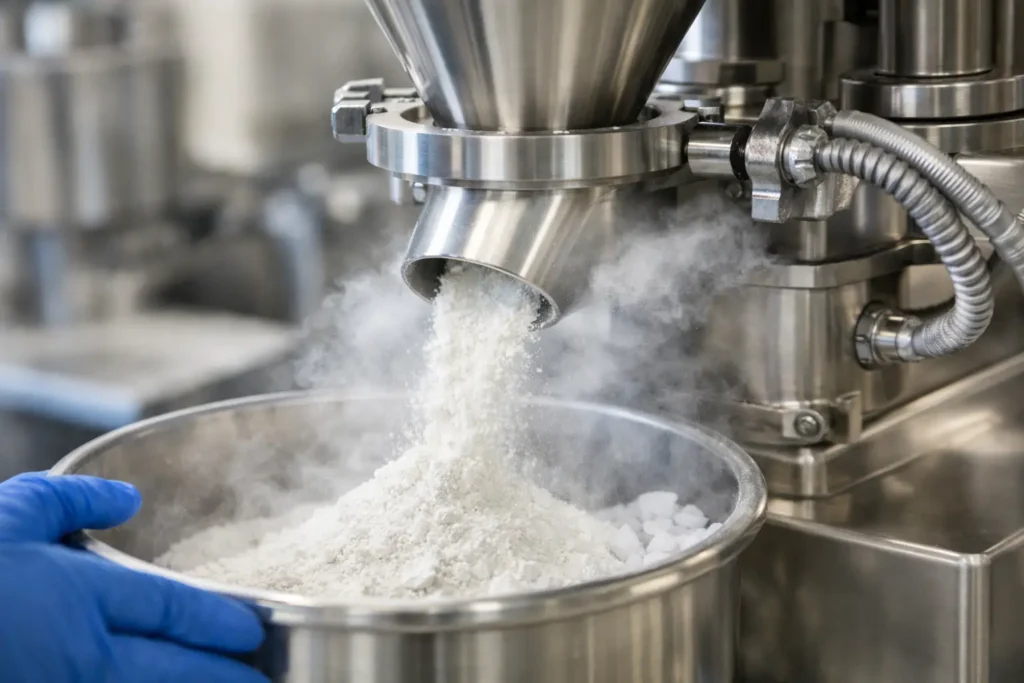
A powder can meet its particle size specification and still fail the process. When milling heat sensitive materials, friction, particle impact and prolonged residence time can alter colour, flavour, potency, flowability or chemical stability before the product leaves the mill. For manufacturers handling high-value or regulated powders, temperature control is therefore a core process requirement, not an afterthought.
The practical objective is to apply enough energy to achieve precise particle size reduction while preventing the material from crossing its thermal limit. That balance depends on the material, target particle size, throughput and the complete processing line – not simply the choice of mill.
Why heat develops during size reduction
Every milling process converts some mechanical energy into heat. In an impact mill, particles collide with pins, beaters or a grinding track. In a jet mill, high-velocity particle-on-particle collisions create fine powders with no mechanical grinding media. In both cases, energy that does not become new particle surface area appears as heat.
The temperature risk increases as the required particle size becomes finer. Fine grinding generally requires more energy, more impacts or longer processing time. A material that remains stable during coarse milling may soften, agglomerate or degrade when the specification moves into a finer range.
Product behaviour also changes the heat load. Waxy materials can smear across internal surfaces. Hygroscopic powders can pick up moisture, form deposits and restrict airflow. Low-melting ingredients may soften locally at the point of impact even when the measured outlet temperature appears acceptable. In pharmaceutical and nutraceutical applications, a small temperature excursion can affect active ingredient performance or the distribution of sensitive components.
This is why a single temperature reading is not always sufficient. Engineers must consider localised heating, product residence time and the repeatability of conditions from batch to batch.
Milling heat sensitive materials: the main control points
A successful process controls energy generation, removes heat efficiently and limits the time product spends in the mill. These three factors are closely connected.
Select a mill that matches the duty
There is no universal machine for temperature-sensitive powder processing. The right selection begins with the feed material and the required outcome.
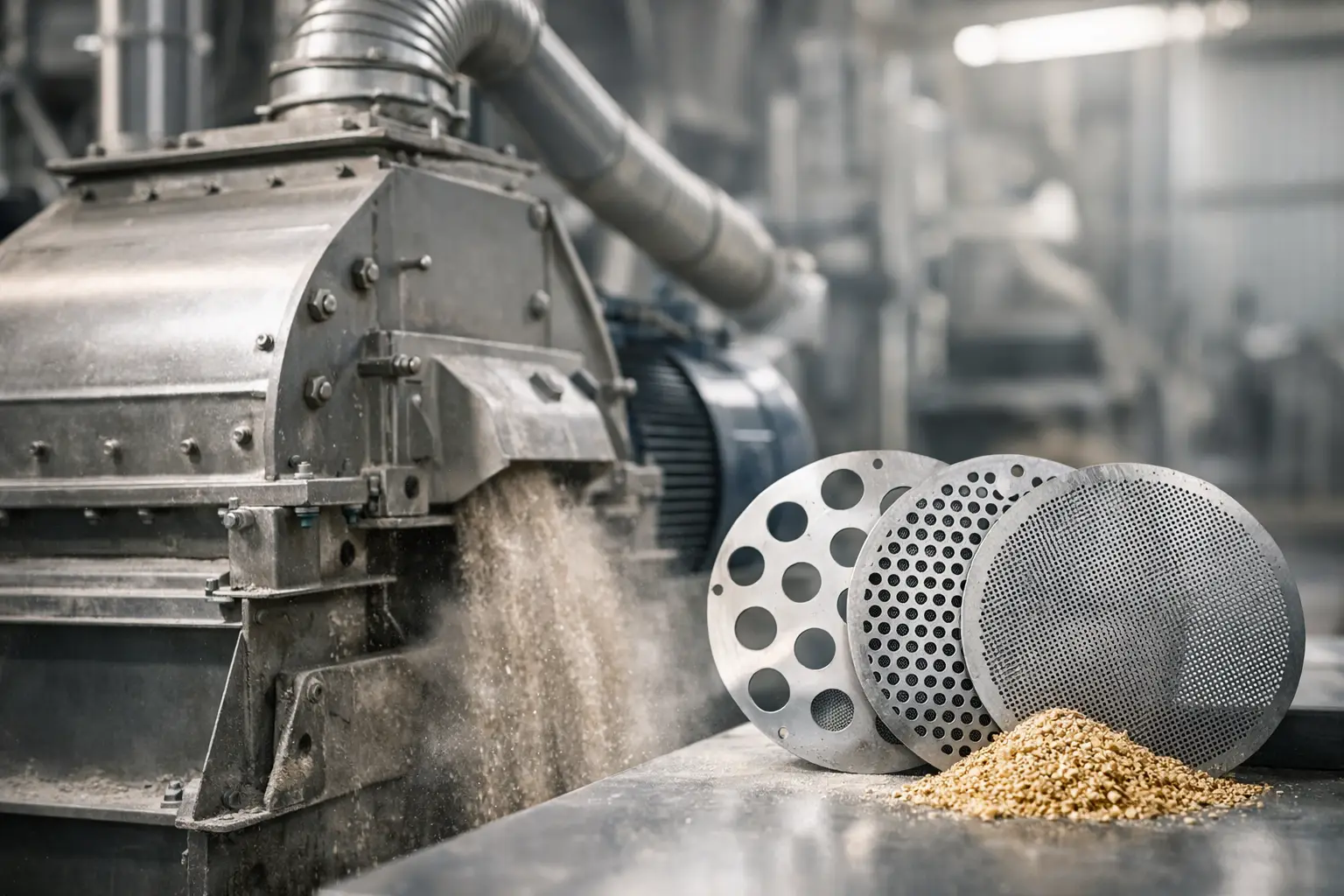
Pin mills and universal mills can provide efficient size reduction for many food, chemical and industrial powders, particularly where a moderate particle size is sufficient. However, their rotational speed, screen selection and feed rate must be configured carefully to avoid unnecessary energy input.
Air classifier mills combine impact milling with internal classification. Oversize particles are returned for further reduction while acceptable fines leave the process. This can support a tighter particle size distribution, but classifier speed and airflow need to be set against the material’s thermal behaviour. Excessive internal recirculation may increase exposure to heat.
Jet mills are often suited to applications requiring very fine particles and low contamination. The expansion of compressed process gas can provide a cooling effect, while particle-on-particle impact avoids contact with conventional grinding tools. Yet jet milling is not automatically a low-temperature solution. Compressed gas conditions, feed consistency, grinding pressure and classifier settings still determine the final thermal profile and specific energy consumption.
For materials that soften, melt or deteriorate near ambient processing temperatures, cryogenic milling may be the appropriate route. Cooling with liquid nitrogen or another suitable cryogenic medium makes many materials more brittle, reducing their tendency to smear and allowing clean fracture at finer sizes. The trade-off is additional operating complexity and refrigerant consumption, so cryogenic operation should be justified through product quality, yield and total production cost rather than assumed as the default answer.
Control feed rate and residence time
Overfeeding is a common cause of temperature rise and unstable particle size. A mill that receives more material than it can process efficiently can develop a packed grinding zone, increased recirculation and a wider particle size distribution. The result may be lower throughput, not higher throughput.
Consistent, metered feeding keeps the mill within its designed operating window. Loss-in-weight feeders, screw feeders and appropriate upstream conditioning can improve feed uniformity, particularly where bulk density varies or powders bridge in hoppers. At the same time, the extraction system must move product away from the milling chamber quickly enough to prevent fines from remaining in the high-energy zone.
Residence time deserves the same scrutiny as outlet temperature. A cooler mill running with excessive recirculation may expose some particles to repeated impacts. Conversely, a correctly classified system can achieve the specification in fewer passes, protecting product quality and improving capacity.
Use air and cooling as process tools
Process air performs more than one function. It conveys material, removes generated heat, supports classification and helps maintain a stable internal operating environment. Poorly balanced airflow can reduce cooling effectiveness, impair separation efficiency and allow deposits to develop.
Where ambient air is inadequate, engineers may use chilled air, conditioned gas or water-cooled mill housings and bearing arrangements. Cooling jackets are useful where heat transfer through the machine wall is meaningful, but they cannot compensate for an unsuitable grinding mechanism or an overloaded mill. The cooling strategy must be designed around the actual heat source.
For oxidation-sensitive materials, an inert gas system may also be required. Nitrogen processing can reduce oxygen exposure while providing controlled process conditions. This introduces further design requirements around containment, monitoring, venting and site safety, particularly in potentially combustible dust environments.
Build the specification around material behaviour
The most effective projects begin with material characterisation rather than a nominal throughput figure. A supplier needs to understand softening point, moisture level, fat or oil content, friability, abrasiveness, bulk density and the target particle size distribution. Equally relevant are the product’s allowable temperature, acceptable fines level, contamination limits and cleaning requirements.
For a food powder, preserving aroma and preventing fat release may be the priority. For a pharmaceutical intermediate, the critical factors may be potency retention, narrow particle size distribution and contained operation. Battery materials, coatings and specialised chemicals may require strict contamination control alongside thermal management. The process design changes accordingly.
It also depends on whether the target specification is defined by a median particle size alone or by the full distribution. Pushing for a very tight top-size limit can substantially increase energy demand. In some applications, adjusting the specification slightly or separating the duty into pre-milling and fine-milling stages delivers a better balance of quality, capacity and operating cost.
Validate at laboratory and pilot scale
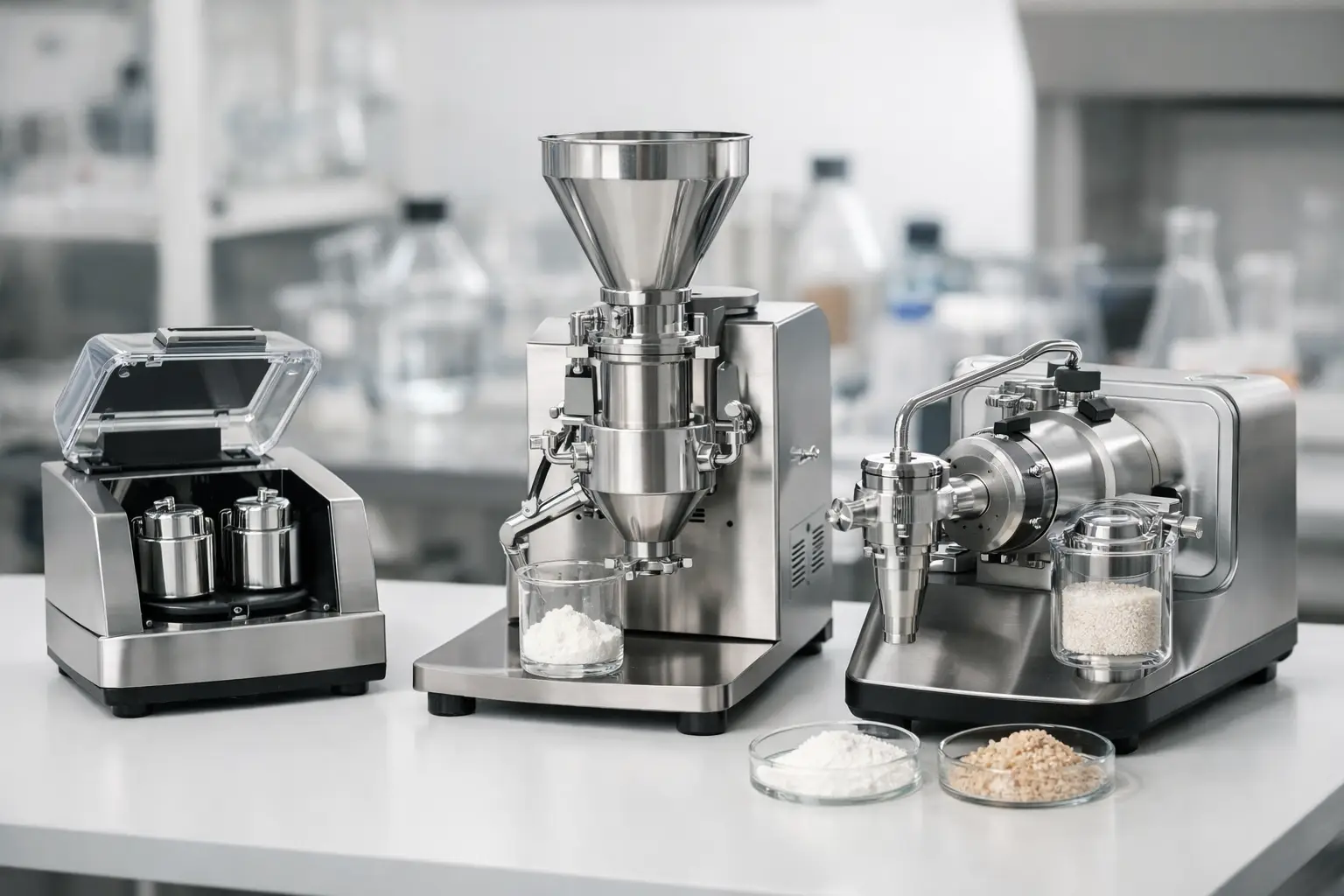
Heat-sensitive products should not move directly from a benchtop assumption to full-scale production. Laboratory trials establish whether the material fractures, smears, agglomerates or changes during milling. They also reveal how speed, air volume, classifier settings and cooling affect particle size and product temperature.
Pilot-scale work is the essential bridge to production. It provides more representative data on continuous feeding, conveying, dust collection and heat removal. Scale-up is not a simple multiplication of motor power or chamber volume. Airflow patterns, dwell time and heat transfer can change significantly between machine sizes.
A well-planned trial programme should measure particle size distribution, product temperature, throughput, yield and physical or chemical quality attributes relevant to the application. Where appropriate, testing should also assess moisture, colour, volatile loss, assay, flow properties and post-milling storage stability. This evidence gives engineering and procurement teams a sound basis for selecting equipment and defining performance acceptance criteria.
Integrate the mill into the complete line
The mill is only one thermal element in the process. Material can gain heat during upstream drying, conveying, screening or storage. It can also be damaged after milling if it enters a warm hopper, experiences long hold times or is packed before it has stabilised.
An integrated system may include controlled feeding, pre-cooling, milling, classification, pneumatic conveying, cyclone separation, filtration and temperature-monitored collection. For sensitive materials, insulated pipework, short transfer routes and cooled product receivers can be as important as the grinding chamber itself.
Dust control must be engineered alongside product protection. Fine organic powders may present combustible dust risks, while pharmaceutical and chemical applications can require contained handling to protect operators and prevent cross-contamination. Equipment selection should account for the required safety philosophy, cleanability and validation approach from the outset.
Measure performance beyond particle size
A process that produces the correct sieve result once is not necessarily production-ready. Reliable operation means maintaining the specification through normal variation in feedstock, ambient conditions and production duration. Operators need clear control parameters, while maintenance teams need access to wear components and cleaning areas without compromising containment.
Useful performance measures include specific energy consumption, yield, product temperature, particle size distribution, cleaning time and unplanned downtime. Together, they reveal the true cost of processing. A lower-cost mill that causes repeated product loss, slow changeovers or inconsistent throughput can carry a far higher total cost of ownership than an engineered system designed around the material.
For demanding applications, DP Pulveriser UK can combine process trials with application-specific milling, classification, cooling and powder handling equipment. The aim is not merely to reduce particle size, but to deliver a stable, scalable process that protects the value already built into the material.
When the thermal limit is treated as a design input from the first trial onwards, milling becomes a controlled manufacturing operation rather than a source of avoidable product loss.