DP Pulveriser UK - Innovating the Future of Size Reduction
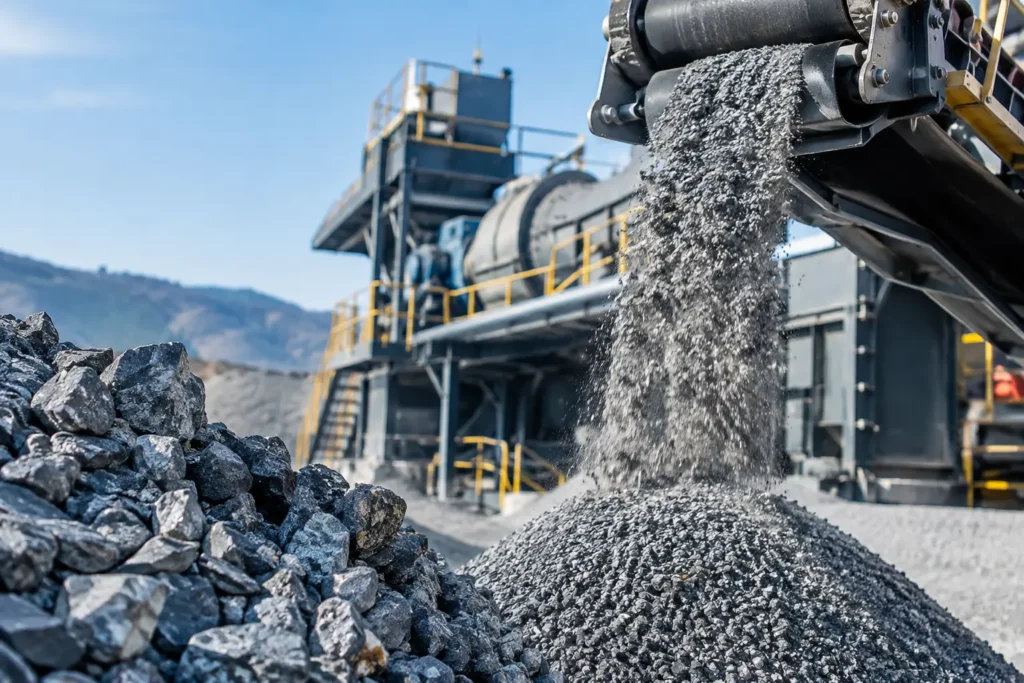
A mineral grinding example is most useful when it follows the material through a real production decision rather than treating milling as an isolated machine purchase. Consider a plant producing fine limestone powder for fillers, coatings or construction compounds. The objective may appear straightforward – reduce a screened limestone feed to a tightly controlled fine powder – but product quality, energy consumption, wear rate and achievable throughput are all set by the interaction between feed preparation, grinding, air classification and powder handling.
For a production team, the question is not simply which mill can make the target size. It is which engineered system can repeatedly make that size distribution at the required capacity, while controlling contamination, dust and operating cost.
Mineral grinding example: producing fine limestone powder
Assume a manufacturer receives dry limestone with a typical feed size below 10 mm and needs a powder with a median particle size of approximately 20 microns. The final product must have limited oversize because coarse particles can affect surface finish, dispersion and performance in the finished formulation. It must also remain free-flowing enough for bulk storage, conveying and downstream blending.
Limestone is a relatively soft mineral compared with quartz or alumina, yet its grindability can vary significantly with purity, moisture content, geological source and feed-size consistency. A system designed around one quarry feed may not perform identically when the mineral source changes. This is why representative trials and particle-size analysis are preferable to selecting equipment solely from a generic capacity chart.
A typical processing route begins with controlled feed preparation. Material that contains large lumps, tramp metal or excessive fines creates instability before it reaches the mill. Crushing and screening establish a predictable top size, while magnets and metal detection protect rotating components. If the feed is stored in a hopper, reliable extraction is equally important. Bridging or inconsistent feed flow will cause fluctuations in mill load and, consequently, changes in the powder distribution.
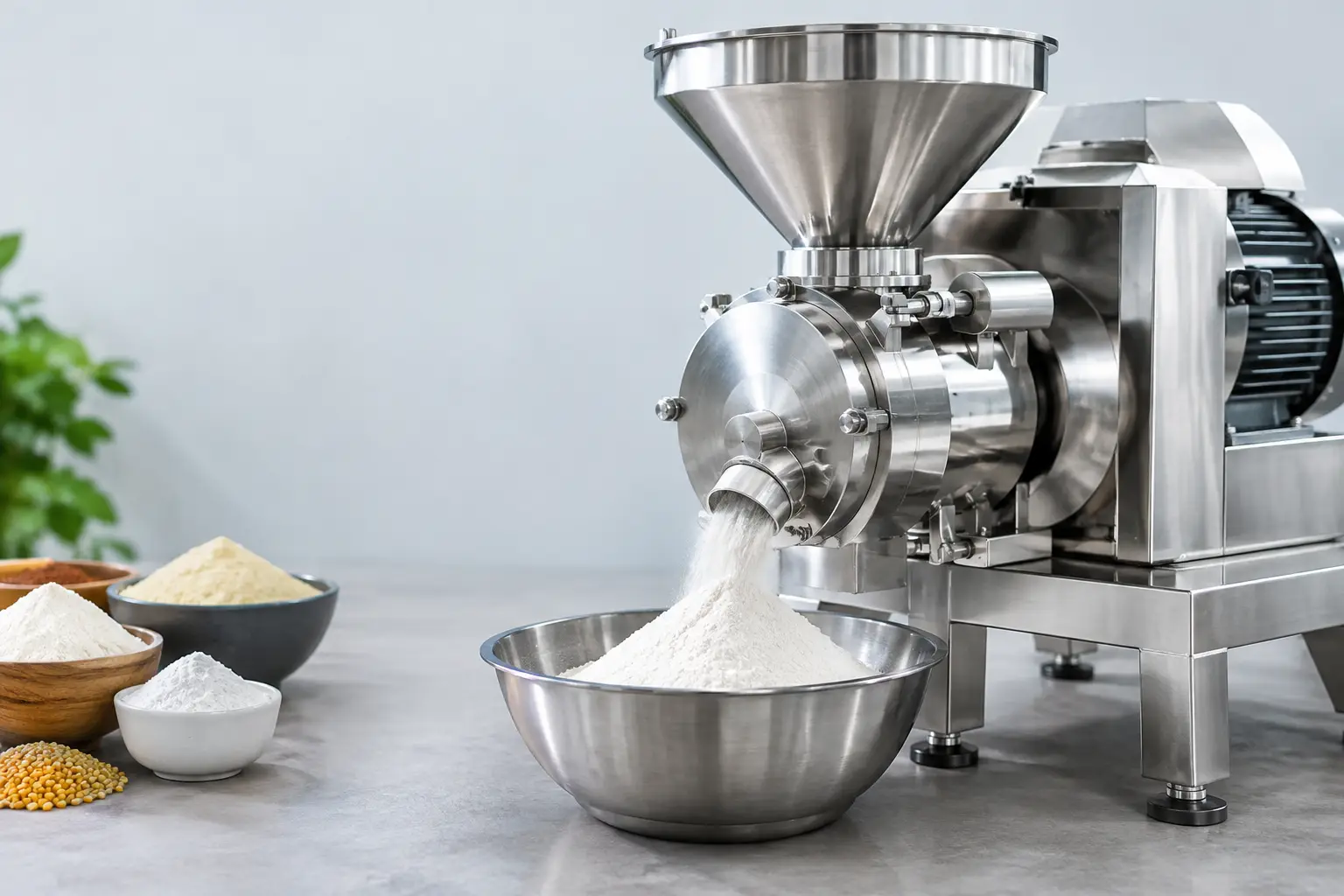
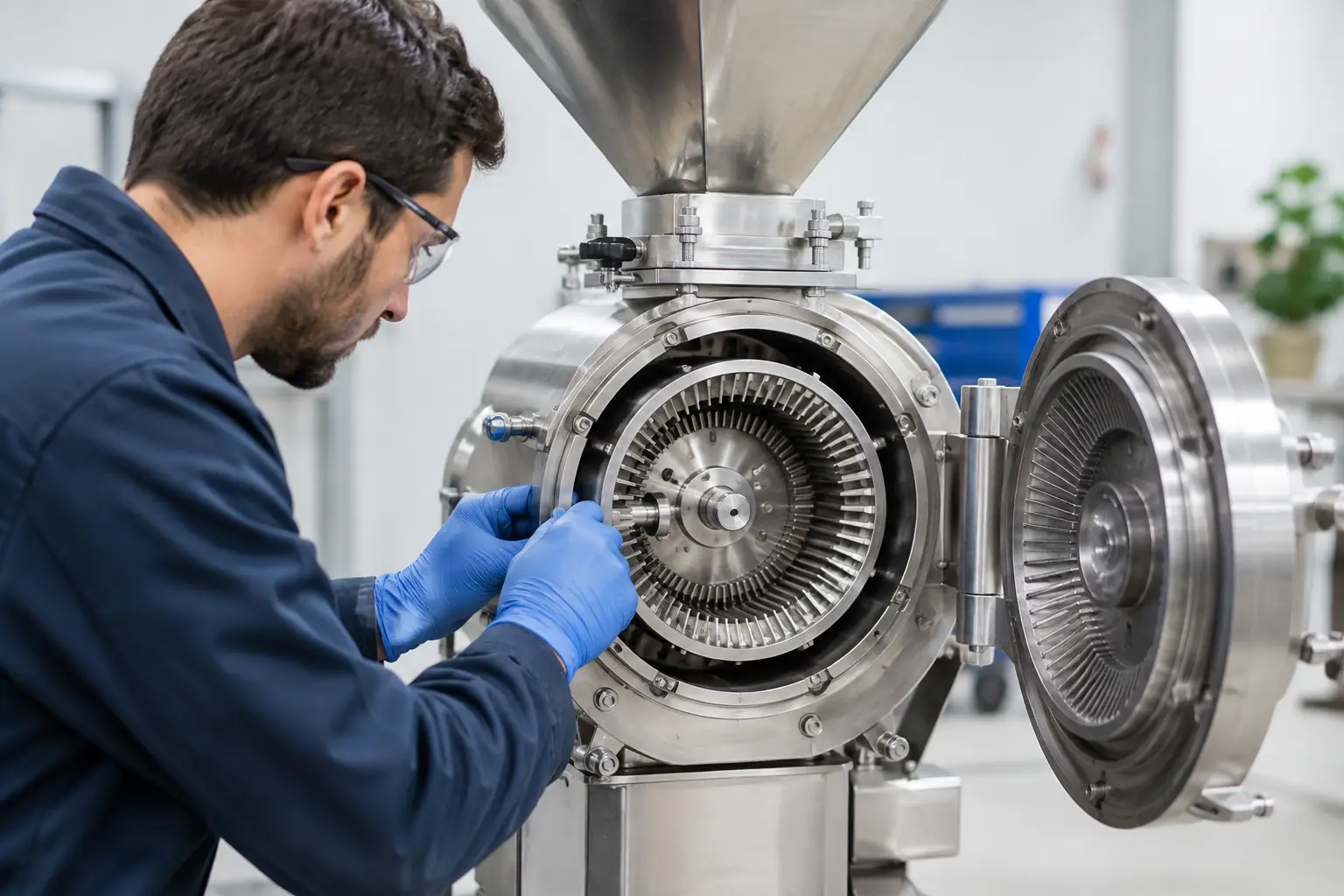
The prepared limestone is then metred into the grinding system at a stable rate. For this application, an air classifier mill can be an effective choice because it combines impact grinding with internal air classification. Particles are accelerated into a grinding zone, while the classifier separates material that has reached the required fineness from coarse material that requires further reduction. Only suitably fine particles leave the system with the process air.
This closed internal circulation is valuable when the specification is defined by a narrow particle-size range. It reduces the proportion of coarse material in the finished powder without relying on multiple passes through a standalone mill. However, it is not automatically the best route for every limestone duty. A pin mill, turbo mill or impact mill with a separate classifier may be more appropriate where a broader cut is acceptable, capacity is the overriding priority, or the plant needs flexibility across several mineral grades.
The operating variables that determine the result
In mineral grinding, the target D50 figure alone is not enough to define success. Two powders can share a median size while having very different coarse tails, fines content, bulk density and behaviour in a customer’s process. The full particle-size distribution, often assessed through D10, D50 and D90 values, should therefore be agreed alongside the product application.
Rotor speed is one primary control. Higher tip speed generally increases impact energy and can produce a finer powder, but it also increases power demand, component wear and heat generation. For limestone this can be acceptable within normal operating limits, although elevated temperature may still affect downstream handling or the performance of surface treatments. Running at the highest speed is rarely the most economical solution if the required distribution can be achieved at a lower setting.
Classifier speed is the second major control point. Increasing classifier speed typically creates a finer cut because larger particles are rejected back into the milling zone. The trade-off is reduced throughput and potentially higher recirculating load. Conversely, opening the classifier can raise production rate but may allow unacceptable oversize into the product. The optimum setting depends on whether the commercial value lies in maximum tonnes per hour, a premium fine grade, or the ability to switch between products efficiently.
Airflow also deserves close attention. It transports powder through the system, assists heat removal and influences classification efficiency. Insufficient airflow can lead to build-up, unstable circulation and poorer separation. Excessive airflow can raise fan energy, increase pressure losses and carry more fines to the filter. System design must balance mill airflow, duct velocities, cyclone performance where used, and the filtration duty.
Feed rate connects all of these variables. Overfeeding can reduce the effective impact intensity in the grinding chamber and increase the oversize fraction. Underfeeding wastes installed capacity and can give a misleadingly fine trial result that cannot be maintained in production. A gravimetric feeder or accurately controlled screw feeder supports consistent loading, particularly where the plant operates unattended or feeds a continuous packaging line.
From mill discharge to saleable powder
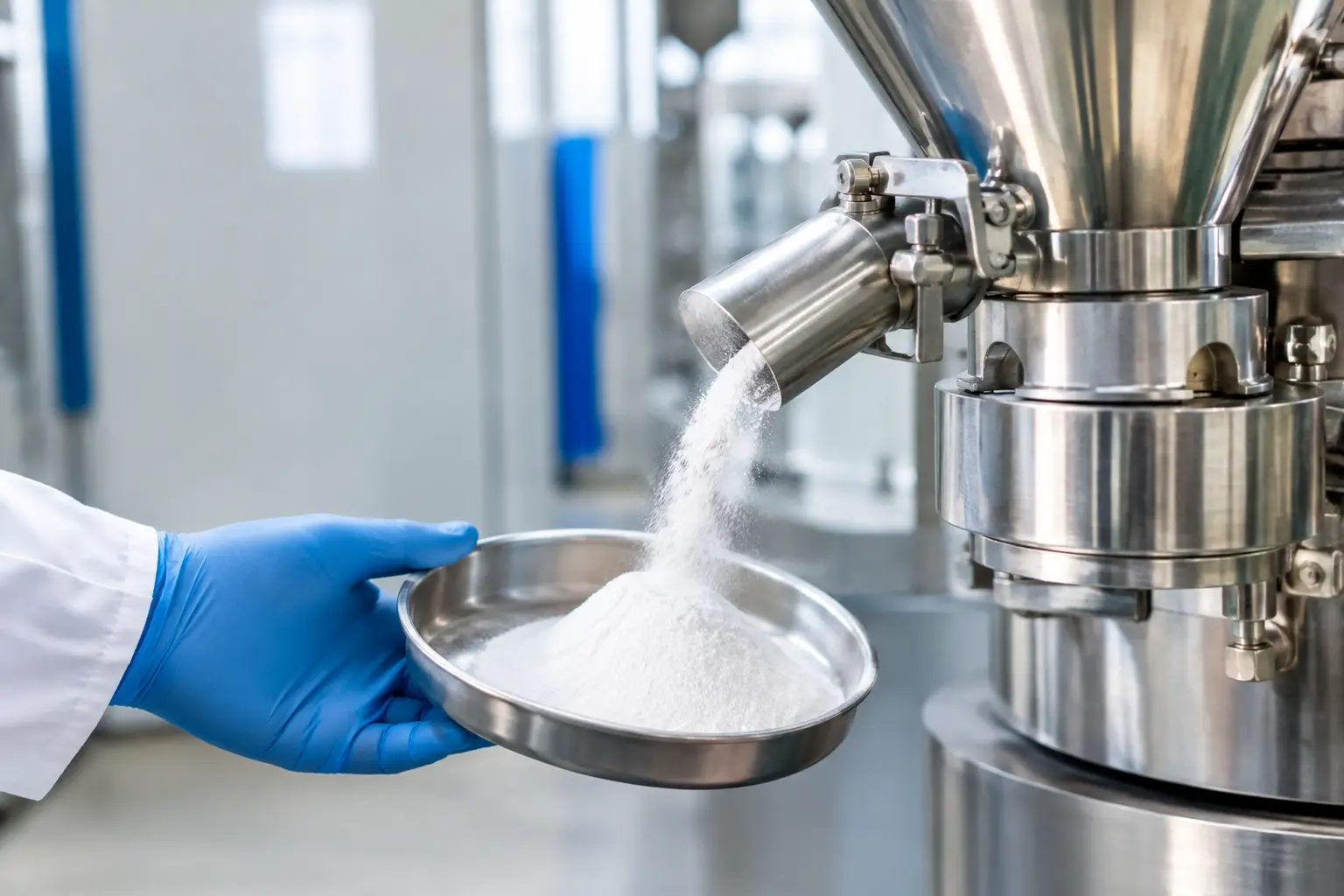
The grinding chamber is only one part of the mineral processing line. Fine limestone exiting an air classifier mill is commonly carried in the process air to a high-efficiency filter receiver. The filter separates the powder from air, while cleaned air is returned or safely discharged according to the plant arrangement. Filter area, media selection and pulse-cleaning performance must match the powder’s fineness and volume loading.
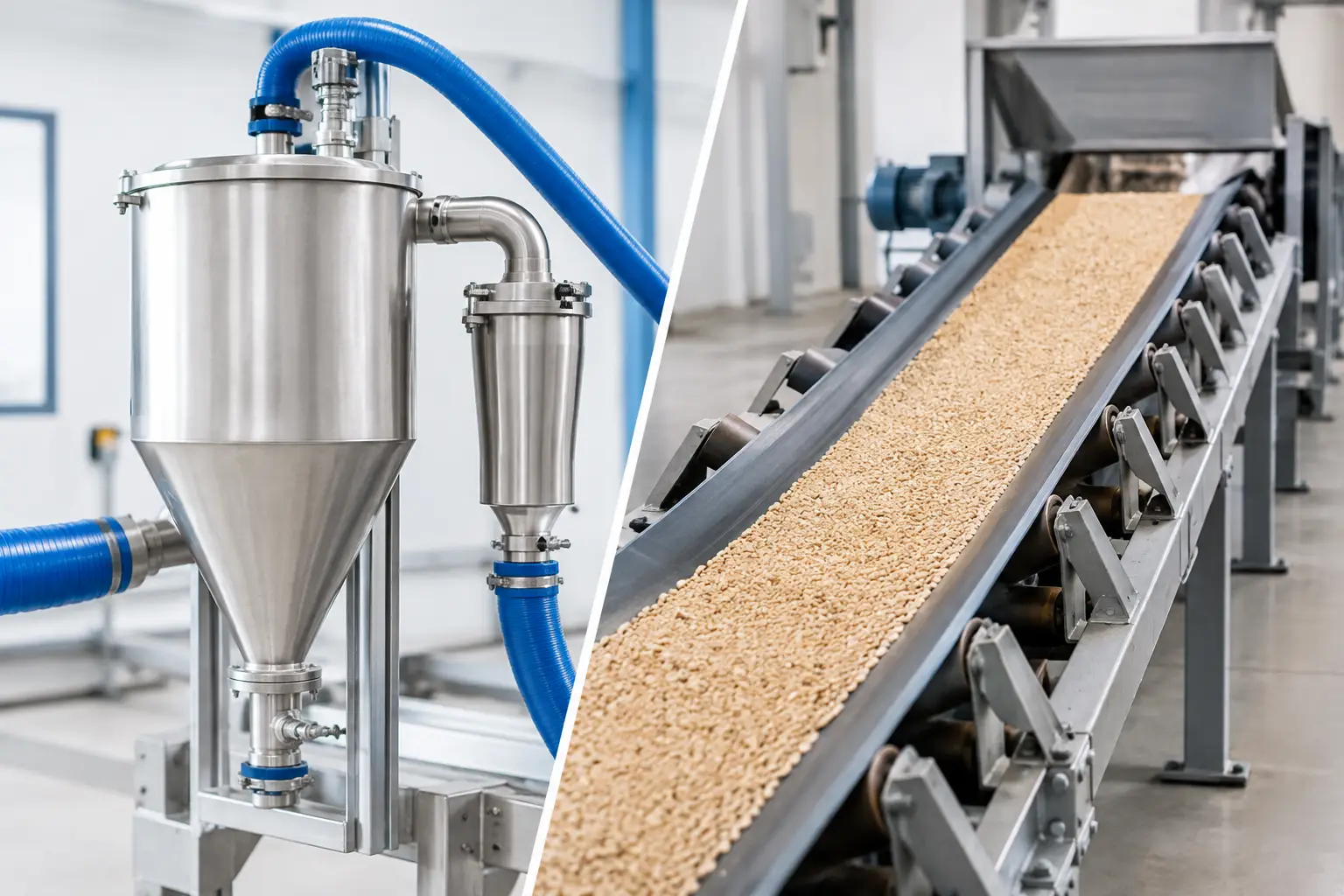
The collected powder then requires controlled discharge. A rotary valve, screw conveyor, pneumatic transfer system or conditioned hopper may be used depending on the required capacity and the final pack format. Fine mineral powders can aerate readily, so bin design, venting and level control matter as much as conveyor selection. Poorly designed transfer equipment can segregate the powder, introduce contamination or become the actual bottleneck after a successful milling installation.
For bulk supply, a finished-product silo may feed tanker loading or bulk bags. For smaller batches, a packing station can fill valve sacks, open-mouth bags or intermediate bulk containers. At this stage, production managers should confirm whether the powder needs a final screen, a metal check, moisture verification or batch sampling. Quality assurance is more effective when it is built into the process flow rather than treated as a final inspection exercise.
Equipment selection changes with mineral hardness
The limestone case illustrates an impact-and-classification approach, but mineral grinding equipment must follow material behaviour. A soft, friable mineral may respond well to a pin mill or air classifier mill. A hard, abrasive mineral such as silica, zircon or certain metal oxides will impose a far greater wear burden. In these duties, liner materials, rotor construction, replaceable wear components and contamination limits become central selection criteria.
A jet mill may be considered where an exceptionally fine product, low contamination or tightly controlled upper particle size is required. It can deliver very fine powders through particle-on-particle collision, but compressed-air or gas consumption must be evaluated against the value of the final product. For a mainstream mineral filler, the operating cost may not justify this route. For a high-value technical mineral or specialty coating grade, it may be entirely justified.
Moisture creates another branch in the decision. Dry milling systems perform best with free-flowing feed. If the mineral has variable moisture or is prone to coating internal surfaces, upstream drying, conditioning or a different size-reduction route may be required. No mill design can fully compensate for an unstable feed condition.
Scaling the example from trials to production
Laboratory trials establish whether the required powder can be produced, but they do not remove the need for scale-up engineering. Wear, residence time, airflow patterns, feeder performance and collection efficiency all change as capacity increases. The trial programme should therefore capture more than a single particle-size result. It should measure throughput, specific energy, temperature rise, product yield, rejects, noise, dust control and the effect of operating changes.
A sensible development programme uses representative material from the intended supply source, including normal variation in moisture and feed size. It also tests the specification at realistic operating rates rather than only under low-load conditions. This provides a more reliable basis for selecting motor power, classifier capacity, filtration area and conveying equipment.
For plants serving several markets, flexibility can be commercially valuable. Variable-speed drives, adjustable classifier settings, interchangeable grinding elements and recipe-based controls can allow one processing line to produce more than one grade. That flexibility has a capital cost, but it can reduce the need for duplicate equipment and improve asset utilisation when demand shifts between products.
DP Pulverizer UK approaches this type of duty as an integrated powder-processing project, matching milling and classification technology with feed systems, collection, conveying and controls. The right configuration is determined by the mineral and the finished-powder specification, not by a standard machine category alone.
The most productive next step is to define the product in operational terms: feed properties, target distribution, acceptable contamination, hourly output, operating schedule and downstream handling requirements. With those details established, a mineral grinding line can be engineered to deliver repeatable powder quality without turning energy, wear or material flow into an ongoing production compromise.