DP Pulveriser UK - Innovating the Future of Size Reduction
DP Pulveriser UK - Innovating the Future of Size Reduction
DP Pulveriser UK - Innovating the Future of Size Reduction
Advanced Micronization Technology by DP Pulveriser UK
As product performance requirements become increasingly demanding, manufacturers across Europe are turning to micronization technologies to improve product quality, increase surface area, enhance dissolution rates, optimise processing performance, and create highly engineered powders.
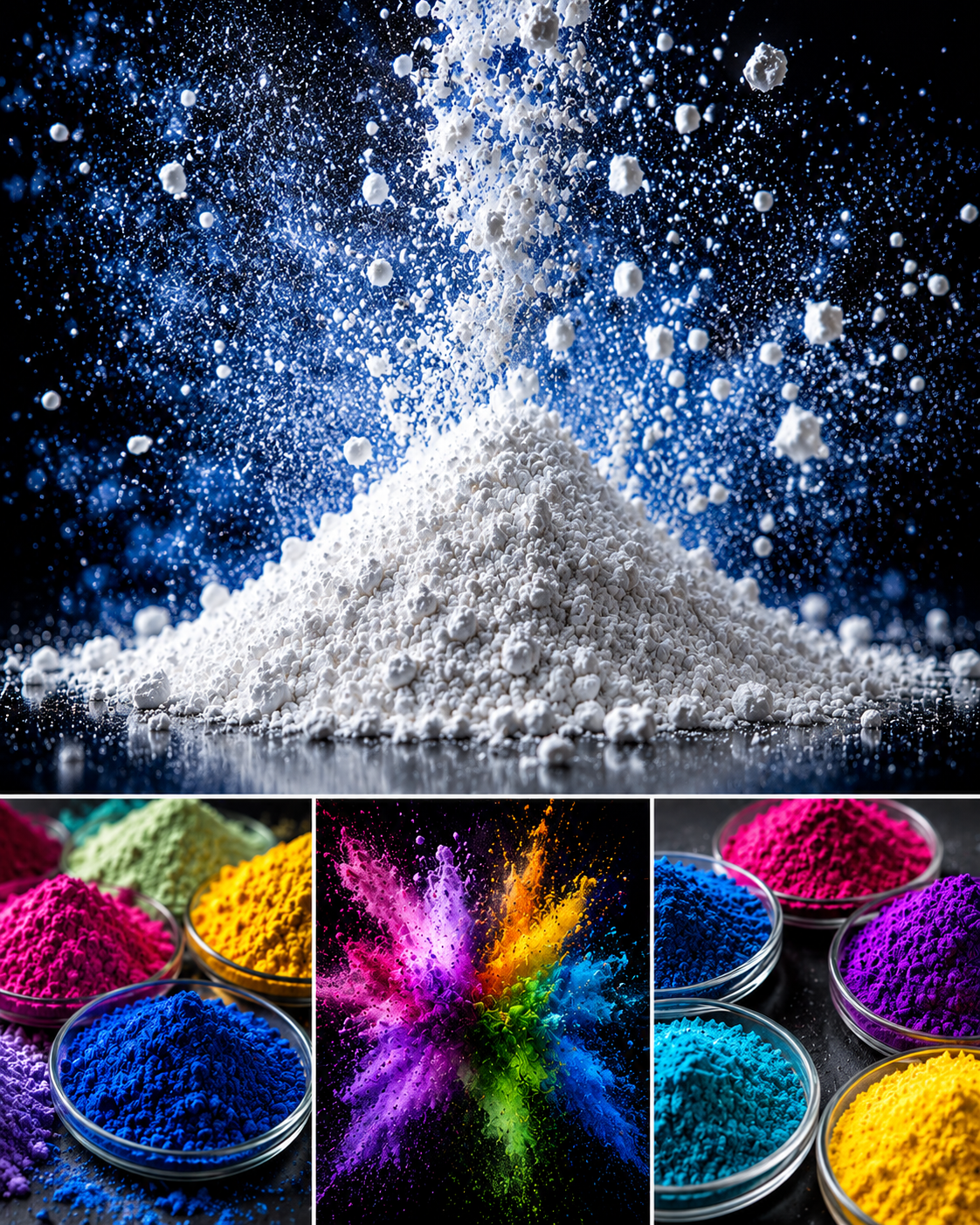
Micronization is one of the most advanced forms of particle size reduction, allowing materials to be processed into particles measured in microns rather than millimetres.
At DP Pulveriser UK, we provide advanced micronization solutions engineered for pharmaceutical manufacturers, battery producers, food processors, nutraceutical companies, chemical manufacturers, and advanced material developers throughout the United Kingdom and Europe.
Whether your objective is to improve bioavailability, increase reaction rates, enhance blending performance, or create ultra-fine powders, our engineering team can develop a micronization solution tailored to your application.
Contact our engineering team to discuss your Micronization requirements.

Micronization is the process of reducing particles to sizes measured in microns (µm), typically below 100 microns and often below 20 microns.
To put this into perspective:
Micronization dramatically increases surface area while improving particle size consistency and overall product performance.
Particle size influences nearly every aspect of product performance.
Reducing particle size into the micron range can significantly improve:
Smaller particles dissolve more rapidly due to increased surface area.
This is particularly important for:
Micronized pharmaceutical ingredients often demonstrate improved absorption and therapeutic performance.
Narrow particle size distributions improve:
Increased surface area can improve reaction kinetics in chemical manufacturing processes.
Micronization frequently enhances:
The achievable particle size depends upon the material and the selected micronization technology.
Typical particle size ranges include:
| Technology | Typical Particle Size |
|---|---|
| Air Classifier Mills | 5–100 Microns |
| Pin Mills | 20–200 Microns |
| Turbo Mills | 20–200 Microns |
| Jet Mills | 1–20 Microns |
| Advanced Jet Milling Systems | Sub-10 Microns |
| Cryogenic Milling Systems | Application Dependent |
DP Pulveriser engineers evaluate each material to determine the most efficient micronization method.
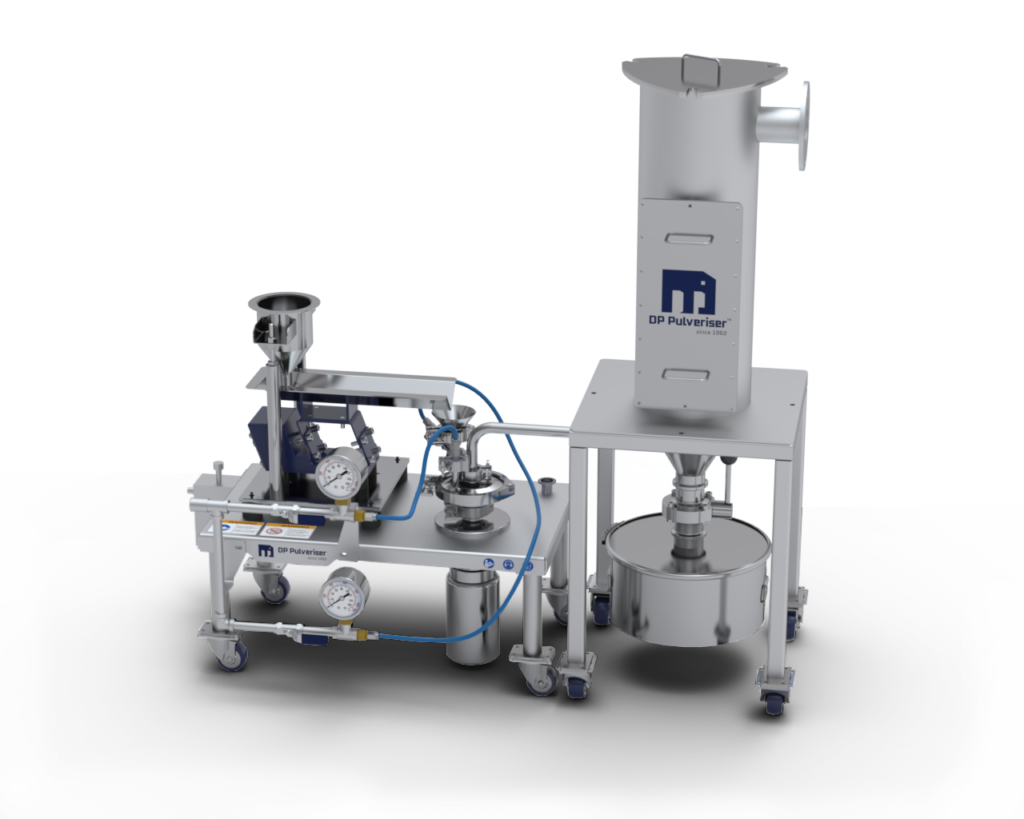
Jet milling is one of the most widely used micronization technologies.
Using high-pressure compressed air or inert gases, particles collide at high velocity within the grinding chamber, resulting in ultra-fine particle size reduction.
Advantages include:
Common applications:
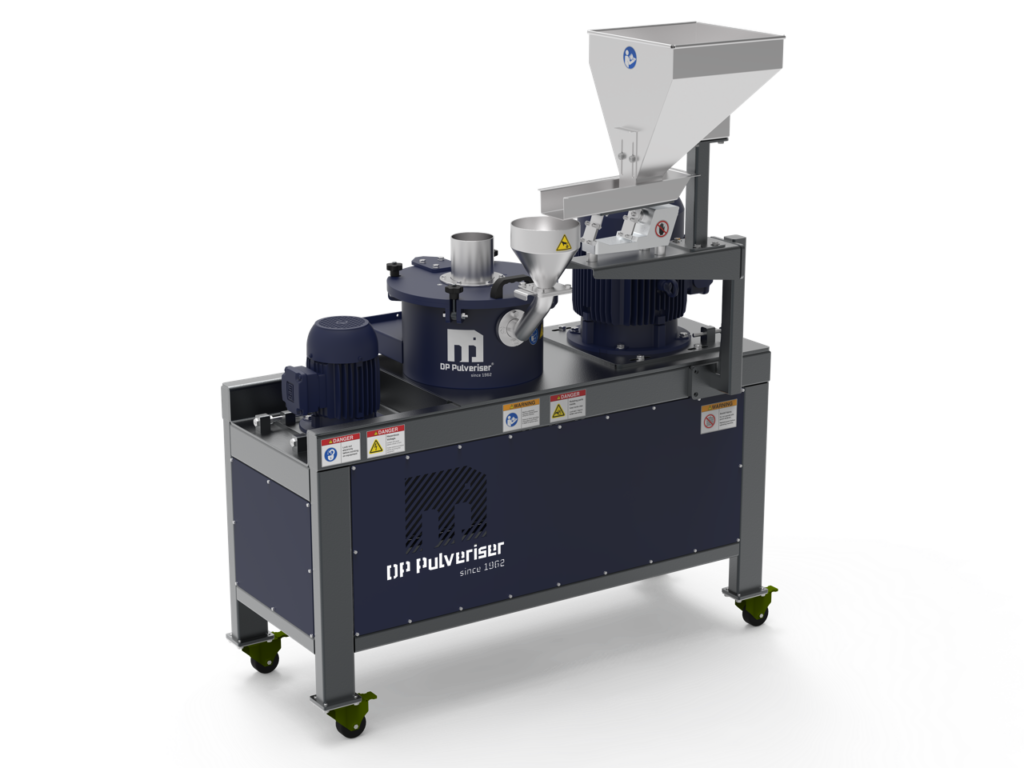
Air Classifier Mills combine impact grinding with dynamic classification.
Advantages include:
Applications include:
Certain materials require ultra-low temperatures to achieve efficient micronization.
Cryogenic systems are commonly used for:
Liquid nitrogen cooling improves brittleness and prevents thermal degradation.
Micronization is widely used throughout the pharmaceutical industry for:
Particle size can directly influence dissolution, absorption, and product performance.
Applications include:
Micronized powders improve:
Europe’s growing battery industry increasingly relies on micronization for:
Precise particle size control contributes to improved battery performance and manufacturing consistency.
Applications include:
Micronization is critical for:
Smaller particles create significantly more surface area, improving product performance.
Micronized particles dissolve faster and more consistently.
Fine particles distribute more evenly throughout formulations.
Micronization can improve:
Many manufacturers utilise micronization to create premium, high-performance products.
Harder materials often require specialised milling technologies.
Certain materials require low-temperature or cryogenic processing.
Pharmaceutical and advanced material applications may require contamination-free processing.
Many applications require not only a target particle size but also a tightly controlled particle size distribution.
Micronization systems can range from laboratory-scale equipment to industrial production systems processing multiple tonnes per hour.
For pharmaceutical, nutraceutical, and food applications, DP Pulveriser offers:
These features support compliance with UK and European manufacturing standards.
Many fine powders create combustible dust hazards.
DP Pulveriser can provide:
These solutions support compliance with UK and EU safety regulations.
Whether you need to improve dissolution rates, increase bioavailability, create ultra-fine powders, enhance product performance, or optimise manufacturing efficiency, DP Pulveriser UK can develop a micronization solution engineered specifically for your application.
Contact our engineering team today to discuss your material characteristics, target particle size distribution, throughput requirements, and process objectives.
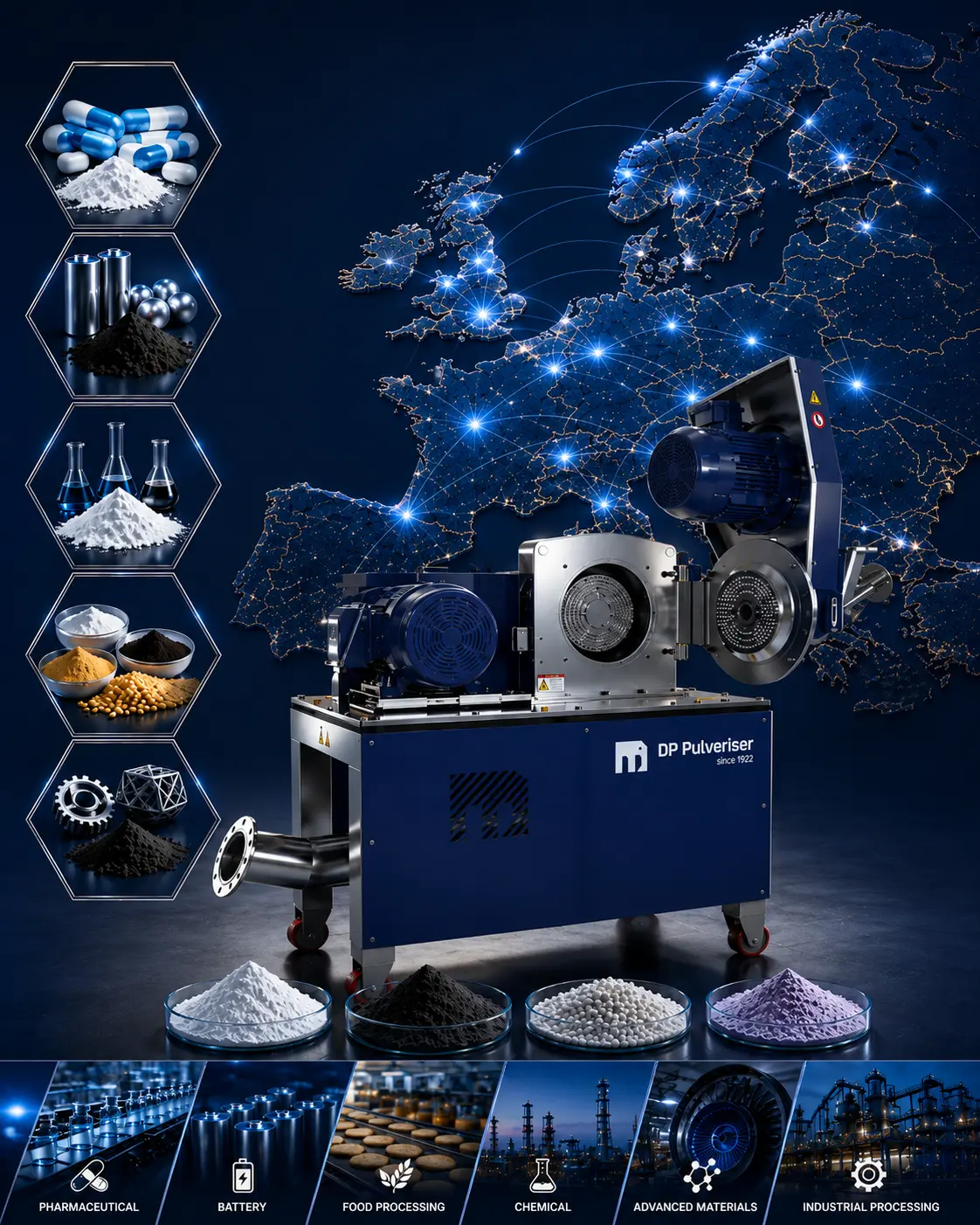
DP Pulveriser supports manufacturers throughout:
Our micronization technologies support pharmaceutical manufacturers, battery producers, food processors, chemical companies, advanced material developers, and industrial processors throughout Europe.
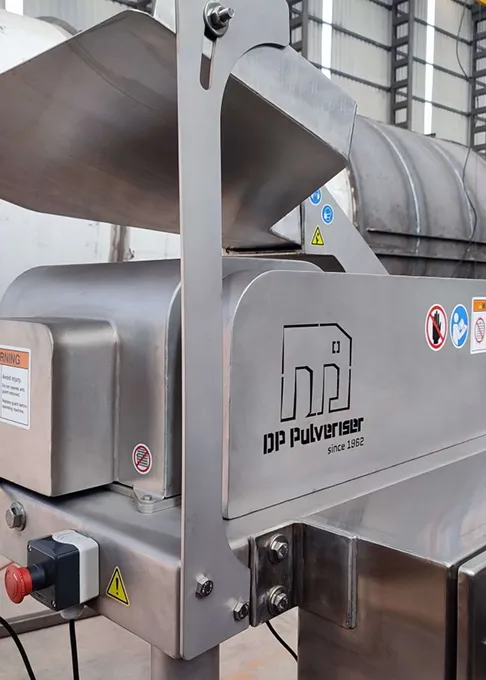
DP Pulveriser combines advanced particle processing expertise with modern engineering to deliver micronization solutions tailored to each customer’s specific application.
Our services include:
Whether you require micronized pharmaceutical ingredients, battery powders, specialty chemicals, food ingredients, or advanced materials, our engineering team can develop a solution that maximises product quality, efficiency, and profitability.
Not Sure Which System You Need? Speak With an Engineer
A practical guide to particle size reduction equipment, covering mill types, material behaviour, ...