DP Pulveriser UK - Innovating the Future of Size Reduction
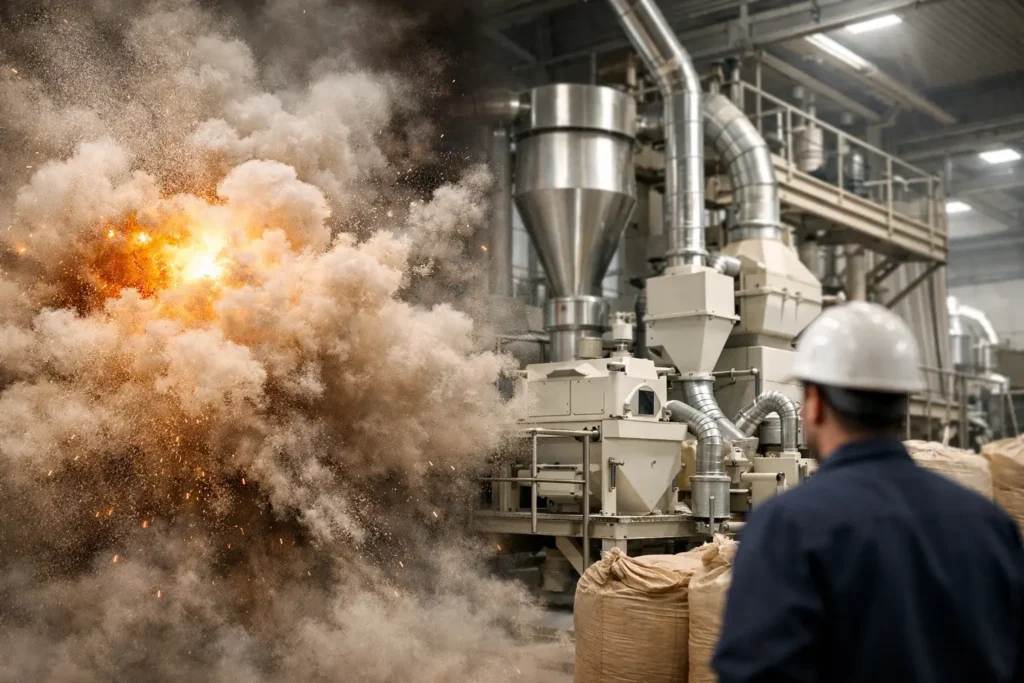
A fine powder that performs well in the finished product can create a significant process hazard long before it reaches the packing line. Preventing dust explosions in milling means controlling the conditions that allow a combustible dust cloud to ignite and propagate through equipment, ductwork, filters and connected process areas. It is not achieved by fitting one safety device to a mill. It requires the milling system, powder handling equipment, extraction arrangement and operating discipline to work as one engineered line.
For manufacturers processing food ingredients, chemicals, polymers, minerals, pigments, agricultural products or battery materials, the risk profile depends on the material and the application. A system suitable for a relatively coarse, low-dust mineral may be inappropriate for a fine organic powder with low minimum ignition energy. The correct approach begins with material data and ends with a verified, maintainable installation.
Why milling creates a dust explosion risk
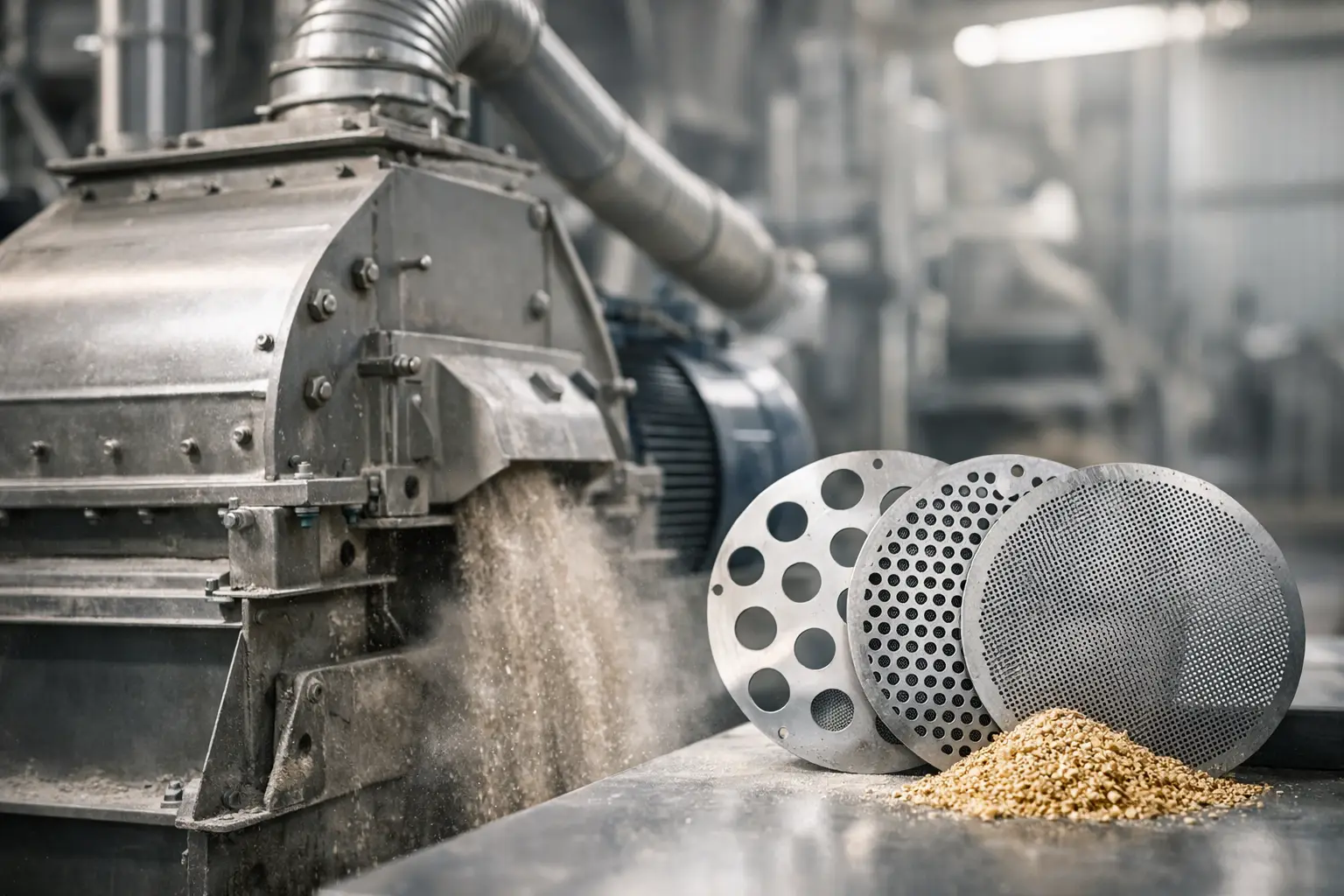
Size reduction increases surface area. As particle size falls, material can become easier to disperse in air and, for combustible materials, potentially more reactive. High-speed impact, pin, turbo and air classifier mills can generate fine fractions, while pneumatic conveying, bag tipping, screening, filling and filter cleaning can create airborne dust clouds elsewhere in the process.
An explosion requires combustible dust, oxygen, dispersion and an ignition source. In enclosed equipment, confinement adds the potential for damaging pressure development. Milling plants can bring all of these conditions together: powder is introduced, processed, conveyed, separated and collected in a sequence of enclosed but interconnected vessels.
The practical concern is not only the primary event. A localised ignition in a filter or receiver can transmit flame and pressure through connected ducting. Deposited dust can also be disturbed by the pressure wave, creating a secondary explosion that is often more severe than the initial incident. Good engineering therefore considers the full powder path, not the mill in isolation.
Start with material characterisation
No meaningful explosion protection strategy should rely on an assumption that a powder is non-hazardous. Particle size, moisture content, temperature, processing history and contamination can all affect dust behaviour. A material that is benign in its incoming condition may behave differently after drying, fine milling or classification.
A suitable dust hazard assessment should establish relevant explosibility and ignition characteristics for the actual material state expected in production. Depending on the assessment, this may include the dust explosion class, maximum explosion pressure, maximum rate of pressure rise, minimum ignition energy, minimum ignition temperature and limiting oxygen concentration. Test methods and data interpretation should be selected by competent specialists.
This data informs equipment selection. It helps determine whether explosion venting is feasible, whether flameless venting is appropriate for an indoor installation, whether suppression or containment is required, and where explosion isolation must be installed. It also supports the hazardous-area classification required under UK dangerous substances controls and the equipment requirements that follow.
Material testing should be revisited when the formulation, source, particle size target or process route changes. A new grade with higher oil content, a finer classifier cut point or a lower moisture specification can alter the basis on which the original system was designed.
Preventing dust explosions in milling through design
The strongest protection is to prevent a combustible dust cloud and a credible ignition source from coinciding. In practice, this means designing for dust-tight processing, controlled pressure, reliable extraction and minimal powder accumulation.
Contain and capture dust at source
Mills, feeders, rotary valves, transfer points and collection bins should be selected and installed to limit leakage under real operating conditions. Seal design, gasket condition, access-door closure and pressure balance matter as much as nominal machine capacity. A poorly balanced extraction system can pull dust from openings, while excessive negative pressure can disrupt feeding and increase air entrainment.
Local exhaust ventilation should capture dust where it is generated, rather than attempting to clean a whole production room after dispersion has occurred. The filter system needs sufficient capacity for the required air volume and pressure drop, but it must also be treated as a high-risk component in its own right. Pulse-jet cleaning, hopper discharge reliability and filter media selection all affect the potential for dust accumulation and ignition.
Where practical, minimise unnecessary transitions and dead legs in ducts and process vessels. Smooth internal surfaces, suitable duct velocities and accessible inspection points make it easier to maintain predictable powder flow and reduce settled deposits.
Eliminate credible ignition sources
Mechanical friction, overheated bearings, tramp metal, static discharge, hot surfaces and electrical faults are common ignition concerns. The appropriate controls depend on the mill type and material. A hammer mill processing difficult feedstock may need different foreign-body protection from a jet mill handling a high-value pharmaceutical intermediate.
Effective arrangements often combine upstream magnets or metal detection, bearing temperature monitoring, vibration monitoring, controlled mill speed and carefully defined maintenance tolerances. Product build-up can create rubbing or block airflow, so cleaning intervals are part of ignition control rather than a housekeeping afterthought.
Static electricity requires particular attention with dry, fine and low-conductivity powders. Bonding and earthing arrangements should cover the mill, ductwork, receivers, flexible connections and ancillary equipment. The continuity of these paths must be inspected and tested, especially after modifications. Non-conductive hoses, liners and temporary containers should be assessed as part of the complete process, not treated as minor accessories.
Control the consequences when prevention is not enough
Even a well-designed system may require explosion protection where combustible dust is present. The available methods include explosion venting, flameless venting, explosion suppression, pressure-resistant containment and explosion isolation. None should be selected independently of the others.
For example, a vented dust collector may relieve pressure safely, but the flame discharge zone must be acceptable for the building layout and adjacent personnel routes. Flameless venting can be useful indoors but introduces inspection and maintenance requirements. Suppression can suit installations where external venting is impractical, but it relies on correctly maintained detection and extinguishing equipment.
Isolation is essential where an explosion could propagate to connected equipment. This may involve fast-acting valves, chemical barriers, explosion diverters or suitably designed rotary valves, depending on the process conditions. Duct length, direction, conveyed product, pressure regime and response time all affect what will work. A component that is suitable on a drawing may not provide effective isolation in the installed configuration.
Integrate safety with milling performance
Safety measures should not be treated as an obstacle to throughput or product quality. A properly engineered milling line can improve both. Stable feeding reduces surges and dust release. Controlled airflows support classification efficiency. Reliable discharge from the mill and collector reduces product retention, changeover time and the risk of cross-contamination.
However, there are trade-offs. Increasing extraction airflow may improve capture at a tipping station but alter pneumatic transport conditions or affect a fine classifier cut. Higher throughput may increase dust loading at the filter and raise wear rates in the mill. Inert gas processing can reduce oxygen availability for certain materials, but it adds complexity around gas control, containment, monitoring and operator safety.
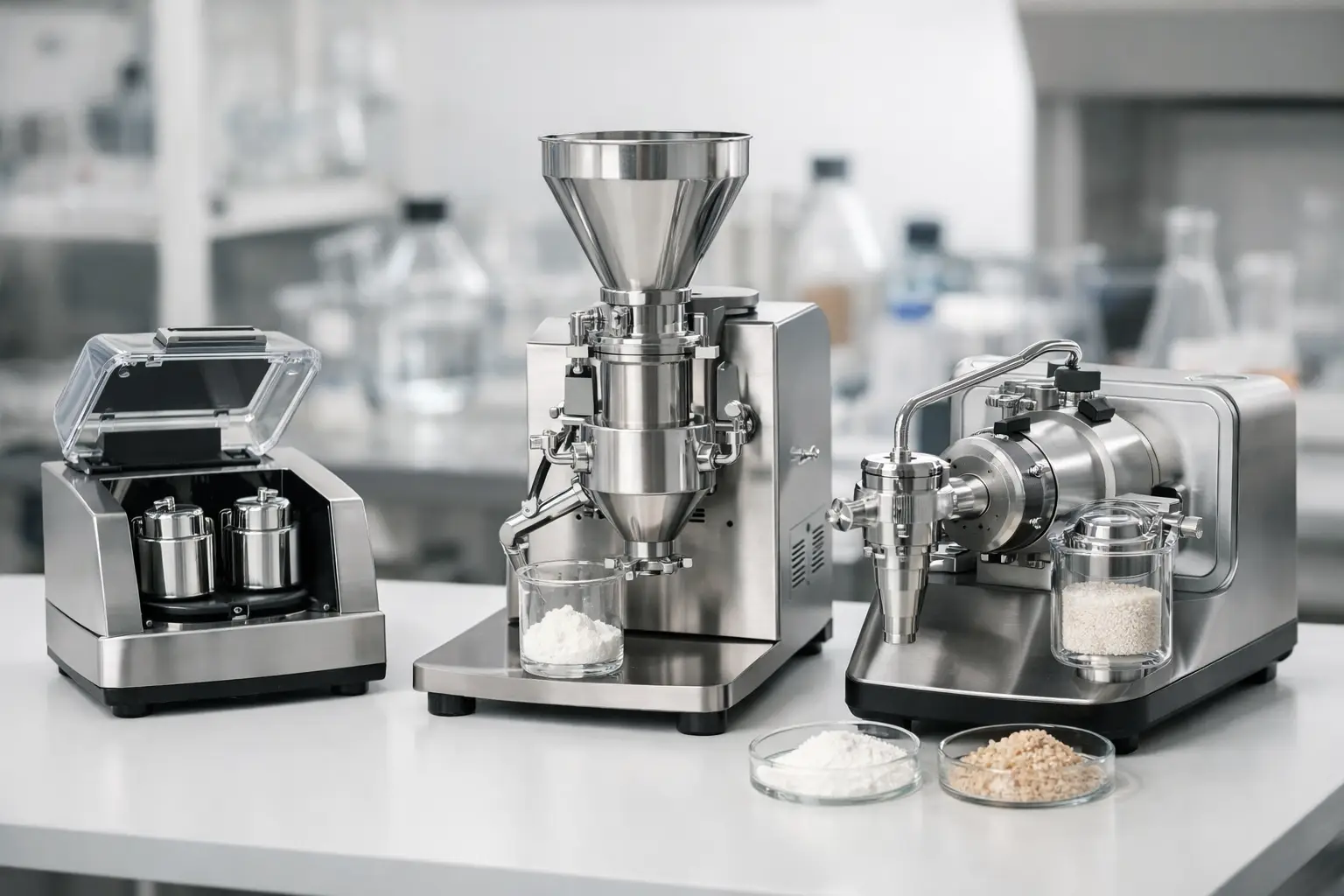
The right solution is therefore application-specific. Process trials at laboratory or pilot scale can establish the relationship between feed rate, rotor speed, air volume, particle size distribution, temperature and dust generation before a full production system is specified. This is particularly valuable when scaling a new formulation or moving from batch development to continuous manufacture.
Operational controls keep the design effective
An engineered system only remains safe when it is operated within its design basis. Operators should understand the purpose of extraction, interlocks, pressure relief devices and alarms, not simply the start-up sequence. If a filter differential-pressure alarm is routinely bypassed to maintain output, the plant is operating without one of its intended safeguards.
A practical inspection and preventive maintenance plan should cover dust leakage, seal integrity, earthing continuity, bearing condition, filter performance, explosion protection components and housekeeping standards. Areas above equipment, cable trays and structural ledges deserve attention because they can collect fine dust without being visible from floor level.
Management of change is equally important. Replacing a conductive flexible connection with a different material, changing the dust collector location, modifying a duct route or introducing a new product grade can invalidate assumptions within the hazard assessment. Changes should be reviewed by competent process and safety personnel before implementation.
Build the safety case around the whole line
Milling safety is strongest when process engineering and explosion protection are developed together. DP Pulveriser UK approaches powder processing as an integrated system, considering the mill, classification, conveying, collection and controls required to achieve precise particle size reduction without compromising safe operation.
For a new line or an upgrade, begin with representative material data, a clear throughput and particle-size specification, and an honest review of how the plant is actually cleaned, maintained and changed over. The most effective safety solution is usually the one that fits the process well enough for people to use and maintain it correctly, shift after shift.