DP Pulveriser UK - Innovating the Future of Size Reduction
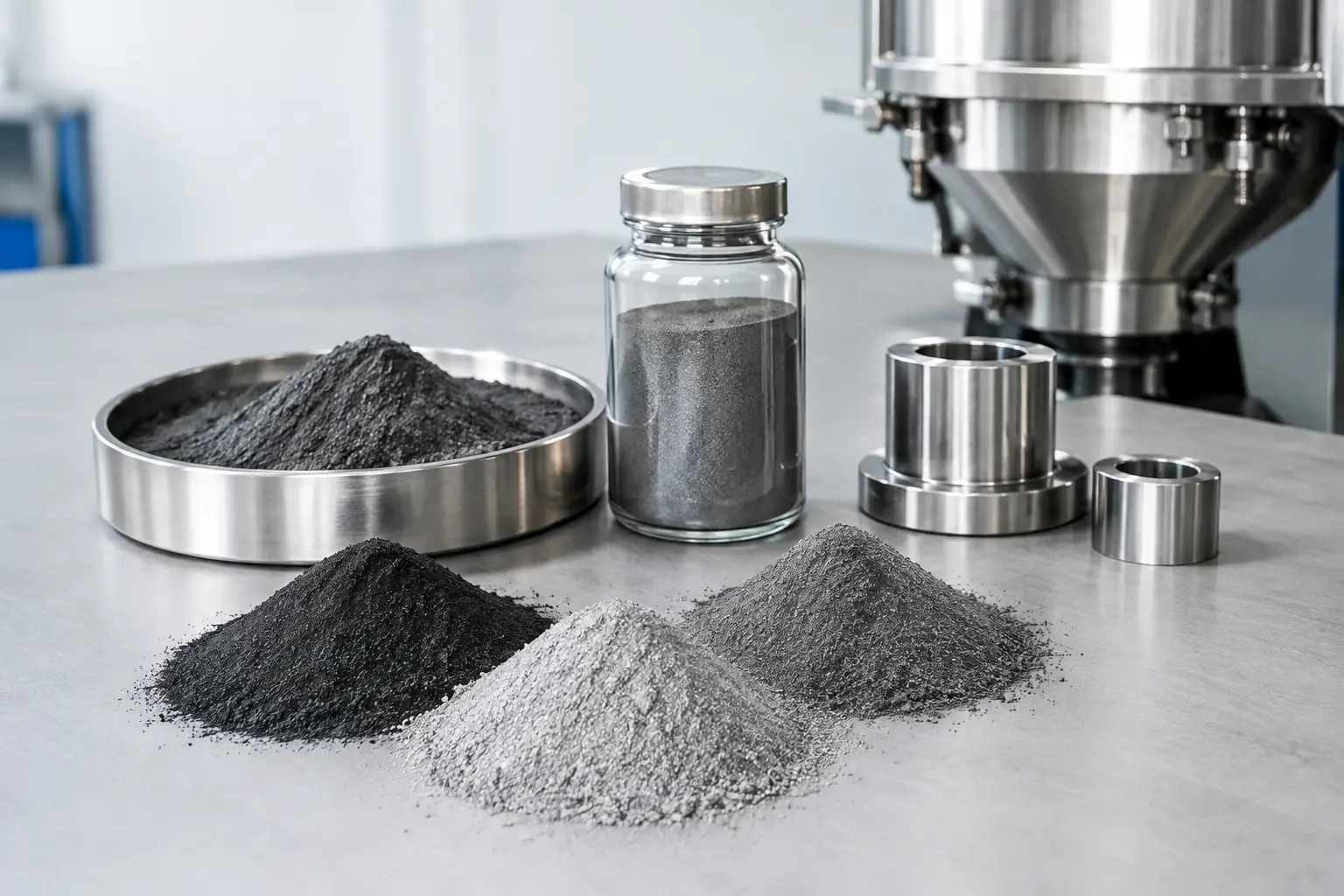
A battery material grinding example is rarely just a question of reducing a coarse powder to a target micron size. In anode and cathode production, the milling stage can influence electrode density, slurry behaviour, coating quality, cycle life and yield. A powder that meets a headline size specification but carries excessive fines, contamination or moisture can create expensive problems further down the line.
Consider a manufacturer preparing lithium iron phosphate (LFP) cathode powder for electrode manufacture. The received material has a broad particle size distribution, including coarse agglomerates that compromise dispersion. The production objective is to deagglomerate and control the powder before blending with conductive carbon and binder, while preserving chemistry, limiting metallic wear and maintaining a repeatable product from shift to shift.
This is a practical processing problem, not simply a mill selection exercise.
Battery Material Grinding Example: LFP Cathode Powder
In this example, LFP powder enters the process with a D90 of approximately 35-45 microns and visible soft agglomerates. The required output is a consistent, free-flowing powder with a controlled top size, limited oversize and a particle size distribution suited to stable slurry preparation. The final target depends on the electrode design, but the critical requirement is consistency rather than chasing the smallest possible particle size.
An air classifier mill is often a strong starting point for this duty. The integrated classifier allows the process engineer to control the top cut while returning oversize material to the grinding zone. This avoids relying on a simple open-loop mill, where dwell time and feed variability can produce a wide distribution and unnecessary ultrafines.
The material is metered from a sealed feed hopper through a controlled dosing system. Conditioned process air carries the powder through the mill and classifier, while a downstream filter receiver separates and contains the finished product. The system should operate under controlled conditions appropriate to the material and the site risk assessment. For moisture-sensitive battery powders, dry air or inert gas handling may be required.
The result is not defined by one number alone. Engineers should review D10, D50 and D90 values, the proportion of sub-micron or very fine particles, bulk density, flowability and chemical cleanliness. A narrow, repeatable distribution usually provides more value than an aggressive milling setting that produces a marginally lower D50 but increases fines and energy consumption.
Why deagglomeration must be controlled
LFP can form soft agglomerates during synthesis, transport and storage. These agglomerates may disperse poorly in the electrode slurry, creating local variations in conductive additive distribution and coating behaviour. Controlled impact and attrition break down the agglomerates, but excessive grinding can alter the powder morphology and increase specific surface area.
More surface area is not automatically better. It can increase binder demand, raise slurry viscosity and make solvent removal more difficult during coating and drying. The best operating point is therefore application-specific: sufficient energy to remove harmful agglomerates and oversize particles, but no more than the formulation requires.
Equipment Selection Depends on Material Behaviour
A battery powder processing line may use different milling technologies at different points in the process. The correct choice depends on hardness, feed size, abrasiveness, heat sensitivity, target particle size, contamination limits and required throughput.
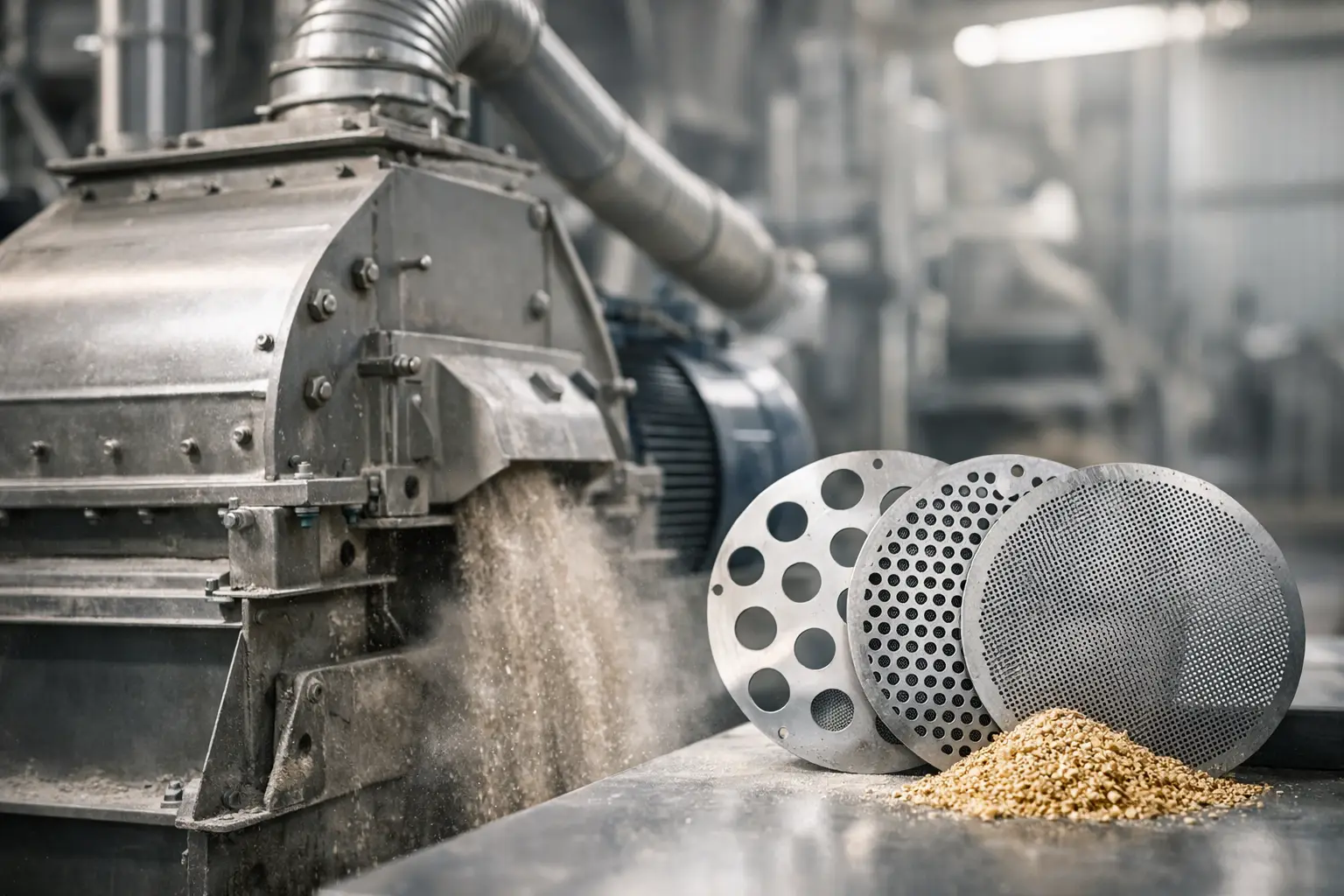
For relatively coarse feed or pre-sizing duties, a universal mill, hammer mill or pin mill may provide efficient reduction. These machines can be effective where the material is not highly heat-sensitive and the final particle size requirement is moderate. They are generally suited to applications where high throughput and straightforward maintenance are priorities.
Where tight particle size control is required, an air classifier mill provides a more selective approach. Classifier speed, airflow, rotor configuration and feed rate can be adjusted to establish a controlled cut point. This makes the technology particularly relevant for cathode active materials, conductive additives and precursor powders where a broad distribution can affect downstream uniformity.
Jet milling is often considered for fine, high-value battery materials where contamination control and low mechanical heat input are decisive. The absence of conventional high-speed grinding media can reduce wear-related contamination, although compressed gas demand must be evaluated carefully. It is not automatically the lowest-cost route for every application, especially at large production volumes.
Cryogenic milling may be appropriate for polymeric components, separators or specialist composite materials that soften, smear or degrade under ambient milling conditions. It introduces additional complexity through cooling media and thermal management, so it should be selected where material behaviour justifies the investment.
Contamination Is a Process Design Issue
Battery materials are particularly sensitive to contamination. Trace metallic particles from worn mill components, poorly controlled transfers or unsuitable ancillary equipment can affect electrochemical performance and create quality risks. Specifying a milling chamber is only one part of the solution.
The full material path requires attention: feed screws, rotary valves, pipework, bends, classifiers, filters and discharge equipment all need to be compatible with the product and cleanliness standard. Wear-resistant linings, ceramic contact parts or carefully selected alloys may be necessary depending on the chemistry and contamination allowance.
Containment is equally important. Fine battery powders can be dusty, difficult to recover and potentially hazardous. A properly engineered system incorporates sealed transfers, suitable dust collection, pressure control and safe product discharge. For reactive or moisture-sensitive powders, inerting and oxygen monitoring may form part of the overall process design.
From Laboratory Trial to Production Line
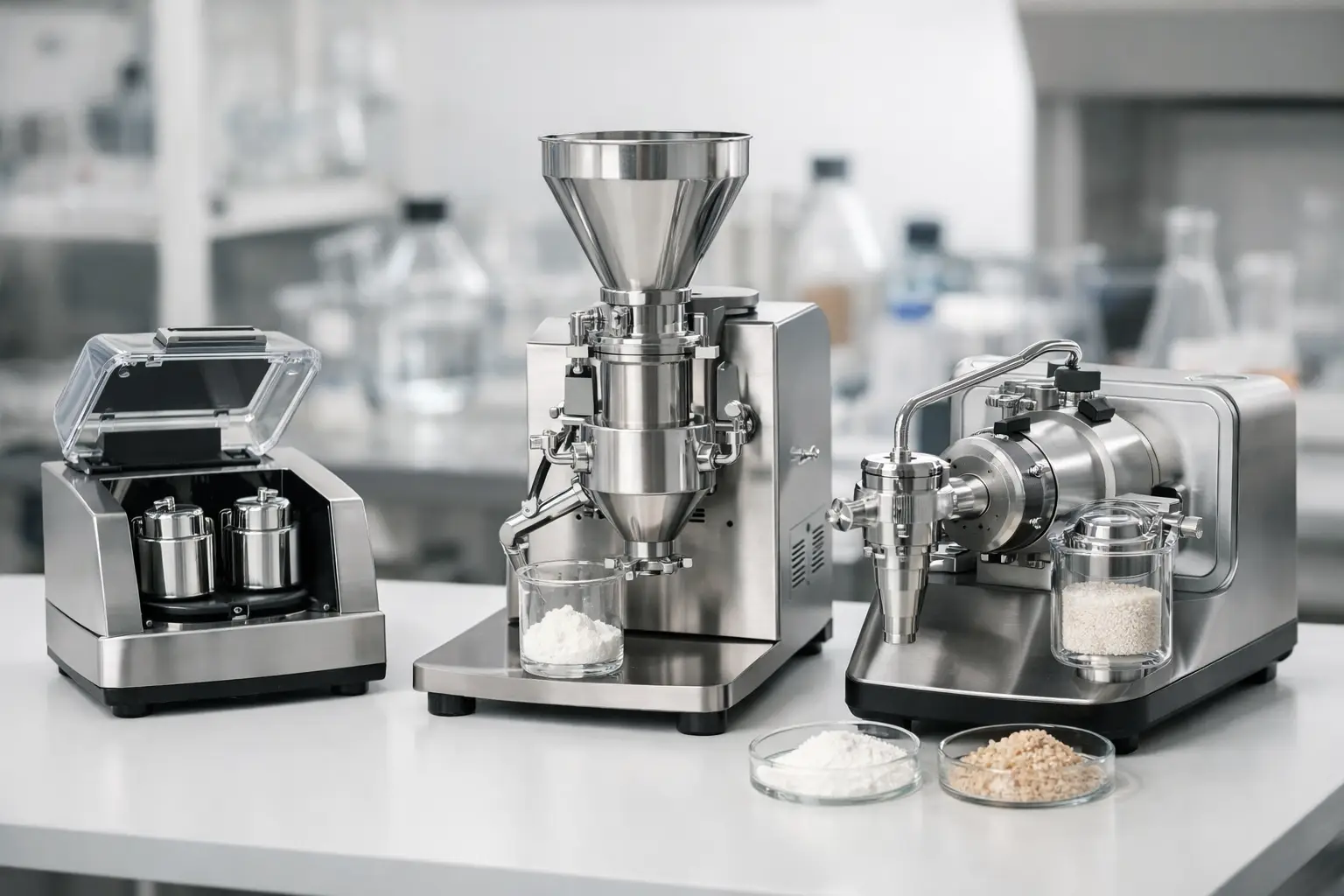
Scale-up cannot be based on mill diameter alone. A laboratory result may demonstrate that a material can reach the desired particle size, but commercial performance depends on residence time, airflow, classifier geometry, feed consistency, heat generation and powder handling behaviour at sustained throughput.
A disciplined development programme begins with representative material and a clear product specification. The trial should measure not only particle size distribution but also yield, temperature rise, bulk density, flow, contamination and the ease of cleaning between campaigns. If the powder is heading to slurry production, testing its dispersion and rheology provides a far better indication of success than laser diffraction results alone.
Pilot-scale trials then establish the operating window. Engineers can assess how classifier speed, mill speed, air volume and feed rate interact. This identifies the point at which capacity increases begin to widen the distribution or generate too many fines. It also reveals whether the real bottleneck sits upstream or downstream, such as inconsistent feeding, inadequate filter area or poor discharge from the product receiver.
At full scale, automation should maintain the validated operating window. Loss-in-weight feeding, monitored airflow, controlled classifier speed and batch traceability help deliver repeatable results. The objective is not merely to install a larger machine. It is to reproduce the particle engineering outcome reliably across every production run.
Balancing Throughput, Energy and Product Quality
There is always a trade-off between throughput and classification sharpness. Raising feed rate may improve tonnes per hour, but it can overload the grinding zone, broaden the particle size distribution and increase recirculation. Running too conservatively may achieve excellent control but leave expensive capacity underused.
Energy use should be assessed per tonne of acceptable product, not simply per hour of motor operation. A process that appears efficient at the mill may be less efficient overall if it creates off-specification material, burdens dust collection or requires rework. Likewise, a more sophisticated milling system can deliver a lower total cost of ownership when it reduces waste, improves electrode consistency and shortens changeover time.
Maintenance planning matters. Abrasive powders can wear internal components gradually, shifting grinding performance before a visible failure occurs. Scheduled inspection of wear parts, classifier components and filters protects consistency and reduces unplanned downtime. For production environments operating multiple battery chemistries, cleanability and segregation must be designed into the equipment layout from the outset.
Engineering the Complete Powder Line
The strongest battery material grinding example is one that considers the complete line: receiving, storage, feeding, milling, classification, collection, conveying and final packing. Each stage can affect the final powder. A well-controlled mill cannot compensate for moisture pickup in storage, pulsating feed rates or segregation during conveying.
DP Pulveriser UK approaches these applications as integrated powder processing projects, combining mill selection with classification, containment and material handling engineering. This allows laboratory findings to be translated into production equipment with a clear focus on particle control, operational reliability and scalable throughput.
For battery manufacturers, the useful question is not simply, “Which mill can make this powder finer?” It is, “Which controlled process will produce the right powder, at the required rate, with the cleanliness and repeatability our electrode process demands?” Answering that question early creates a firmer foundation for scale-up and for the cells that follow.