DP Pulveriser UK - Innovating the Future of Size Reduction
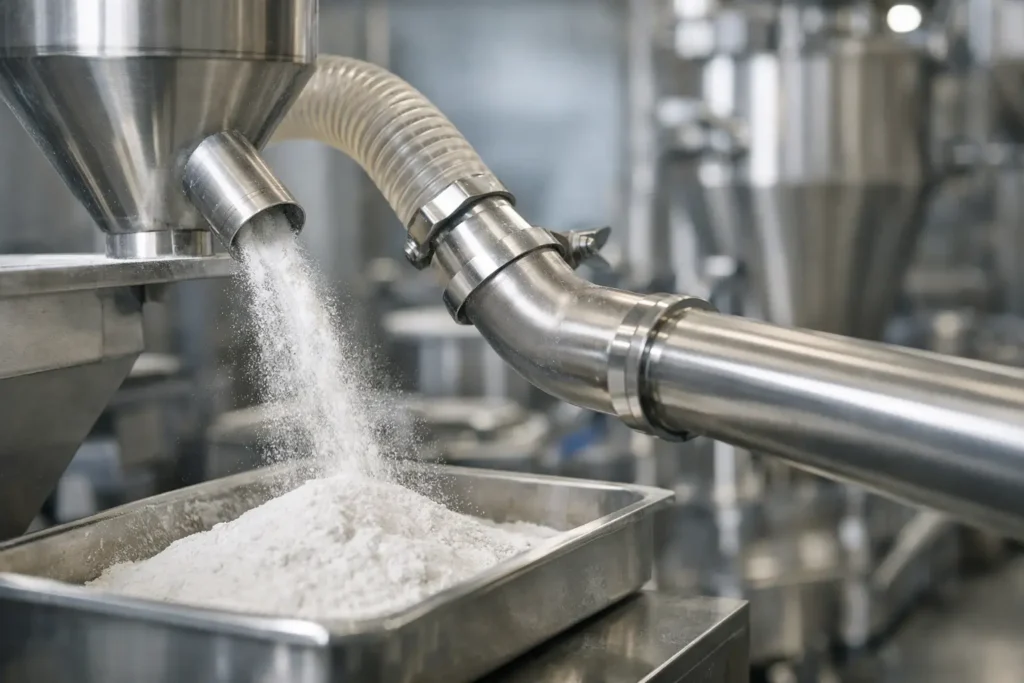
Fine powder conveying problems rarely begin at the conveyor. They begin when a material that performed acceptably in a laboratory trial is asked to move continuously through a production line, across changes in humidity, batch condition, throughput and pressure. Knowing how to convey fine powders therefore means designing around the material’s actual behaviour, rather than selecting a transport method on capacity alone.
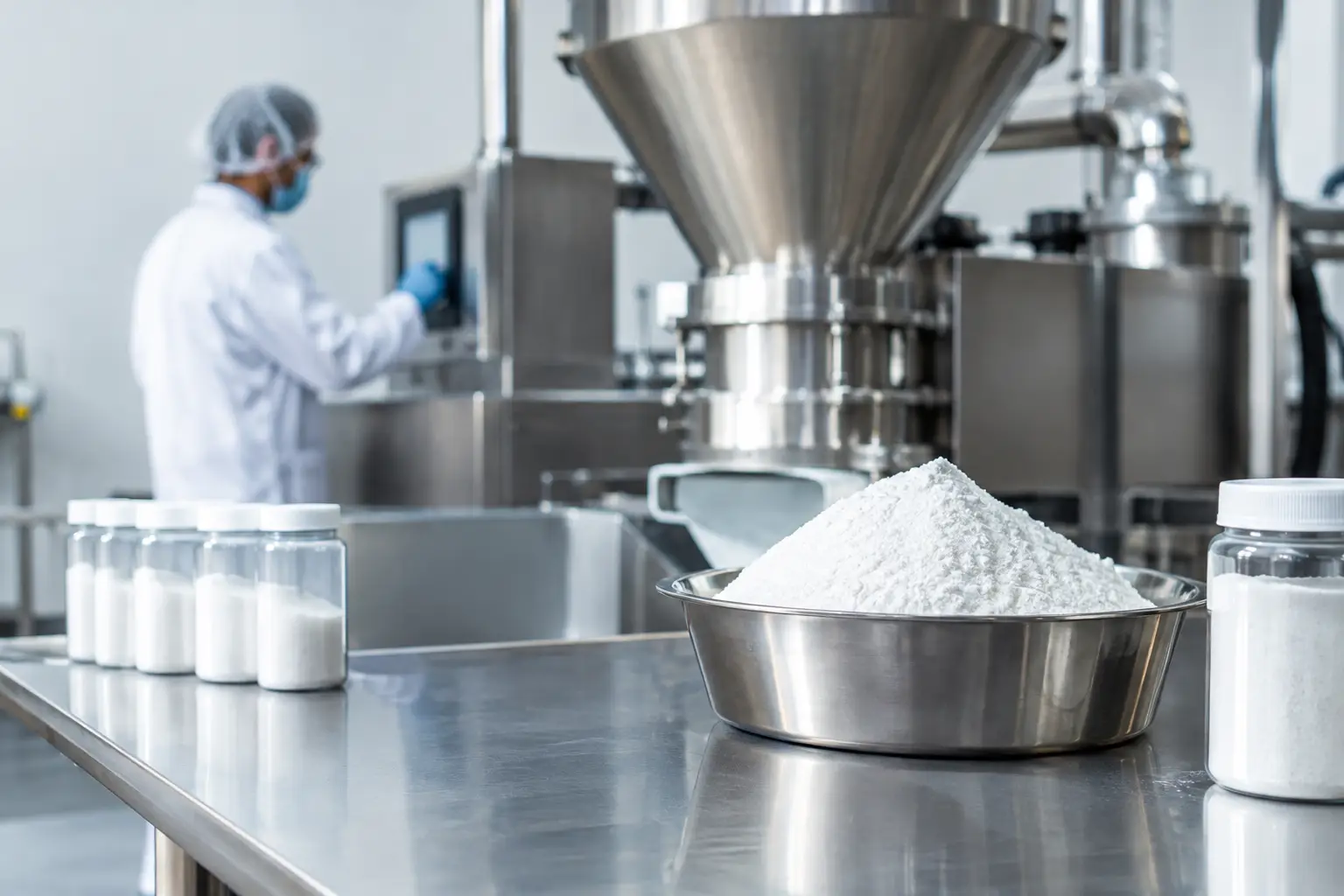
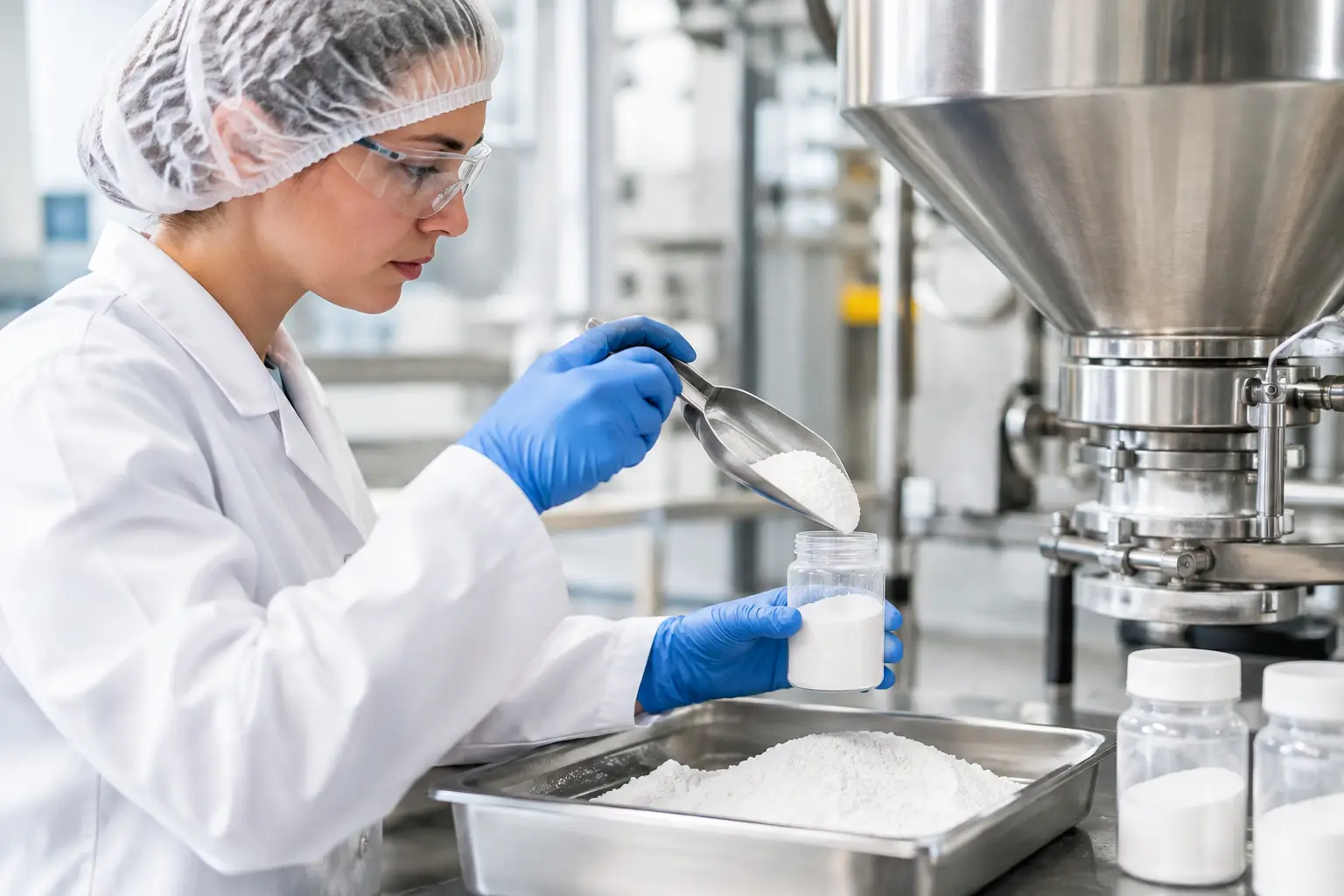
For pharmaceutical actives, food ingredients, pigments, battery materials, minerals and speciality chemicals, the objective is to transfer product at a controlled rate while preserving particle size distribution, preventing contamination and keeping operators out of the dust cloud. The right solution may be pneumatic, vacuum or mechanical. In many cases, it is a combination of conveying, conditioning, dosing and dust collection engineered as one system.
Start with the powder, not the conveying equipment
A fine powder can appear free-flowing in a sample container and still bridge in a hopper, coat a pipeline or compact at a rotary valve. Particle size is only one variable. Bulk density, particle shape, moisture content, cohesiveness, electrostatic charge, abrasiveness and sensitivity to shear all influence how material travels.
Very fine particles have a large surface area relative to their mass. This can increase inter-particle attraction, make the powder more susceptible to moisture and generate substantial dust during transfer. A powder below roughly 100 microns may behave very differently from a coarser grade of the same material, particularly where its particle size distribution includes a high proportion of ultrafines.
Before specifying a system, establish the operating envelope. This should include the required throughput, conveying distance and lift, batch or continuous duty, temperature limits, allowable attrition, cleaning requirements and hazardous-area classification. Testing should also examine flow function, bulk density under consolidation, permeability and moisture response. These data identify whether the real constraint is poor hopper discharge, line blockage, segregation, dust containment or product degradation.
How to convey fine powders: select the right method
No single conveying technology is correct for every powder. The selection depends on product behaviour and the wider process requirement.
Pneumatic conveying for enclosed transfer
Pneumatic systems are often selected where a closed, flexible route is needed between mills, classifiers, mixers, storage vessels, packing stations and process reactors. They are well suited to fine powders because the pipework is enclosed, readily routed around existing plant and capable of maintaining hygienic or contained transfer.
Dilute-phase conveying uses a relatively high air velocity to suspend product in the pipeline. It can offer straightforward conveying over longer distances, but high velocity may increase wear, energy demand and particle attrition. It is generally better suited to powders that tolerate impact and do not form persistent deposits.
Dense-phase conveying moves material at lower air velocity and higher solids loading, often in discrete plugs or dunes. For fragile, abrasive or high-value powders, this can reduce degradation and pipe wear. However, dense-phase operation requires disciplined engineering. Inadequate pressure control, unsuitable line geometry or inconsistent feed can cause unstable flow and blockages. It is not simply a lower-velocity version of dilute-phase transport.
Vacuum conveying is particularly valuable for collecting powder from multiple pick-up points or feeding enclosed equipment. Because the system operates below atmospheric pressure, minor leaks tend to draw air inward rather than release product outward. This supports dust control and operator protection, although practical convey distances and capacities can be lower than pressure systems depending on the material.
Mechanical conveying where air is not the answer
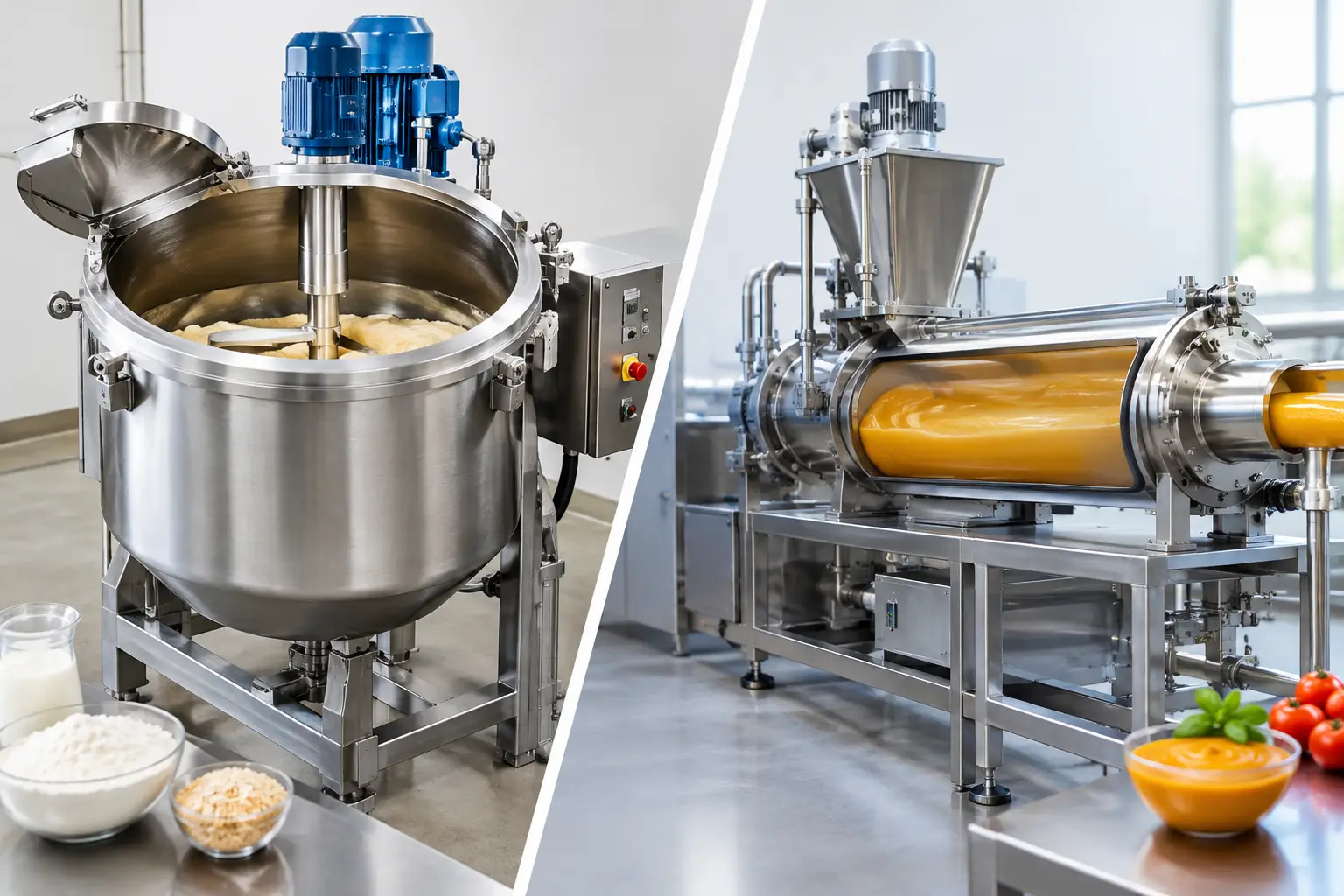
Mechanical conveyors can be the more efficient option for short, direct routes, especially where high throughput is required and the powder is not excessively cohesive. Screw conveyors, flexible screws, tubular drag conveyors and belt-based systems each have a place.
A screw conveyor provides positive, predictable movement and can also meter product. Yet fine powders may pack in the trough, smear against surfaces or suffer heat build-up at high speeds. Shaft seals and cleanability require attention, particularly in food, pharmaceutical and nutraceutical applications.
Tubular drag conveyors operate at low speed and can move product gently through enclosed circuits. They can be effective for fragile materials and multiple discharge points, but disc selection, chain tension, clean-out arrangements and wear allowance must be matched to the powder. Mechanical equipment should not be chosen solely because it appears simpler. The interface with the hopper and the next processing stage remains decisive.
Control feeding and airflow at the entry point
Most unstable conveying systems are fed inconsistently. A pipeline cannot compensate for a hopper that rat-holes, bridges or discharges in surges. Fine powder handling begins with reliable mass flow from the vessel above it.
Hopper geometry, wall finish, outlet size and discharge aid selection should be based on measured flow properties. Agitators, vibrators, air pads and fluidising devices can improve discharge, but each has a trade-off. Excessive vibration can compact certain powders, while uncontrolled aeration can produce flooding, erratic feed and dust loading downstream.
The feeder must create a controlled seal or dosing point between the vessel and conveyor. Rotary valves are widely used, but their performance depends on pocket fill, clearance, wear and pressure differential. A poorly selected rotary valve can leak air into a pneumatic line, reduce conveying efficiency and damage the powder. For difficult materials, a screw feeder, double-flap valve or specialised pressure vessel arrangement may provide better control.
Air supply quality matters just as much. Conveying air should be dry, filtered and sized for stable operation through the full duty range. Humid air can cause hygroscopic material to adhere to line walls. Oil contamination is unacceptable in many high-purity applications. Airflow instrumentation, pressure monitoring and controlled start-up sequences give operators early warning of conditions that lead to a blockage.
Design the route to protect product and uptime
Every bend, vertical lift and transition changes the conditions inside a conveying line. Fine powders are especially sensitive to dead zones, abrupt expansions and poorly designed elbows where material can settle or accumulate.
Keep pipe runs as direct as the plant layout allows, using long-radius bends where attrition and wear are concerns. For abrasive products, bend materials and replaceable wear sections should be selected as part of the lifecycle-cost calculation. For cohesive products, minimise horizontal sections that can retain material after a shutdown.
Pipeline diameter is a balancing exercise. An oversized line may allow velocity to fall below that required for stable transport. An undersized line increases pressure loss, wear and energy consumption. The correct diameter is determined by air volume, pressure, solids loading, powder properties and route length, not by a generic capacity table.
Where segregation is a risk, consider the entire transfer path. Differences in particle size, density or shape can cause a blend to separate during feeding, transport or discharge. Lower velocity, reduced drop height and controlled receiving conditions may help, but the best answer depends on the product. A material that needs gentle conveying may still require sufficient motion to prevent fines accumulating in one area of the system.
Build containment, cleaning and safety into the system
Fine powder transfer is also a containment and housekeeping challenge. Dust extraction should capture displaced air at receiving vessels and transfer points without pulling excessive product from the process. Filters require appropriate media, cleaning method and area to maintain stable pressure conditions.
For combustible dusts, the conveying system must be assessed as part of the complete dust hazard strategy. This includes material explosibility data, ignition sources, earthing and bonding, explosion isolation, venting or suppression where required, and compliance with applicable UK regulations and site standards. A filter receiver, rotary valve and collection bin are not peripheral components. They can determine the safety performance of the whole installation.
In regulated production, cleanability may change the equipment choice. Product-contact materials, surface finish, gasket design, access points and validation requirements should be considered before manufacture. A system intended for rapid product changeover needs more than a clean-out port. It needs a route and receiver design that avoid product hold-up.
Use testing to reduce scale-up risk
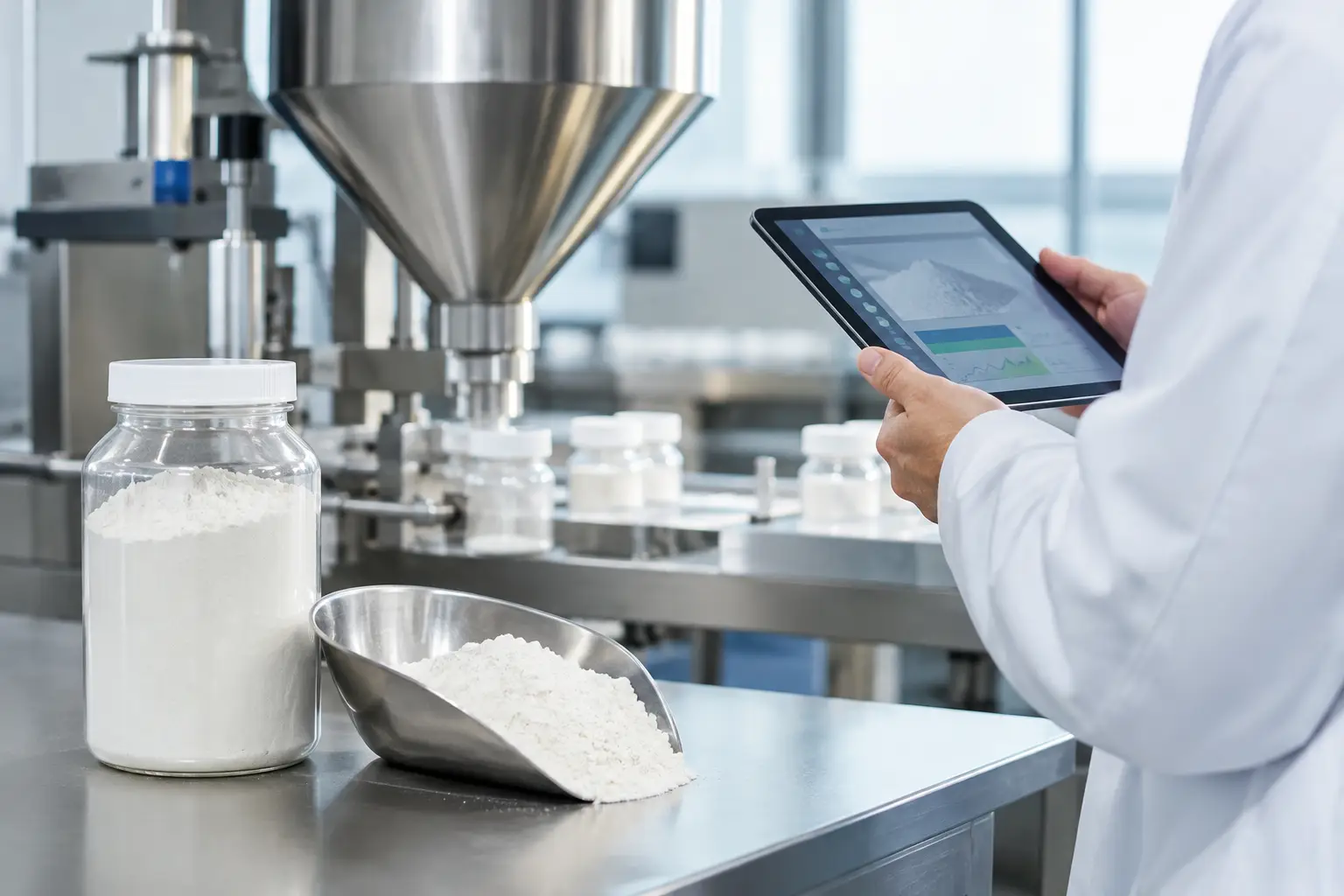
Pilot trials are valuable when dealing with a new powder, a tighter particle size specification or a major capacity increase. A practical test should reproduce the likely conveying distance, vertical lift, feed arrangement and receiving conditions where possible. It should measure throughput, air consumption, pressure profile, product temperature, attrition and residual material in the line.
This is particularly relevant when a milling or classification stage changes the proportion of fines. A powder processing line should be engineered as an integrated system: mill discharge, air classification, conveying, collection and downstream mixing or packing all affect final product consistency. DP Pulveriser UK applies this process-led approach when developing conveying systems alongside size-reduction and complete powder handling lines.
The most reliable fine powder conveyor is not necessarily the highest-capacity or lowest-cost unit in isolation. It is the system that matches the powder’s behaviour, gives operators controllable process conditions and continues to perform when production moves beyond ideal test conditions.