DP Pulveriser UK - Innovating the Future of Size Reduction

A jet mill is rarely selected because it is simply capable of producing a fine powder. It is selected when a production line needs tight particle size control without mechanical grinding media, and when product purity, heat sensitivity or contamination risk make conventional milling unsuitable. This jet mill machine review examines the factors that determine whether the technology is the right engineering choice for industrial powder processing.
What a Jet Mill Does Differently
Jet milling reduces particle size through high-velocity collisions between particles. Compressed gas, typically air or nitrogen, accelerates feed material within a grinding chamber. The resulting inter-particle impact breaks down the material, while an integrated classifier separates fines from oversized particles and returns the latter to the milling zone.
There are no conventional grinding tools in contact with the product. That is a material advantage for applications where metallic contamination, wear debris or elevated product temperatures would compromise quality. Pharmaceuticals, nutraceuticals, battery materials, speciality chemicals, pigments and high-value minerals are frequent candidates.
The absence of moving grinding media does not mean the process is simple. Jet mill performance depends on the relationship between gas pressure, nozzle configuration, classifier speed, feed rate, material hardness, moisture content and required particle size distribution. A well-engineered system turns these variables into a repeatable production process. A poorly specified system can consume excessive energy while producing an unnecessarily broad distribution or unstable throughput.
Jet Mill Machine Review: Performance Criteria That Matter
The first question for any jet mill machine review should be: what does the finished powder need to achieve? A stated average particle size alone is not enough. A product may require a narrow top-cut, controlled D10, D50 and D90 values, low levels of oversize, improved dispersion or a defined surface-area range. Each requirement has consequences for equipment selection and operating conditions.
Particle Size Distribution and Classification
The classifier is central to precision size reduction. Its function is to allow particles below the selected cut point to leave the mill while retaining coarser material for further milling. Variable classifier speed gives operators practical control over fineness, but increasing speed generally raises energy demand and can reduce throughput.
For this reason, the finest achievable result is not automatically the most economical result. If a coating formulation performs consistently at a slightly coarser distribution, specifying an ultra-fine grade may add operating cost without delivering a measurable commercial benefit. Process trials should establish the particle size range that supports real product performance, rather than pursuing the smallest possible micron value.
Throughput at Production Conditions
Published capacity figures should be treated as reference points, not procurement guarantees. Throughput changes significantly with material density, feed particle size, friability, moisture, target fineness and gas availability. A mineral that feeds freely at 500 microns behaves very differently from a cohesive organic powder with a tendency to agglomerate.
The useful capacity figure is the sustained output achieved at the required quality specification. It should account for start-up, material feed consistency, collection efficiency and cleaning intervals. In many projects, a mill that appears smaller on paper can provide better total output because its classifier, feeder and downstream collection system are correctly matched to the product.
Heat, Moisture and Product Integrity
Jet milling is often chosen for heat-sensitive materials because expanding gas can provide a cooling effect. However, temperature control remains application-specific. High gas compression, prolonged residence time and poor feed management can still affect sensitive products.
Materials with high moisture content, waxy characteristics or strong hygroscopic behaviour need particular attention. They may bridge in the feeder, coat internal surfaces or form agglomerates that reduce classification efficiency. Pre-drying, conditioned air, closed conveying and, where appropriate, cryogenic processing may be more effective than asking a jet mill alone to overcome difficult material behaviour.
Wear and Contamination Control
Although jet mills avoid conventional grinding media, wear is not eliminated. Abrasive feedstocks can affect nozzles, classifier components, liners, pipework and collection equipment. Construction materials should therefore be selected around product purity and wear resistance. Options may include stainless steel, hardened alloys, ceramic liners or specialised internal coatings.
The correct specification balances capital cost against replacement intervals, contamination limits and maintenance access. For high-purity battery, pharmaceutical or electronic materials, the cleanability of the whole powder path matters as much as the milling chamber itself.
The Compressed Gas Question
Compressed gas is usually the largest operating cost associated with jet milling. It deserves the same level of evaluation as the mill itself. Plants should assess compressor capacity, air quality, drying requirements, pressure stability and the cost of generating each cubic metre of gas.
Air is suitable for many products, but nitrogen may be necessary where oxidation, moisture exposure or dust explosion risk must be controlled. Nitrogen introduces additional cost and recovery considerations, yet it can be essential for reactive metals, certain chemical powders and materials requiring an inert environment.
Energy performance improves when the mill is sized for the actual duty, nozzle geometry is matched to the material, and feed control prevents the chamber from operating either starved or overloaded. A system also benefits from efficient cyclone and filter design, with minimal pressure losses through the downstream process line.
Integration Decides Whether the Mill Delivers
A jet mill should not be reviewed as an isolated machine. Feed preparation, dosing accuracy, gas supply, powder collection, containment, conveying and control architecture all influence the result. This is particularly relevant when scaling from laboratory development to pilot and commercial production.
A stable gravimetric feeder can improve consistency more than repeated adjustments to milling pressure. Likewise, an inadequately sized filter receiver can restrict production capacity even if the milling chamber itself has headroom. For hazardous, dusty or regulated materials, containment and cleaning validation may determine the preferred system layout from the outset.
A complete line may include raw material unloading, screening, feeding, jet milling, air classification, cyclone separation, dust filtration, metal detection, blending and final packing. The right scope depends on the production environment, but integrating the interfaces under one engineering responsibility reduces commissioning risk and simplifies performance accountability.
Where Jet Milling Is Not the Best Choice
Jet milling is highly capable, but it is not the default answer for every fine-powder application. It can be an inefficient choice when the target size is relatively coarse, when very high bulk throughput is the overriding requirement, or when the material is too soft, sticky or wet for stable pneumatic processing.
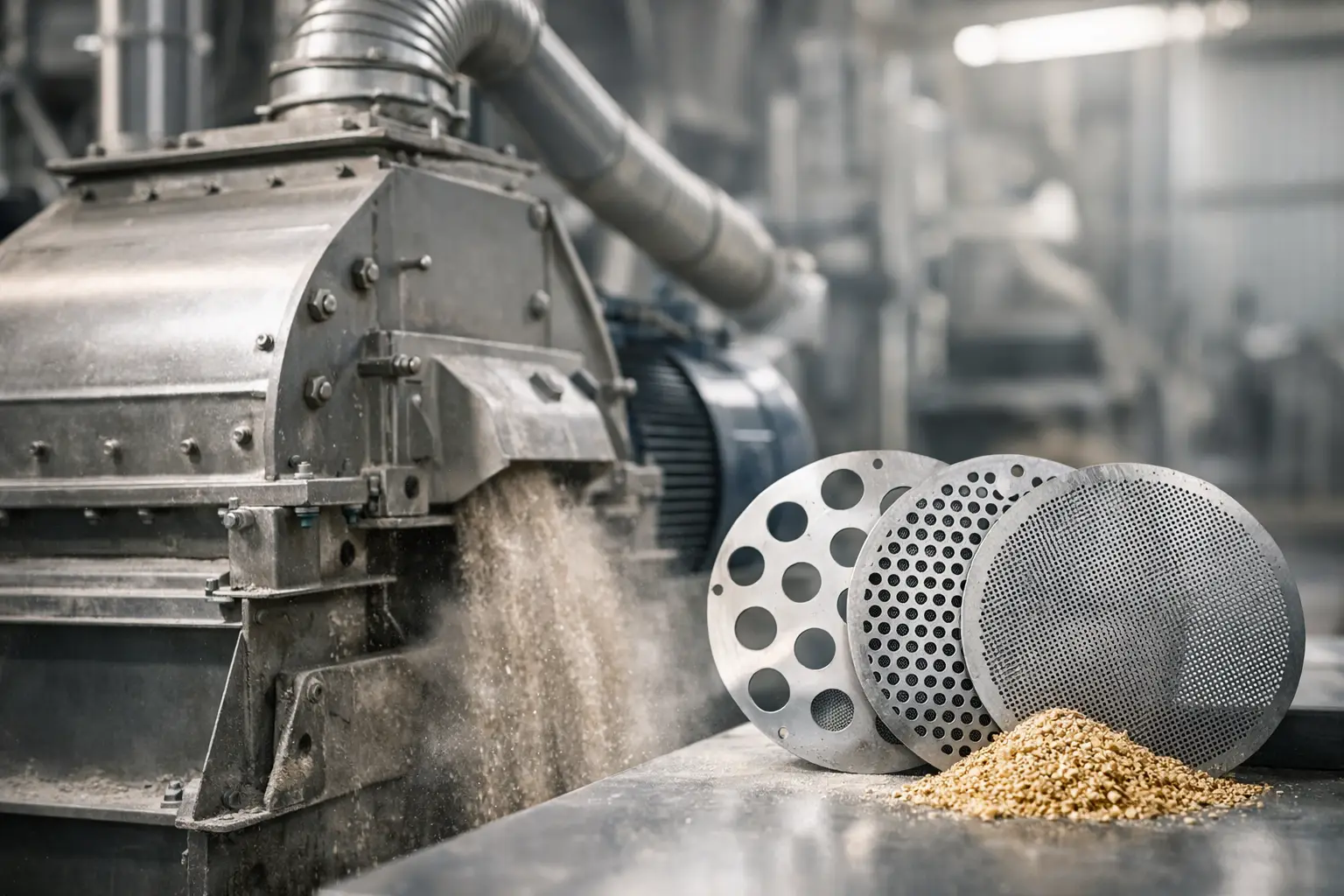
Pin mills, turbo mills, hammer mills, air classifier mills or cryogenic milling systems may provide a better fit depending on the product. A pin mill, for example, can offer cost-effective impact grinding for many dry materials. An air classifier mill combines mechanical size reduction with classification and may suit applications that do not require the extreme purity or ultra-fine capability of a jet mill.
The best selection follows product testing, not assumptions based on material category. Two grades of the same chemical can behave differently because of moisture, crystal structure, particle morphology or additive content.
How to Evaluate a Supplier Proposal
Procurement teams should request evidence that relates directly to their material and production target. This includes trial data, particle size analysis, expected throughput at the agreed specification, gas consumption, material-of-construction details and a clear description of the feed and collection system.
It is also sensible to establish the acceptance criteria before manufacture. Define the feed condition, target distribution, allowable oversize, product yield, run duration, clean-down expectations and utility conditions. This protects both the buyer and supplier from comparing a laboratory result with an undefined production duty.
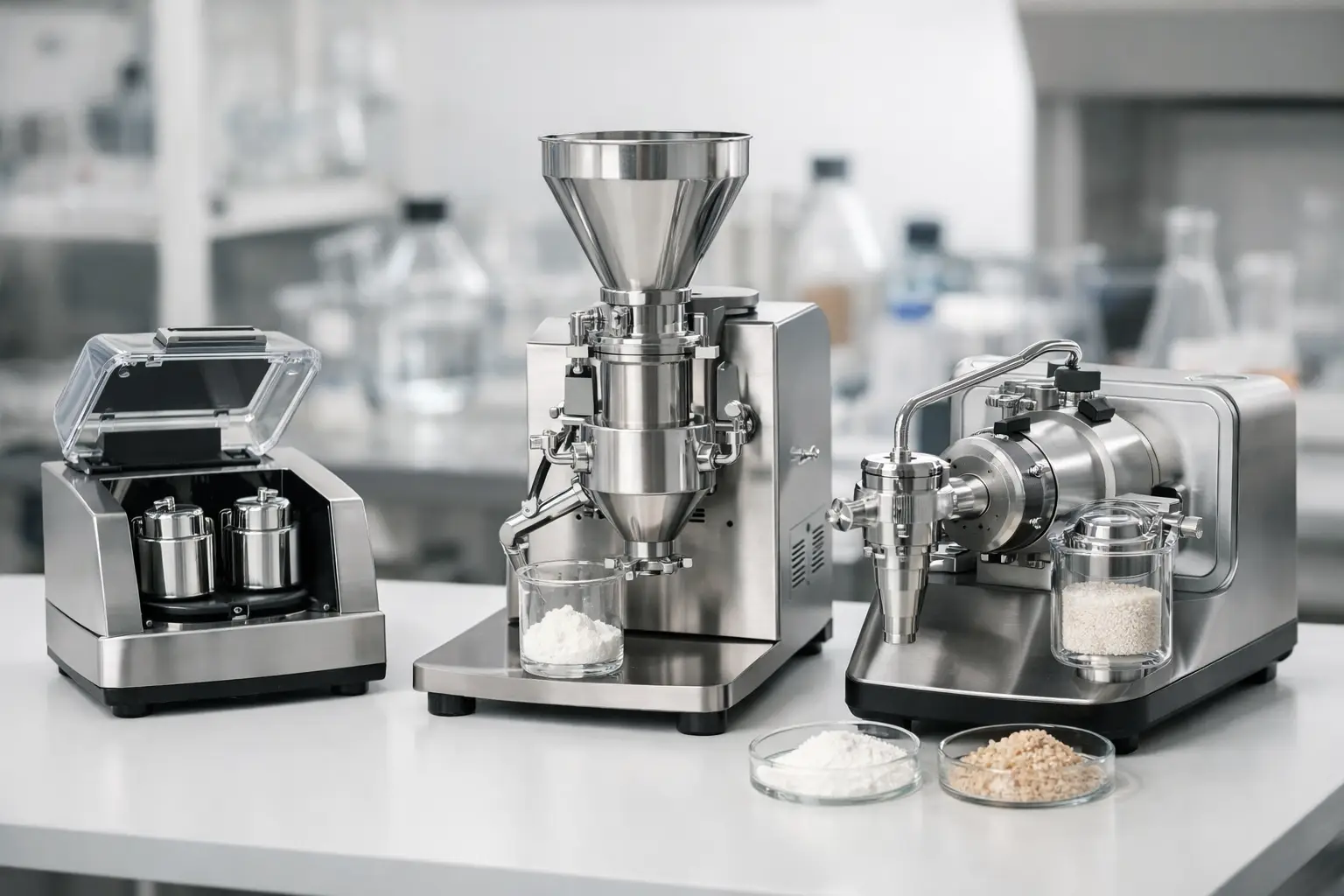
DP Pulveriser UK approaches jet mill projects as complete powder processing systems, combining application-specific engineering with equipment suitable for laboratory development, pilot work and full-scale manufacturing. That approach is especially valuable where particle size control must remain consistent as production volume increases.
A productive evaluation does not begin with the question, “Which jet mill is best?” It begins with a defined powder specification, realistic production duty and a clear view of the complete process around the mill. Once those conditions are known, the right machine becomes an engineering decision rather than a purchasing gamble.