DP Pulveriser UK - Innovating the Future of Size Reduction
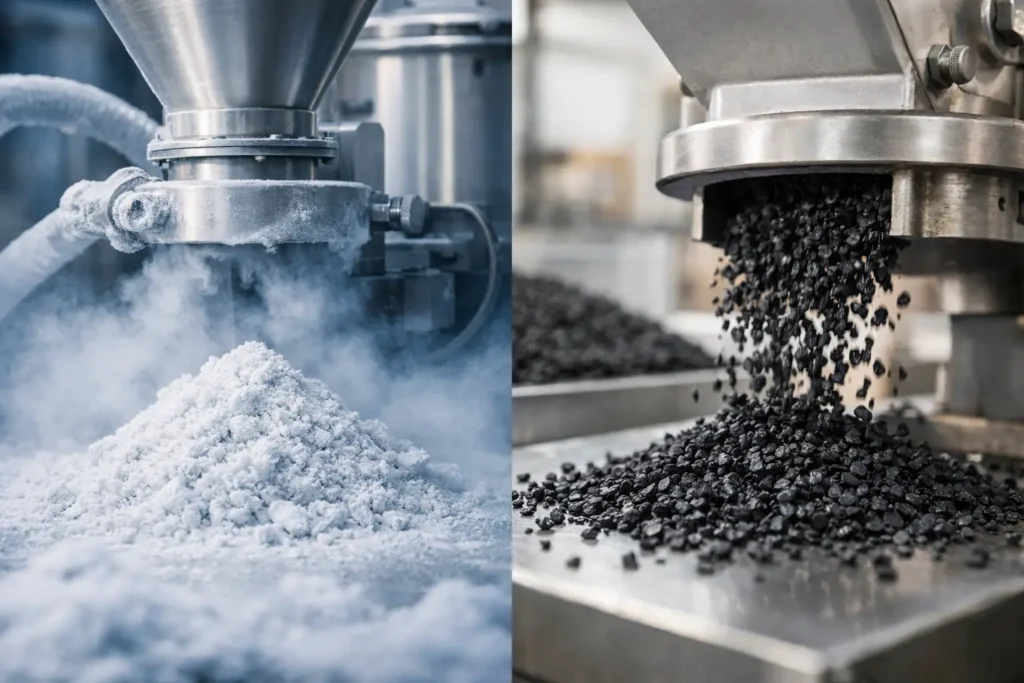
A polymer that smears across a screen, a spice blend that loses volatile oils, or a waxy compound that blocks a mill are not simply maintenance problems. They are often signs that the material is being processed above its useful temperature range. The choice between cryogenic milling vs ambient grinding determines whether a feedstock fractures cleanly, remains stable and achieves the required particle size distribution – or creates heat, agglomerates and costly rework.
For many production lines, ambient grinding remains the most economical and effective route. Cryogenic milling becomes valuable when material behaviour changes sharply at low temperature. The right decision depends on the material, target specification, production rate and the total process around the mill.
How the two processes differ
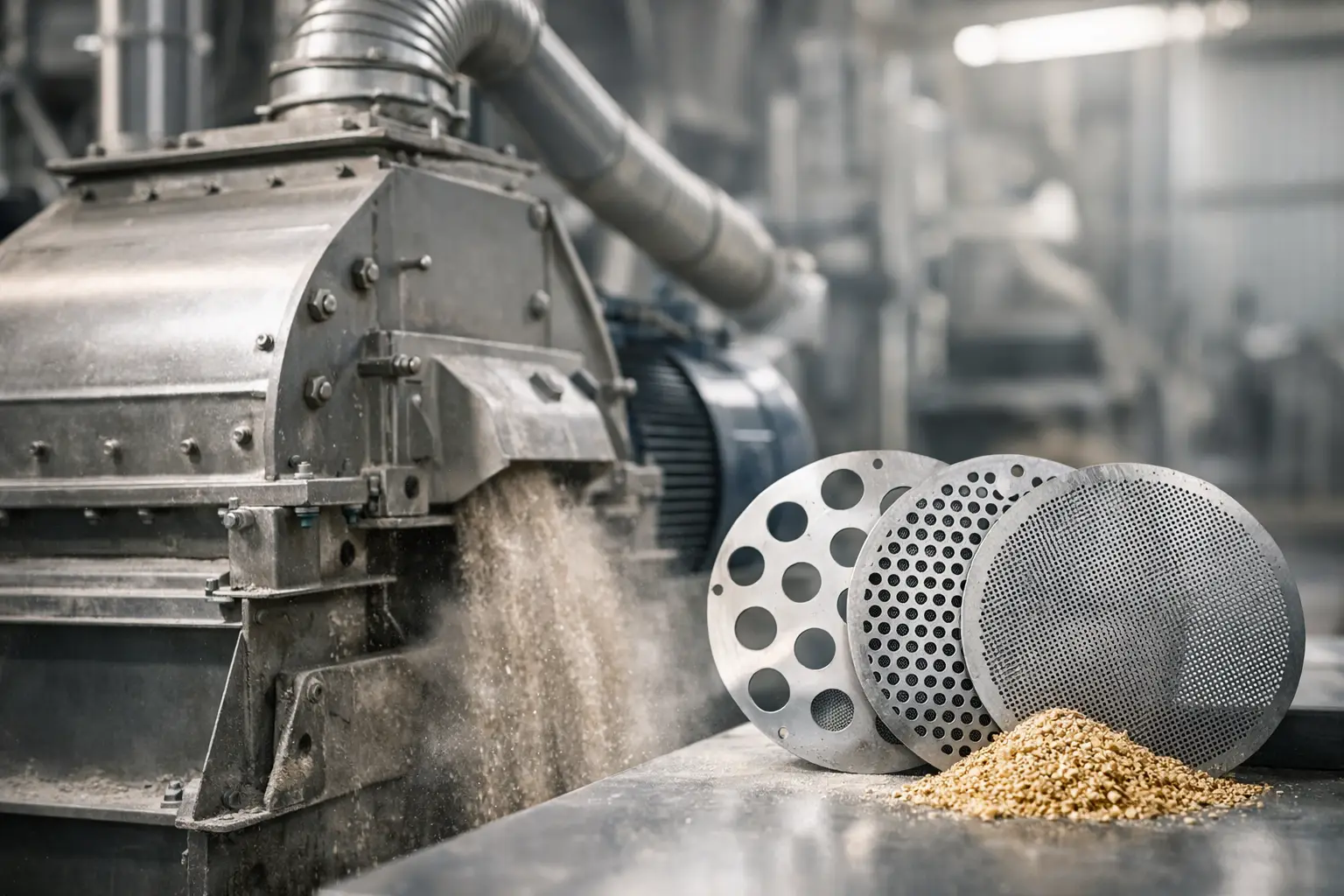
Ambient grinding reduces particle size at normal plant conditions, using impact, shear, compression or attrition. Depending on the machine type, this may involve a hammer mill, pin mill, universal mill, turbo mill, cone mill or air classifier mill. Heat is generated by the grinding action itself, as well as friction between particles, mill components and the conveying air.
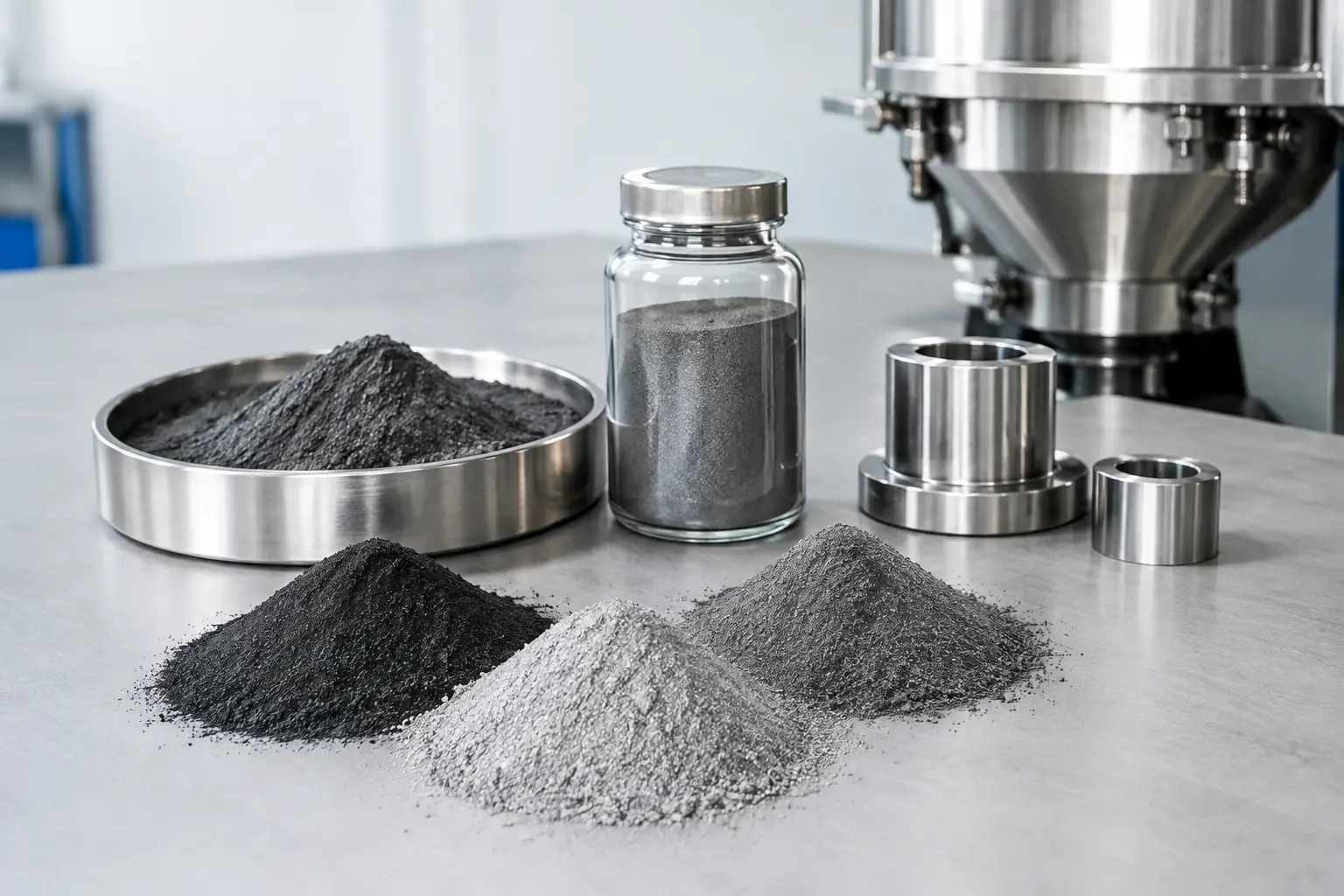
This approach is well suited to dry, friable materials that fracture readily. Many minerals, crystalline chemicals, dry food ingredients and agricultural products can be milled efficiently at ambient temperature, provided the process is correctly specified. Airflow, rotor speed, screen selection, feed rate and classification settings all influence the final particle size and the heat load imposed on the product.
Cryogenic milling introduces a refrigerant, most commonly liquid nitrogen, to lower the feed material temperature before and, where necessary, during grinding. At sufficiently low temperature, elastomers, waxes, polymers, oily ingredients and other difficult materials can become hard and brittle. Rather than deforming under impact, they fracture.
The mill still performs the size reduction. Cooling does not replace engineering control of speed, residence time, classifier operation or material feed. It changes the physical response of the material, allowing the grinding system to work more effectively.
Cryogenic milling vs ambient grinding: performance factors
The comparison is not a simple question of cold versus conventional. Each route produces different operating conditions and can affect product quality in several ways.
Particle size and distribution
Ambient systems can provide highly precise particle size reduction when the feed material is naturally brittle and stable. An integrated classifier is particularly useful where a narrow top size is critical, such as pigments, mineral fillers, chemical intermediates or speciality powders.
For elastic and thermoplastic materials, ambient grinding can produce a broad distribution. Fine particles may soften, adhere to larger particles or build up inside the grinding chamber. Screen blinding and reduced throughput can follow. Cryogenic conditioning limits this deformation and often supports a finer, cleaner cut with fewer oversized particles.
However, cryogenic operation should not be assumed to produce a finer powder in every application. A material may already be brittle at ambient temperature, in which case additional cooling offers little benefit. Pilot trials should establish the achievable particle size distribution, not just the nominal screen or classifier setting.
Product quality and heat sensitivity
Temperature is frequently the deciding factor. In food, nutraceutical and pharmaceutical applications, excess heat can affect flavour, aroma, active ingredients, colour and moisture behaviour. In coatings, adhesives and polymers, it can alter material handling characteristics or cause partial softening that compromises downstream processing.
Cryogenic milling can preserve volatile components in spices, botanicals and aromatic ingredients by reducing heat exposure. It can also help process heat-sensitive plastics, rubber and wax-based materials without the smearing associated with higher product temperatures.
Ambient grinding may still be the better choice where product temperature can be controlled through efficient airflow, reduced residence time, staged milling or cooling jackets. It avoids the refrigerant requirement and can simplify operation. The practical issue is not whether the process generates any heat, but whether that heat moves the material outside specification.
Throughput and reliability
A mill operating below its material’s softening point can run more consistently. Cryogenic systems may reduce chamber deposits, screen blockage and unplanned cleaning intervals for difficult feedstocks. This can improve effective production capacity even where the mill’s instantaneous throughput is not dramatically higher.
Ambient grinding generally offers a simpler process layout and can provide strong throughput for free-flowing, dry materials. It also avoids the time and operating discipline associated with cryogen supply, insulated lines and temperature management.
Plant teams should assess throughput as saleable kilograms per hour, not just feed rate. A high apparent rate has limited value if off-spec material, excessive fines, downtime or cleaning losses reduce usable output.
Where each process is most suitable
| Processing route | Typical material characteristics | Common application considerations | |—|—|—| | Ambient grinding | Brittle, dry, free-flowing, heat-stable materials | Minerals, salts, crystalline chemicals, dry food powders, pigments and many agricultural products | | Cryogenic milling | Elastic, waxy, oily, thermoplastic, heat-sensitive or volatile materials | Rubber, polymers, adhesives, waxes, spices, botanicals, speciality chemicals and temperature-sensitive formulations |
These categories overlap. Some polymers, for example, can be processed at ambient conditions when the target size is relatively coarse, while the same polymer may require cryogenic operation for micronisation or a narrow particle size range. Similarly, a spice may be suitable for ambient milling at modest throughput but benefit from cryogenic processing where aroma retention is commercially significant.
Cost should be measured across the whole line
Ambient grinding normally has a lower direct operating cost because it does not consume liquid nitrogen or require cryogenic storage and distribution equipment. Equipment configuration is usually less complex, commissioning can be more straightforward and routine maintenance is familiar to most plant teams.
Cryogenic milling introduces refrigerant consumption, insulated equipment sections and additional process controls. Safe system design must account for ventilation, oxygen monitoring, pressure management and operator procedures. These are essential engineering requirements, not optional additions.
Yet direct energy and refrigerant costs are only part of the evaluation. A cryogenic system may lower total cost of ownership where it prevents product degradation, enables recovery of a high-value material, reduces cleaning frequency or replaces repeated passes through an ambient mill. It may also make an otherwise impractical specification achievable.
The financial comparison should include yield, rejected batches, labour, cleaning time, wear parts, energy, refrigerant, maintenance and the value of consistent product quality. For a high-volume commodity powder, ambient grinding often remains compelling. For a specialised formulation with tight performance requirements, the economics can reverse quickly.
Selecting the right mill around the process
The cooling method and the grinding mechanism must be specified together. A cryogenic feed system coupled to an unsuitable mill will not deliver stable results. Equally, an efficient pin mill or air classifier mill may solve an ambient application without the added complexity of low-temperature operation.
Key inputs for equipment selection include feed size, bulk density, moisture level, fat or oil content, hardness, softening behaviour, explosibility, target particle size, required distribution, throughput and cleanability. For regulated sectors, material contact construction, containment, validation requirements and batch traceability may be equally important.
A complete line also needs appropriate feeding, nitrogen injection or pre-cooling, conveying, dust collection, classification and collection. The interfaces matter. Poorly controlled feed rate can create inconsistent cooling; unsuitable conveying can allow a conditioned material to warm before milling; inadequate separation can undermine a well-designed grinding stage.
Prove the process before committing to production scale
Material data sheets are useful, but they rarely reveal how a powder will behave in a live mill. Trial work should compare ambient and cryogenic conditions using representative feedstock, including normal variation in moisture, particle shape and incoming temperature.
The test programme should measure particle size distribution, product temperature, throughput, energy use, yield and any signs of agglomeration or build-up. For food, nutraceutical and pharmaceutical materials, quality testing should also consider volatile retention, active content and flow properties. For polymers and rubber, downstream performance can be more meaningful than particle size alone.
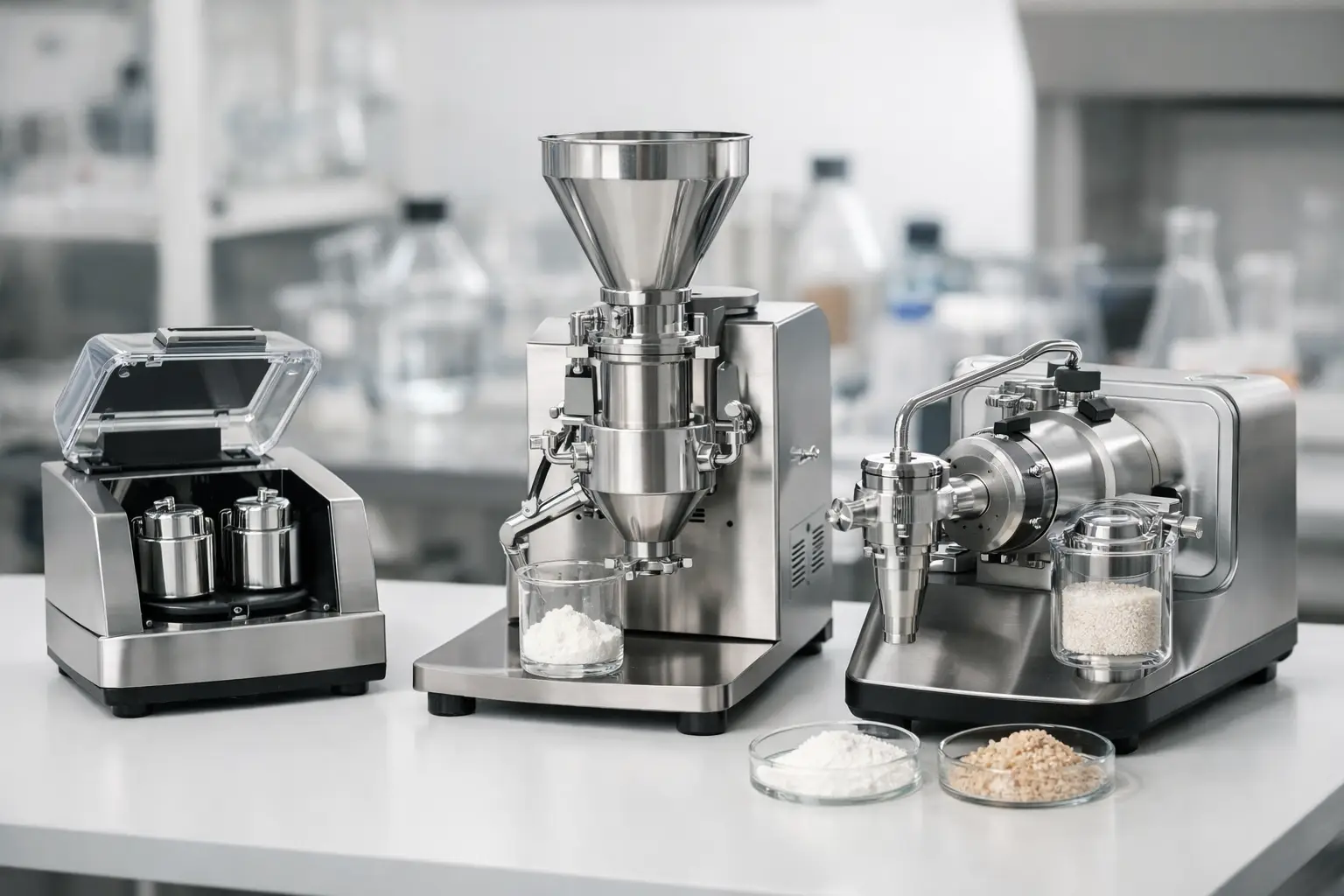
DP Pulveriser UK supports this progression from laboratory and pilot development through to fully integrated production systems. The objective is not to prescribe cryogenic technology by default, but to engineer the most reliable route to the required powder specification.
The most useful final question is straightforward: can ambient grinding deliver the specified product consistently at an acceptable total operating cost? If the answer is no because the material softens, degrades, blocks the mill or produces unacceptable variation, cryogenic milling is not an added complication. It is the process condition that makes dependable production possible.