DP Pulveriser UK - Innovating the Future of Size Reduction
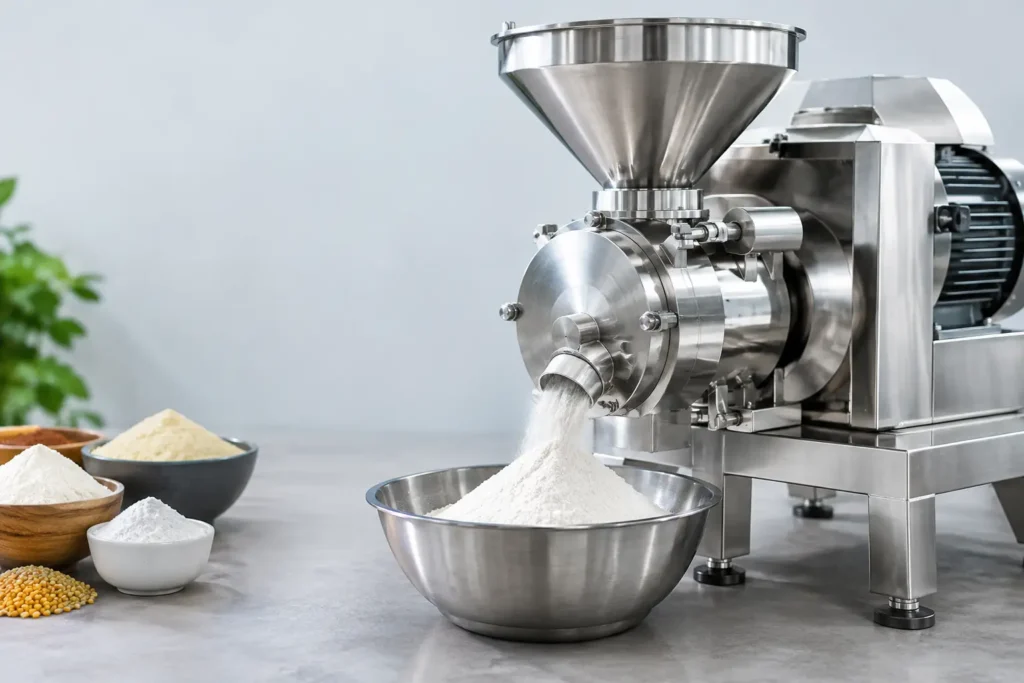
A universal mill is often specified when a production line needs more than simple size reduction. It must reduce varied feed materials reliably, achieve a controlled particle size distribution and adapt to changing product requirements without introducing unnecessary complexity. For manufacturers working with powders, granules, dry ingredients and intermediate materials, that flexibility can make universal mills a practical foundation for both standalone and integrated processing systems.
The value is not that one machine suits every milling duty. It does not. The value lies in selecting a mill configuration that matches the material, target specification, containment requirements and required throughput. When those factors are engineered together, a universal mill can deliver consistent product quality with an efficient operating profile.
What Is a Universal Mill?
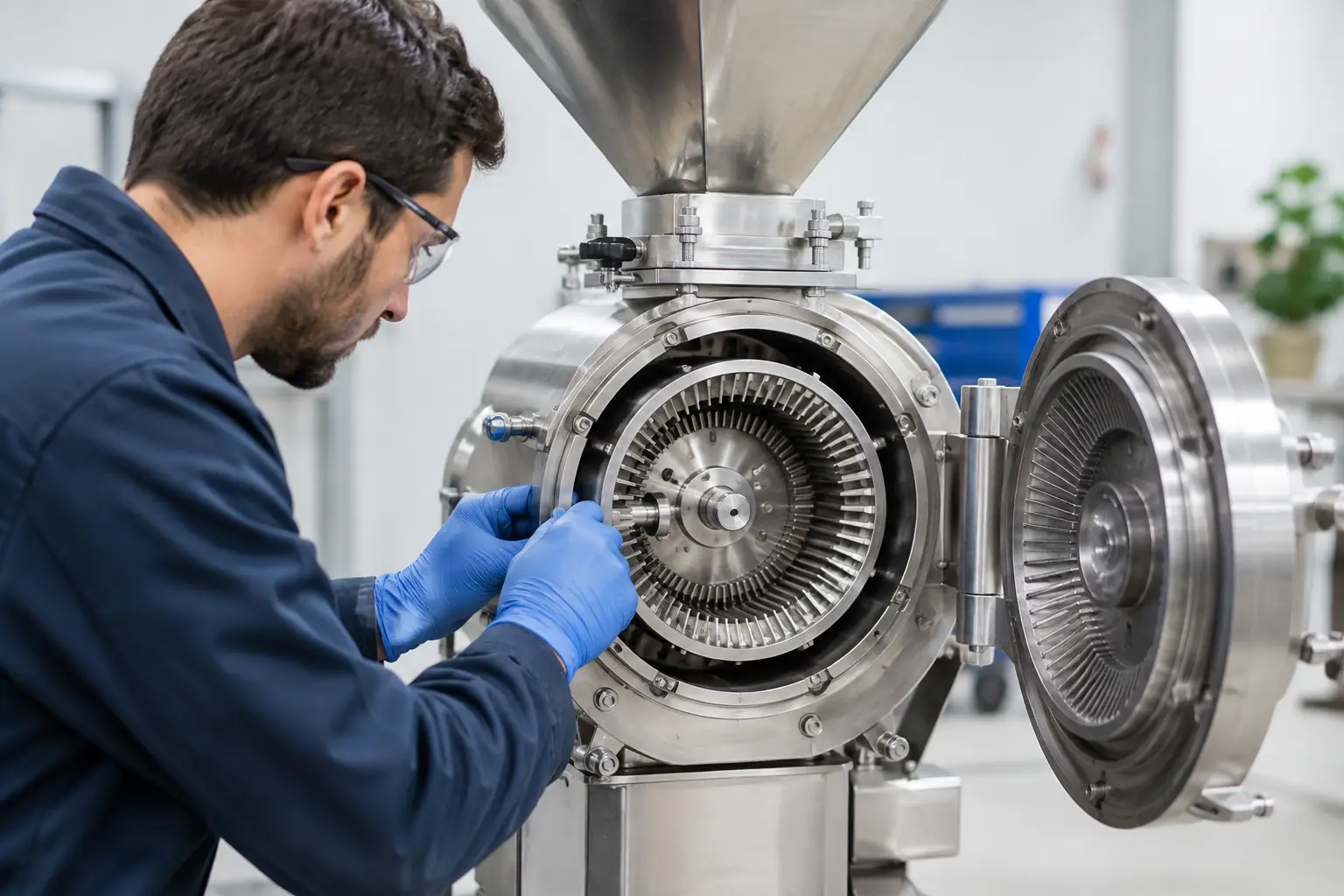
A universal mill is a versatile impact milling machine designed for the size reduction of dry materials. It typically uses interchangeable grinding elements, such as swinging or fixed hammers, pins, impact tools and screen arrangements, to produce the required reduction mechanism for the application.
Material enters the milling chamber and is accelerated by the rotating assembly. Repeated impact against the grinding tools, liner surfaces and other particles breaks down the feed. Product remains in the chamber until it is sufficiently fine to pass through the selected screen or discharge arrangement. This straightforward principle supports a wide range of duties, from deagglomeration and coarse granulation through to finer powder production.
The term ‘universal’ should be read as configurable rather than unlimited. A universal mill can be highly effective across many materials, but abrasive minerals, highly heat-sensitive products, explosive dusts and very fine micron-level specifications may require alternative technologies or additional process controls.
Why Configuration Determines Milling Performance
Two materials with a similar starting size can behave very differently in a mill. One may fracture cleanly under impact; another may deform, smear, generate heat or form agglomerates. Successful milling therefore depends on understanding material behaviour before choosing rotor tools and operating conditions.
Rotor and grinding tool selection
The rotor establishes the speed and intensity of impact inside the chamber. Higher tip speed generally creates greater impact energy and can support finer reduction, but it may also increase heat generation, wear and power consumption. The appropriate operating range depends on the feed material and particle size target.
Hammers are commonly selected where resilient or fibrous materials need strong impact action. Pins can be suitable for brittle products requiring more intensive particle-to-particle and tool impact. Fixed impact elements may provide a controlled route for materials where repeatability matters more than aggressive reduction. The right choice should be based on trials and process data, not a generic equipment specification.
Screen design and open area
In a screen mill configuration, the screen is a major control point. Its aperture determines the approximate maximum particle size that can leave the chamber, while its open area influences residence time, throughput and the risk of heat build-up.
A smaller aperture does not automatically deliver a narrower distribution. If the product is difficult to fracture or the mill is overfed, particles can remain in the chamber too long, leading to excess fines, elevated product temperature or screen blinding. Screen thickness, hole pattern and material of construction also affect performance, particularly when processing abrasive or sticky feeds.
Airflow and discharge
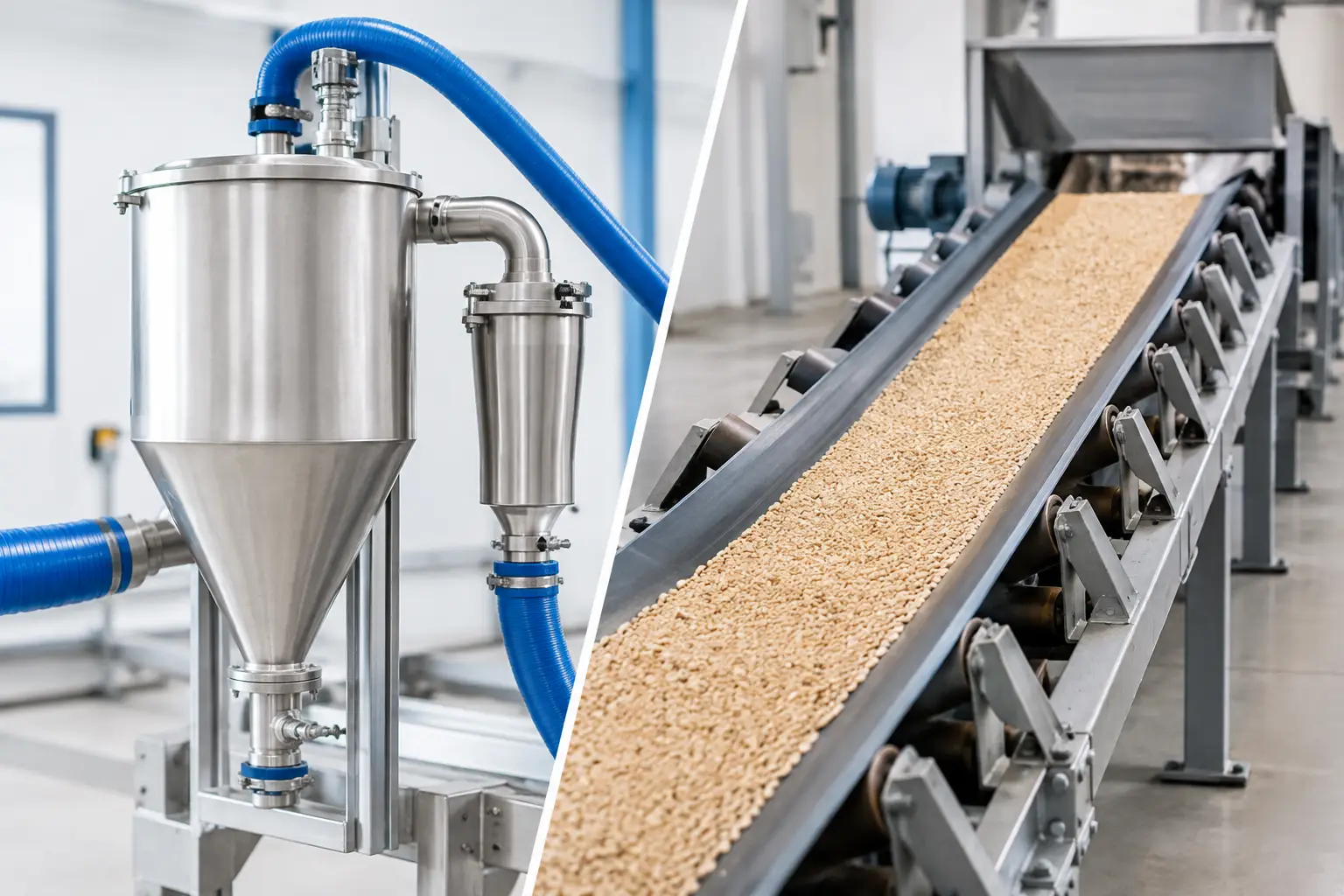
Efficient discharge is essential. Air movement can help remove milled product from the grinding zone, reduce residence time and limit the opportunity for over-grinding. In larger systems, a correctly designed conveying and collection arrangement also helps maintain stable pressure conditions around the mill.
This is particularly relevant for low-density powders, hygroscopic ingredients and products that generate a high proportion of fines. The mill, filter receiver, rotary valve, ductwork and fan should be treated as one process system. A well-specified mill cannot compensate for poor downstream airflow or restrictive product handling.
Applications for Universal Mills
Universal mills are used across industries where dry materials must be prepared to a reliable and repeatable specification. In food and beverage processing, they may reduce spices, grains, sugar, dried ingredients or plant-based materials. In chemicals and coatings, they can process resins, pigments, salts and additive blends. Pharmaceutical and nutraceutical operations may use appropriately designed systems for the controlled reduction of excipients, botanical materials and non-sterile intermediates.
They are also relevant to agricultural products, minerals, battery-related materials and speciality compounds, although each application brings different demands around wear, contamination control, dust management and particle-size verification.
For example, a brittle crystalline feed may respond well to high-impact milling with a defined screen. A fibrous botanical material may need a larger screen, careful feed control and an upstream pre-cutting stage. A heat-sensitive food ingredient may require lower energy input, cooled process air or a different technology altogether. There is no useful ‘best setting’ without the material and process context.
The Operating Variables That Affect Consistency
Once the machine configuration is correct, day-to-day control determines whether the process remains consistent. Feed rate is especially important. An underfed mill may create excessive fines because particles receive repeated impacts. An overfed mill can lose throughput stability, increase motor load and produce a wider particle size distribution.
Feed material condition matters equally. Variation in moisture content, bulk density, inlet particle size and temperature can alter milling behaviour from one batch to the next. For this reason, upstream handling should be considered part of the solution. Controlled feeding, magnetic separation, lump breaking, sieving and metal detection may all be necessary to protect the mill and stabilise its output.
Motor load, product temperature and differential pressure are useful operating indicators. A change in any one of these may point to screen blockage, worn tools, a feed inconsistency or an issue in the air handling system. Monitoring these conditions supports preventative maintenance and helps operators intervene before product quality is affected.
Engineering for Hygiene, Wear and Containment
Material contact construction must match both the product and the operating environment. Stainless steel is commonly used where hygienic design, corrosion resistance and cleanability are required. Highly abrasive products may justify hardened or wear-resistant components in areas exposed to repeated impact.
For food, pharmaceutical and high-purity chemical duties, smooth internal surfaces, accessible inspection points and designs that minimise product retention are central to effective cleaning. The aim is not simply to make the machine look clean after shutdown. It is to reduce carryover risk, shorten changeovers and give production teams practical access to the areas that require inspection.
Dust containment is another critical engineering consideration. Fine powder handling can create occupational exposure, housekeeping and combustible dust concerns. The required solution may include sealed connections, local extraction, contained discharge, inerting or pressure-rated equipment, depending on the dust characteristics and site risk assessment. These requirements should be established early, as they influence the full line design rather than the mill alone.
How to Specify a Universal Mill
A productive specification begins with representative material data and a clear product target. The most useful starting information includes feed size, bulk density, moisture, hardness, friability, abrasiveness, thermal sensitivity, required capacity and acceptable particle size distribution. Information on cleaning expectations, construction standards and hazardous-area requirements is equally relevant.
Laboratory and pilot trials are valuable because they reveal behaviour that data sheets cannot. They can confirm whether a material mills cleanly, identify an appropriate screen and rotor arrangement, measure achievable throughput and generate samples for quality assessment. They also reduce the risk of scaling a process based only on assumptions.
When moving from trials to production, scale-up should account for more than motor size. The feed system, air handling, collection method and discharge equipment must all be sized for the intended duty. A line that achieves the correct particle size but suffers from poor flow at the receiver, high product losses or difficult cleaning will not deliver the expected total cost of ownership.
When Another Mill May Be Better
Universal mills are a strong option for flexible impact milling, but not every process should use one. A cone mill may be better for gentle sizing and deagglomeration where particle shape must be preserved. A pin mill can offer a more intensive action for certain brittle materials. Jet milling is often considered when very fine particle sizes are required without mechanical grinding media, while cryogenic milling can help process elastic, fatty or heat-sensitive materials.
The decision should be based on the required product outcome, not on the broadest equipment label. Energy use, wear rate, cleaning time, noise, containment and maintenance access all affect the real operating cost over the life of the installation.
For production teams, the best universal mill is therefore the one engineered around the material and the wider process. DP Pulverizer UK applies this application-led approach from initial testing through to full turnkey systems, helping manufacturers build milling lines that remain controlled, serviceable and commercially effective as demand grows.