DP Pulveriser UK - Innovating the Future of Size Reduction
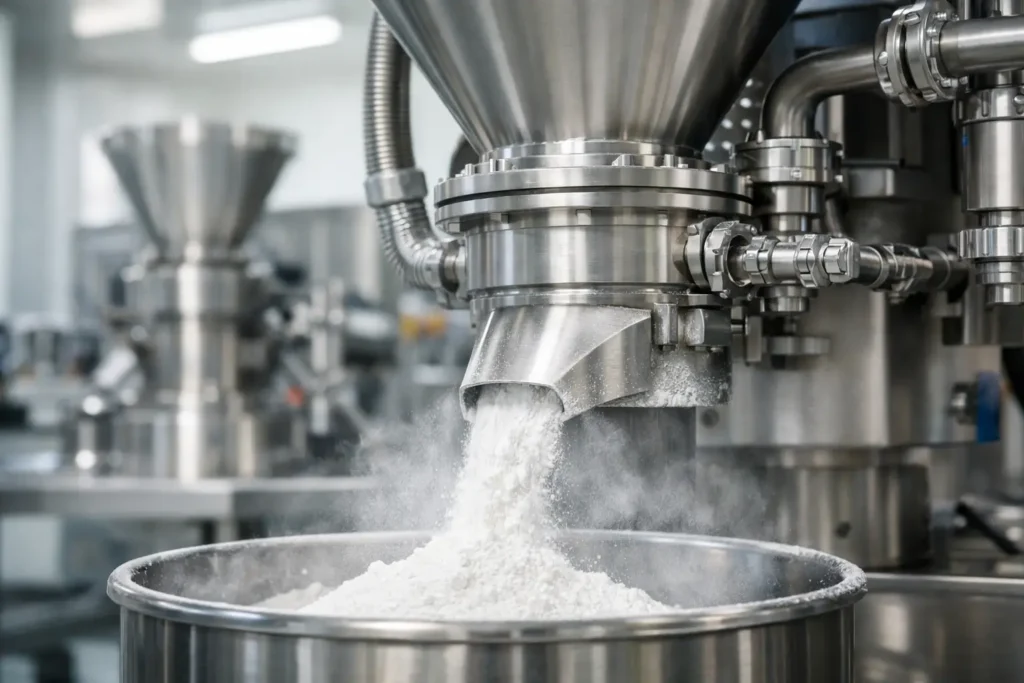
A powder can meet its particle-size target and still fail production. When mechanical energy raises product temperature, active ingredients may degrade, fats can smear, flavours can volatilise, sugars may soften and thermoplastics can agglomerate. Selecting the best mills for heat sensitive powders is therefore not simply a question of achieving a finer grind. It requires control of heat generation, residence time, air flow, feed rate and the entire material path.
For process engineers, the correct milling system is the one that delivers the required particle size distribution without compromising product functionality, yield or cleanability. That choice depends on the powder’s thermal limit, hardness, feed condition, throughput target and whether the process must operate in an inert, hygienic or ATEX-controlled environment.
Why heat builds up during milling
Every size-reduction process converts part of its input energy into heat. In impact mills, repeated collisions between particles and high-speed tooling create local temperature rises. In mechanical mills with screens, material that does not pass the aperture can recirculate in the grinding chamber, increasing dwell time and heat exposure.
Heat can also originate upstream. Warm feedstock, inconsistent moisture content, poor conveying design and an undersized dust collection system can all reduce the system’s ability to remove heat. A mill should therefore be specified as part of a process line, rather than as an isolated machine.
The key engineering objective is to minimise the energy absorbed by the product while removing heat as it is generated. In practice, this may mean using compressed gas, conditioned process air, chilled components, liquid nitrogen or a classification stage that removes fines as soon as they reach specification.
Best mills for heat sensitive powders: the main options
No single technology is best for every heat-sensitive application. The following mill types address the problem in different ways, with clear trade-offs in operating cost, achievable fineness and process complexity.
Jet mills for fine, high-value powders
Jet mills are often the preferred solution where very fine particle size reduction is required with minimal mechanical contact. Particles are accelerated by compressed air or inert gas and collide with each other in the grinding chamber. Because there are no conventional rotating grinding tools in contact with the product, contamination risk is low and heat can be dissipated by the expanding gas stream.
This makes jet milling particularly suitable for pharmaceuticals, nutraceuticals, fine chemicals, pigments and specialist mineral products. Integrated dynamic classification allows oversized particles to remain in the grinding zone while finished material exits promptly, limiting unnecessary residence time.
The trade-off is energy demand. Compressed air systems require careful utility assessment, and jet mills are not automatically the most economical choice for coarse products or high-volume duties where a less energy-intensive mill can meet the specification. For oxygen-sensitive or combustible powders, nitrogen can be used, subject to the required containment and safety design.
Air classifier mills for controlled, efficient fine grinding
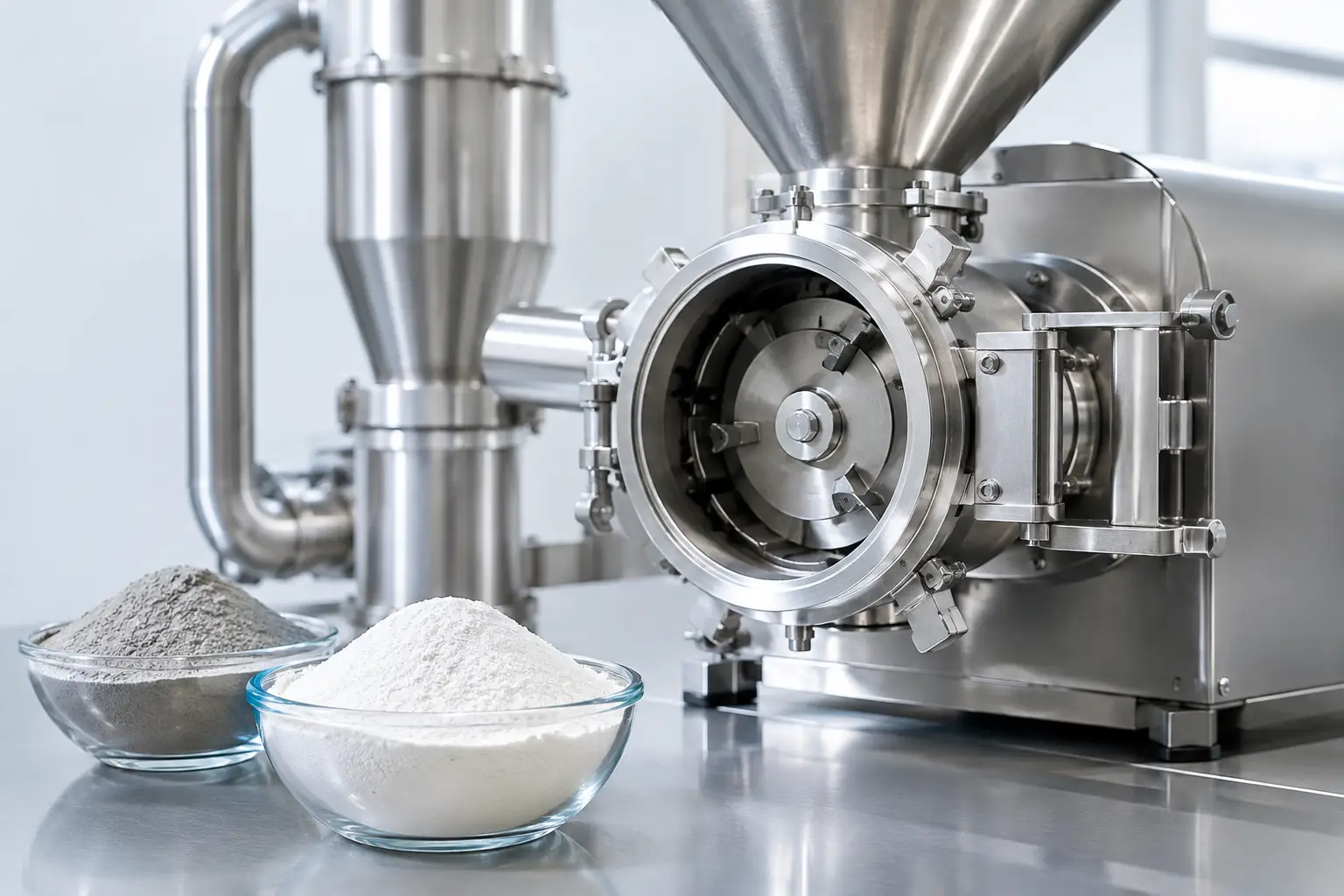
An air classifier mill combines impact grinding with internal air classification. The rotor generates the required size reduction, while the classifier controls the maximum particle size leaving the mill. Oversize material remains in the milling zone until it is sufficiently fine, and acceptable particles are carried away in the air stream.
For moderately heat-sensitive powders, this arrangement offers a strong balance between throughput, control and product temperature. Adjustable rotor speed, classifier speed and process air volume give operators meaningful control over the particle size distribution without relying solely on a fine screen.
Cooling or conditioned air can improve thermal management further. However, the process must be matched to the material. Sticky powders or materials that soften quickly may still coat internal surfaces if feed rate is excessive or air flow is inadequate. Pilot trials should establish the practical operating window before a production-scale system is selected.
Pin mills for flexible medium-fine applications
Pin mills use intermeshing discs fitted with pins to create high-velocity particle impact. They are compact, versatile machines capable of producing medium to fine powders across food, chemical and mineral applications. Their relatively straightforward design also supports efficient cleaning and maintenance where access is well engineered.
For heat-sensitive products, a pin mill can perform well when operated at sensible peripheral speed with a controlled feed rate and sufficient cooling air. It is often a practical choice for dry ingredients, spices, food powders, resins and materials that require a narrower distribution than a conventional hammer mill can deliver.
The limitation is that heat generation rises quickly if operators attempt to force throughput or chase very fine sizes. A pin mill is not the default answer for every temperature-critical product. For the most sensitive materials, a jet mill or cryogenic system may offer a wider safety margin.
Cryogenic mills for powders that soften, melt or smear
Cryogenic milling introduces liquid nitrogen, or in some cases another suitable refrigerant, to cool the product before and during size reduction. Lowering the material below its glass transition, softening or melting point can make it brittle enough to fracture cleanly rather than deforming or coating the mill.
This is particularly valuable for high-fat foods, waxes, adhesives, elastomers, polymers, fragrant botanicals and pharmaceutical materials with low thermal stability. Cryogenic processing can preserve volatile compounds, reduce product loss and improve flowability by preventing agglomeration.
The additional cooling infrastructure brings higher capital and operating costs, so cryogenic milling should be justified by product quality, recovery and process reliability rather than selected as a precaution. Nitrogen consumption, insulation, control instrumentation and safe venting must all be included in the total cost of ownership assessment.
Cone and hammer mills for gentler de-lumping duties
Not every heat-sensitive powder needs intensive fine grinding. Where the objective is de-lumping, calibration or controlled coarse reduction, low-speed cone mills can provide a gentler solution with limited temperature rise. They are widely used in pharmaceutical and food production for sizing dried granules, breaking soft agglomerates and improving downstream flow.
Hammer mills can also be suitable for relatively coarse duties, provided the material does not remain in the chamber for extended periods. Screen selection, rotor tip speed and feed consistency are decisive. If a powder is prone to melting, smearing or flavour loss, a conventional hammer mill should be tested carefully rather than assumed to be suitable.
Process variables that matter as much as the mill
A technically capable mill cannot compensate for poorly controlled operating conditions. Feed temperature should be measured, not estimated, particularly where material arrives from drying, extrusion or bulk storage. Continuous, uniform feeding prevents temporary overloads that increase friction and residence time.
Particle size specification also needs scrutiny. Tighter is not always better. An unnecessarily fine target consumes more energy, raises product temperature and can reduce throughput. Defining an acceptable particle size distribution, rather than only a nominal top size, gives the process engineer more scope to select an efficient operating point.
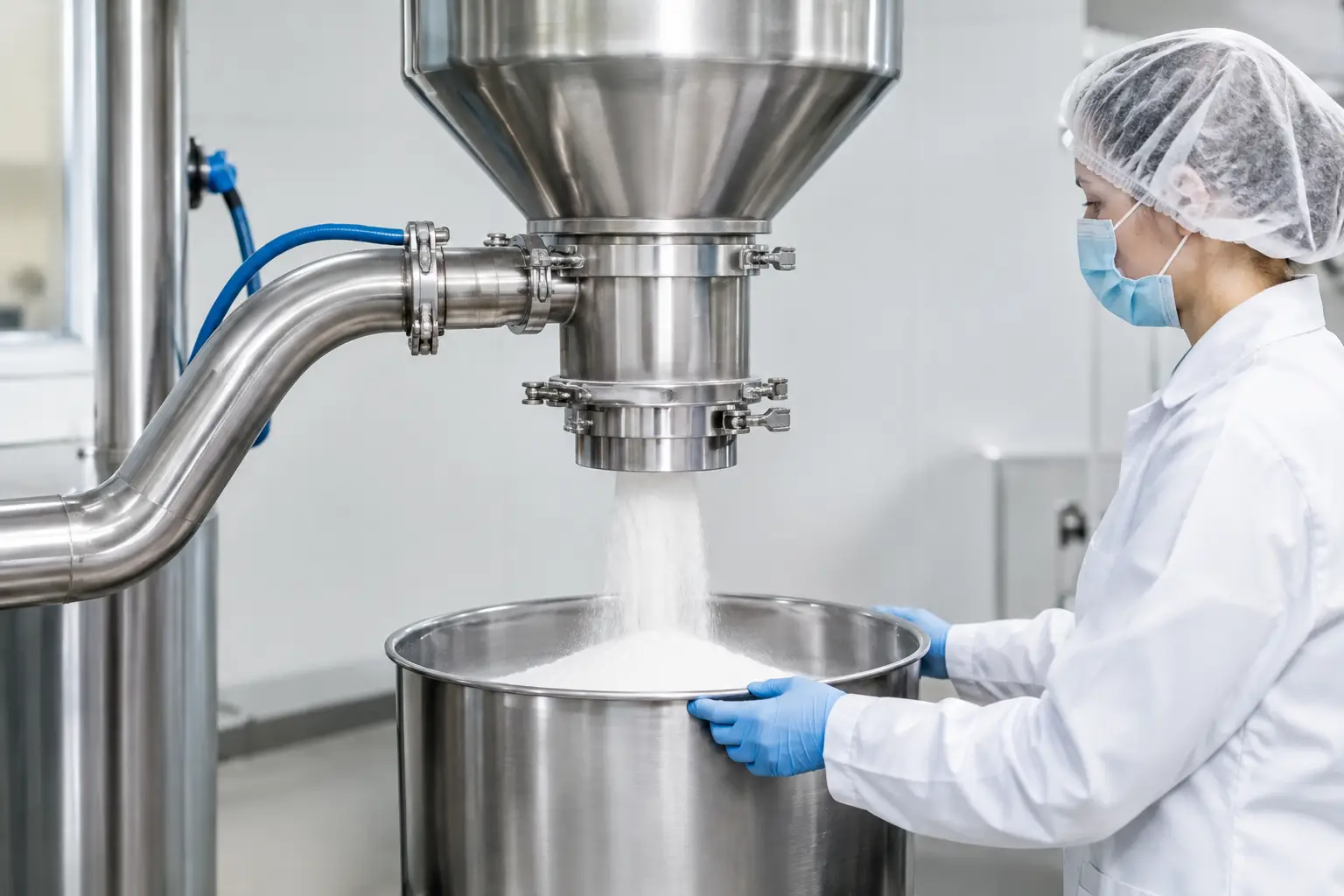
Material handling should be designed to protect the powder after milling. Warm product can compact in transfer lines, segregate in hoppers or pick up moisture before packing. Insulated conveying, appropriate air separation, low-retention pipework and correctly sized collection equipment help preserve the quality achieved at the mill.
How to select the right system
Begin with the material, not the machine category. Establish the maximum permitted product temperature, moisture range, hardness, fat or wax content, bulk density, flow behaviour and any explosive atmosphere classification. Then define the production requirement: feed rate, finished particle size distribution, batch or continuous operation, cleaning standard and required validation documentation.
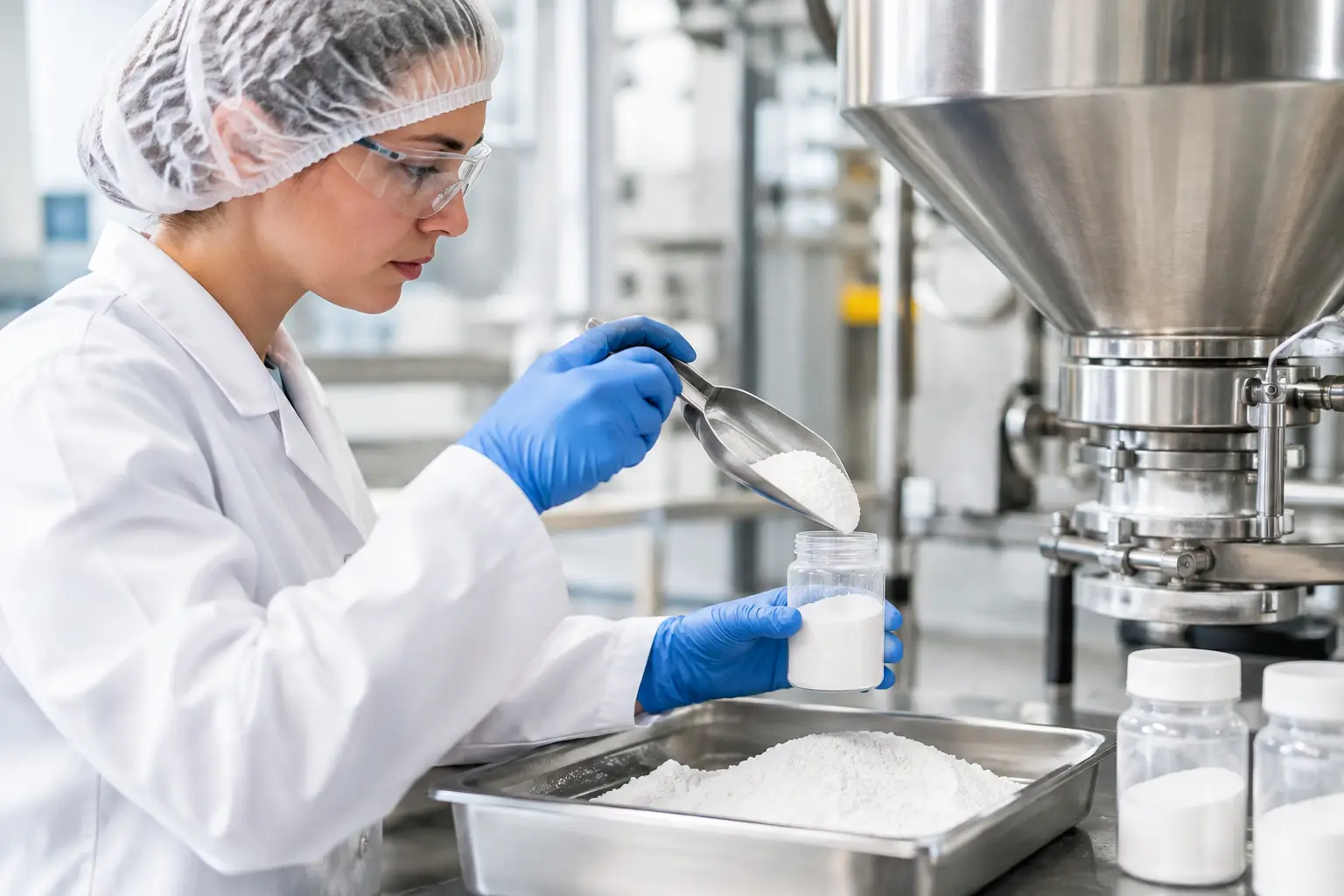
Laboratory and pilot-scale trials are especially valuable for heat-sensitive powders because product behaviour can change sharply near a softening point. Temperature should be monitored at feed, mill outlet and collection point, alongside yield, particle size distribution and any changes in colour, odour, potency or flow. Scaling should reproduce energy intensity and air handling conditions, not merely increase motor size.
For complex applications, an integrated system may include conditioned feed, metered dosing, milling, air classification, separation, dust collection and closed conveying. This approach provides better control than assembling independently specified components, particularly where hygiene, containment or inert operation is required.
DP Pulveriser UK engineers milling and powder-processing systems from development through to full production, allowing mill selection to be based on measured process performance rather than catalogue assumptions. The most reliable route to a stable, high-quality powder is a trial programme that proves the thermal operating window before the production line is committed.