DP Pulveriser UK - Innovating the Future of Size Reduction
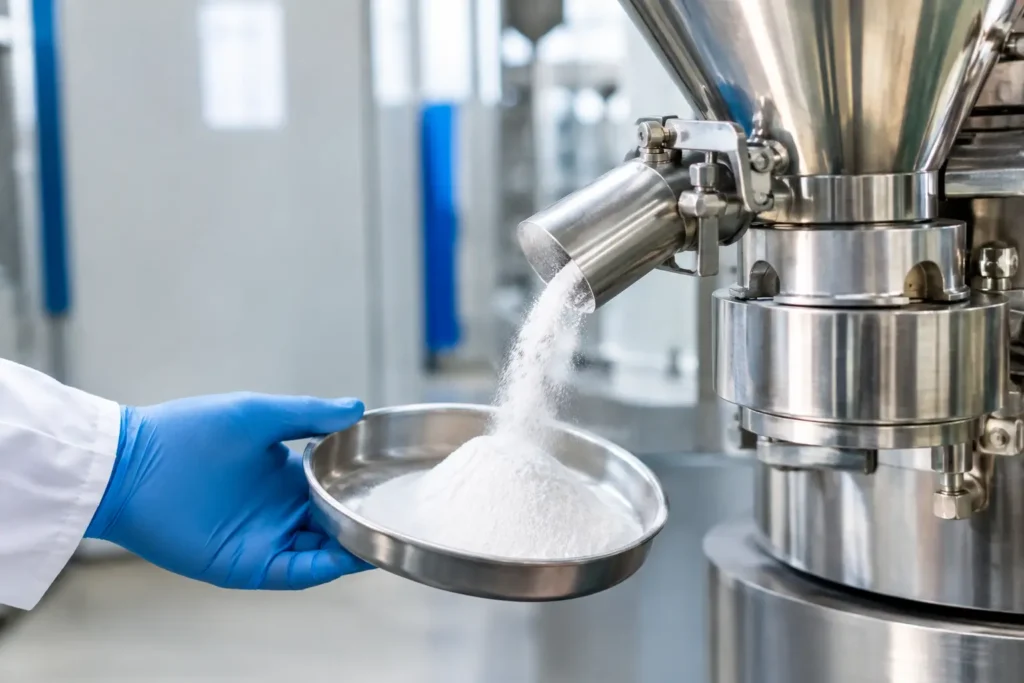
A micronisation system can achieve its target median particle size in a trial and still underperform on the production floor. Feed variability, heat generation, classifier stability and powder handling often determine whether a fine-powder process delivers a consistent saleable product. That is why micronisation technology trends matter to manufacturers: the focus is moving beyond smaller particles towards controlled, repeatable and commercially efficient particle engineering.
For process engineers and production teams, the priority is not simply selecting the highest-energy mill. It is specifying an integrated process that maintains the required particle size distribution, protects material properties and supports safe, reliable operation at the required throughput.
Micronisation technology trends changing plant design
Tighter particle size distribution control
Particle size targets are becoming more demanding across pharmaceuticals, battery materials, pigments, food ingredients and speciality chemicals. In many applications, the D50 value alone is insufficient. Oversize particles can affect dissolution, coating appearance, dispersion or downstream blending, while excess fines may reduce flowability, raise dust loads and complicate filling or conveying.
This is increasing the use of air classification as an integral part of micronisation rather than a separate corrective stage. Jet mills and air classifier mills can be configured to reject oversize material while controlling the final cut point, helping producers achieve a narrower particle size distribution. Classifier speed, airflow, feed rate and material loading must work together. Adjusting one variable in isolation can improve a laboratory result while creating instability at production scale.
The practical trend is towards systems designed around the complete particle size specification. That includes the feed material, milling zone, classification stage, collection efficiency and product transfer. A well-engineered line is built to control the distribution that the application requires, not just to produce a small average size.
More process data, but not data for its own sake
Manufacturers increasingly expect visibility of the variables that influence powder quality. Differential pressure, process air temperature, classifier speed, mill feed rate and motor load can provide useful indications of operating condition. When these signals are captured and reviewed together, they can help identify a developing blockage, a drifting cut point or a change in incoming material before it becomes a batch-quality issue.
Closed-loop control is particularly relevant where a fine powder has a narrow operating window. Automated feed control can maintain stable mill loading, while controlled air volume and classification settings support repeatable separation. For regulated production, recorded process parameters also strengthen batch traceability and support more disciplined process validation.
However, instrumentation does not remove the need for sound process development. A sensor can show that a condition has changed; it cannot establish whether the selected mill type, grinding energy or classifier geometry is correct for the material. Representative trials and particle size analysis remain essential, especially where feedstock characteristics vary between suppliers or batches.
Energy efficiency is becoming a design criterion
Micronisation is energy intensive, particularly when the required particle size falls below conventional mechanical milling ranges. Compressed air demand in jet milling, fan power in air classification and the supporting requirements of dust collection all contribute to operating cost.
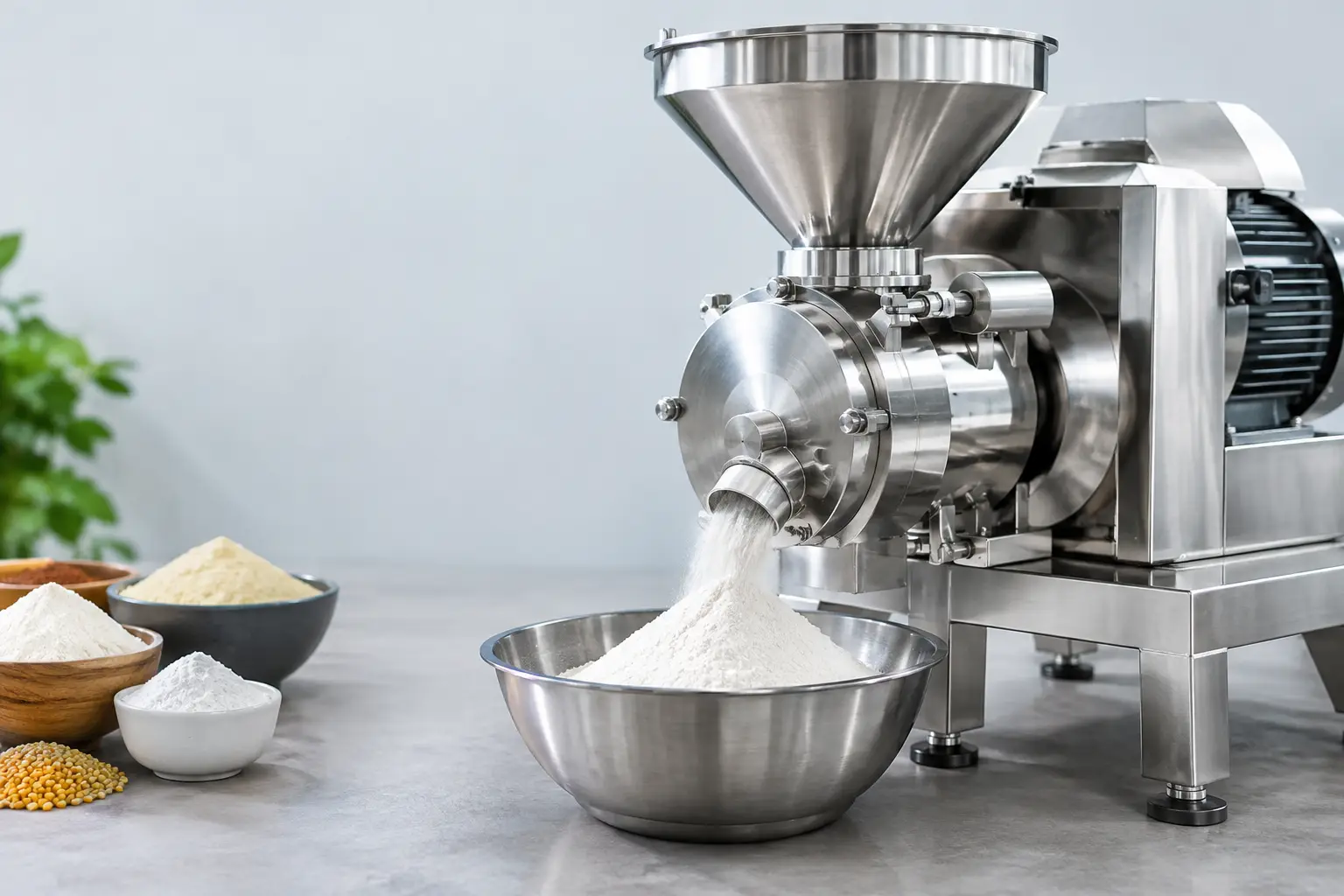
The response is not a single technology. It is better matching of equipment to the duty. A pin mill, turbo mill or universal mill may provide efficient pre-milling before a final classification stage. Where genuinely fine, contamination-sensitive material is required, a fluidised bed jet mill may justify its higher energy input through superior particle control and low wear. For heat-sensitive or elastic materials, cryogenic milling can prevent smearing and improve fracture behaviour, although liquid nitrogen consumption and handling must be assessed against the product benefit.
Energy-efficient micronisation therefore starts with a realistic specification. Chasing unnecessarily fine material or a distribution tighter than the application needs can add cost without improving performance. The lowest total cost of ownership usually comes from optimising the whole process, including conveying, collection, recirculation and cleaning, rather than focusing only on mill power.
Containment, hygiene and recoverable product
Fine powders are difficult to contain. They can become airborne during feeding, discharge, sampling and filter changes, creating challenges for operator exposure, cross-contamination, housekeeping and yield. This is driving greater demand for enclosed processing lines with engineered transfer points and collection systems designed for the actual powder behaviour.
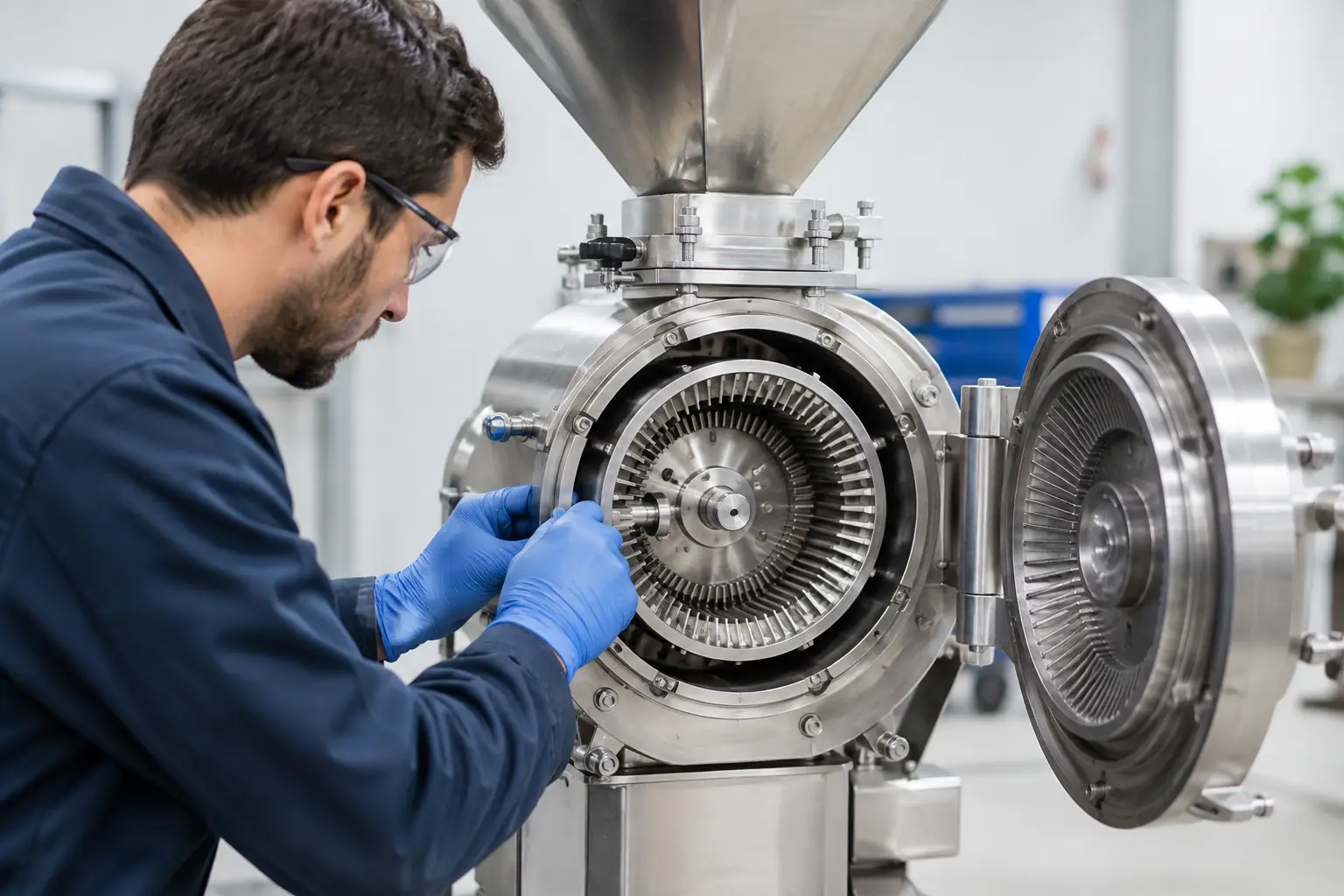
For pharmaceutical, nutraceutical and food applications, cleanability and material traceability must be considered from the outset. Smooth internal finishes, accessible contact parts, controlled cleaning procedures and practical inspection access can reduce changeover risk. In chemical and battery-material processing, containment requirements may take precedence, requiring sealed charging, inert handling or local extraction arrangements suited to the hazard profile.
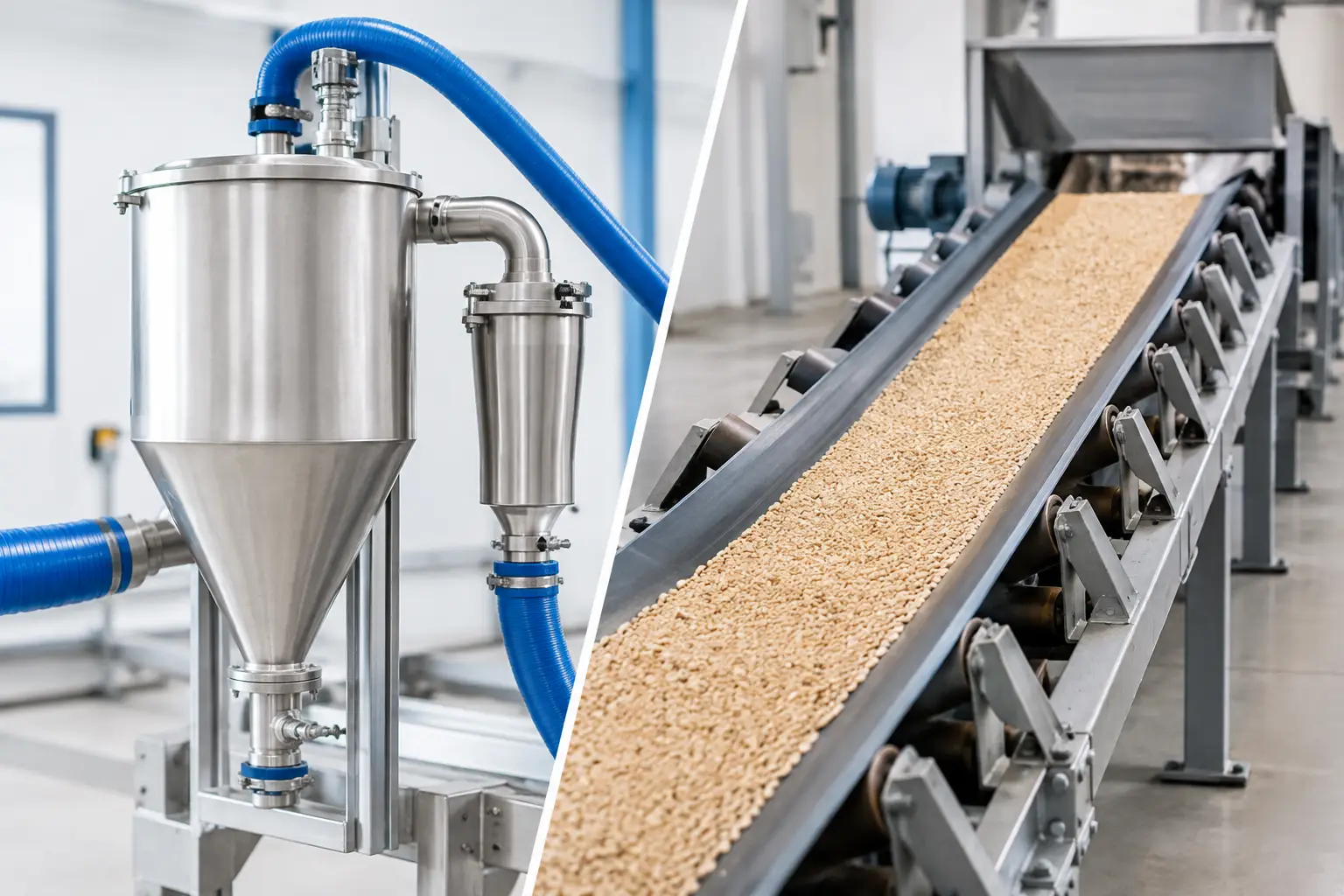
Recovery is equally significant. A high-value active ingredient, pigment or conductive material lost to ductwork and filters is not a minor efficiency issue. Correctly sized cyclones, filters and receivers, combined with stable pneumatic conveying, can improve yield while reducing manual intervention.
Modular development from laboratory to production
The gap between laboratory milling and commercial manufacture remains one of the most costly risks in powder processing. A material may micronise effectively in small batches but behave differently once feed rates rise, residence times change and product collection becomes continuous.
One of the most useful current approaches is a staged development path: laboratory trials to establish feasibility, pilot operation to define the processing window, then production equipment engineered around verified data. This allows manufacturers to evaluate not only particle size, but also throughput, temperature, yield, wear, flowability and cleaning requirements before committing to a full-scale line.
Scale-up is not a matter of multiplying capacity. Gas flow patterns, classifier geometry and energy density can change materially between machine sizes. Equipment suppliers should be able to translate trial results into production conditions using defined process knowledge, not broad assumptions. DP Pulverizer UK supports this approach through application-specific systems spanning development equipment through to complete industrial processing lines.
Where micronisation technology trends differ by material
The correct trend to follow depends on what the powder must do after milling. Pharmaceutical compounds may require careful temperature management, low contamination and validated containment. Food powders may place greater emphasis on hygiene, flavour protection and cleanable design. Mineral products can demand high throughput and wear-resistant components, while battery materials may require strict control of metallic contamination, moisture exposure and particle morphology.
Material behaviour also changes the equipment decision. Brittle materials often respond well to impact or fluid-energy milling. Fibrous, fatty or thermoplastic products may need cooling, different rotor arrangements or cryogenic conditioning. Abrasive feedstocks can shorten the life of conventional contact components, making lining selection and maintenance access central to the business case.
These differences explain why a catalogue comparison is rarely enough. The most successful projects begin with a defined material characterisation programme and a clear understanding of the required downstream outcome, whether that is faster dissolution, improved dispersion, better packing density or a more uniform finished product.
Specifying equipment around production performance
When assessing a micronisation project, technical teams should establish four connected requirements: the incoming feed specification, the acceptable final particle size distribution, the expected production rate and the operating constraints. Those constraints include temperature limits, explosion or exposure controls, cleaning frequency, available utilities and permissible product loss.
It is also worth challenging nominal throughput figures. Capacity depends on material hardness, moisture, bulk density, feed consistency and the fineness target. A system rated for a particular output on one powder may deliver a very different result on another. Factory acceptance trials using representative material provide a far stronger basis for investment than a headline capacity alone.
Finally, consider how the mill integrates with upstream and downstream equipment. Controlled feeding is vital to stable micronisation. Product collection must avoid pressure fluctuations that disturb performance. Conveying and storage should preserve the particle size, prevent segregation and maintain powder condition. Full turnkey systems reduce the number of interfaces where these problems can develop.
The strongest opportunity in micronisation is not simply to reduce particle size further. It is to build a controlled process in which material, mill, classifier, containment and handling equipment operate as one engineered production system. That is where consistent quality, higher yield and lower operating cost become achievable rather than aspirational.