DP Pulveriser UK - Innovating the Future of Size Reduction
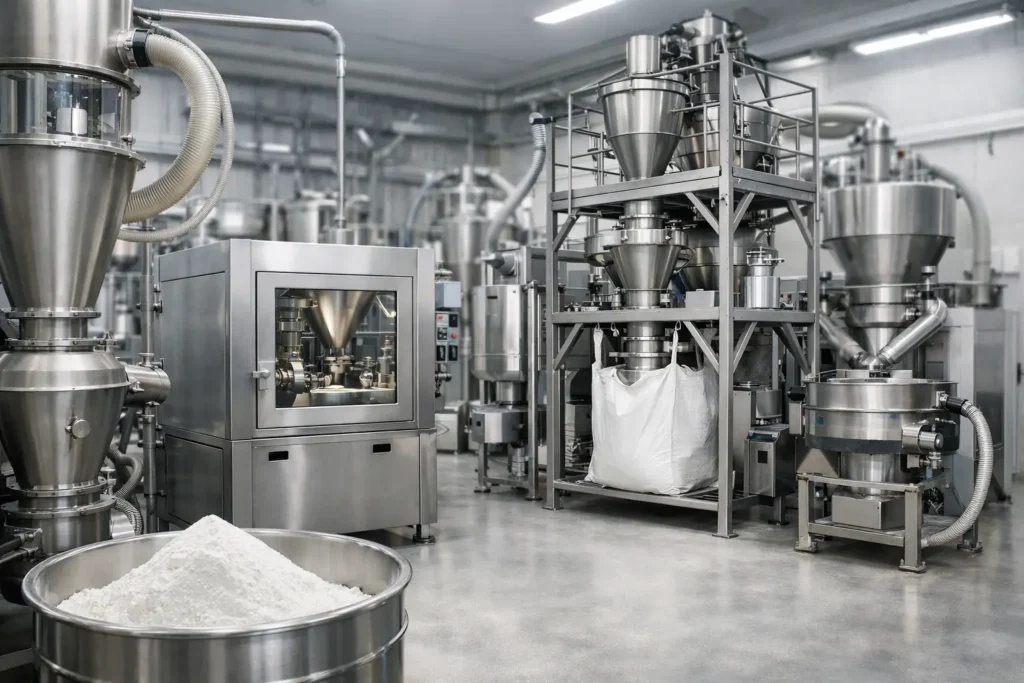
A powder line rarely fails because a mill is incapable of reducing particle size. It fails because the equipment either side of that mill cannot maintain material flow, containment, cleanliness or consistency. The best turnkey powder processing systems treat milling, classification, conveying, dosing, mixing and controls as one engineered process rather than a collection of machines.
For manufacturers handling pharmaceuticals, food ingredients, chemicals, minerals, coatings or battery materials, that distinction has direct consequences. A properly specified line can stabilise particle size distribution, reduce manual handling, protect product quality and make future capacity increases more manageable. A poorly integrated line can create bottlenecks, segregation, excessive fines, dust exposure and expensive rework.
What defines the best turnkey powder processing systems?
A turnkey powder processing system is designed around a material, a required product specification and a production objective. It should extend from raw-material receipt or feed preparation through to final collection, transfer, packing or discharge to the next process stage. The best systems are not defined by the greatest number of components. They are defined by how reliably every component supports the required result.
Particle size reduction remains central, but it is only one part of the process. Feed material may need conditioning, controlled metering or lump breaking before it reaches the mill. The milled product may require air classification, cooling, dust collection, metal separation, blending or enclosed conveying before it is suitable for use. Each transfer point must preserve the attributes the milling stage has created.
System design should therefore begin with measurable requirements: target particle size distribution, throughput, bulk density, moisture behaviour, temperature sensitivity, flow characteristics, contamination risk, cleaning regime and acceptable yield loss. These inputs determine the process route and equipment selection far more effectively than selecting a mill from a capacity chart.
Start with the material, not the machine
Two powders with a similar nominal feed size can behave completely differently. A crystalline chemical may mill efficiently but generate heat. A fatty food ingredient may smear or soften. A hygroscopic powder may bridge in a hopper, while a hard mineral can accelerate wear throughout the milling and classification circuit.
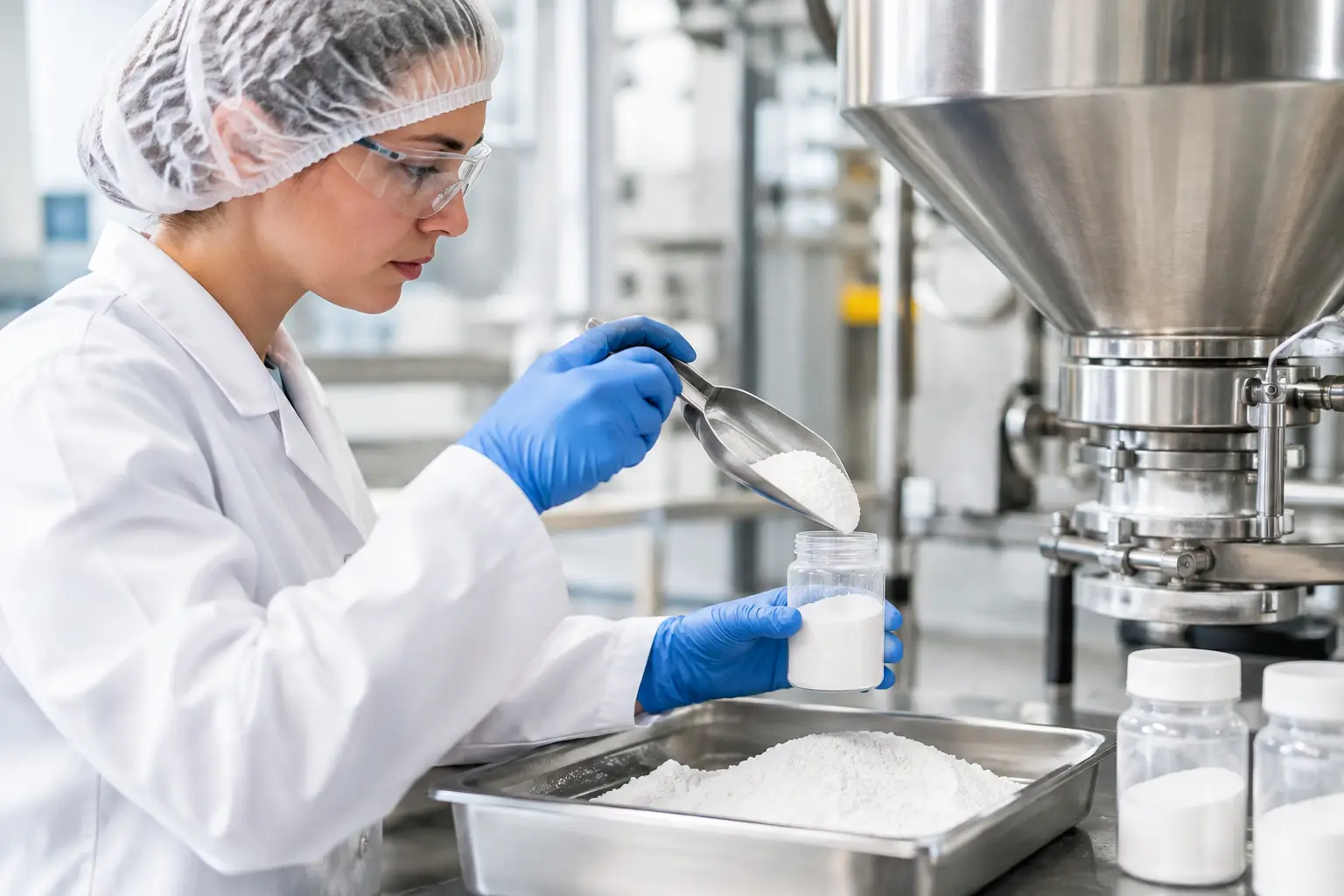
This is why representative trials matter. Laboratory and pilot-scale work provides the data needed to establish achievable fineness, throughput, energy use, temperature rise and classifier settings. It also reveals practical issues such as build-up, poor feeding, excessive noise, attrition or difficulty cleaning the equipment between products.
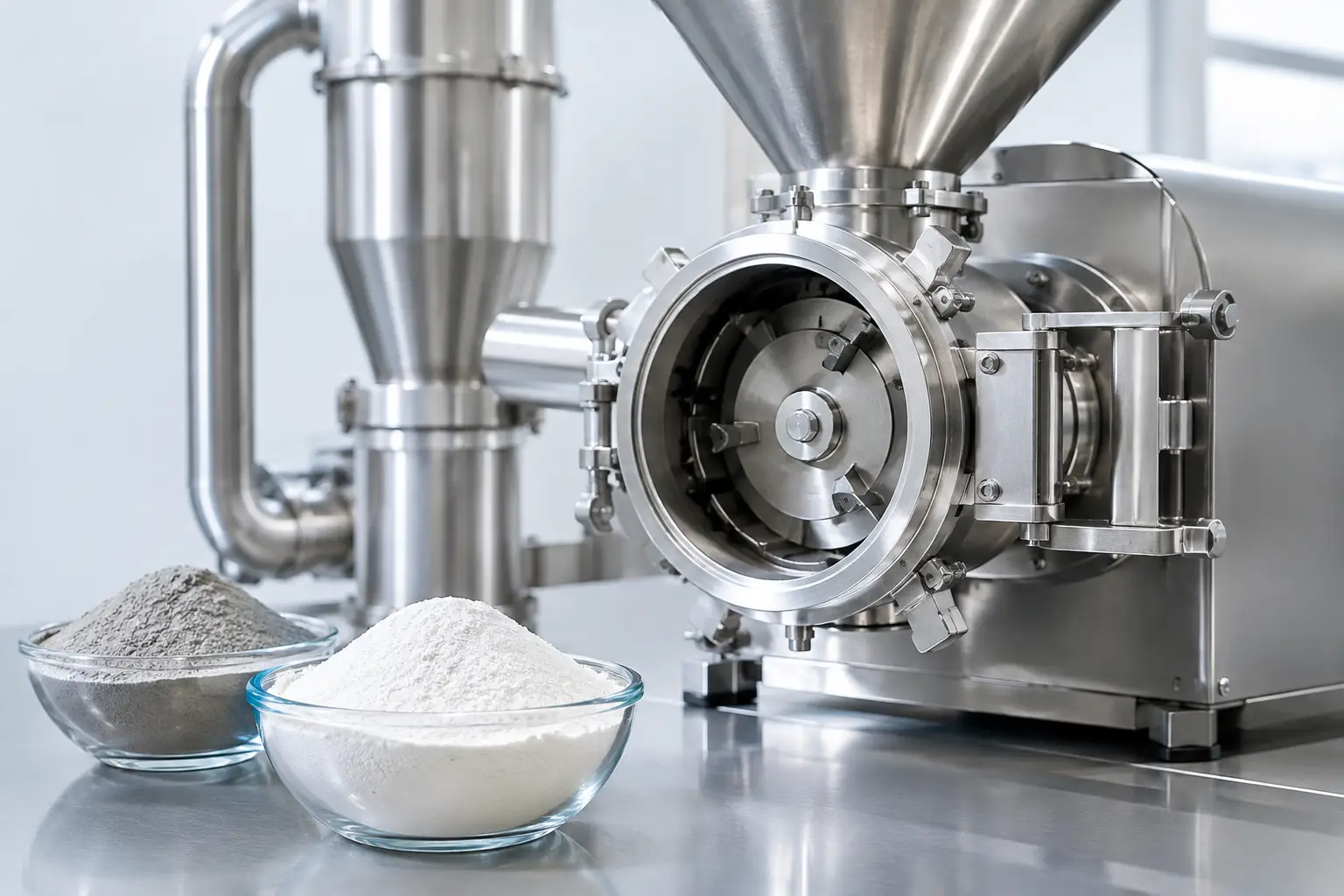
For a new product, the right answer may be a jet mill with integrated air classification to achieve fine, tightly controlled particle sizes without mechanical contact at the grinding zone. For a free-flowing material requiring a medium-fine product, a pin mill or turbo mill may offer a more economical route. Cone mills are often suited to deagglomeration and sizing in sanitary processes, while hammer mills can provide dependable coarse-to-medium reduction for many bulk solids.
There is no universally best mill. The right selection depends on product chemistry, target specification and total process duty.
Milling and classification must work together
Where narrow particle size control is essential, the classifier is not an optional add-on. It determines which particles leave the system as finished product and which return for further size reduction. Air classifier mills combine impact milling and dynamic classification in a compact arrangement, offering a controllable route to fine powders while reducing the risk of oversized particles passing into the product stream.
Separate milling and classification stages can be preferable where throughput is high, wear is significant or the process requires greater flexibility. This arrangement may allow the mill and classifier to be adjusted independently, but it introduces extra transfers and controls. The trade-off is justified when it improves product control, maintenance access or future scalability.
Integration determines real production performance
A mill quoted at a certain output does not guarantee that the line will deliver that output. The usable capacity of a powder processing system is set by its limiting stage. It may be the feeder, the pneumatic conveying line, the filter, the classifier, the mixer or the packing station rather than the grinding chamber.
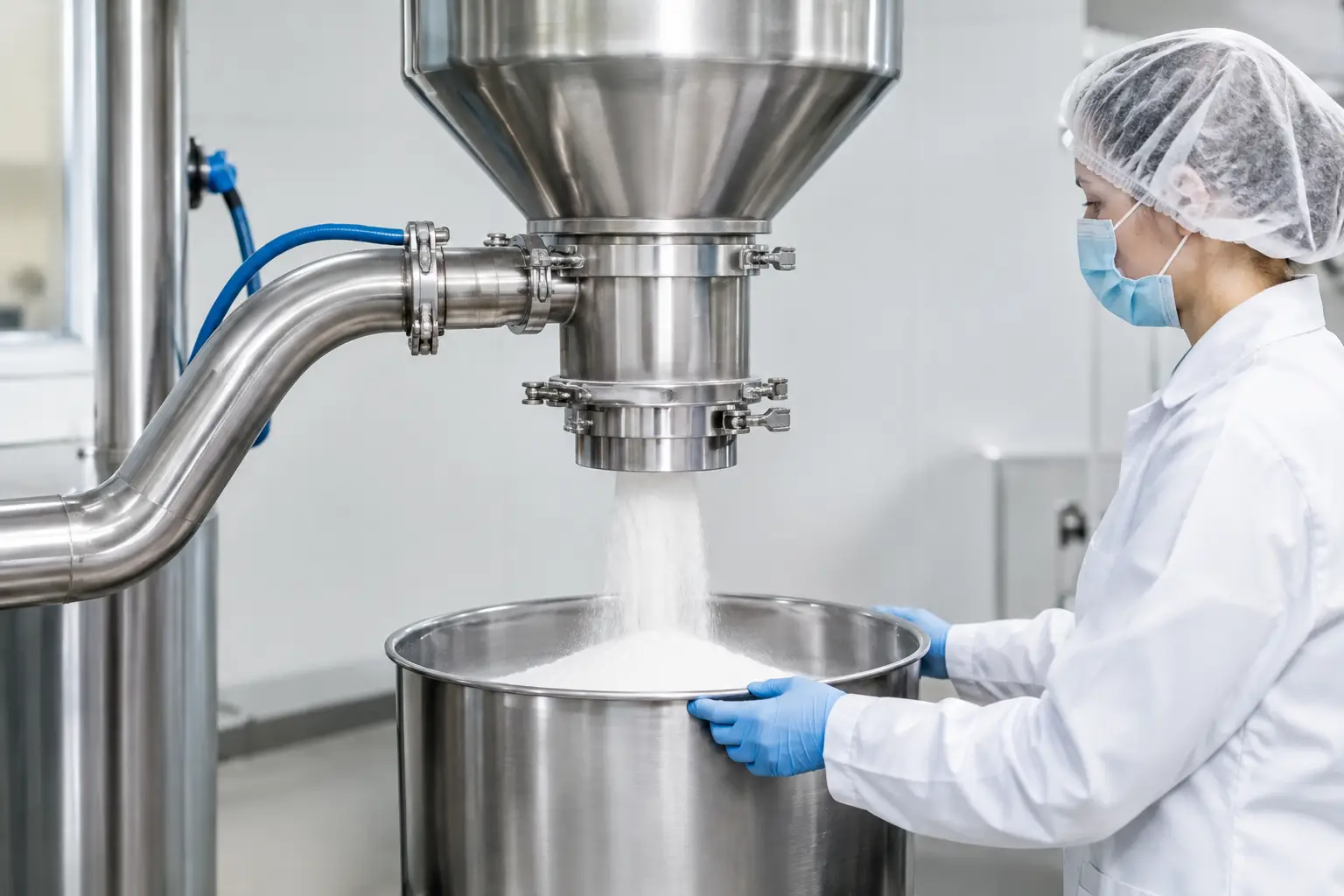
Accurate dosing is particularly important. A variable-speed screw feeder, rotary valve or loss-in-weight feeder must supply material consistently enough to keep the mill operating within its intended range. An inconsistent feed can widen particle size distribution, increase energy consumption and create pressure fluctuations in pneumatic systems.
Material handling also deserves early engineering attention. Dense mineral powders, fragile agglomerates and cohesive fine powders require different conveying strategies. Pneumatic conveying can provide enclosed, clean transfer between process stages, but air velocity, line length, bends, receiver design and filtration must suit the material. Excessive velocity can degrade friable products or create unnecessary wear, while insufficient velocity can result in deposits and unstable flow.
Effective dust collection is both a product-quality and plant-safety requirement. Filter selection, pressure relief, earthing, explosion protection and isolation arrangements should be considered as part of the core design where combustible dusts are present. Retrofitting these measures after equipment selection often adds cost and constrains layout options.
Select the level of customisation that the process needs
Standard equipment can be the correct commercial decision for stable applications with known material behaviour. However, high-specification production often benefits from application-specific engineering. This may include contact surfaces in selected stainless-steel grades, sanitary finishes, quick-release access, wear-resistant linings, inert gas operation, cryogenic milling, specialised sealing or automated cleaning arrangements.
Cryogenic milling is a clear example. Cooling a heat-sensitive, elastic or oily material with liquid nitrogen can make it more brittle and improve grinding efficiency. It can also preserve volatile flavours or active ingredients. Yet it introduces utility consumption, process controls and safety considerations that are unnecessary for materials that mill effectively at ambient temperature. The value lies in matching the design to the material, not specifying complexity by default.
Automation should be assessed in the same way. Basic interlocks and local controls may be sufficient for a single-product line with regular operator oversight. Multi-product or regulated facilities may require recipe management, batch traceability, controlled access, data capture and integration with plant-level systems. The best approach is one that supports repeatable production without making routine operation difficult to maintain.
Design for cleaning, maintenance and changeover
A system’s purchase price is only part of its cost. Long-term value is shaped by cleaning time, wear-part replacement, energy use, downtime and the labour required to manage material transfers. These factors are especially significant where plants run short campaigns, high-value ingredients or abrasive products.
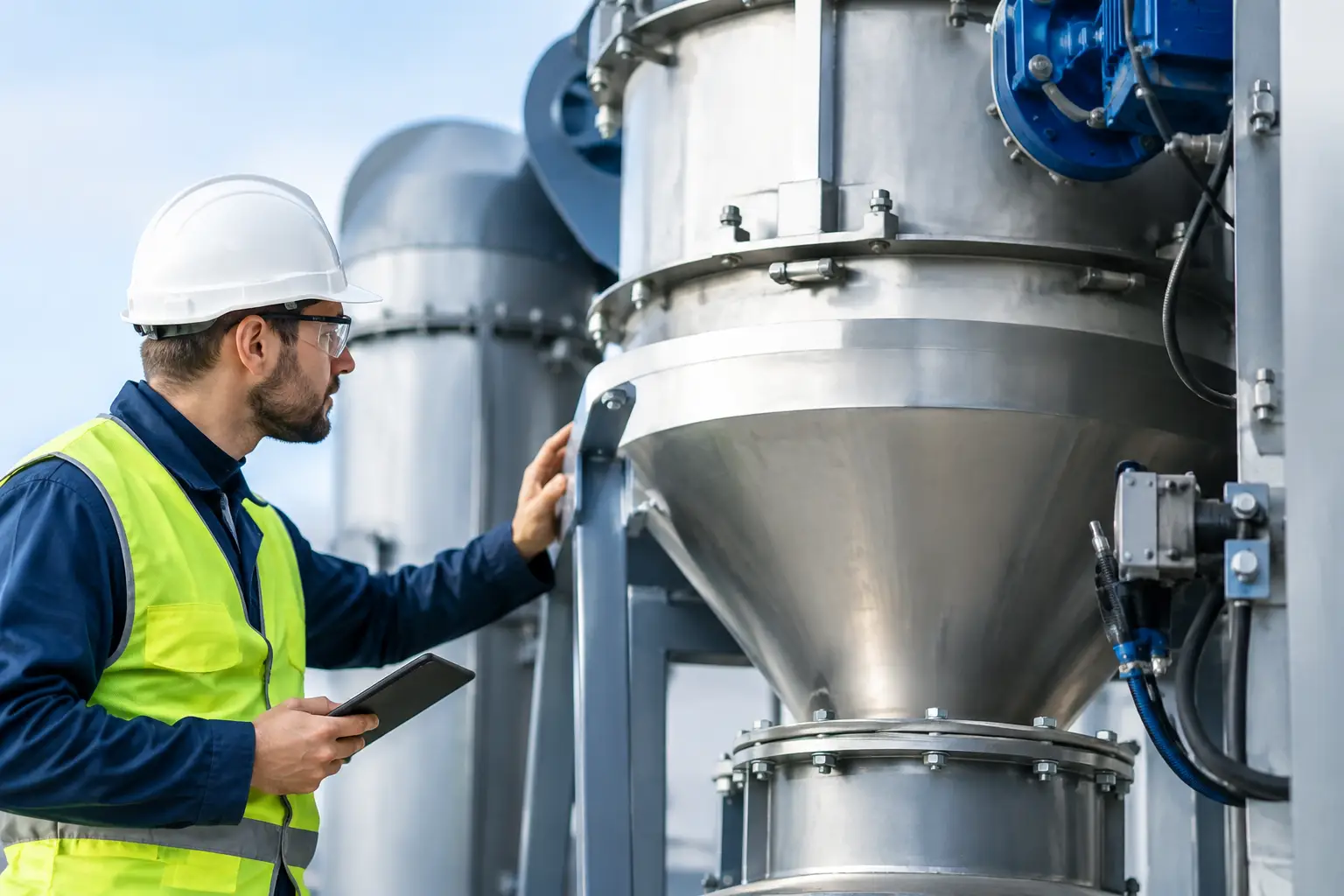
Access points should allow operators to inspect and clean product-contact areas without lengthy dismantling. Where cross-contamination is a risk, the system must minimise dead zones and retained material. A design that appears compact on a layout drawing may be less suitable if filters, mill internals or conveying receivers cannot be serviced safely.
Wear management is equally practical. Abrasive powders may require hardened or ceramic-lined components, while the process should be arranged to make replacement parts accessible. Specifying suitable materials at the outset can reduce unplanned stoppages and protect particle size consistency as equipment ages.
Plan for scale-up before installing the first line
Manufacturers often begin with a pilot requirement and then need commercial throughput sooner than expected. Scale-up is more reliable when the production line is developed from trial data and uses a process principle that can be reproduced at larger scale. Simply choosing a bigger mill may not reproduce the same residence time, air flow, feed behaviour or classifier performance.
DP Pulveriser UK supports this progression from laboratory development through to full-scale production, combining milling, classification, mixing and powder handling into engineered process solutions. This is particularly valuable where a product specification must remain consistent as volumes increase.
Questions procurement and engineering teams should resolve
Before comparing proposals, teams should agree the performance measures that genuinely define success. This normally includes guaranteed throughput at the target particle size, expected yield, acceptable temperature range, utilities, cleaning requirements, containment expectations and service access. It should also identify what happens when feed properties vary within the normal supply range.
Ask suppliers to explain the boundaries of their performance assumptions. Is quoted capacity based on continuous operation with a specific feed size and moisture level? Does the proposal include the feeder, filters, controls and conveying equipment needed to achieve that rate? Are commissioning, operator training, documentation and after-sales support included in the project scope?
A clear answer is more valuable than an optimistic capacity figure. It allows a like-for-like comparison of capital cost, operating cost and technical risk.
The strongest powder processing investment is one that gives operators controlled, repeatable production from the first shift and still makes engineering sense when product volumes, specifications or compliance demands change. Start with material evidence, specify the whole process, and give equal weight to maintainability as to peak throughput.