DP Pulveriser UK - Innovating the Future of Size Reduction
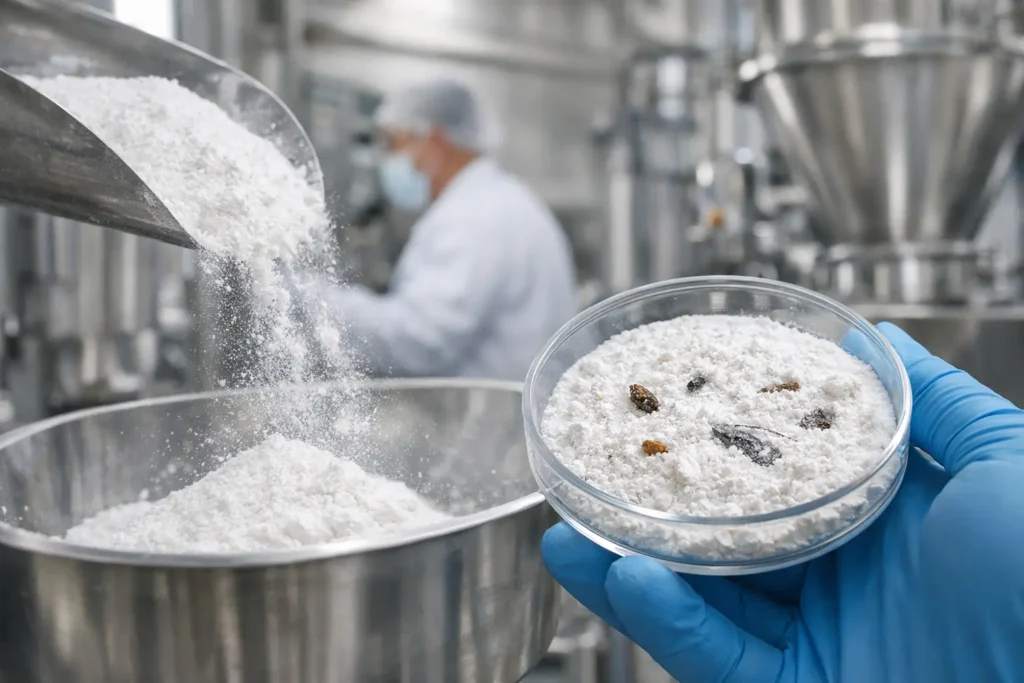
A single dark speck in a white food powder, a trace metal result in a pharmaceutical batch, or an unexpected particle in an electrode material can stop production immediately. Powder contamination risks are not confined to the mill itself. They develop across the complete process, from raw-material receipt and feeding through size reduction, classification, transfer, storage and cleaning.
For high-specification manufacturers, contamination control is a process-engineering requirement rather than a final inspection activity. The most effective approach identifies where foreign material, carryover, wear debris and environmental ingress can enter the product, then specifies equipment and operating controls that remove those routes at source.
Where powder contamination risks begin
Contamination is often discussed as though it has one cause. In practice, several mechanisms may overlap, and their significance depends on the product, particle size, batch value and applicable standards. A mineral application may tolerate a degree of material wear that would be unacceptable in food, pharmaceutical, nutraceutical or battery production.
The starting point is to distinguish between external contamination and internally generated contamination. External contamination enters from the surrounding environment, incoming materials, operators, cleaning tools or utilities. Internal contamination is created within the process by abrasion, poor seals, degraded gaskets, retained material from a previous batch or component failure.
Fine powders increase the challenge. They are easily dispersed, can settle in inaccessible areas and may cling to surfaces through electrostatic charge. A system that appears clean at visual inspection can still retain enough material to compromise a sensitive formulation or analytical result.
Raw materials and incoming handling
Contamination control begins before milling. Raw materials may contain packaging fragments, fibres, metal particles, oversize lumps or residue from upstream processing. These contaminants can damage equipment as well as enter the finished powder.
Appropriate screening, magnetic separation and material inspection can reduce this exposure. The right arrangement depends on the product and process flow. Magnets are effective for ferrous fragments but will not address non-ferrous metal, polymer, mineral grit or previous-product carryover. They should form one layer of protection, not the entire strategy.
Wear from milling and classification equipment
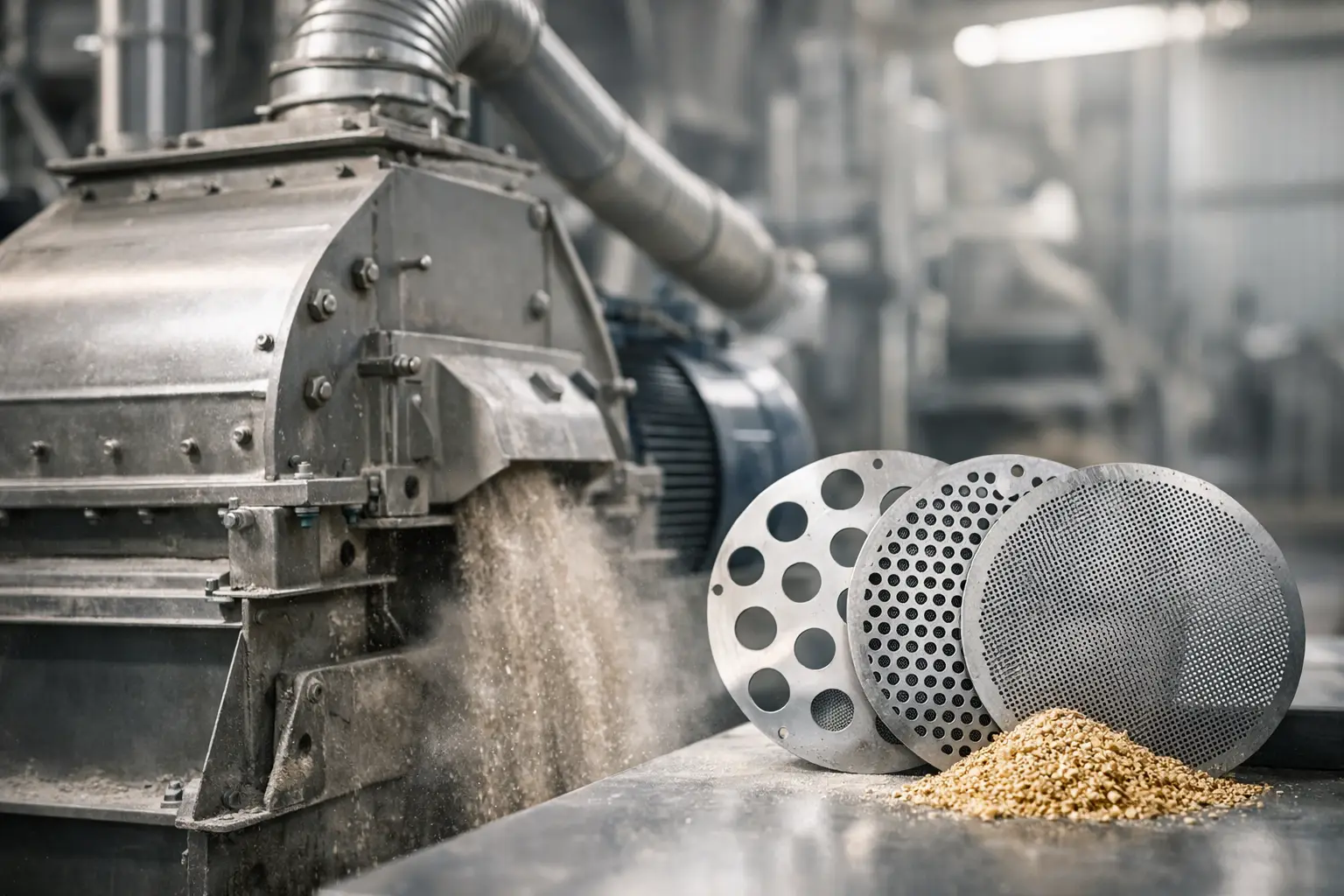
Every size-reduction process places material in contact with working surfaces. In hammer mills, pin mills, universal mills and cone mills, the choice of rotor, screen and liner material affects both wear life and the risk of product contamination. Jet milling can reduce mechanical contact in the grinding zone, but the wider system still requires careful design of injectors, classifiers, conveying lines and collection equipment.
Wear behaviour depends on feed hardness, abrasiveness, moisture content, target particle size, throughput and rotor speed. Operating a machine outside its intended duty can accelerate component degradation. It may also create particle size variation that masks the early signs of wear until contamination has already reached a problematic level.
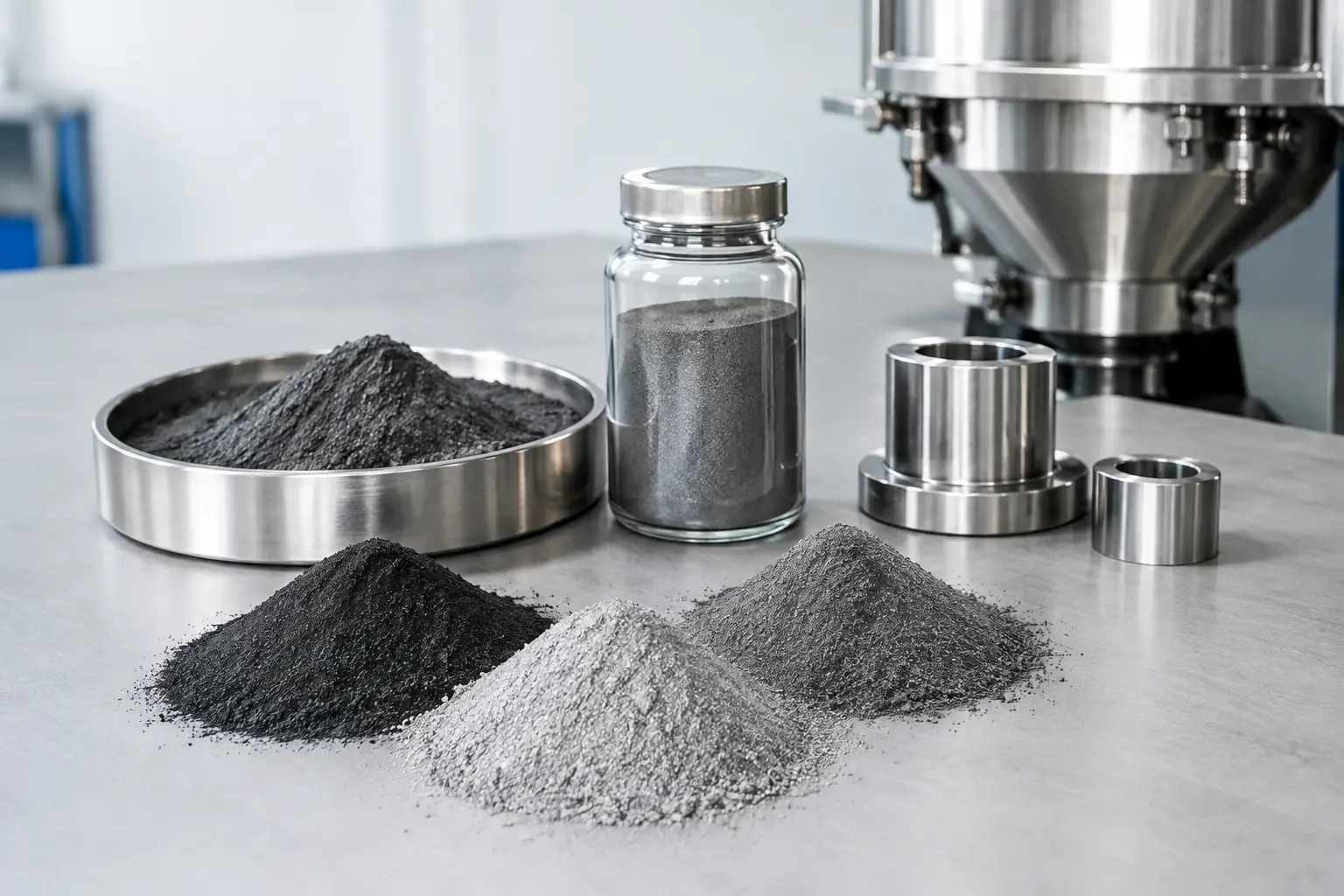
Material selection should therefore be application-specific. Stainless steel may be suitable for many hygienic processes, while harder alloys, ceramic linings or specialised coatings may be required for abrasive minerals, pigments or battery materials. There is a trade-off: the hardest contact surface is not automatically the best choice if it creates cleaning difficulties, changes product behaviour or adds unnecessary capital cost.
Contamination control through process design
A well-engineered powder line prevents contamination by limiting exposed transfer points, retaining clear access for inspection and making cleaning repeatable. Adding filters or end-of-line checks can help, but these measures cannot compensate for a process that continually creates or admits contaminants.
Contained transfer and dust management
Open charging, poorly sealed connections and uncontrolled dust extraction are common sources of environmental ingress and cross-contamination. Powder released from one operation can migrate to another, especially where products are fine, dry or electrostatically active.
Contained conveying, correctly specified rotary valves, sealed discharge interfaces and balanced extraction reduce this exposure. However, containment must be designed around the actual powder. A cohesive material may bridge in a hopper; a free-flowing powder may leak through a connection that appears adequately sealed; an abrasive powder can quickly compromise valve clearances.
Pressure differentials also matter. Excessive negative pressure can draw unfiltered air into a system through imperfect joints. Insufficient extraction can allow airborne powder to escape into the production area. Engineering the airflow, filtration and collection system as one package is more reliable than treating dust control as an afterthought.
Eliminating product retention zones
Cross-contamination commonly originates in retained product. Dead legs in pipework, flat ledges in housings, inaccessible screw conveyors, poorly drained vessels and complex valve geometries can all hold powder after discharge. The problem becomes more acute where batches change frequently or formulations contain potent ingredients, allergens, colourants or active compounds.
Equipment should be assessed for cleanability as well as throughput. Smooth internal finishes, short and direct product paths, minimal joints, accessible doors and tool-free removal of selected components can materially reduce cleaning time and validation burden. For some applications, a fully disassemblable system is appropriate. For others, clean-in-place or wash-in-place capability may provide better repeatability, provided the equipment can be dried fully before the next batch.
The preferred cleaning method depends on the powder and sector. Dry cleaning avoids introducing moisture to hygroscopic products and can reduce turnaround time, but it demands effective vacuum recovery and disciplined procedures. Wet cleaning may remove adherent residues more thoroughly, yet adds drying requirements and may be unsuitable for water-reactive materials. There is no universal answer.
Operating practices that protect product quality
Even the best equipment design needs controlled operation. Preventive maintenance, documented cleaning and routine condition checks turn contamination prevention from a theoretical specification into a reliable production discipline.
A practical control plan should define how operators inspect contact parts, seals, screens, filters and flexible connections; how often they do so; and what triggers replacement. A torn screen, worn pin, degraded gasket or damaged filter element should be treated as a product-quality event, not merely a maintenance issue.
Trend data adds value here. Monitoring vibration, motor load, differential pressure, airflow and particle size distribution can reveal abnormal operating conditions before a visible failure occurs. A gradual increase in mill power, for example, may indicate changed feed behaviour, build-up or mechanical wear. The correct interpretation depends on the equipment and material, but the principle is consistent: process data can provide an early warning of contamination risk.
For regulated or performance-critical production, inspection records should connect component condition to batch traceability. If an investigation is required, the manufacturer needs to know which equipment configuration processed the batch, what cleaning took place, whether maintenance was completed and whether process parameters remained within the approved window.
Verification: testing without relying on testing alone
Product testing is essential, particularly where foreign-body, metal, microbiological or cross-product contamination carries a high consequence. Yet testing has limits. Sampling captures only a small portion of a batch, and a contaminant may be unevenly distributed.
Verification should combine product analysis with process evidence. This may include line-clearance checks, documented inspections, sieve integrity checks, magnet inspections, cleaning verification, environmental monitoring and retained-sample procedures. The exact programme should reflect the risk assessment and applicable quality system rather than copying a generic checklist.
A useful question is whether a control can prevent contamination, detect it early or only identify it after the batch is complete. Prevention is generally the most economical option. Early detection limits the scale of the issue. End-of-batch detection is necessary, but it is the least desirable point at which to discover a problem.
Selecting equipment for lower contamination exposure
When specifying a new mill or turnkey powder processing line, contamination risk should be evaluated alongside capacity, target micron size, energy use and footprint. It is easier and less costly to build cleanability, suitable contact materials and contained handling into the original design than to retrofit them after a quality incident.
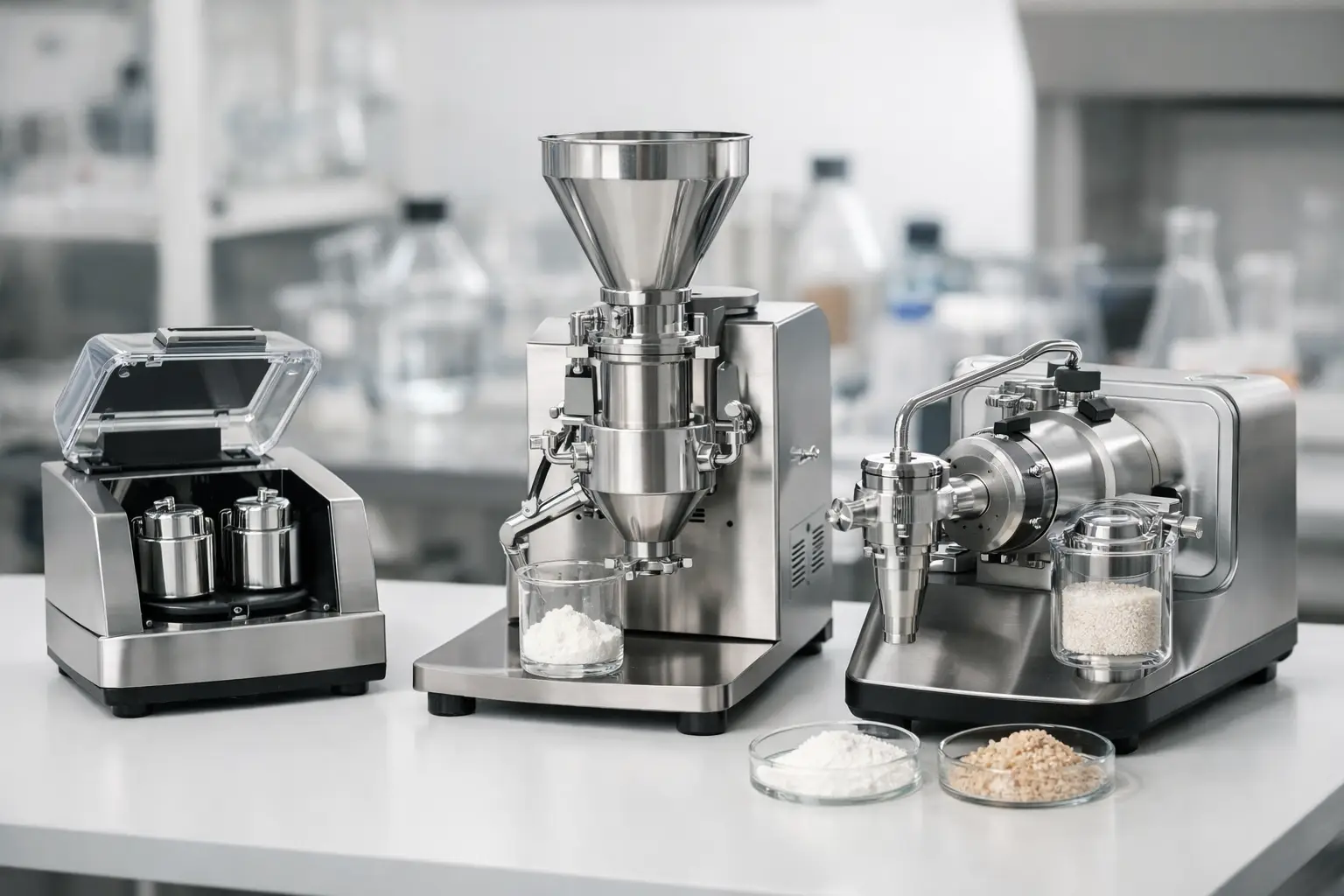
DP Pulveriser UK approaches this through application-specific engineering, considering the material characteristics and required production environment across milling, classification, mixing and powder transfer. Laboratory and pilot trials are particularly valuable where wear, retention or clean-down performance is uncertain. They provide evidence for selecting the milling principle, contact materials and system layout before committing to full-scale production.
The right solution may be a compact standalone mill with carefully controlled feed and discharge. It may equally be an integrated line with screening, magnetic separation, pneumatic conveying, dust collection, classification and sealed packing. The deciding factor is not the number of components. It is whether every interface supports the required level of product protection and operational control.
Contamination prevention works best when process engineers, quality teams and equipment specialists review the line together before installation. A detailed assessment of material behaviour, cleaning expectations and realistic operating conditions can turn a potential weak point into a controlled part of the process.