DP Pulveriser UK - Innovating the Future of Size Reduction
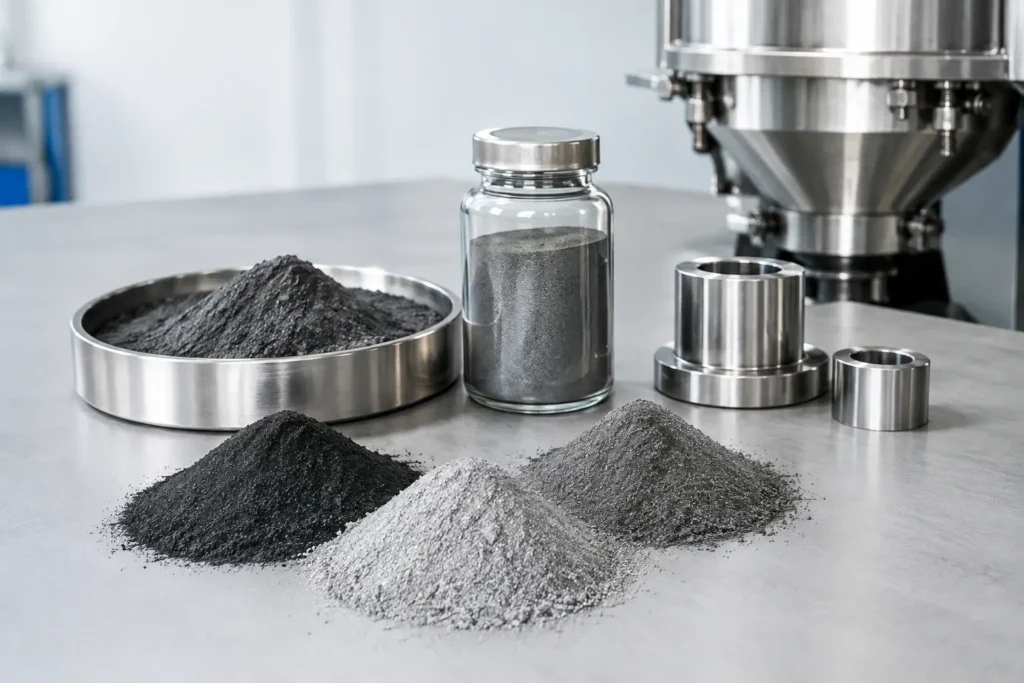
A metal powder processing guide must start with a practical reality: the required particle size is only one part of the specification. Shape, surface condition, apparent density, oxygen content, flowability and particle size distribution can all affect downstream pressing, sintering, coating, blending or additive manufacturing. A mill selected solely on its advertised micron range can create costly variability elsewhere in the process.
For production teams, the objective is to produce a repeatable powder at the required throughput while controlling contamination, heat generation, dust, yield and operating cost. That demands an engineered view of the complete line, from material receipt through to packed product.
Define the powder specification before selecting equipment
A useful process specification goes further than a single target size such as 45 microns. It should set an acceptable particle size distribution, including the top-size limit and fines content, alongside moisture, bulk density, flow characteristics and purity requirements. The required product form also matters. A narrow fraction for thermal spraying has different processing needs from a broader powder blend used in powder metallurgy.
The starting material determines how realistic and economical size reduction will be. Brittle alloys, mineral-bearing metals and pre-processed granules can often be milled effectively. Ductile metals may flatten, smear or cold-weld instead of fracturing, particularly when high mechanical energy is applied. Materials that work-harden may become easier to break as processing continues, but they can still place significant demands on the milling system.
It is also necessary to establish whether the powder is produced by milling, or whether milling is a conditioning step after atomisation, crushing, drying or agglomeration. This distinction changes the equipment duty. Removing occasional oversize particles from an atomised powder is not the same task as reducing metal turnings or flakes to a controlled fine grade.
Test the material at representative scale
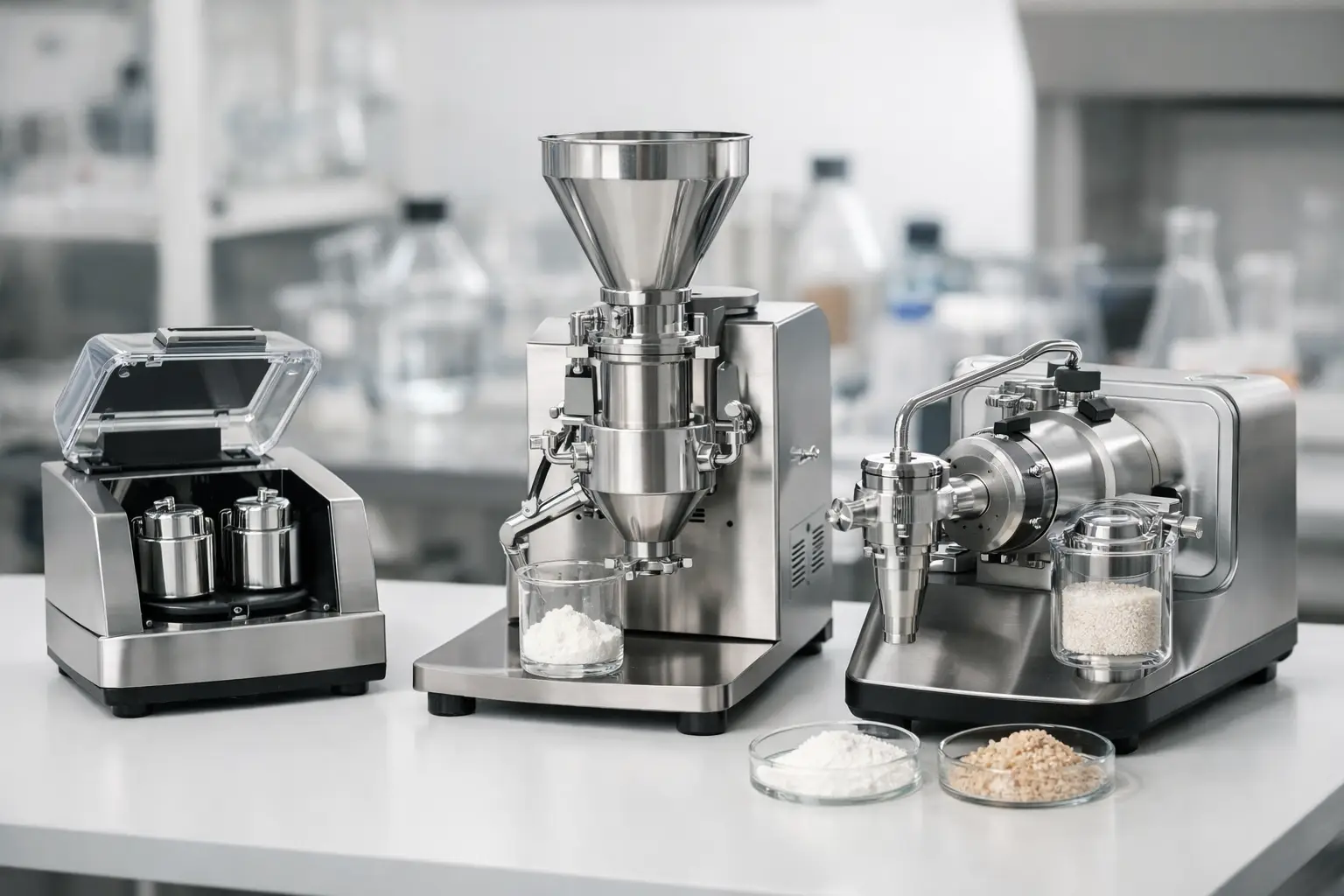
Laboratory trials are valuable, but scale-up cannot rely on particle size alone. Feed rate, air volume, residence time, temperature and classifier performance all influence the result at production scale. Trials should use representative feedstock and assess a full set of product properties, including the proportion of recoverable on-spec material.
This work identifies whether a single-pass process is viable or whether a closed-loop circuit is required. In many metal powder applications, oversize is separated and returned to the mill, while correctly sized product is removed continuously. This can improve yield and prevent excessive milling of material that has already reached specification.
Select a milling method for material behaviour
The right mill depends on hardness, brittleness, feed size, target fineness, contamination limits and thermal sensitivity. There is no universal machine for metal powder processing, and forcing a material through an unsuitable design usually increases wear, energy consumption and product variability.
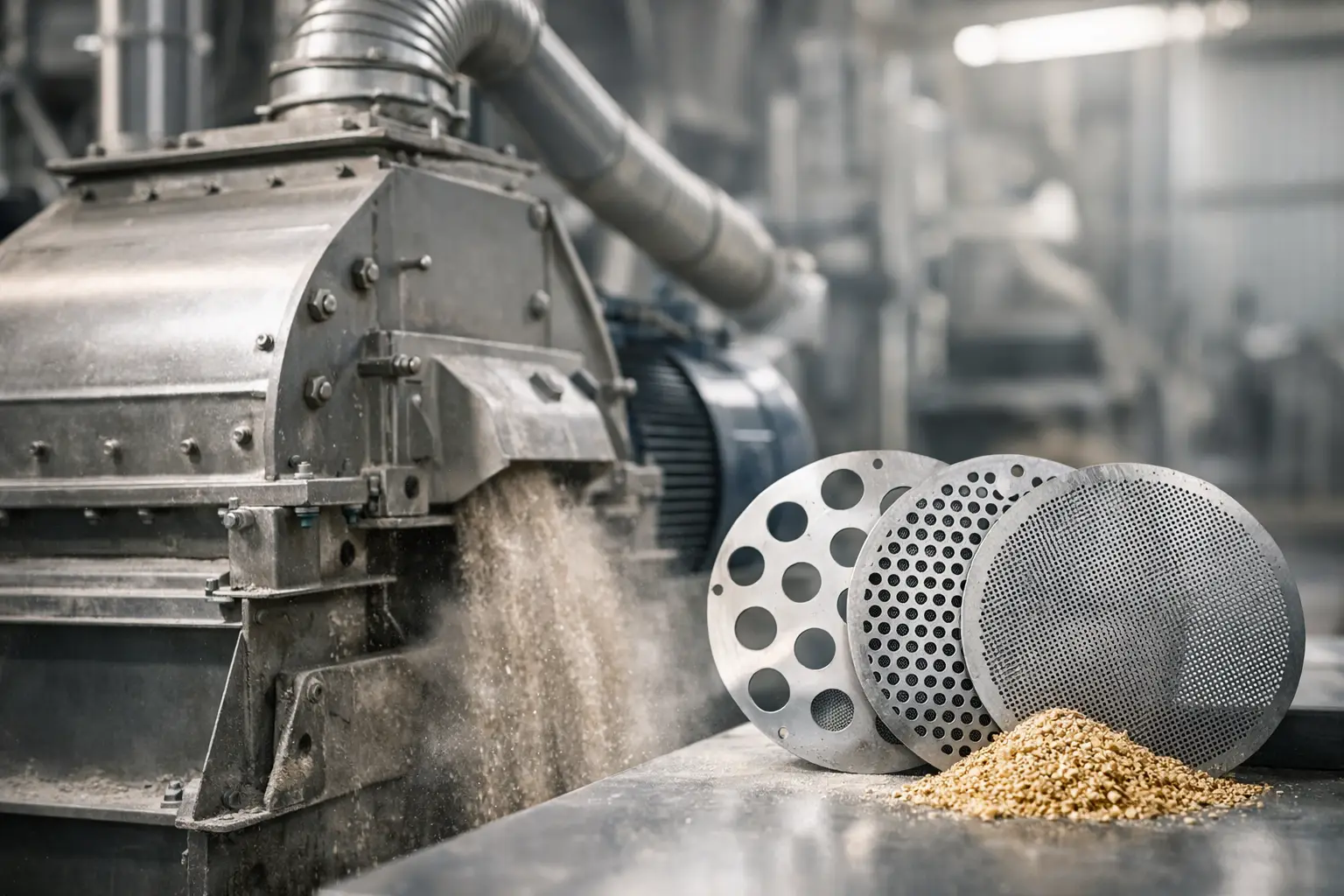
Hammer mills and universal mills can provide effective pre-size reduction for brittle feed, coarse granules and agglomerates. They are often used ahead of finer milling stages where controlled feed size is essential. Their simplicity can make them a sound choice where the product specification is relatively coarse, but they may generate a wider distribution than more selective technologies.
Pin mills and turbo mills offer higher impact and shear for materials that can tolerate mechanical processing. They can be configured to suit a range of feed rates and target sizes, although the process must be monitored for temperature rise and wear. Internal geometry, tip speed and screen or classifier arrangement each influence the final powder profile.
For fine powders where contamination and heat control are critical, jet milling may be more appropriate. Particle-on-particle impact can reduce contact with internal grinding components, supporting high-purity applications. An integrated air classifier enables control of the cut point, allowing fine material to leave the system while oversize remains in the milling zone. Jet milling has higher compressed-air demand, so its benefits should be weighed against energy cost and the required production rate.
Cryogenic milling can be particularly relevant for ductile metals, polymer-coated metal compounds or temperature-sensitive composites. Cooling changes fracture behaviour and can reduce smearing or agglomeration. However, the system requires suitable insulation, controlled cryogen use and an economic case based on product value, yield and quality improvement.
Classification is where control is established
Milling creates particles. Classification determines which particles qualify as product. For metal powders with tight specifications, classification should be treated as a core process stage rather than an accessory added after the mill.
Air classification separates particles according to aerodynamic behaviour, which is influenced by size, density and shape. It is well suited to fine powders and can operate as part of a continuous circuit. The classifier wheel speed, airflow and feed loading must be balanced carefully. Increasing wheel speed generally produces a finer cut, but it may lower throughput or raise the proportion of material returned for reprocessing.
Screens and sieves remain valuable for coarser cuts, final security screening and removal of foreign material. They are straightforward and effective, but fine metal powders can blind meshes, agglomerate or generate static-related handling issues. In such cases, a combined approach may be appropriate: air classification for the main separation followed by a final screen before packaging.
The process team should define how particle size will be measured and reported. Laser diffraction, sieve analysis and image analysis do not describe powders in exactly the same way. Aligning the test method with the customer specification avoids a situation where an apparently compliant product fails acceptance because the measurement method differs.
Control heat, contamination and oxidation
Metal powder processing involves more than particle breakage. Every contact surface, air stream and transfer point can affect product quality. Wear from liners, grinding elements and classifiers may introduce unwanted material into high-specification powders. Equipment construction, wear protection and replaceable components should therefore be selected with the alloy chemistry and permissible contamination levels in mind.
Heat can alter surface condition, promote oxidation and increase the tendency of fine particles to agglomerate. Milling energy, air temperature, bearing condition and mill residence time should all be considered. Air cooling may be adequate for some duties; others require chilled process air, inert gas or cryogenic operation.
Where reactive, combustible or oxidation-sensitive powders are involved, containment and atmosphere control are central engineering requirements. Aluminium, magnesium, titanium and other fine metallic powders may present significant fire or dust explosion hazards. A safe system requires a material-specific risk assessment covering ignition sources, dust extraction, pressure relief or suppression, earthing, isolation, housekeeping and, where required, inerted processing.
This is also an area where process design should consider maintenance. A system that is safe in normal operation but difficult to clean, inspect or isolate is less likely to remain safe over its working life.
Design material handling as part of the process
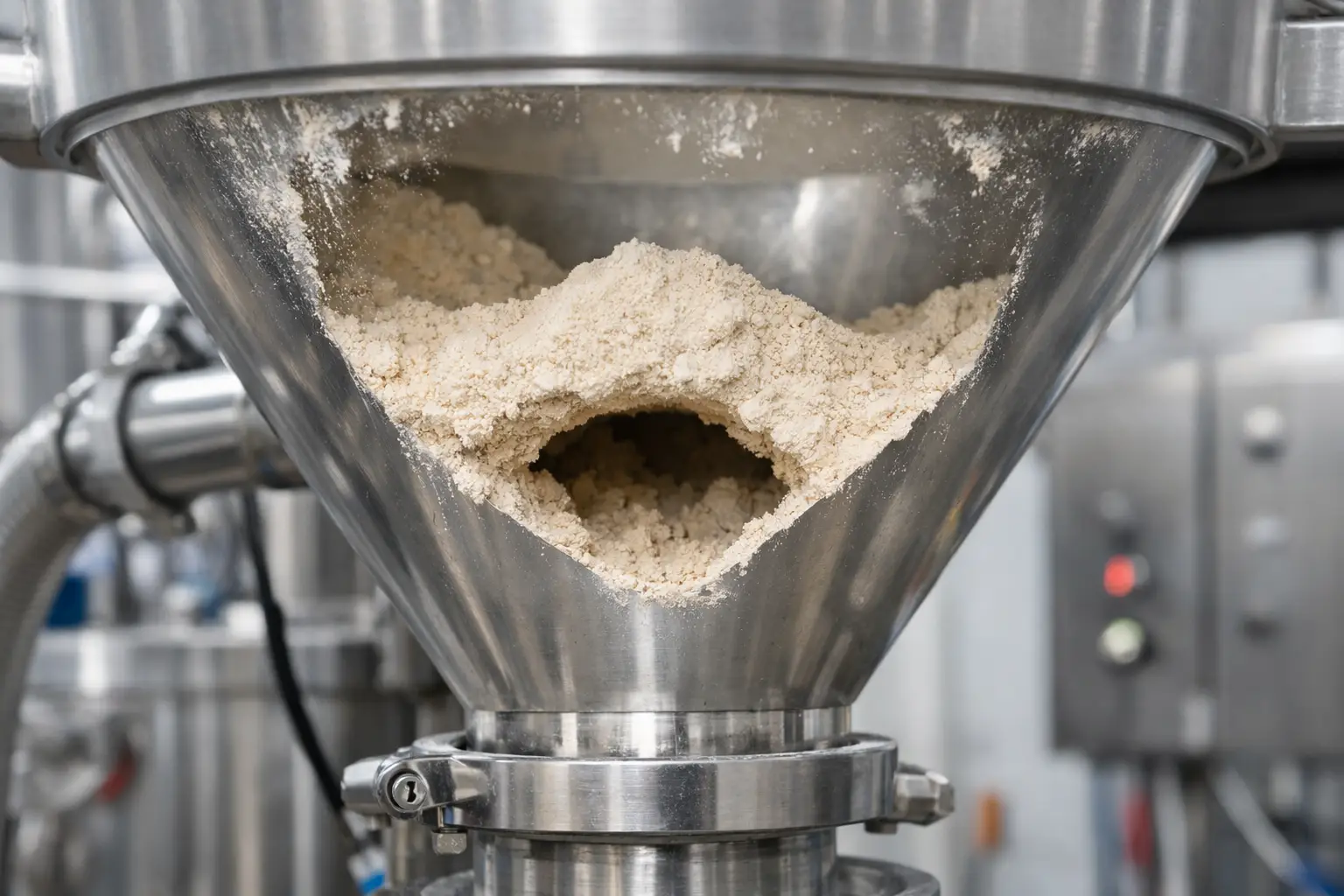
Fine metal powders can segregate, compact, bridge in hoppers, leak from poor seals or become airborne at transfer points. Conveying and storage arrangements should preserve the particle size distribution achieved by the mill and classifier rather than undo it.
Dense-phase pneumatic conveying, vacuum transfer, enclosed screw conveyors and suitably designed intermediate bulk containers may each be appropriate, depending on powder behaviour and throughput. The choice depends on distance, transfer frequency, abrasion, oxygen exposure and the need to avoid segregation. Short, controlled transfer routes are generally preferable where powder integrity is critical.
Feed consistency has equal importance. Variable feed rate can overload a mill and shift classifier performance, producing a broader distribution or excessive oversize. Loss-in-weight feeders, controlled rotary valves and level-managed hoppers help maintain stable operating conditions. For blended or multi-component powders, mixing time and mixer geometry must be validated to achieve homogeneity without damaging particle shape.
Measure performance beyond tonnes per hour
Throughput is necessary, but it is not the only measure of a successful production line. A high feed rate that creates excessive recirculation, rejects or equipment wear can increase the real cost per kilogram of compliant powder.
Production teams should track specific energy consumption, yield, particle size distribution, downtime, wear-part life, housekeeping demand and cleaning time. These metrics reveal whether a process is genuinely efficient. They also provide a better basis for comparing equipment options with different capital cost, utilities demand and maintenance requirements.
Automation can strengthen consistency by recording mill load, feeder rate, airflow, classifier speed, temperature and differential pressure. Trend data makes it easier to recognise gradual changes in feedstock or component wear before product moves out of specification. For regulated applications, this data also supports batch traceability and process validation.
Build for scale-up and long-term operation
An R&D system may prove that a powder can be made, but a production system must make it predictably over extended campaigns. Scale-up should account for cleaning regimes, operator access, spare parts, utility capacity, dust collection and packaging rate. The bottleneck is often outside the mill itself.
A modular line can offer useful flexibility where grades, batch sizes or future capacity are likely to change. Equally, a dedicated continuous system may deliver a lower cost per tonne for stable, high-volume demand. The correct choice depends on the commercial operating model as much as the powder specification.
DP Pulveriser UK approaches these decisions as an integrated engineering exercise, combining milling, classification, mixing and powder handling around the material and production target. The strongest result is not simply a finer powder. It is a stable, safe process that delivers the same powder quality shift after shift, with an operating cost the plant can sustain.