DP Pulveriser UK - Innovating the Future of Size Reduction
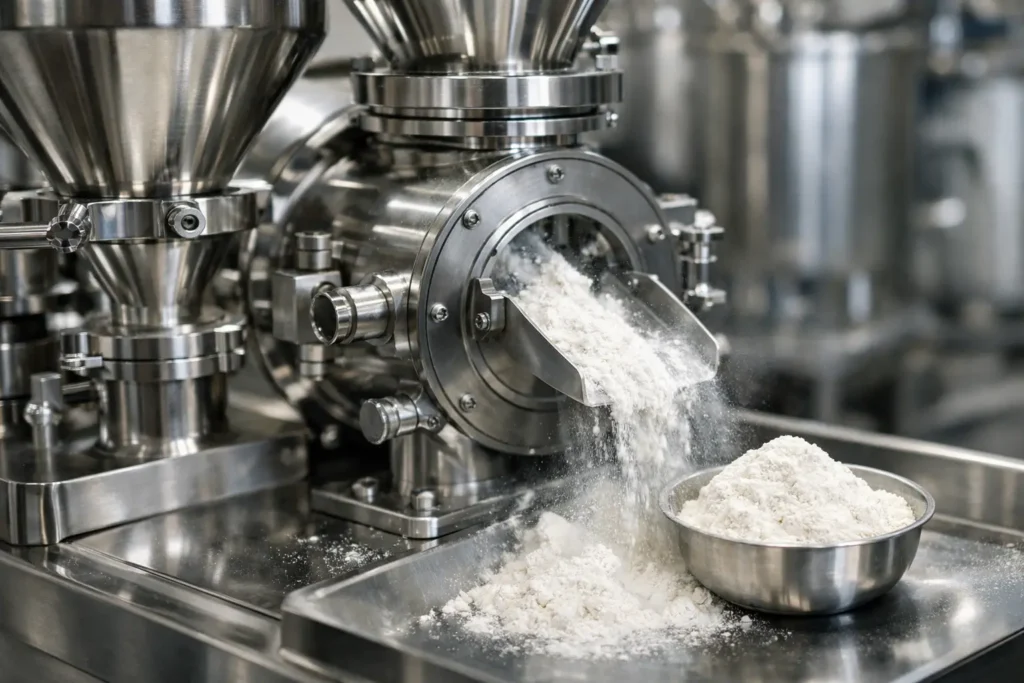
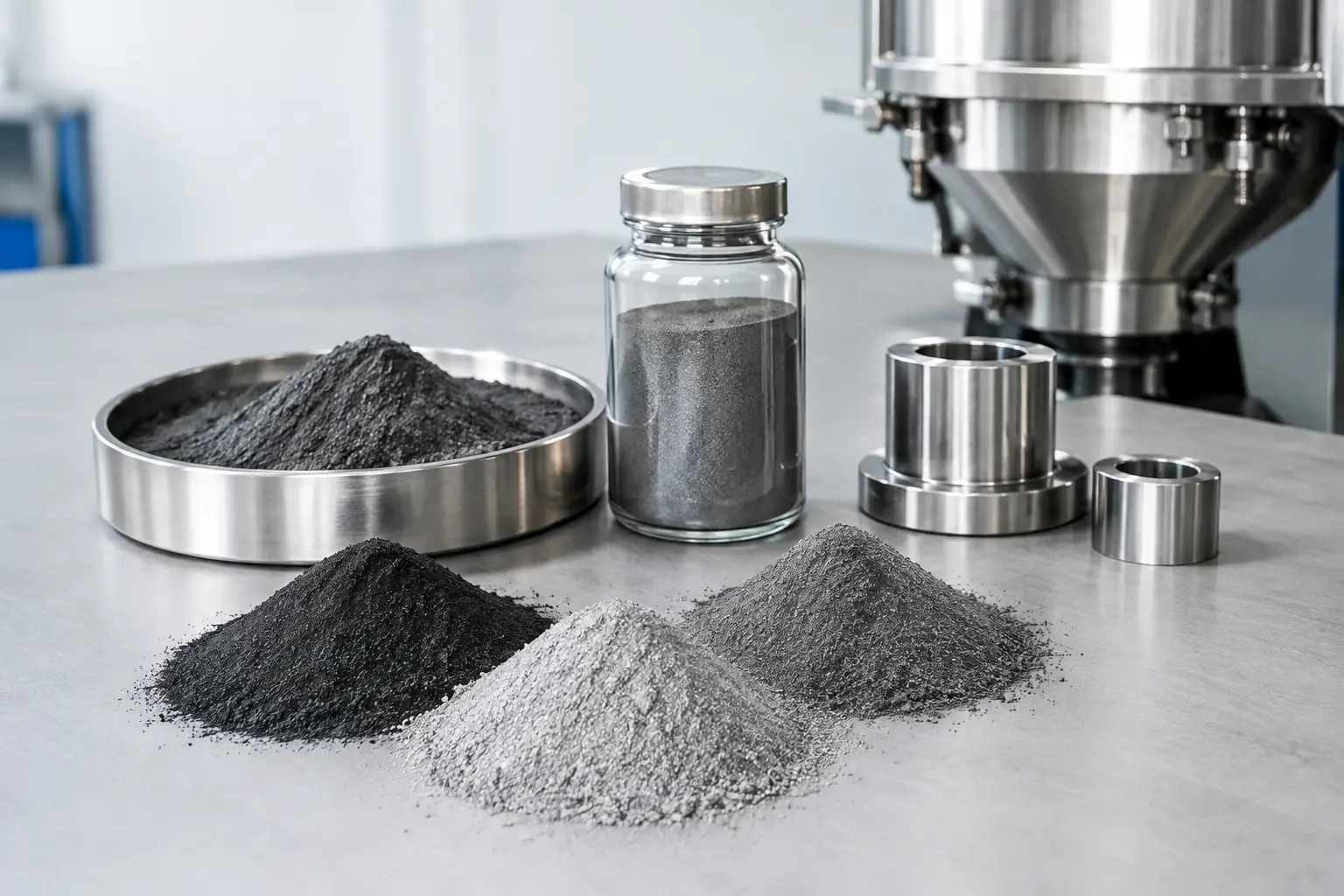
A powder that flows cleanly at ambient conditions can become a production constraint within minutes of entering a mill. Heat generation, moisture pickup, fat content and fine-particle agglomeration can cause screen blinding, chamber build-up, unstable throughput and an off-specification particle size distribution. Selecting the best mills for sticky powders therefore means assessing the material as a processing system, not simply comparing nominal mill capacities.
For industrial manufacturers, the right answer is usually a combination of suitable mill geometry, controlled feed conditions, temperature management and correctly engineered discharge and conveying equipment. A mill that performs well in a short trial can still struggle in continuous production if the product is not conditioned, classified or conveyed appropriately.
Why sticky powders challenge conventional milling
Sticky powders adhere to contact surfaces rather than breaking and discharging cleanly. The cause may be inherent tackiness from oils, resins, waxes or sugars. It may also develop during processing when mechanical energy raises product temperature, when humidity increases moisture content, or when a fine fraction coats larger particles and promotes agglomeration.
This behaviour changes the milling duty. Instead of repeated, efficient particle breakage, product can circulate in the grinding chamber, coat the rotor or pins, block screens and compact in transfer lines. The result is often a wider particle size distribution, reduced output and more frequent cleaning intervals. In pharmaceutical, food, nutraceutical and chemical applications, it can also introduce quality, traceability and hygiene concerns.
A meaningful equipment assessment should establish the material’s softening point, moisture sensitivity, oil or fat content, target particle size, permitted temperature rise and required production rate. Feed form matters as well. A free-flowing granular feed behaves very differently from flakes, filter cake, warm pastilles or compacted agglomerates, even where the chemistry is identical.
Best mills for sticky powders: matching technology to the duty
There is no universal best mill for a sticky product. The most effective configuration depends on whether the material needs gentle deagglomeration, controlled granulation, fine grinding or micronisation. The following technologies are commonly considered, with different strengths and limitations.
Cone mills for controlled sizing and deagglomeration
Cone mills are often the appropriate starting point where the requirement is to break soft agglomerates, condition powder before blending, or achieve a controlled granular specification. Their low-speed, relatively gentle action limits heat generation and can reduce the risk of melting or smearing compared with high-energy impact milling.
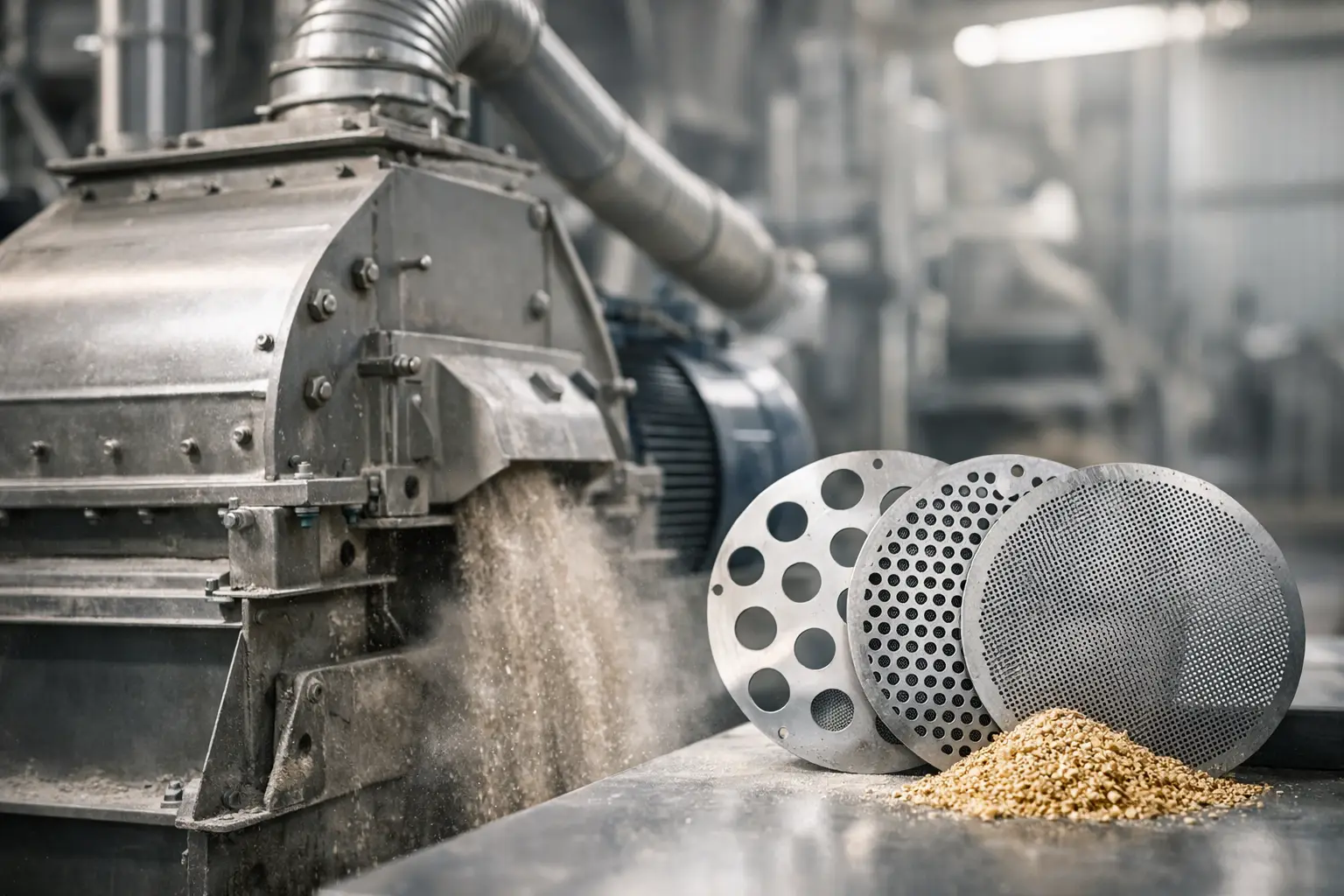
For sticky powders, screen selection and impeller design are critical. A more open screen can improve throughput and reduce blinding, but it may not achieve the required top size. Where a narrow fine specification is essential, a cone mill may be better used as a pre-conditioning stage before a finer grinding process.
Pin mills for fine products with controlled heat input
A pin mill provides high-impact particle reduction and can produce fine powders at useful throughputs. It is particularly effective for brittle materials that require a tighter product size than a cone mill can achieve. However, the high surface speed that gives a pin mill its performance can also generate heat, making it unsuitable for materials that soften rapidly unless cooling and feed control are properly engineered.
A cooled pin mill configuration can be effective for moderately sticky products, especially where the feed is dry and stable but becomes tacky during impact. Jacketed components, conditioned inlet air and regulated feed rates help maintain a more consistent operating window. If the product begins to coat the pin discs, reducing speed alone may not solve the problem. The process may require lower feed temperature, a coarser initial reduction stage or an alternative milling principle.
Turbo and universal mills for versatile impact grinding
Turbo mills and universal mills provide flexible impact-based reduction for many industrial powders. Their adjustable rotor and classifier arrangements can offer useful control where the material changes between batches or where multiple products are processed on one line.
They are not automatically the first choice for highly adhesive powders. Internal recirculation and fine classification can increase residence time, which may raise temperature and intensify build-up. They are better suited to products with limited tackiness, or to applications where cooling, air management and a carefully selected internal geometry keep the powder below its critical softening condition.
Hammer mills for coarse reduction and pre-milling
Hammer mills are dependable for coarse size reduction of dry lumps, crystals and friable solids. In a sticky-powder application, they are often most valuable upstream of a finer mill. Reducing large feed pieces into a consistent size can stabilise downstream dosing and minimise overloads in the final grinding stage.
Screened hammer mills can blind when processing highly adhesive materials. A screenless or low-retention configuration may provide a better result where the duty is primarily lump breaking rather than precision milling. The trade-off is less precise control of the final particle size distribution.
Jet mills and cryogenic systems for difficult fine powders
Where a product must be micronised and becomes sticky at relatively low temperatures, air jet milling or cryogenic milling may be the technically sound route. Jet mills use particle-to-particle impact, limiting the number of mechanical contact surfaces inside the grinding zone. This can reduce contamination and build-up while delivering fine particle size control.
Jet milling still requires careful consideration of moisture and feed behaviour. Hygroscopic materials can agglomerate in the air stream, and compressed gas quality must be controlled. It is also typically more energy-intensive than conventional mechanical milling, so it should be selected where particle size, product purity or thermal sensitivity justifies the operating cost.
Cryogenic milling lowers the material temperature sufficiently to make soft, waxy or oily products more brittle. It is often highly effective for polymers, food ingredients, botanical materials and specialty chemicals that smear under ambient grinding. The additional cost of cryogenic media, insulated equipment and vapour handling must be balanced against higher yield, less downtime and a more stable product specification.
Temperature control is usually the deciding factor
For sticky materials, temperature is not simply a monitoring point. It is a process control variable. A small increase in product temperature can move a powder beyond its glass transition or softening range, changing it from free-flowing to adhesive. This is why a mill’s installed power or maximum speed is less informative than its ability to manage energy at the product.
Effective approaches include chilled feed, water-cooled jackets, conditioned process air, lower rotor speeds, staged milling and short residence times. In some applications, operating at a slightly coarser grind before classification is more stable than forcing the entire duty through a high-energy mill. The final target can then be reached with controlled secondary milling or an air classifier system.
Temperature should be measured at the discharge and, where practical, within the milling or air-handling circuit. Surface temperature alone can be misleading because localised heat near impact zones may cause coating before it is visible in the discharged product.
Engineer the complete powder path
A suitable mill cannot compensate for poor upstream feeding or a restrictive downstream discharge. Sticky powders benefit from uniform, metered feeding that avoids surges into the grinding chamber. Depending on the material, this may require agitation, live-bottom hoppers, screw feeders, loss-in-weight dosing or controlled vibration. Bridging in a hopper is a process issue, not merely a handling inconvenience: inconsistent feed rate directly affects particle size and heat generation.
The discharge system should minimise dead zones and product hold-up. Correctly selected conveying velocity, bends, valve geometry and filter arrangements reduce the opportunity for powder to settle, compact or absorb moisture. For hygroscopic products, enclosed transfer and humidity-controlled air may be essential to maintain repeatable performance.
When hygiene, containment or hazardous-dust control is required, cleanability must be considered alongside milling efficiency. Tool-free access, polished product-contact surfaces, suitable seals and validated cleaning arrangements can materially reduce downtime. For high-value products, the lowest capital-cost machine is rarely the lowest-cost processing solution if cleaning and changeover consume production hours.
Prove performance at production-relevant conditions
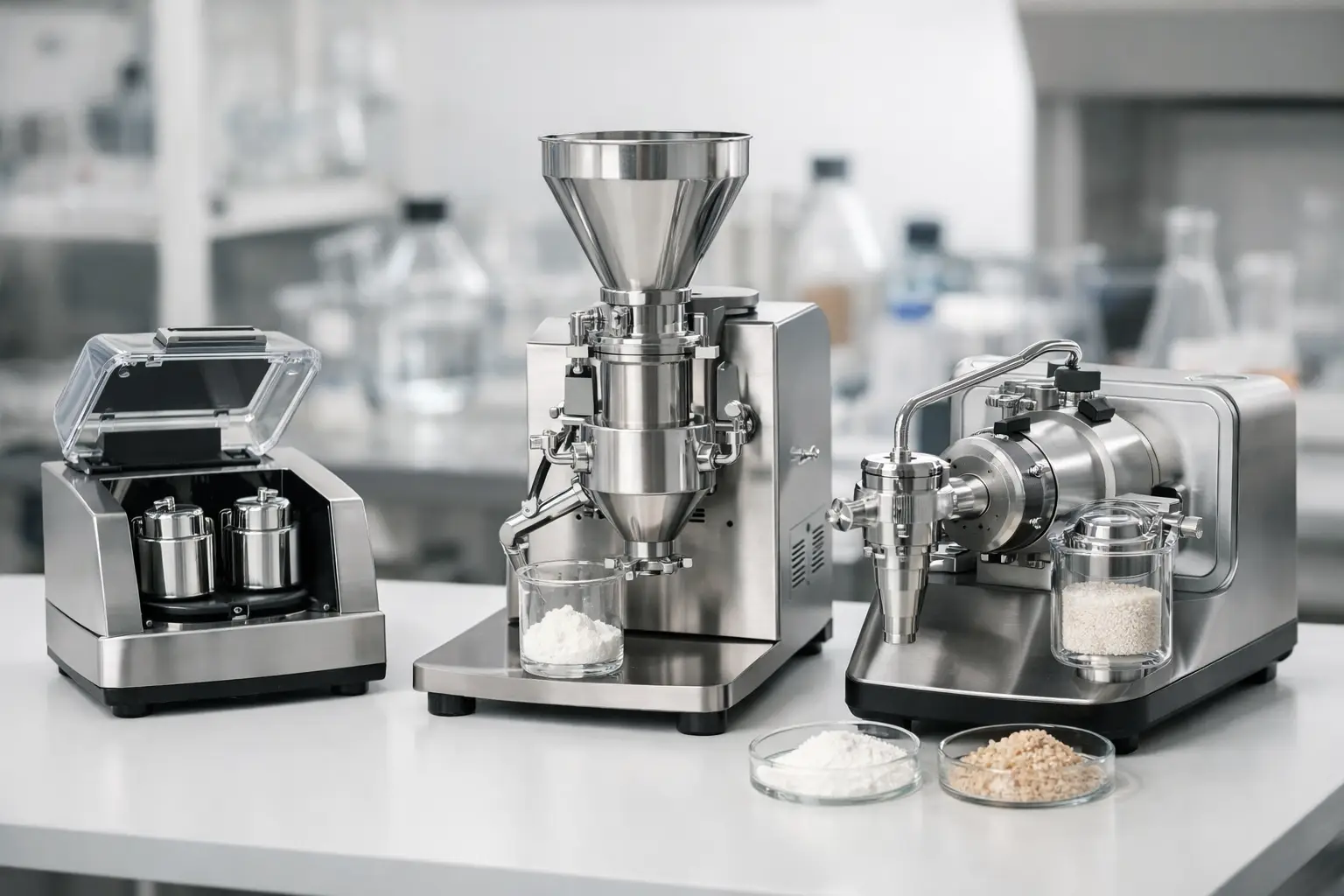
Laboratory trials are valuable, but sticky powders demand representative testing. The trial should use actual feedstock, including expected moisture range, temperature and bulk condition. It should run long enough to reveal coating, gradual screen blinding and thermal drift rather than relying only on an initial product sample.
Record throughput, energy consumption, product temperature, particle size distribution, yield and cleaning requirement. Assess the product after conveying too, since fragile agglomerates may reform or break down downstream. Scaling should account for residence time, air volume, heat removal and feeder behaviour, not just geometrically larger equipment.
DP Pulverizer UK approaches these duties as integrated powder-processing projects, combining milling, classification, feeding, cooling and handling around the material’s actual behaviour. This engineering perspective is particularly valuable where a product must move reliably from pilot work into commercial output without sacrificing specification control.
The strongest mill selection begins with a clear definition of what makes the powder sticky, then designs that constraint out of the line. When the mill, thermal controls and powder path are engineered together, difficult materials become predictable production processes rather than recurring downtime events.