DP Pulveriser UK - Innovating the Future of Size Reduction
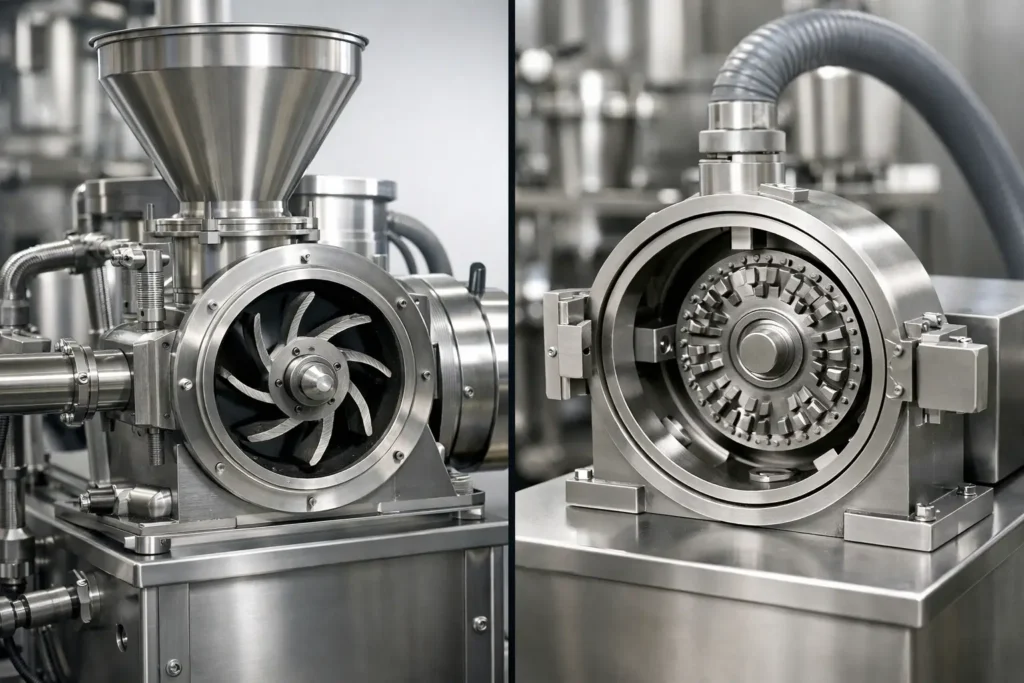
A turbo mill versus universal mill decision is rarely settled by a headline capacity figure. Both machines can reduce dry materials efficiently, but they create size reduction through different combinations of impact, shear, airflow and retention time. For manufacturers working to tight particle size specifications, the correct choice affects product quality, yield, energy use, cleaning time and downstream handling.
The practical question is not simply which mill produces a finer powder. It is which milling principle suits the material’s hardness, moisture sensitivity, heat sensitivity, feed size and required particle size distribution. Equipment terminology can also vary between suppliers, so the rotor design, internal classification arrangement and discharge configuration should always be assessed alongside the machine name.
Turbo Mill Versus Universal Mill: The Core Difference
A turbo mill generally uses a high-speed turbine-style rotor to accelerate material and force repeated particle-to-particle and particle-to-liner impacts. Air movement through the grinding chamber plays an active role in conveying material, removing fines and, in many designs, supporting classification. This makes the turbo mill well suited to dry powder applications where a controlled fine product and high throughput are required.
A universal mill is designed as a more adaptable impact mill platform. Depending on configuration, it may use swinging hammers, fixed beaters, pins, a turbine rotor or other interchangeable grinding elements. Material is reduced against an internal liner or screen, with the screen aperture and rotor speed providing primary control over product size. Its strength is flexibility across a broad range of products rather than one narrowly defined grinding duty.
In simple terms, a turbo mill is usually selected for intensive fine grinding with strong airflow management, while a universal mill is often chosen where a production line must handle changing materials, multiple grades or a wider target size range. There is overlap, particularly when a universal mill is fitted with a turbine-style grinding assembly. The final specification must therefore be based on process trials and measurable product requirements.
How Each Mill Controls Particle Size
Turbo mill particle size control
Turbo mills achieve reduction through high peripheral rotor speed and repeated impact in a compact grinding zone. Finer particles are carried towards the outlet by the process air, while oversize material remains in the milling chamber for further reduction. Where an integrated or external classifier is fitted, the system can reject coarse particles and return them to the grinding zone.
This approach can produce a relatively tight fine powder when operating conditions are stable. Rotor speed, airflow, feed rate, classifier setting and material characteristics all influence the result. Increasing speed may reduce the median particle size, but it can also increase power draw, wear and product temperature. A finer result is not automatically a better result if it creates excessive fines, agglomeration or loss of functional product properties.
Universal mill particle size control
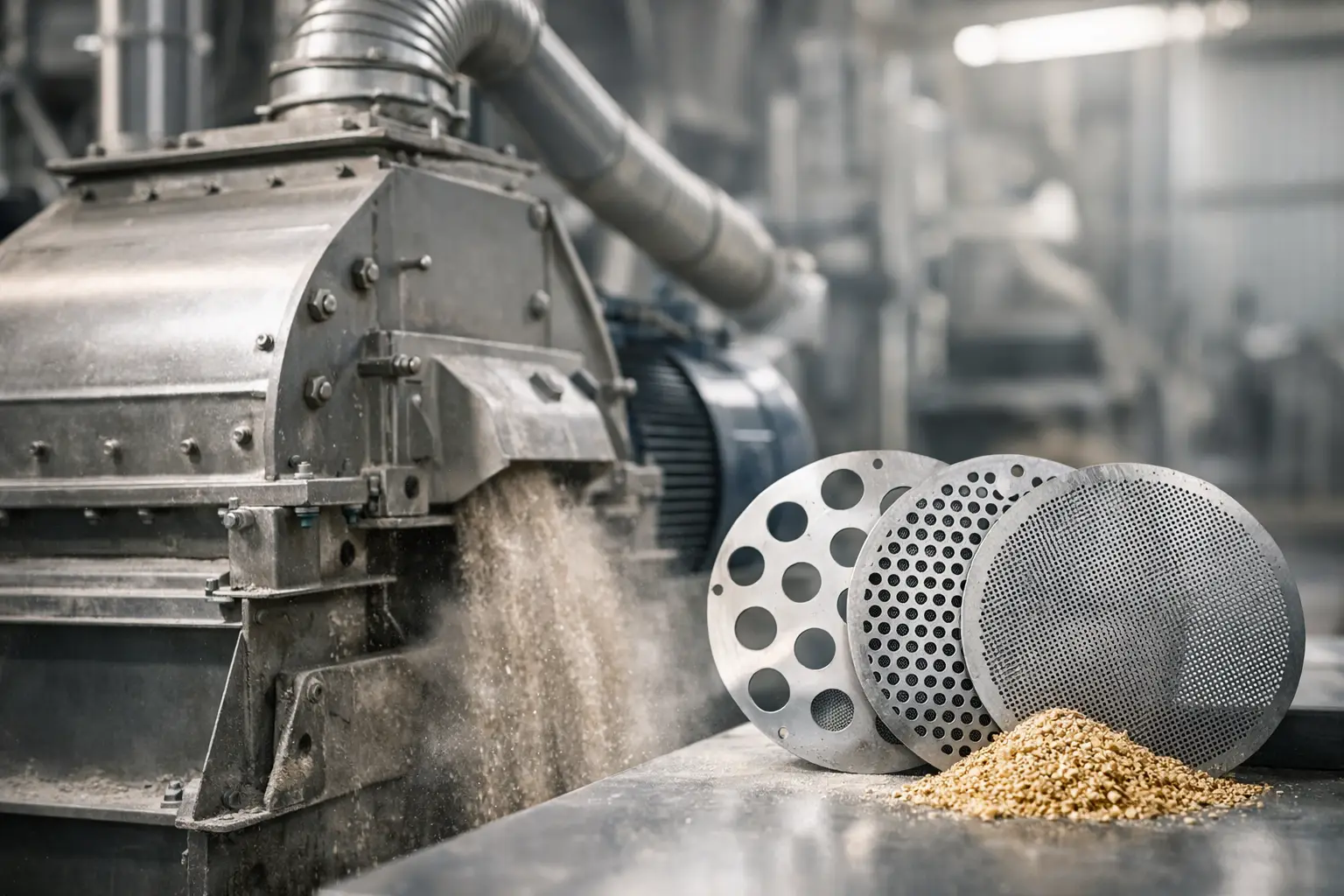
In a universal mill, the grinding element and screen selection have a more direct influence on the final product. A larger screen supports faster discharge and a coarser grind. A smaller screen retains material for longer, increasing exposure to impact and producing a finer output. Rotor speed and feed consistency remain critical, particularly for low-density or difficult-flowing powders.
Screen-based control is valuable for many food, agricultural, chemical and mineral applications because it is straightforward to set and repeat. However, very fine screens can restrict throughput, increase heat generation and become prone to blockage when processing hygroscopic, fatty or fibrous materials. For these products, an alternative rotor, chilled process air, pre-conditioning or a different milling technology may be required.
Material Behaviour Determines the Better Choice
Material behaviour should lead the selection process. A free-flowing, brittle mineral or crystalline chemical may respond well to the high-impact and air-assisted action of a turbo mill. The same machine can be less suitable for a product that softens under temperature, carries residual oil or readily smears onto internal surfaces.
Universal mills are frequently specified for applications where versatility has commercial value. A plant producing several powder grades may need to change screens and adjust rotor speed rather than install dedicated equipment for every recipe. This can reduce capital expenditure and floor-space demand, provided the required fineness remains within the machine’s efficient operating range.
For heat-sensitive materials, neither option should be selected on assumed temperature performance. Milling energy ultimately becomes heat. Product temperature depends on dwell time, rotor speed, airflow, feed rate, ambient conditions and the thermal mass of the material. When the specification includes temperature limits, process cooling, air conditioning, cryogenic milling or a lower-energy milling route should be evaluated during trials.
Throughput, Efficiency and Wear Considerations
Turbo mills can deliver high production rates for fine dry powders because airflow supports rapid transport through the grinding zone. The benefit is strongest when the feed is uniform and the downstream collection system is correctly matched. A poorly sized fan, filter or rotary valve can restrict capacity and destabilise the milling operation, even when the mill itself is correctly selected.
Universal mills can offer strong throughput for medium to fine reductions, particularly when the required product can pass readily through the selected screen. Their adaptable tooling can also improve asset utilisation in multi-product facilities. The trade-off is that a screen-restricted process may become less efficient as the target size becomes finer.
Wear should be treated as a process cost, not just a maintenance item. Abrasive pigments, minerals, metal powders and battery materials can rapidly affect rotor edges, liners and screens. Worn components alter grinding intensity and can widen the particle size distribution before a visible failure occurs. Wear-resistant grades, ceramic linings or specialised coatings may be justified where product purity and consistent output are critical.
Integration Matters as Much as the Mill
The milling chamber is only one part of a controlled powder processing system. Feed conditioning, metering accuracy, dust extraction, product collection, conveying and sieving all influence final quality. A turbo mill relies especially heavily on stable air handling, while a universal mill depends on consistent feed and screen condition.
For regulated pharmaceutical, nutraceutical and food production, cleanability and containment may be decisive factors. The equipment should be specified with appropriate access arrangements, surface finish, seals, clean-in-place capability where relevant, and validation support. For combustible dusts, the system also requires a documented assessment of explosion risk, including appropriate earthing, venting, isolation or suppression measures.
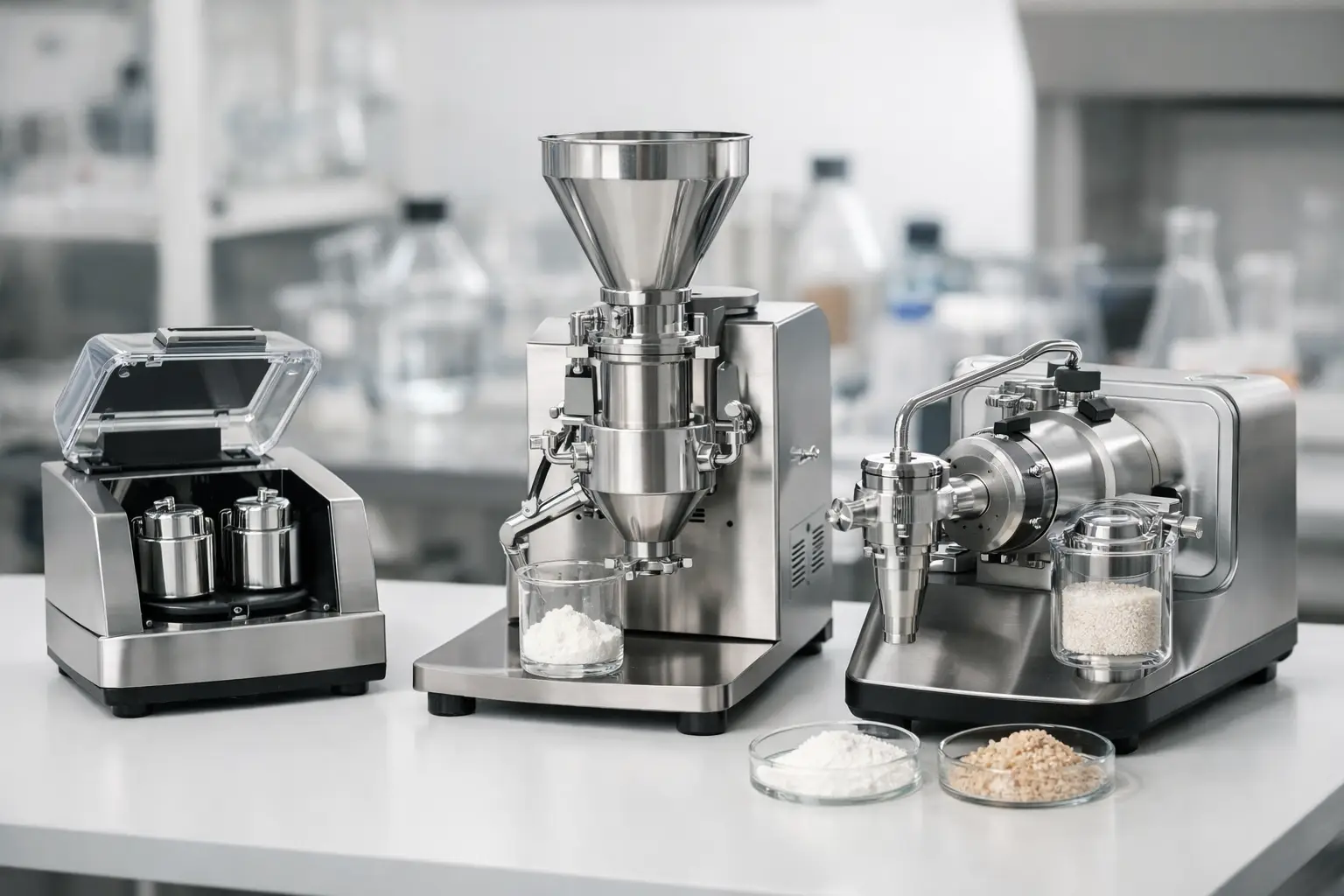
When scaling from laboratory work to production, retain the operating intent rather than simply increasing motor power. The relationship between rotor tip speed, air volume, residence time and feed rate must be reviewed at each scale. Pilot trials using representative material are the most reliable way to establish achievable throughput, particle size distribution, temperature and cleaning performance.
Choosing Between a Turbo Mill and Universal Mill
A turbo mill is often the stronger option when the duty centres on fine, dry powders, high-energy impact and air-assisted classification. It is particularly relevant where a narrow particle size distribution supports product performance, such as pigments, selected chemicals, minerals and advanced material applications.
A universal mill is often the more practical choice when the plant needs broad product flexibility, controlled screen milling and straightforward adjustment between grades. It can suit food ingredients, spices, agricultural products, chemical intermediates and many general industrial powders, subject to material testing.
The most useful specification starts with data: feed particle size, moisture content, bulk density, hardness, abrasiveness, target particle size distribution, required capacity and permitted product temperature. It should also define the complete process boundary, including feeding, dust collection, containment, cleaning and product discharge. This prevents a mill being sized in isolation and then asked to compensate for limitations elsewhere in the line.
DP Pulveriser UK approaches mill selection as an application-specific engineering exercise, from laboratory evaluation through to integrated production systems. A representative trial can turn a broad turbo mill versus universal mill comparison into a defensible equipment decision, with performance targets that production teams can operate and maintain with confidence.
The best next step is to test the actual material at the required specification. A well-run trial will reveal more about throughput, heat, wear and particle size control than a nominal capacity chart ever can.