DP Pulveriser UK - Innovating the Future of Size Reduction
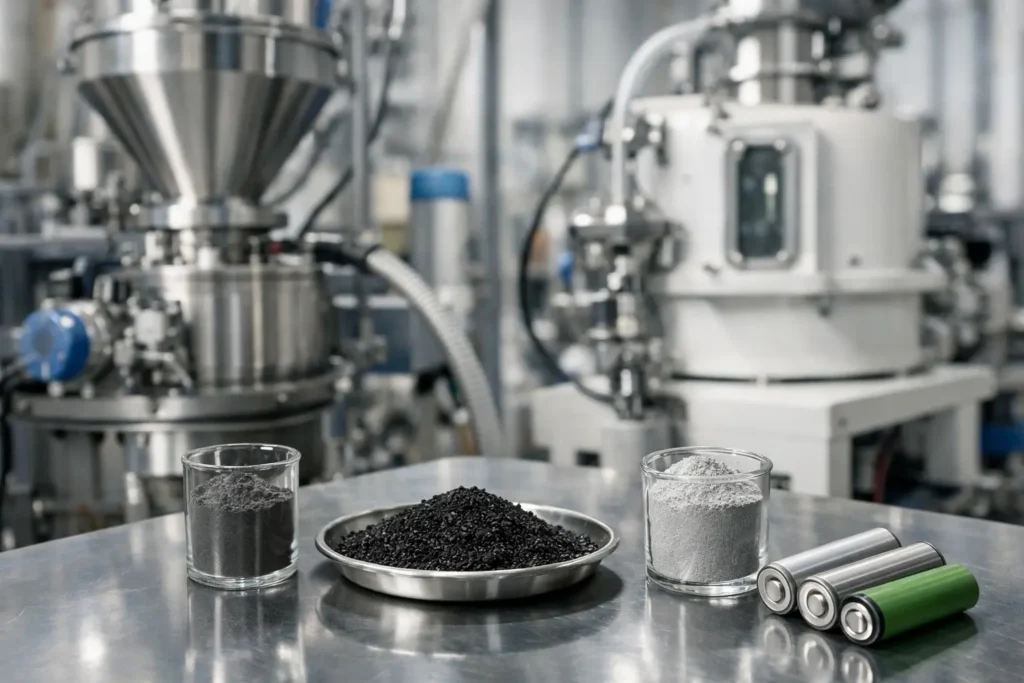
A cathode batch can meet its target median particle size and still create downstream problems. Oversize tails may affect coating quality, excessive fines can alter slurry rheology, and trace contamination can compromise electrochemical performance. Selecting the best grinding systems for battery materials therefore requires more than choosing a mill by nominal fineness. It requires a controlled process built around particle size distribution, material purity, throughput, containment and repeatability.
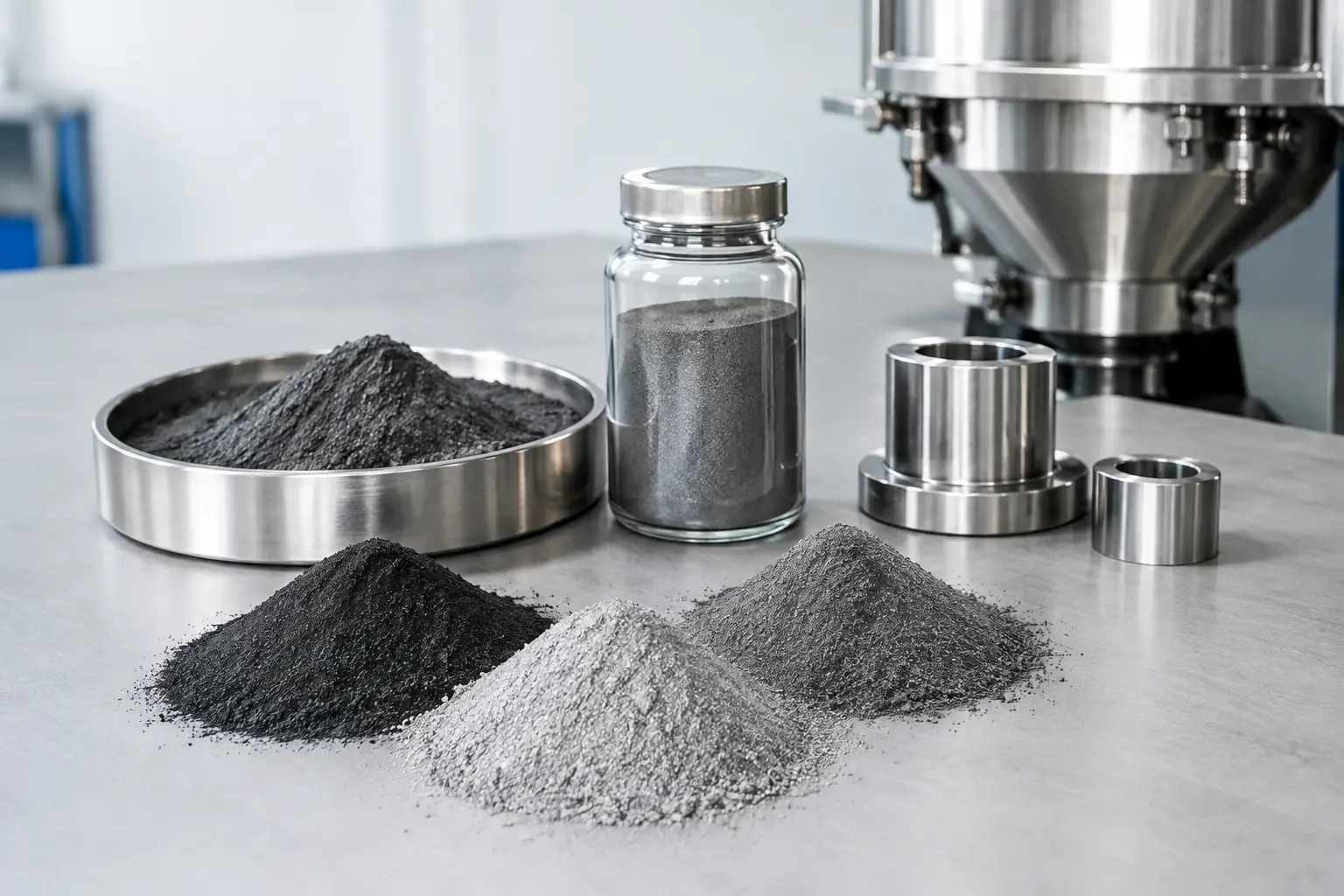
Battery powder processing places unusually high demands on milling equipment. Cathode active materials, natural and synthetic graphite, silicon-containing anodes, conductive carbons, precursor materials and recycling streams all behave differently under mechanical stress. The appropriate system depends on whether the process calls for delumping, controlled deagglomeration, micronisation, classification or a combination of these operations.
What battery material grinding must achieve
The first question is not which mill to buy. It is what the finished powder must do in the cell manufacturing process. A grinding system should be specified around the required particle size distribution, typically including D10, D50 and D90 values, rather than a single average result. Narrow control is often as valuable as fine size reduction because it improves packing density, mixing consistency and coating behaviour.
Purity is equally critical. Wear from grinding elements, unsuitable liners, degraded seals or poorly designed conveying equipment can introduce contaminants into high-value active materials. For this reason, material-contact surfaces, construction materials and the separation of product from process air must be assessed alongside milling performance.
Heat generation also matters. Some materials tolerate high-energy milling well; others can change surface characteristics, agglomerate or create handling issues when process temperatures rise. Fine powders introduce a further requirement: safe dust containment, effective extraction and, where the material and risk assessment demand it, inert processing conditions.
Best grinding systems for battery materials by duty
There is no single best machine for every battery powder. The strongest solution is usually a staged system in which coarse reduction, fine grinding, classification and contained powder handling are engineered as one process.
Jet mills for high-purity micronisation
Jet milling is often the preferred route where very fine particle size and low mechanical contamination are central requirements. Particles are accelerated in compressed gas streams and reduced through particle-to-particle collision rather than intensive contact with grinding media. This makes the technology well suited to demanding cathode materials, conductive additives and other fine, high-purity powders.
An integrated classifier allows the system to control the top cut and recirculate oversize particles until they meet specification. The result can be a tightly controlled distribution with limited oversize material. The trade-off is energy demand. Compressed air or inert gas consumption must be evaluated carefully, especially at production scale. Jet mills provide high performance, but they are not automatically the lowest-cost choice for a duty that only requires moderate fineness.
Air classifier mills for controlled fine grinding
An air classifier mill combines impact grinding with internal air classification. It is a practical option for applications that require fine size reduction with control over the upper particle size limit, but do not necessarily require the finest output achievable with a jet mill.
The classifier speed, airflow and mill speed can be adjusted to tune product performance. This flexibility is valuable for manufacturers processing several formulations or moving from development batches to commercial production. For graphite, precursor powders and selected active materials, an air classifier mill can offer an effective balance of throughput, PSD control and operating cost.
The system must still be matched to the material. Abrasive or contamination-sensitive powders may require specialised liners and carefully selected internal components. A process trial is the most reliable way to establish achievable capacity, energy use and wear behaviour.
Pin, turbo and universal mills for deagglomeration
Not all battery materials need intensive micronisation. Many arrive as compacted powders, soft agglomerates or materials that require consistent conditioning before blending, classification or further milling. Pin mills, turbo mills and universal mills are effective for controlled deagglomeration and intermediate grinding.
These systems can deliver high throughput with a comparatively straightforward mechanical arrangement. They are particularly useful as an upstream stage ahead of a fine mill, preventing oversized feed from reducing the efficiency of the final grinding operation. Their limitation is that they may not provide the narrow ultrafine distribution needed for specialist electrode materials without downstream classification.
Hammer and cone mills for feed preparation
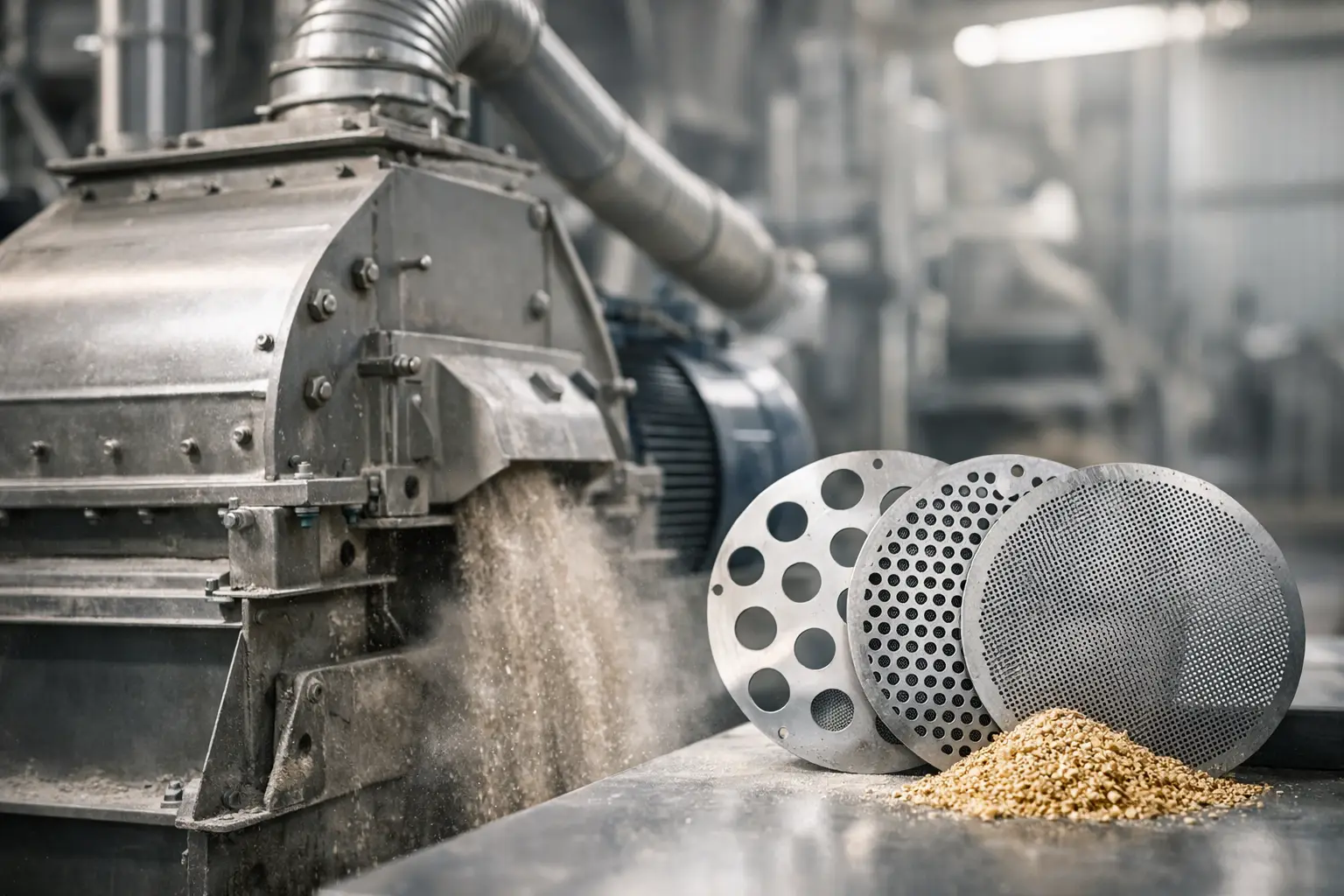
Hammer mills and cone mills are typically selected for coarse size reduction, pre-conditioning and removal of feed lumps. In a battery material line, their role is often to create a stable, metered feed for more precise downstream equipment rather than to produce the final specification.
This stage should not be overlooked. Irregular feed can cause variable mill loading, unstable classifier performance and avoidable downtime. A well-designed pre-grinding stage improves the consistency of the whole line, particularly when processing bagged material, recycled intermediates or batches with varying incoming particle size.
Cryogenic milling for heat-sensitive materials
Cryogenic milling uses low temperatures to reduce heat generation and alter the fracture behaviour of difficult materials. It can be beneficial for polymer-containing streams, binder-rich residues, separator materials and certain recycling applications where ambient grinding causes softening, smearing or excessive agglomeration.
The additional cooling infrastructure increases capital and operating complexity, so this approach should be selected for a defined material challenge rather than as a default. Where it is justified, cryogenic processing can produce cleaner fracture, improved separation and more stable powder handling.
Classification is not an optional extra
Many battery powder specifications are achieved through grinding and classification together. A mill reduces particle size; a classifier determines which particles are accepted as finished product and which return for further processing. This distinction has a direct effect on yield, consistency and energy consumption.
Dynamic air classification is particularly valuable where the top size must be tightly controlled. It can reduce the incidence of coarse particles that affect electrode coating and may enable a manufacturer to tune product cut points for different cell designs. Conversely, an overly aggressive cut can reduce yield or generate an unnecessary volume of fines. The correct operating point is determined by the material, target PSD and downstream performance requirements.
Engineering the complete processing line
A standalone mill cannot compensate for poor feeding, inadequate dust control or uncontrolled conveying. Battery material systems should be designed as contained production lines, beginning with controlled feeding and ending with clean product collection or transfer to the next process stage.
Key engineering considerations include:
- loss-in-weight or gravimetric feeding for stable mill loading;
- enclosed conveying to minimise product loss and operator exposure;
- high-efficiency filtration and dust collection sized for the actual airflow;
- inert gas capability where the material hazard assessment requires oxygen control;
- magnetic separation or metal detection where contamination risk must be managed; and
- automated controls that record operating conditions and support repeatable recipes.
For fine powders, the interface between mill, classifier, cyclone, filter and discharge point is as significant as the grinding chamber itself. Poorly designed transitions can create deposits, segregation, pressure instability and difficult cleaning. A turnkey line allows these interfaces to be addressed during engineering rather than corrected after installation.
Scale-up from trials to production
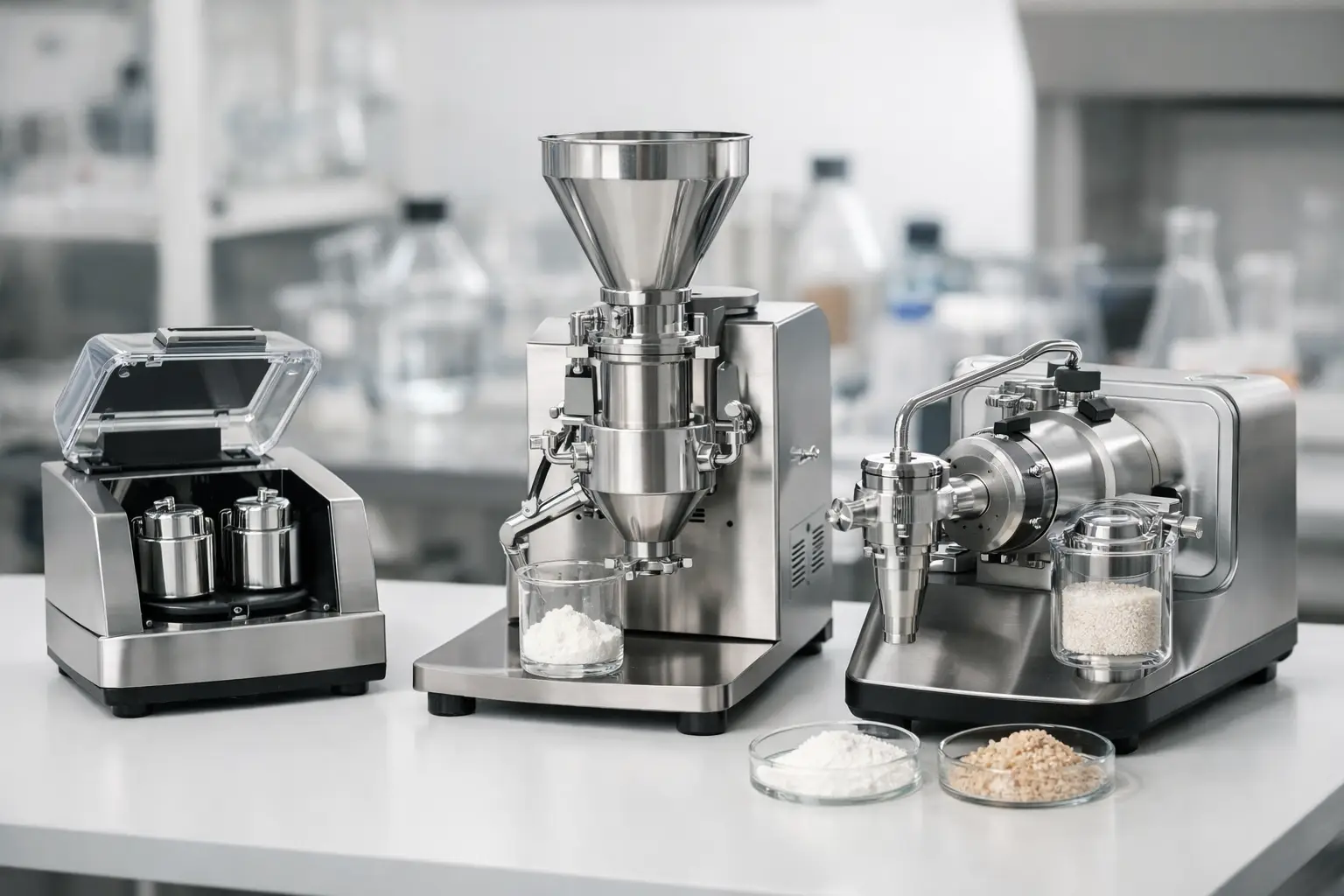
Laboratory trials provide valuable starting data, but scale-up should not be based on particle size alone. A successful trial programme measures capacity, energy consumption, feed behaviour, product temperature, contamination risk and classifier response. It should also examine how the powder performs in its next manufacturing step, whether that is blending, slurry preparation, coating or compaction.
Pilot-scale validation is particularly useful when moving from a few kilograms to continuous industrial output. Material flow can change considerably at scale, and a powder that mills well in short test runs may bridge, compact or retain static charge in a larger system. Production equipment should be selected with a realistic view of cleaning requirements, maintenance access, spare parts and future capacity expansion.
DP Pulveriser UK approaches these projects as process engineering assignments, combining laboratory and pilot development with production-scale milling, classification, mixing and powder handling equipment. This is especially relevant where the final result depends on the interaction of multiple process stages rather than a single machine.
Selecting for total cost of ownership
The lowest initial equipment price rarely represents the lowest lifetime cost. Energy use, compressed air demand, wear parts, cleaning time, product losses and unplanned stoppages all affect the economics of battery material production. A jet mill may justify its operating cost where purity and ultrafine PSD are decisive. An air classifier mill may provide better overall economics where higher throughput and adjustable cut control are the priority.
Ask suppliers for performance data based on your material, not a generic powder. Review achievable throughput at the required PSD, not at a less demanding test point. Confirm the specification of contact parts, the expected maintenance intervals, dust-control strategy and the route for scaling capacity. These details reveal whether a proposed system is engineered for dependable production or simply sized to meet a headline figure.
The right grinding system gives process engineers room to control variation before it reaches the coating line or the finished cell. Start with representative material, define the PSD and purity limits that genuinely matter, then validate the complete process around those requirements. That approach produces a line built not merely to grind powder, but to support reliable battery manufacturing.