DP Pulveriser UK - Innovating the Future of Size Reduction
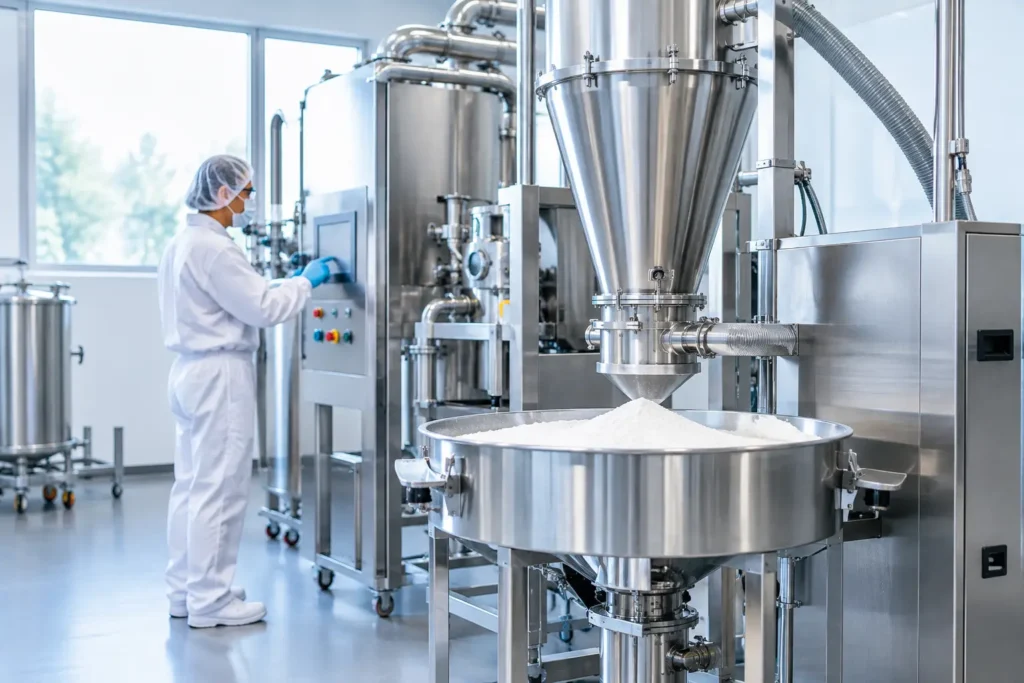
A milling machine can achieve an excellent particle size distribution in isolation and still underperform in production. If material feeding fluctuates, conveying creates segregation, dust collection is undersized, or the final pack-out stage becomes a bottleneck, the process is no longer under control. Turnkey systems address these interfaces as one engineered production line rather than a collection of separate machines.
For manufacturers processing high-value or specification-critical powders, this distinction has a direct effect on product consistency, throughput, safety and operating cost. The objective is not simply to install more equipment. It is to create a defined, repeatable process from raw material intake to the finished product.
What turnkey systems mean in powder processing
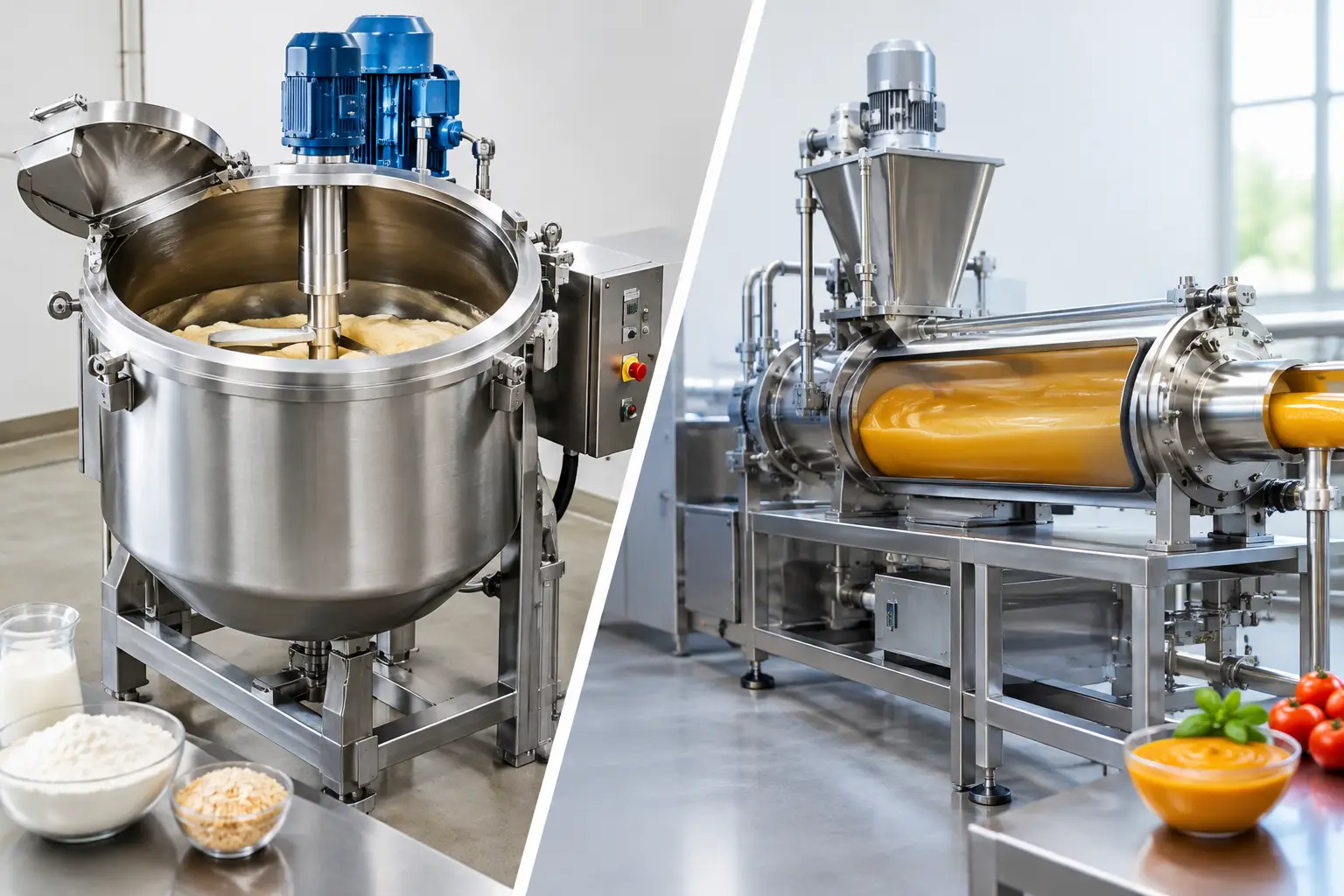
A turnkey system is a complete processing solution designed around a specific material, production target and operating environment. It typically incorporates raw material handling, feeding, size reduction, classification, mixing where required, dust extraction, conveying, controls and final discharge or packaging interfaces. The supplier takes responsibility for how these elements perform together.
This differs from sourcing standalone equipment from multiple vendors. A standalone mill may be technically capable, but its results depend on what happens before and after the milling chamber. Feed rate, material temperature, moisture level, air volume, classifier settings and downstream transfer conditions can all alter the final result.
With an integrated line, these variables are considered together during process design. The equipment is selected and configured to meet the required particle size range, capacity, product quality and containment standard. It also gives production teams clearer accountability: one process architecture, one control philosophy and one defined performance target.
Why system integration affects product quality
Particle size reduction is only one stage in a powder processing operation. In pharmaceutical, food, nutraceutical, chemical, mineral, battery material and pigment applications, the finished product must often meet narrow specifications for particle size distribution, bulk density, flowability, moisture, purity or blend uniformity.
An uncontrolled handover between process stages introduces avoidable variation. For example, an inconsistent feeder can overload a jet mill or pin mill, increasing the proportion of oversize material. A poorly matched pneumatic conveying system may damage friable particles or create unwanted fines. An inadequately designed hopper can promote bridging and irregular discharge, particularly with cohesive powders.
A properly engineered turnkey line manages these relationships. Loss-in-weight or volumetric feeding maintains a stable feed rate. Milling and air classification are matched to the target cut point. Suitable conveying protects the powder and keeps material moving efficiently. Contained collection and discharge reduce product loss while supporting housekeeping and operator safety.
The result is more than a cleaner layout. It is a process with fewer uncontrolled variables.
Start with the material, not the machine
The best equipment choice depends on the characteristics of the material and the intended outcome. There is no universal mill for every powder, and there is no standard turnkey configuration that is right for every site.
A crystalline chemical that requires a fine, tight particle size distribution may suit a jet mill with integrated air classification. A heat-sensitive food ingredient may need cryogenic milling to maintain product properties and prevent softening. A mineral product may require a high-throughput hammer mill, turbo mill or universal mill, followed by classification to remove oversize fractions. A formulation that needs final homogenisation may require a mixer positioned after milling and before packing.
Early process development should therefore establish the material’s hardness, abrasiveness, moisture content, thermal sensitivity, flow behaviour, explosibility and contamination risk. It should also define the critical quality attributes: target particle size distribution, permitted oversize, throughput, batch or continuous operation, cleaning expectations and level of automation.
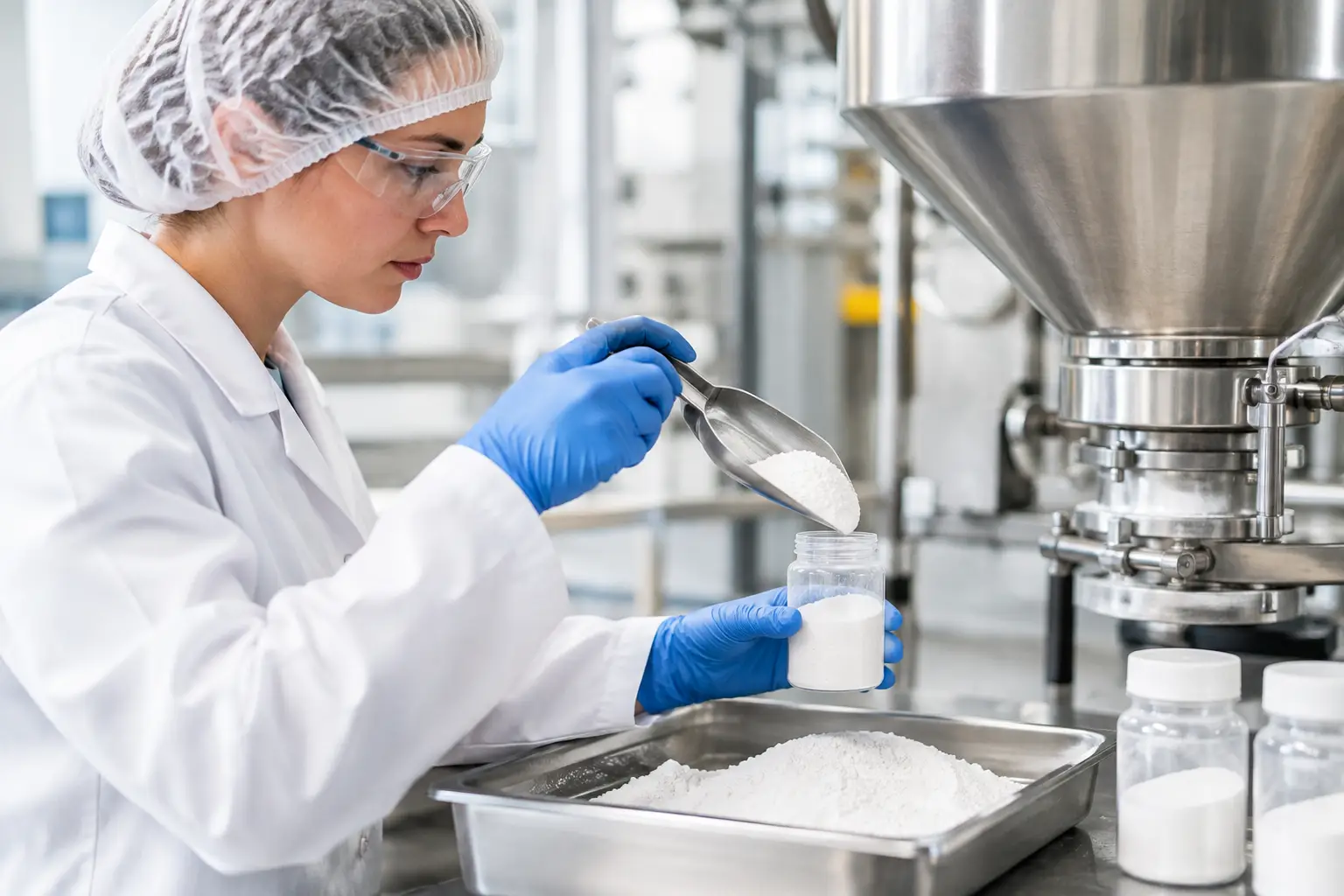
Laboratory and pilot trials are valuable because they replace assumptions with process data. They show how the material responds to different grinding mechanisms, rotor speeds, classifier settings and feed conditions before capital equipment is specified for commercial production.
Core elements of a full processing line
While every system is application-specific, a complete powder processing line generally brings together four functional areas:
- controlled raw material receipt, storage and feeding;
- milling, grinding or deagglomeration matched to the required product specification;
- air classification, collection and transfer of the processed powder; and
- mixing, screening, storage, discharge or packaging integration where the process requires it.
The value lies in how these areas are connected. Equipment dimensions, transfer distances, airflow, valve selection, vessel geometry and control interlocks must work as one system. A high-capacity mill has limited value if a downstream filter receiver constrains output. Equally, a sophisticated classifier cannot maintain a tight cut if upstream feeding varies substantially.
For this reason, system design should include mass balance, airflow requirements, residence time, access for cleaning and maintenance, and the practical realities of the available plant footprint. These details determine whether a system performs reliably beyond factory acceptance testing.
Designing for safety, containment and compliance
Many powder processing projects are driven as much by safety and compliance as by capacity. Fine powders can create inhalation risks, cross-contamination concerns and combustible dust hazards. Hygienic sectors may require cleanable contact surfaces, defined material traceability and controlled product changeovers.
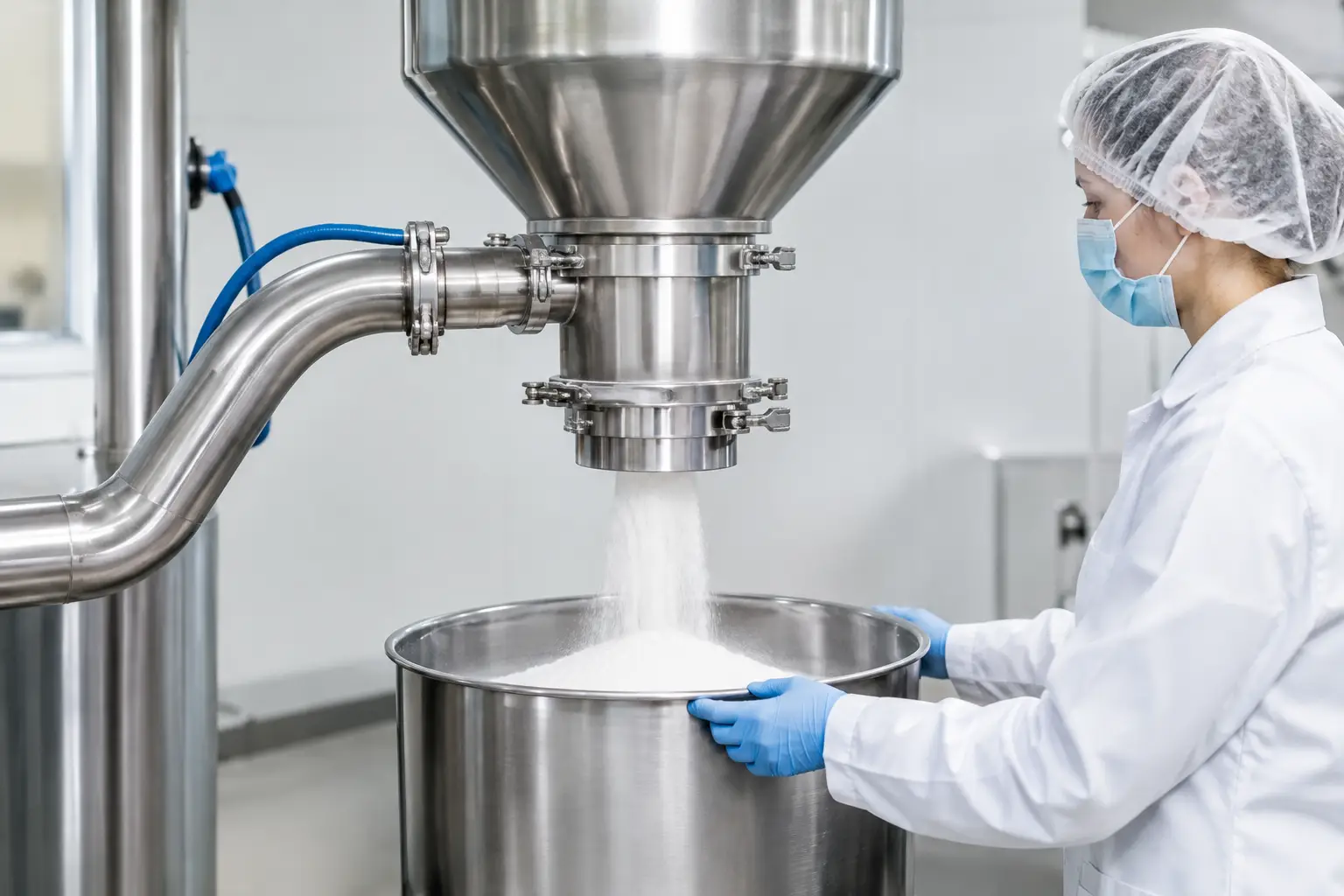
The appropriate design depends on the material risk assessment and the sector’s operating requirements. Measures may include enclosed transfer, local extraction, dust-tight connections, negative-pressure operation, high-efficiency filtration, explosion protection, earthing and bonding, or contained charging and discharge arrangements. For food and pharmaceutical processes, material selection, surface finish, clean-in-place capability and access for inspection may be equally important.
These requirements should not be added after the mill has been chosen. Retrofitting containment or safety equipment can compromise access, increase pressure losses and create difficult cleaning points. Incorporating them at the system-design stage is usually more effective and more economical over the equipment life.
Controls turn equipment into a repeatable process
Mechanical equipment determines what is physically possible; controls determine how consistently it is achieved. A modern turnkey installation should provide a clear operating philosophy, not simply a group of machines with individual control panels.
At a minimum, the control system should coordinate start-up and shut-down sequences, feeder operation, mill speed, classifier performance, conveying air, dust collection and fault response. Interlocks protect equipment and prevent operators from starting a process stage before supporting equipment is ready. Recipe-based parameters can be particularly valuable where multiple grades or materials are processed on the same line.
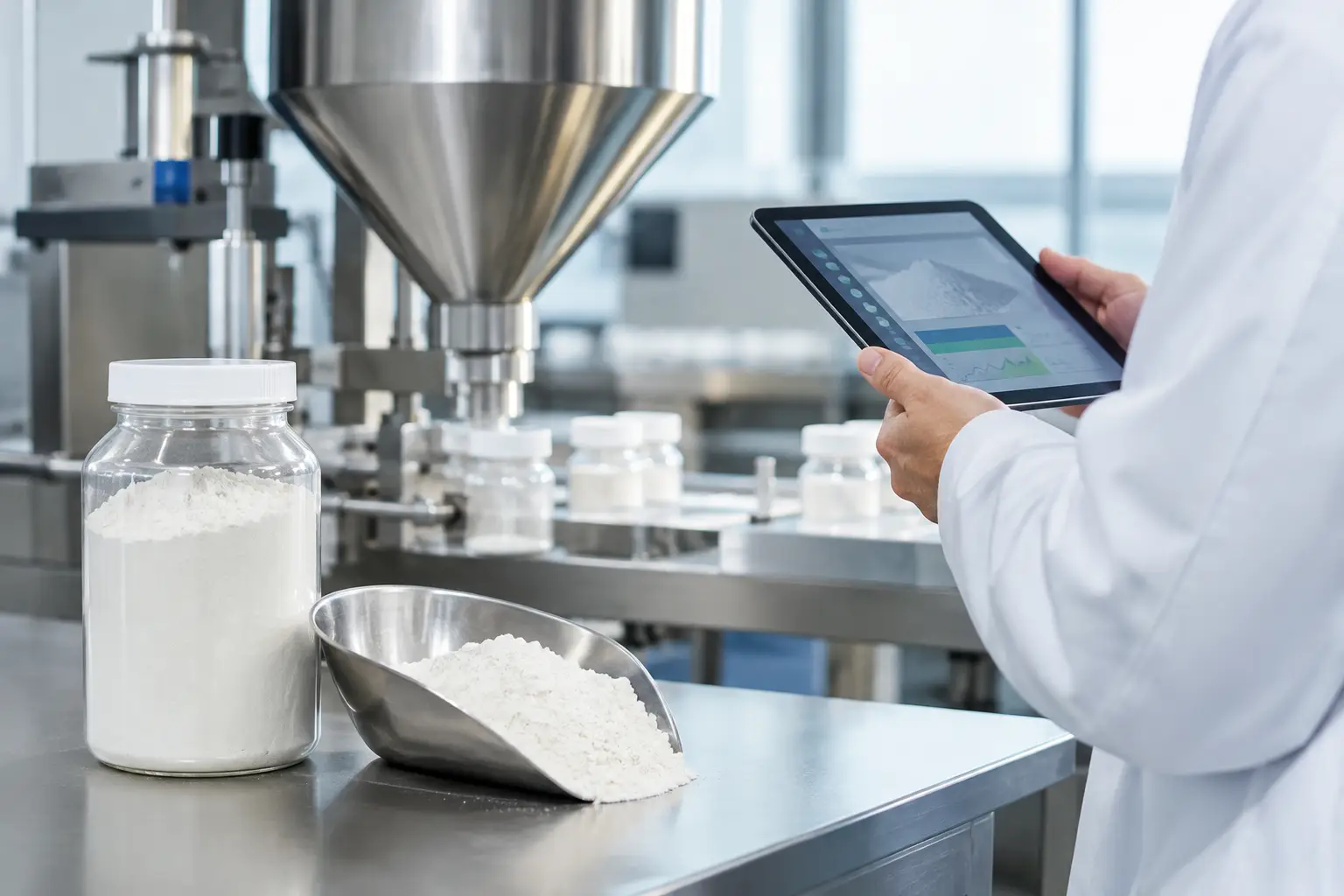
Data capture also supports continuous improvement. Tracking motor load, differential pressure, feed rate, temperatures, airflow and production output helps engineering teams identify drift before it becomes an off-specification batch or an unplanned stoppage. The level of automation should reflect the application. A simple mineral processing line may require straightforward local control, while a regulated manufacturing operation may need more detailed records, permissions and batch traceability.
Where total cost is won or lost
The capital price of a system matters, but it is only one part of the investment decision. Energy consumption, wear part life, cleaning time, labour requirement, product yield and maintenance access can have a greater effect on total cost of ownership over several years.
A lower-cost installation may appear attractive if it uses generic equipment and minimal integration. However, frequent manual transfers, unstable throughput, excess fines, dust loss and repeated adjustments can quickly consume the apparent saving. Conversely, a highly automated line is not automatically the right answer if production volumes are modest or products change frequently.
The practical question is whether the system matches the duty. For continuous, high-volume manufacture, reliable automated feeding and conveying may deliver a strong return through reduced labour and higher utilisation. For specialist campaigns, a flexible modular arrangement with fast cleaning access may be more valuable. Good process engineering makes these trade-offs visible before procurement decisions are fixed.
Scaling from trials to commercial output
Scale-up should preserve product performance, not merely increase throughput. Changes in mill size, airflow, material residence time and heat generation can affect the powder produced at commercial scale. This is particularly relevant where narrow particle size distribution, temperature control or fragile particle morphology is critical.
A supplier with laboratory, pilot and production-scale capability can develop a scale-up route using representative material and agreed performance criteria. The aim is to define operating windows rather than a single ideal setting. That gives production teams room to manage normal variation in incoming material without losing control of the finished product.
DP Pulverizer UK engineers full turnkey systems around this process-led approach, combining milling, classification, mixing and powder handling equipment into production lines designed for the required duty.
The strongest project brief is specific: define the material, the finished-product specification, the capacity requirement, the site constraints and the standards the line must meet. With those foundations in place, a turnkey system becomes a practical production asset – one that gives operators control, gives engineers reliable data and gives the business a more dependable route to consistent output.