DP Pulveriser UK - Innovating the Future of Size Reduction
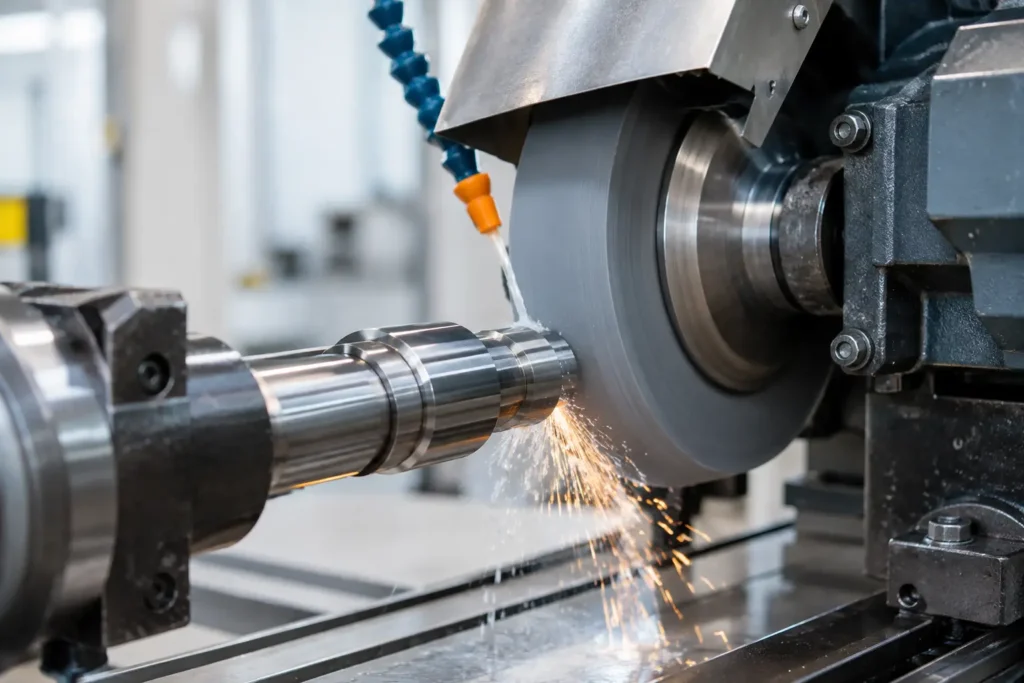
A mill drawing excessive power rarely has a single, simple fault. More often, it is being asked to overcome an avoidable process constraint: an inconsistent feed, unsuitable size reduction mechanism, inefficient classification point or worn internal components. Understanding how to lower grinding energy starts with treating milling as a complete process rather than an isolated machine duty.
For industrial producers, the objective is not simply to reduce kWh. It is to achieve precise particle size reduction at the required throughput, with stable product quality and a lower total cost of ownership. An apparent energy saving that creates oversize material, wider particle size distribution or reduced capacity is not a real improvement.
Establish the right energy baseline
Energy performance should be measured against useful output. Total mill power alone can be misleading when throughput, feed moisture or product specification changes between batches. A more practical measure is specific grinding energy: kWh consumed per tonne of acceptable finished product.
Track this figure alongside throughput, product fineness, particle size distribution, reject rate, classifier settings and material temperature. This creates a meaningful operating baseline and exposes whether higher power demand is linked to the mill itself or to variation upstream and downstream.
A gradual increase in specific energy commonly points to wear, build-up or restriction. A sudden change may indicate altered feed characteristics, an incorrectly adjusted classifier, a damaged screen, air leakage or an issue with the drive and controls. Trend data allows maintenance and process teams to investigate before production quality is affected.
Match mill technology to the material and target size
The most effective way to lower grinding energy is to select a mill whose reduction mechanism matches the material behaviour and final specification. Different materials fracture, shear, deform, smear or agglomerate in very different ways. A machine that performs efficiently on crystalline minerals may be unsuitable for a heat-sensitive active ingredient, fibrous botanical material or waxy food powder.
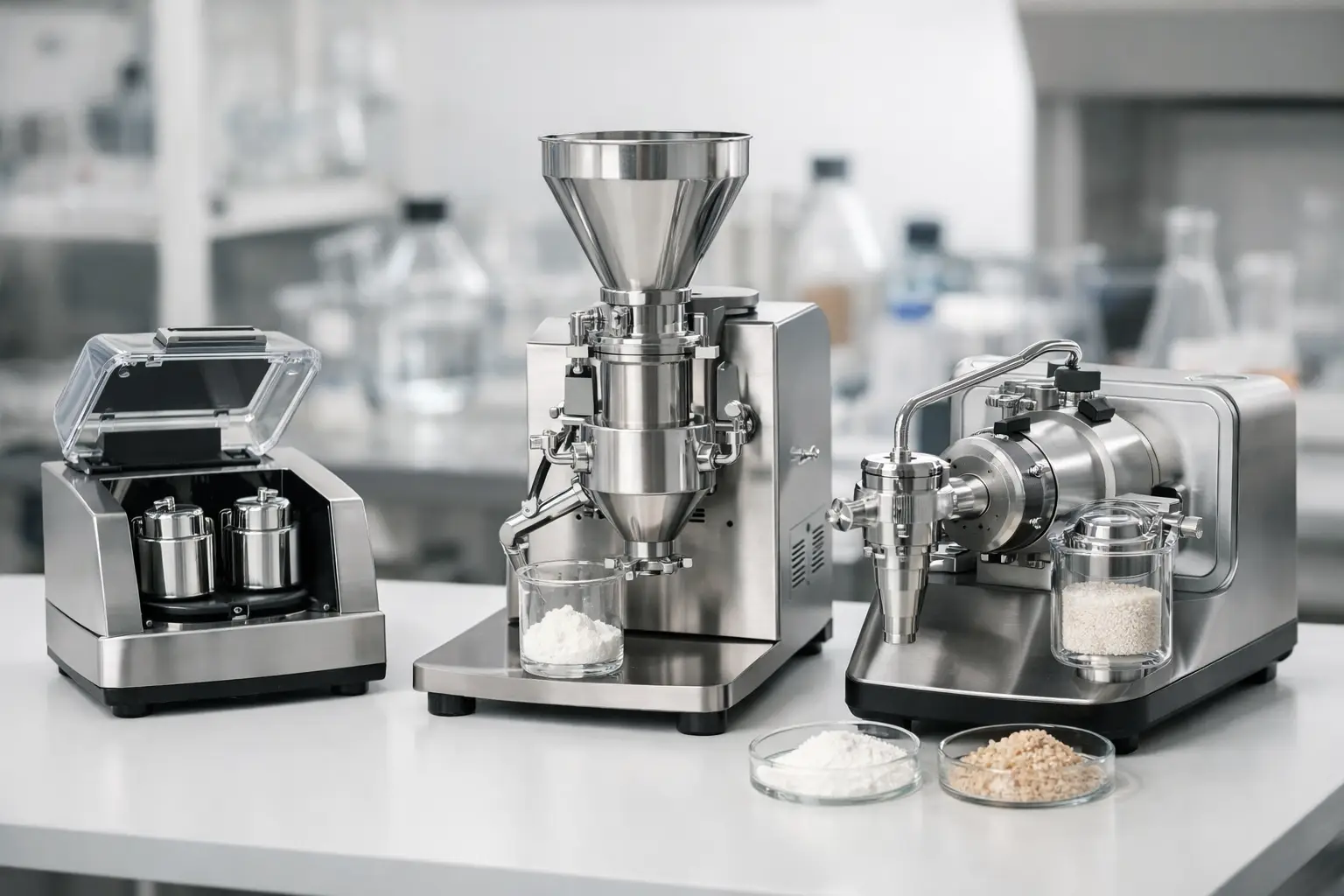
Impact-based mills, including hammer, pin, turbo and universal mills, can offer high throughput for materials that fracture readily. However, forcing them to produce a very fine cut can raise recirculation, heat generation and power consumption. For tighter fine-powder duties, an air classifier mill or jet mill may provide better control, particularly where a narrow particle size distribution is required.
Jet milling avoids mechanical grinding media and can be highly effective for fine and ultra-fine applications, but compressed air demand must be assessed as part of the true energy balance. Likewise, cryogenic milling can materially reduce energy absorbed in deforming soft, elastic or heat-sensitive materials, although the cost and handling requirements of the cooling medium must be justified by the application.
The best choice depends on feed hardness, brittleness, moisture, fat or oil content, thermal sensitivity, contamination limits, target particle size and required production rate. Pilot trials using representative material are usually more reliable than selecting equipment from nominal capacity alone.
Avoid over-grinding
Over-grinding is one of the largest hidden energy costs in powder processing. It occurs when material remains in the grinding zone longer than necessary, or when the system repeatedly returns already compliant particles for further size reduction.
A well-designed classification stage removes in-specification fines promptly and returns only genuine oversize material to the mill. This protects particle shape, limits heat build-up and reduces the energy spent creating unnecessary ultra-fines. It can also improve downstream behaviour in blending, conveying, tabletting, coating or dispersion.
Condition the feed before it reaches the mill
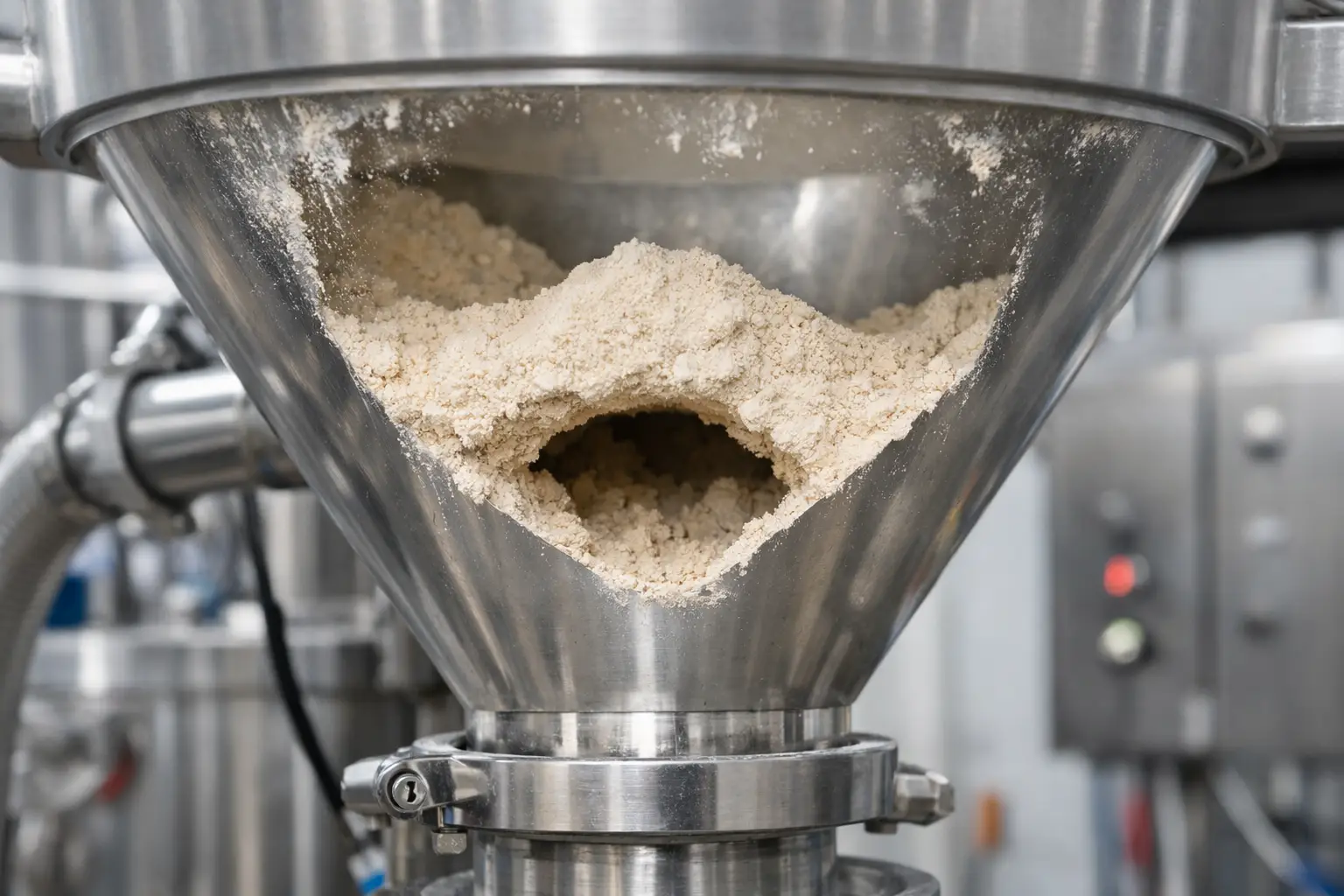
Mills operate most efficiently with a controlled, consistent feed. Large fluctuations in feed rate force the motor and classifier to work outside their preferred range. Starved operation reduces useful output, while overfeeding can cause material retention, pressure instability, excessive recirculation and poor product separation.
Use appropriate dosing equipment to maintain a steady mass flow. Where possible, control feed rate through load, differential pressure, mill motor demand or a combination of these signals. The correct strategy depends on the material and equipment configuration, but the principle remains the same: stable feed produces stable grinding conditions.
Feed size is equally important. Sending oversized lumps directly to a fine grinding stage wastes energy and accelerates wear. A staged approach, using controlled pre-breaking, milling or screening, often reduces the energy required at the final milling stage. It also prevents occasional coarse particles from destabilising the process.
Moisture content deserves particular attention. Excess moisture can make powders cohesive, promote screen blinding and increase adhesion to internal surfaces. Very dry materials may generate dust, static charge or excessive fines. In some applications, drying, conditioning or controlled cooling before milling delivers a better energy result than attempting to solve the problem through higher mill speed.
Optimise air, classification and operating speed
In air-swept and classifier mills, airflow is not simply a transport utility. It directly influences residence time, product cut point, temperature and the amount of material recirculated for further grinding. Insufficient airflow can retain fines in the grinding chamber, while excessive airflow may carry coarse material through prematurely or increase fan energy without improving separation.
Classifier speed should be set to meet the actual product specification, not a more demanding target than the customer requires. Increasing classifier speed generally produces a finer powder, but it can sharply increase the circulating load and specific energy. If the specification allows a broader or slightly coarser distribution, a modest adjustment may release significant capacity and reduce power demand.
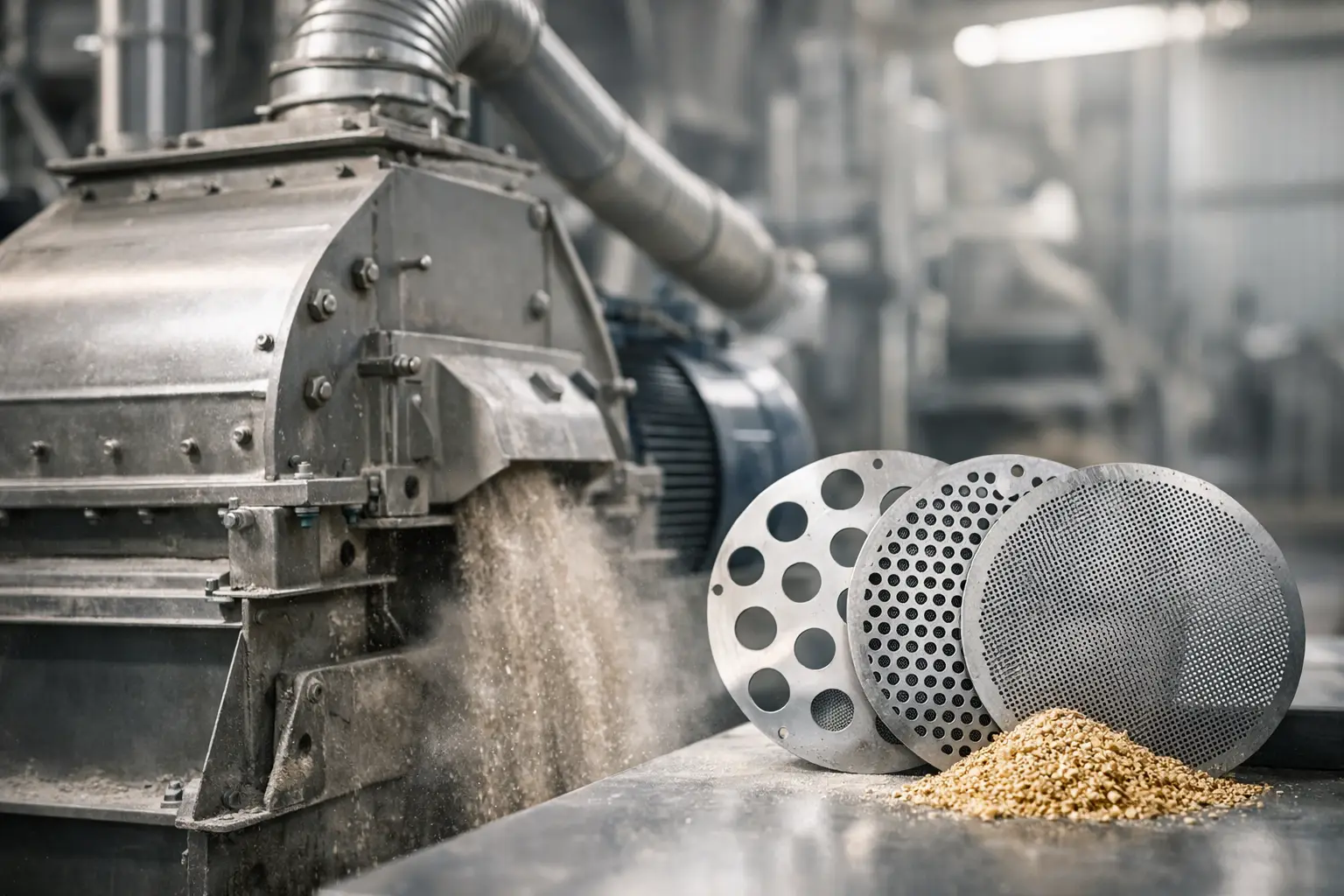
Rotor tip speed, screen aperture and grinding element configuration require the same discipline. Higher speed increases impact intensity, but it also raises energy consumption, wear and product temperature. The optimum point is normally found through structured trials, changing one variable at a time while recording throughput, specific energy and particle size distribution.
Keep the grinding zone in designed condition
Wear is a process-efficiency issue, not only a maintenance issue. Worn hammers, pins, beaters, liners, grinding tracks and classifier components reduce effective impact or shear, alter airflow patterns and lengthen residence time. The mill may then continue to meet target fineness, but only by consuming more energy and sacrificing throughput.
Build-up inside the chamber has a similar effect. Product deposits reduce free volume, disrupt material flow and can create zones of repeated grinding. Hygienic and high-care applications also require this risk to be managed for product quality reasons.
A condition-based maintenance programme should therefore include routine inspection of critical wear parts, screen integrity, rotor balance, bearing condition, seals and air-system pressure losses. Replace components according to measured wear and process performance, rather than relying only on calendar intervals. For demanding duties, maintaining a record of specific energy against component life helps identify the point at which replacement becomes economically justified.
Look beyond the mill motor
Grinding energy can be transferred elsewhere in the line. A poorly designed pneumatic conveying system, restrictive filter, oversized fan, inefficient compressor or high-pressure drop through ductwork can undermine gains made at the mill. This is especially relevant for jet mills and integrated systems using aspiration, classification and dust collection.
Review the complete power profile: feeder, mill drive, classifier, blower or fan, compressed air generation, cooling, conveying and collection. Variable speed drives can reduce unnecessary energy consumption where demand varies, but they must be correctly sized and controlled. Operating every auxiliary at maximum output is rarely the most efficient solution.
System integration also matters during scale-up. A laboratory mill can show excellent product performance, yet a production line may consume more energy if its feed arrangement, air handling and discharge system are not engineered around the same material behaviour. DP Pulverizer UK approaches this through application-specific development, allowing equipment selection and full turnkey system design to be assessed together.
Use trials to find the economical operating window
There is no universal setting for lowest grinding energy. The economical operating window sits between product specification, throughput, yield, equipment wear, temperature control and utility cost. It may shift when raw material sources, seasons, formulations or production volumes change.
A disciplined trial plan is the fastest route to dependable improvement. Test representative material at defined feed rates, rotor or classifier speeds and airflow settings. Compare specific energy only when particle size distribution and acceptable yield are equivalent. Record observations such as chamber build-up, product temperature, noise, vibration and downstream handling performance as well as the headline power figure.
The strongest improvements usually come from several modest changes working together: a more uniform feed, a realistic cut point, effective separation, correct operating speed and timely replacement of worn parts. When the process is engineered around the material rather than driven by maximum motor load, lower energy use becomes a repeatable production outcome rather than a short-term adjustment.