DP Pulveriser UK - Innovating the Future of Size Reduction
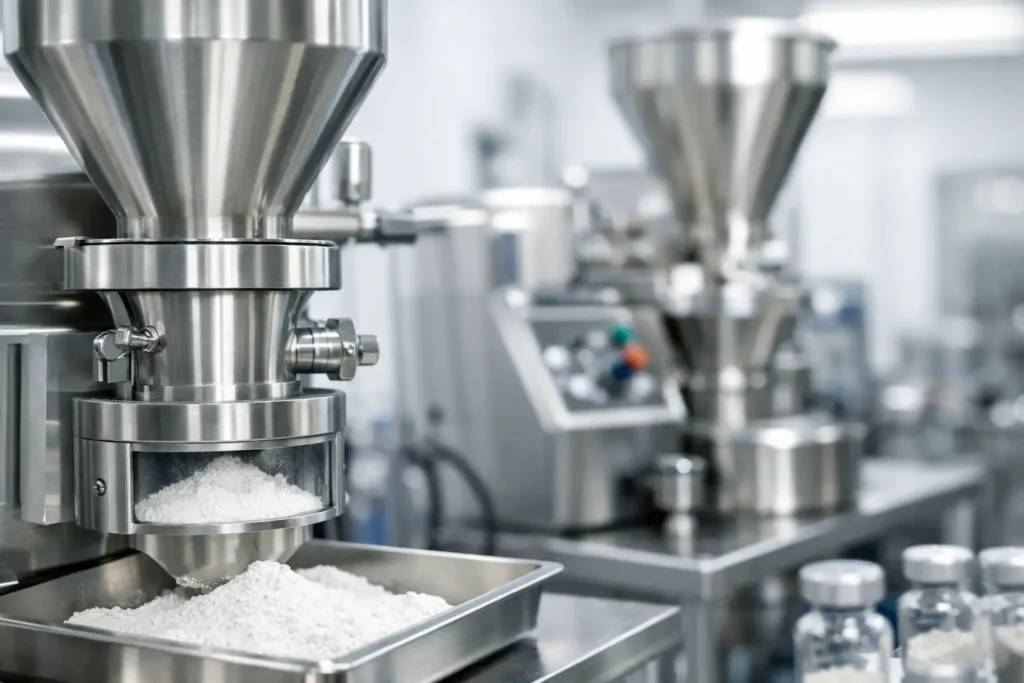
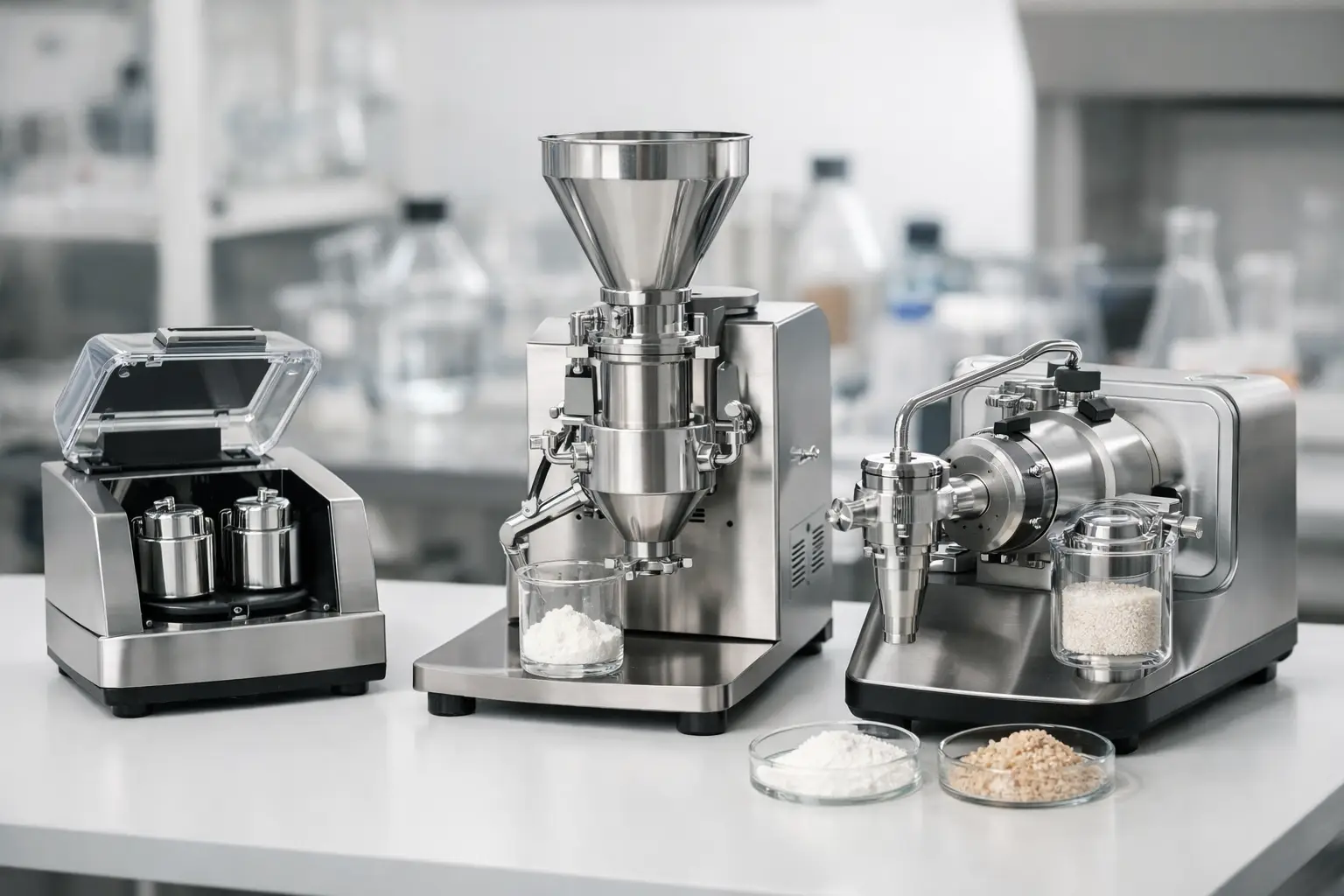
A milling stage can determine whether a pharmaceutical batch progresses cleanly through blending, granulation and tabletting or creates downstream variability that is expensive to correct. The top pharmaceutical milling equipment is not defined by a single machine type. It is defined by how reliably the system delivers the required particle size distribution, protects the active ingredient, supports cleaning and contains the process at production scale.
For pharmaceutical manufacturers, the selection decision should begin with the material and the process objective, rather than a catalogue specification. A mill that performs well on a free-flowing excipient may be unsuitable for a heat-sensitive API, a cohesive powder or a formulation requiring narrow size control. Throughput matters, but it must be balanced against yield, temperature rise, metal contamination risk, cleanability and repeatable operation.
What Top Pharmaceutical Milling Equipment Must Deliver
Particle size reduction is rarely an isolated operation. It affects powder flow, blend uniformity, dissolution profile, compressibility, granule quality and, ultimately, finished-dose performance. Equipment therefore needs to provide controlled mechanical action rather than simply maximum impact energy.
The first requirement is a defined and repeatable particle size distribution. Median particle size alone is not enough. Oversize particles can affect tablet appearance and dissolution, while excess fines can reduce flowability, increase dusting and make compression less stable. The right milling system controls both the target size and the tails of the distribution.
The second requirement is suitable containment and hygienic design. Pharmaceutical processing equipment should be specified with appropriate product-contact materials, surface finishes, access arrangements and sealing. Where potent compounds are involved, containment performance, safe charging and discharge, and compatibility with isolators or contained transfer systems become central design criteria.
Finally, the system must be practical to operate. Fast changeovers, accessible inspection points, predictable wear-part replacement and effective clean-in-place or wash-in-place options can materially reduce downtime. A lower purchase price offers little value if a mill is difficult to clean, frequently blocks or produces inconsistent batches.
Top Pharmaceutical Milling Equipment by Application
Cone mills for sizing and de-lumping
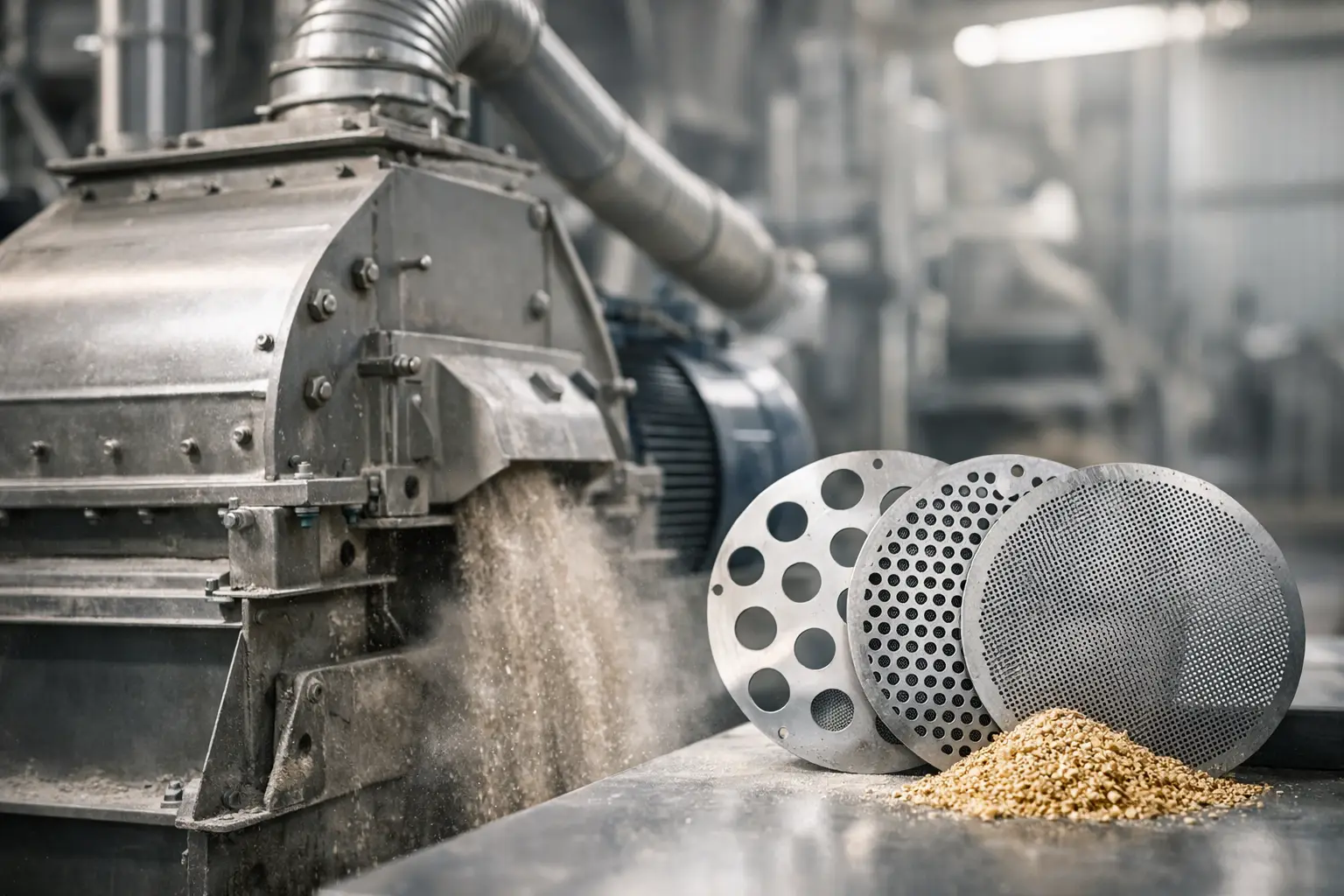
Cone mills are widely used for gentle de-lumping, calibration and controlled sizing of dry granules, powders and agglomerates. Their low-speed impeller action makes them a strong choice where preserving particle shape and avoiding excessive fines is more important than aggressive size reduction.
In tablet and capsule production, a cone mill is often positioned after drying or prior to blending to achieve a more consistent granule size. Screen selection, impeller profile and rotational speed can be adjusted to tune the result. This flexibility is useful, but it also means development work is needed to establish a reproducible operating window.
Cone milling is not usually the best option for hard crystalline materials requiring substantial micronisation. It excels when material needs conditioning rather than intensive grinding.
Pin mills for controlled fine grinding
Pin mills use intermeshing rows of rotating and stationary pins to generate impact and shear. They are effective for dry materials requiring finer particle size reduction than a cone mill can typically achieve, including many excipients, intermediates and non-heat-sensitive active ingredients.
Their principal advantage is controllable, high-energy milling with comparatively straightforward adjustment through rotor speed, feed rate and internal configuration. Pin mills can also be engineered for inert gas operation where oxidation or moisture control is a concern.
The trade-off is heat generation. At high peripheral speeds, temperature-sensitive materials may soften, smear or undergo unwanted physical changes. Process engineers should assess mill outlet temperature and residence time during trials, rather than assuming a target micron size can be achieved without affecting product quality.
Hammer and universal mills for versatile production duties
Hammer mills and universal mills remain valuable for a broad range of pharmaceutical materials, particularly where moderate-to-high reduction ratios and dependable throughput are required. Their impact-based action can process crystalline powders, dried plant materials, coarse intermediates and selected excipients.
A universal mill typically provides greater flexibility than a conventional hammer mill through interchangeable grinding elements and screens. This can make it attractive in multiproduct facilities, where a single machine may need to handle different materials over its service life.
However, these mills are not automatically suitable for every formulation. High impact can generate fines, and screen-based operation can become less efficient with sticky, fibrous or moisture-sensitive material. Correct feeder design and air management are essential to maintain stable throughput and avoid product build-up.
Air classifier mills for narrow particle control
Air classifier mills combine mechanical grinding with dynamic air classification. Fine particles pass through the classifier while oversize material remains in the grinding zone for further reduction. This recirculating principle provides closer control of top particle size than screen-only milling approaches.
For pharmaceutical applications where powder behaviour depends on a tightly controlled distribution, an air classifier mill can offer a major process advantage. It is particularly relevant for fine excipients, inhalation formulations and materials where oversize particles cannot be tolerated.
The system requires careful optimisation of airflow, classifier speed, feed rate and grinding energy. Greater fineness generally increases energy demand and may reduce throughput. The appropriate design point is therefore the one that meets the formulation specification with stable output, not necessarily the finest result the mill can produce.
Jet mills for micronisation of high-value materials
Jet mills use compressed gas to accelerate particles into high-velocity collisions. Because there are no conventional mechanical grinding components in the milling chamber, they are well suited to fine and ultrafine micronisation of sensitive or high-value APIs.
The absence of moving contact parts in the product zone can reduce wear contamination risk, while the expansion of gas can help manage temperature during processing. These attributes make jet milling a proven route for products that require low-micron particle sizes and controlled crystal fracture.
Jet milling is energy-intensive and demands a well-controlled feed. Poorly flowing material may require conditioning or specialised feeding before entering the mill. Compressed air or nitrogen quality, containment strategy and filter performance must also be designed as part of the complete system rather than treated as secondary utilities.
Cryogenic milling for heat-sensitive or elastic products
Some pharmaceutical and nutraceutical materials cannot be milled efficiently at ambient temperature. Waxy compounds, polymers, fatty materials and certain botanical products may soften or become elastic under mechanical energy, leading to poor size reduction and mill fouling.
Cryogenic milling uses a cooling medium, commonly liquid nitrogen, to make the feed more brittle before and during grinding. This can improve throughput, reduce sticking and preserve volatile or temperature-sensitive constituents. It may also support a cleaner particle morphology where conventional milling causes smearing.
The additional infrastructure and operating cost must be justified by the material response. Cryogenic processing is a targeted engineering solution, not a default choice for every heat-sensitive product.
Specify the Complete Milling System, Not Just the Mill
The mill is only one part of pharmaceutical powder processing. Inconsistent results often originate upstream in feeding or downstream in collection, rather than in the grinding chamber itself. A complete specification should address controlled feeding, dust extraction, pneumatic or vacuum conveying, product collection, metal detection and, where required, inline classification.
Feed rate consistency is particularly important. Starve-feeding may reduce throughput and increase variability, while overfeeding can widen particle size distribution, elevate temperatures and cause blockage. Loss-in-weight feeders, screw feeders and agitated hoppers should be selected according to bulk density, flowability and batch requirements.
Containment and cleaning strategy should be established early. A system designed for potent APIs may require high-integrity seals, contained discharge, split butterfly valves and integration with isolator technology. For multiproduct lines, tool-less access, minimal retained material and validated cleaning access may be more commercially significant than marginal differences in milling capacity.
From Laboratory Trials to Commercial Scale
Scale-up should be based on measured process behaviour, not a simple increase in motor power or chamber volume. Material properties can change with batch size, humidity, supplier variation and pre-processing conditions. Laboratory and pilot trials should establish the relationship between feed rate, rotor or classifier speed, gas flow, temperature and particle size distribution.
A credible scale-up programme also assesses yield, cleaning time, product retention and wear. These factors influence total cost of ownership as directly as energy use. The most effective route is usually an application-specific design that carries proven operating parameters from development into a production-capable system.
DP Pulverizer UK supports this approach with milling, classification, mixing and powder handling systems engineered around the material, target specification and production environment. The objective is not simply to install a mill, but to create a controlled, maintainable process that performs consistently across the equipment lifecycle.
The right milling investment should leave the production team with a clear operating window, dependable particle control and a system that can adapt as product volumes and formulation demands change. That is the standard against which pharmaceutical milling equipment should be judged.