DP Pulveriser UK - Innovating the Future of Size Reduction
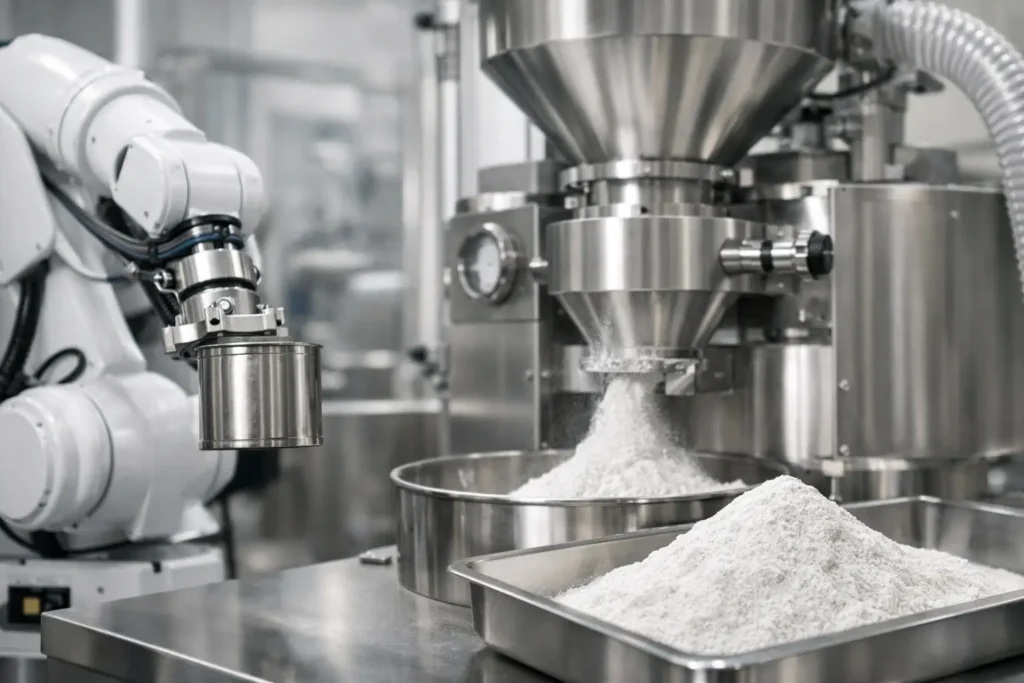
A mill can achieve an excellent particle size distribution during commissioning, then drift out of specification when feed properties, ambient conditions or operator settings change. For manufacturers producing high-value powders, milling automation is the practical means of holding the process within its intended operating window, batch after batch and shift after shift.
Automation is not simply a PLC added to a mill. It is the controlled integration of feeding, milling, classification, product transfer, containment, recipe management and process data. Properly engineered, it turns a collection of individual machines into a repeatable powder processing system with measurable performance.
What milling automation controls
The level of automation should reflect the product, the production rate and the consequences of process variation. In a simple installation, automated control may govern mill speed, feeder rate and basic interlocks. In a high-specification pharmaceutical, battery-material or speciality chemical process, the system may also manage weighing, ingredient verification, air volume, classifier speed, inert gas, temperature, dust collection, batch records and cleaning sequences.
The central task is to control the variables that influence particle size reduction. These commonly include material feed rate, rotor or grinding-disc speed, airflow, classifier setting, milling temperature and differential pressure. Each variable affects the others. Increasing feed rate, for example, may raise the mill load and alter residence time. If airflow and classification are not adjusted appropriately, the resulting powder can become coarser or show a wider particle size distribution.
A well-designed control strategy makes these relationships manageable. It applies defined limits, responds to changing process conditions and prevents operators from relying on informal adjustments that are difficult to reproduce.
Why consistent feeding is the starting point
Many milling issues begin before material reaches the grinding chamber. Powders can bridge in hoppers, segregate during transfer, absorb moisture or vary in bulk density between deliveries. A mill cannot compensate indefinitely for an unstable feed.
Automated gravimetric feeding provides a controlled mass flow rather than a nominal screw speed. Loss-in-weight feeders continuously measure the reduction in hopper weight and correct the feeder output to maintain the required feed rate. This is particularly valuable where low-dose ingredients, cohesive powders or narrow particle size targets are involved.
The feeder must still be selected for the material. Free-flowing granules, fine cohesive powders, fibres and heat-sensitive materials behave differently. Agitation, hopper geometry, screw configuration and refill management all need consideration. The objective is not merely to automate the feeder, but to deliver a stable and representative feed to the mill.
Closed-loop control improves milling performance
Open-loop operation follows pre-set parameters. It can be effective for stable, well-understood materials, but it assumes the incoming material remains constant. Closed-loop control uses process feedback to make measured corrections when conditions move away from target.
For an air classifier mill or jet mill, feedback may include pressure, airflow, classifier motor load, temperature and product characteristics from at-line or in-line analysis. A control system can identify a rising pressure drop that suggests filter loading, or detect operating behaviour associated with overfeeding. It can then reduce feed, alert the operator or place the system in a controlled hold state before off-specification product accumulates.
Particle size measurement presents a useful distinction. In-line analysers can provide fast feedback, but they require reliable sampling, calibration and a clear understanding of how the measured result relates to the finished product. At-line laser diffraction may be more appropriate where analysis time is acceptable and the process does not justify continuous instrumentation. The right approach depends on product value, batch size, compliance requirements and the cost of a quality failure.
Automation should not be treated as a substitute for sound process development. It performs best when mill selection, operating parameters and material behaviour have been established through laboratory and pilot trials.
Milling automation across the full process line
The greatest gains often come from automating the interfaces around the mill. Manual charging, product collection and intermediate handling introduce variation, dust exposure and delays that a highly automated grinding chamber alone cannot remove.
An integrated line may include bulk bag or sack discharge, screening, metal detection, vacuum conveying, milling, air classification, product collection, blending and final packing. Each stage should communicate with the central control system. Interlocks ensure that downstream receivers are available before conveying begins, extraction is running before material is introduced, and the mill cannot operate outside safe pressure or temperature limits.
For hazardous, potent or contamination-sensitive materials, enclosed transfer is a decisive benefit. Vacuum conveying and contained discharge reduce manual intervention while supporting cleaner production areas. In combustible dust applications, the design must also account for the material’s dust explosion characteristics, pressure containment, venting or suppression requirements, earthing and the relevant ATEX obligations. These are engineering decisions, not software settings.
Recipes, traceability and controlled changeovers
Recipe control gives production teams a structured way to run approved products at approved settings. A recipe can define feeder setpoints, mill speed, classifier speed, air volume, timing sequences and acceptable operating limits. Access permissions help ensure that changes are made only by authorised personnel and are recorded.
This is particularly relevant in regulated manufacturing. Batch records can capture material identifiers, lot numbers, operator actions, alarms, deviations and key process values. The resulting data supports investigation when results fall outside specification and provides evidence that the process was run as intended.
Recipe systems also make product changeovers more predictable. They do not eliminate the need for validated cleaning, inspection or line clearance, but they reduce the risk of loading incorrect settings after a changeover. Where several products share one line, the control philosophy should include clear confirmation steps for the completed cleaning state and selected recipe.
Where automation delivers the strongest return
The business case is rarely based on headcount reduction alone. The more significant value comes from avoiding quality loss, increasing productive machine time and reducing the hidden cost of manual handling.
Milling automation is especially effective where:
- particle size distribution has a direct effect on dissolution, flowability, colour strength, reaction rate or final product performance;
- manual feed control causes fluctuating throughput or repeated operator adjustments;
- the process handles dusty, hazardous, potent or temperature-sensitive materials;
- production is moving from laboratory or pilot scale to a repeatable commercial process;
- traceability, electronic batch documentation or controlled access are required.
For lower-volume, frequently changing campaigns, a fully automated installation may not provide the same return as a modular, semi-automated system. Flexibility, cleaning time and the need for skilled operator intervention must be assessed honestly. Automation should remove avoidable variation, not impose complexity where it adds little production value.
Designing an automation project around the material
An automation specification should begin with the material and the required finished powder, not with a preferred control platform. Define the target particle size distribution, throughput range, moisture and temperature limits, flow behaviour, containment requirement, cleaning method and downstream packaging needs. These inputs determine the appropriate mill technology and the required instrumentation.
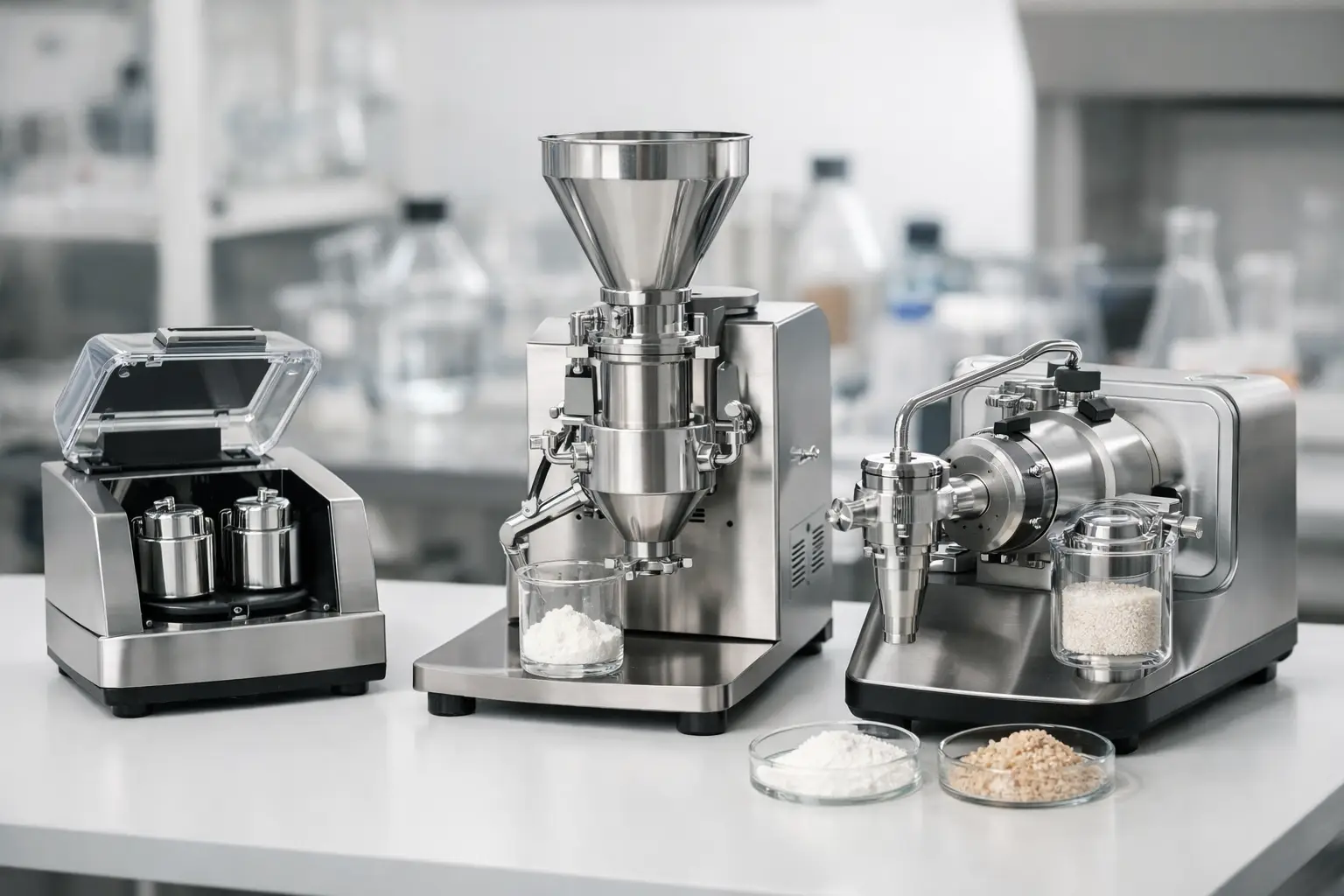
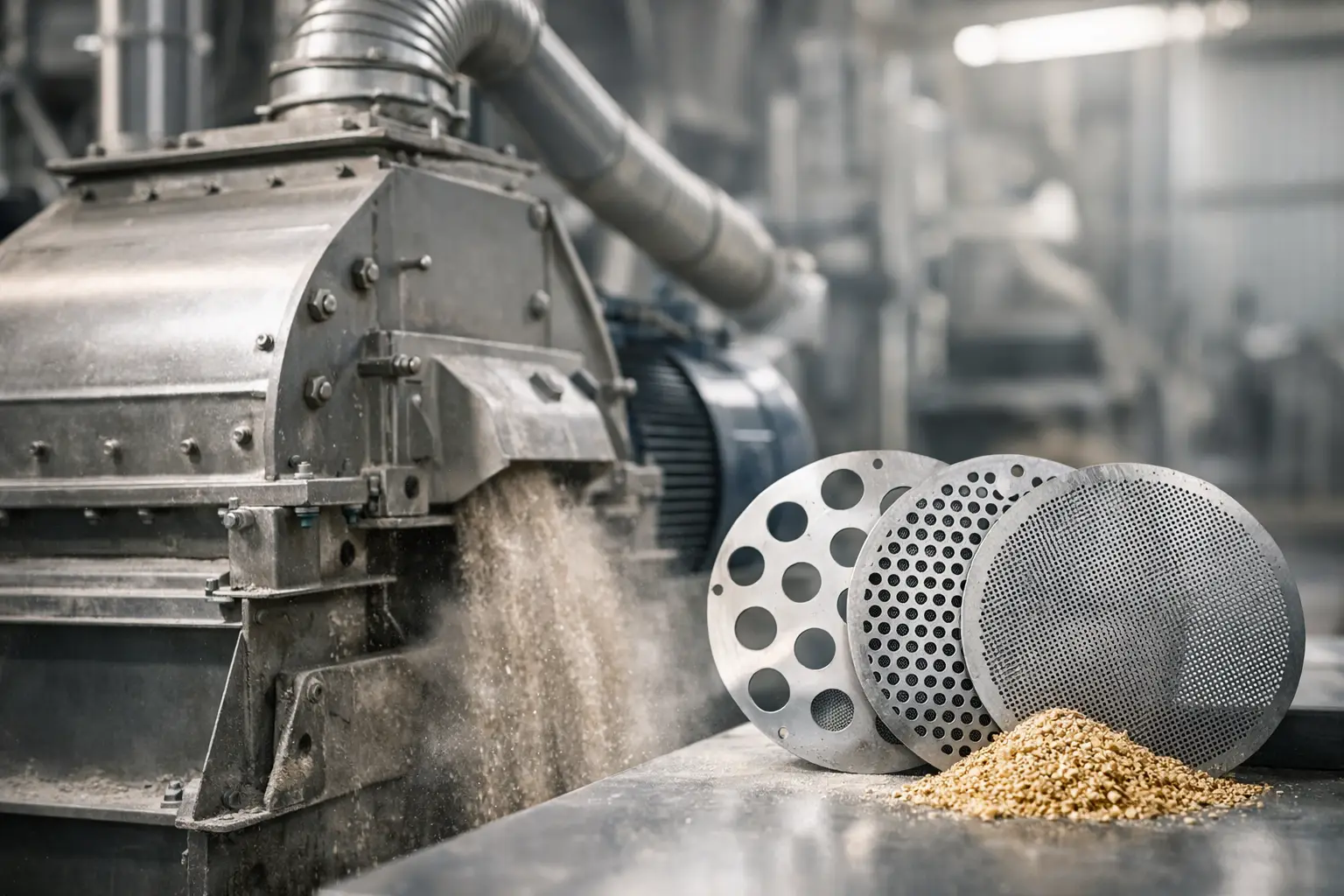
The next stage is to establish the operating envelope through trials. A pin mill, universal mill, turbo mill, hammer mill, jet mill or air classifier mill will respond differently to the same material. The automation architecture should reflect those responses. A cryogenic milling system, for instance, requires dependable management of cooling medium, temperature and feed behaviour, alongside the normal controls for size reduction and transfer.
Factory acceptance testing should verify not only that motors start and interlocks function, but that recipes, alarms, emergency stops, loss-of-air conditions, feeder refills and fault recovery behave as intended. Site acceptance testing then confirms performance within the actual production environment, including the customer’s utilities, extraction system and operating procedures.
DP Pulverizer UK approaches these projects as complete process systems, combining milling and classification equipment with feeding, conveying, controls and application-specific engineering. That integrated view is essential because the best mill cannot deliver consistent output if its upstream feed and downstream handling are uncontrolled.
The most useful automation project is one that gives operators clearer decisions rather than more screens to manage. Start with the variables that cause the greatest product variation, establish reliable measurement and build control around proven process knowledge. The result is a milling line that produces powders to specification with greater confidence, every time it is called upon to run.