DP Pulveriser UK - Innovating the Future of Size Reduction

A powder specified at D90 below 20 microns can fail its intended function even when its average particle size appears correct. Oversize particles may affect dissolution, surface finish, blend uniformity, reactivity or downstream coating performance. The micronisation process is therefore not simply a matter of making material smaller. It is a controlled engineering operation that must deliver a defined particle size distribution, stable throughput and repeatable product quality.
For industrial manufacturers, the right solution begins with the material and the production objective. Particle size target matters, but so do hardness, moisture, heat sensitivity, feed consistency, contamination risk, explosion hazards and the required production rate. Equipment selection without this process context can lead to excessive energy use, poor yield or a powder that performs inconsistently in the final application.
What the micronisation process achieves
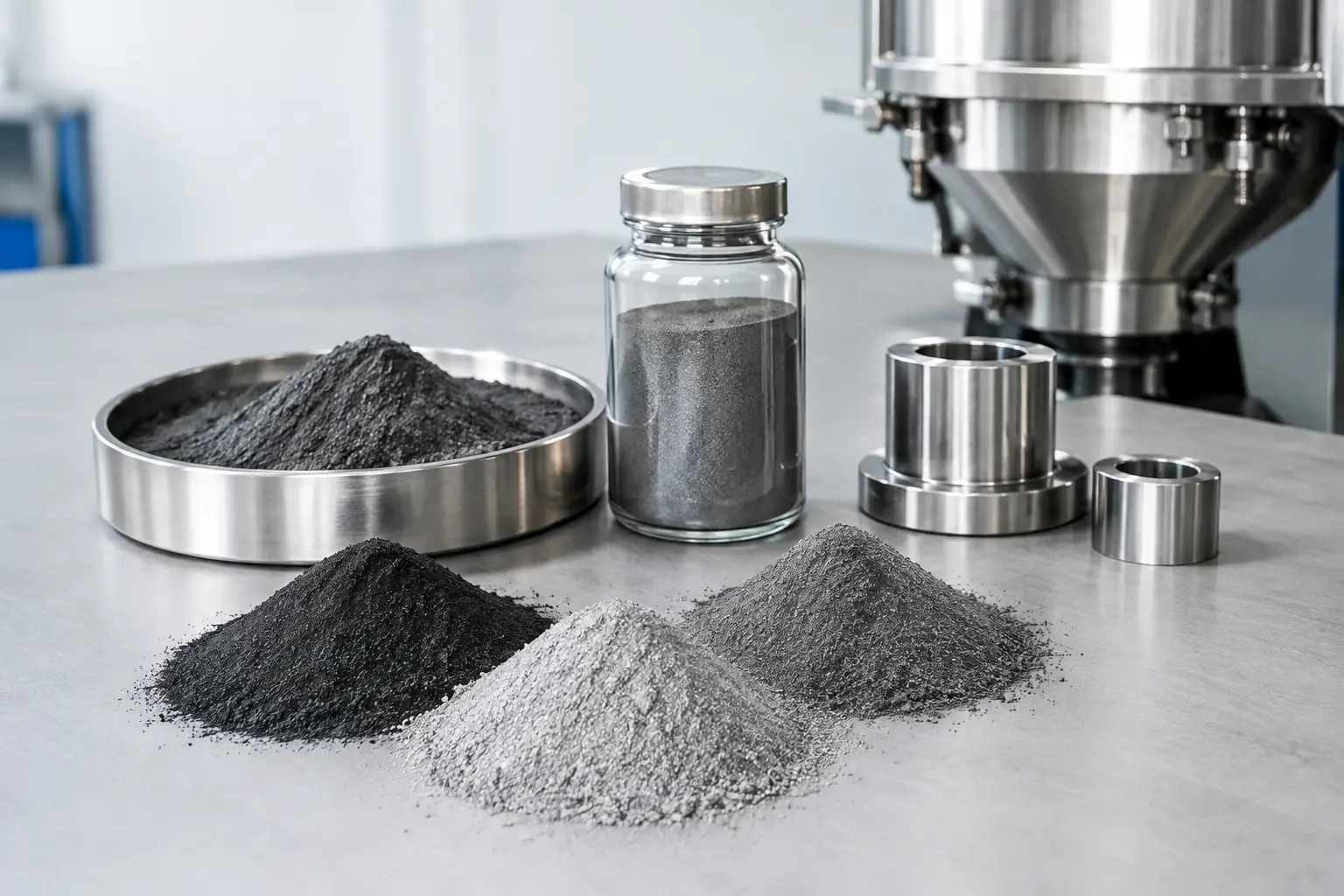
Micronisation is the reduction of solid particles into the micrometre range, commonly to sizes below 100 microns and, in many applications, substantially finer. It is used where powder behaviour is governed by surface area and particle size distribution rather than bulk mass alone.
The benefits vary by application. In pharmaceutical and nutraceutical production, finer particles can improve dissolution and support more uniform blends. In coatings, pigments and inks, they can influence colour strength, gloss and dispersion. Chemical producers may seek greater reaction rates or improved mixing. Battery-material, mineral and metal processors often require tightly controlled size fractions to support performance and consistent downstream handling.
However, smaller is not always better. Excessive fines can reduce flowability, increase dust generation, encourage agglomeration and make conveying more difficult. A successful process targets the particle size distribution that the product actually needs, rather than pursuing the lowest achievable size.
Particle size distribution is the real specification
A single average value, such as D50, offers only part of the picture. It indicates the size below which 50% of the particle volume lies, but it says little about the coarse tail or the volume of very fine material. For many production environments, D10, D50 and D90 values provide a more useful basis for control.
The D90 is particularly significant when oversize material creates defects, blocks screens or compromises product appearance. The D10 may matter where excessive fines affect dust control, packing density or flow. Equally important is the distribution width. Two powders can share the same D50 yet behave very differently if one has a broad distribution and the other is tightly classified.
This is why classification is frequently as important as grinding. A mill produces particles across a range of sizes; an integrated classifier separates material that meets specification from material that requires further size reduction. In closed-loop processing, oversize particles are returned to the grinding zone, helping maintain quality without discarding valuable product.
Choosing the right milling principle
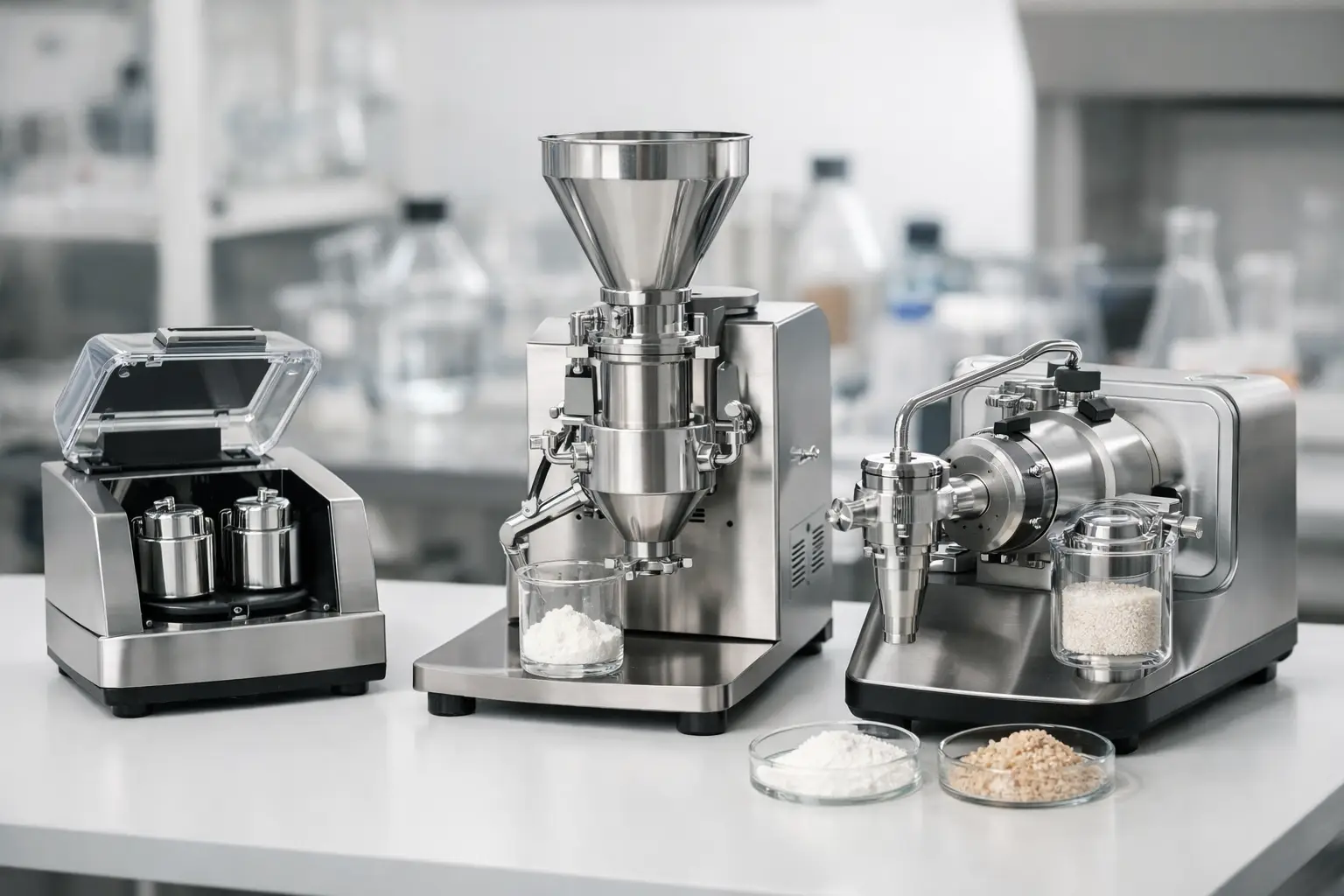
The best micronisation equipment depends on how the material fractures, how much heat it can tolerate and how tightly the final powder must be controlled. No single mill is suitable for every duty.
Jet milling for fine, low-contamination applications
Jet mills use high-velocity gas streams to accelerate particles into one another. The size reduction mechanism is particle-on-particle impact, which can minimise wear-related contamination compared with mechanically driven grinding systems. This makes jet milling well suited to high-purity products, abrasive materials and applications requiring fine particle sizes.
The trade-off is energy demand. Compressed air or inert gas consumption must be evaluated alongside output, yield and quality requirements. Feed preparation is also critical: wet, cohesive or poorly deagglomerated material can restrict performance before it reaches the milling chamber.
Mechanical impact mills for versatile production duties
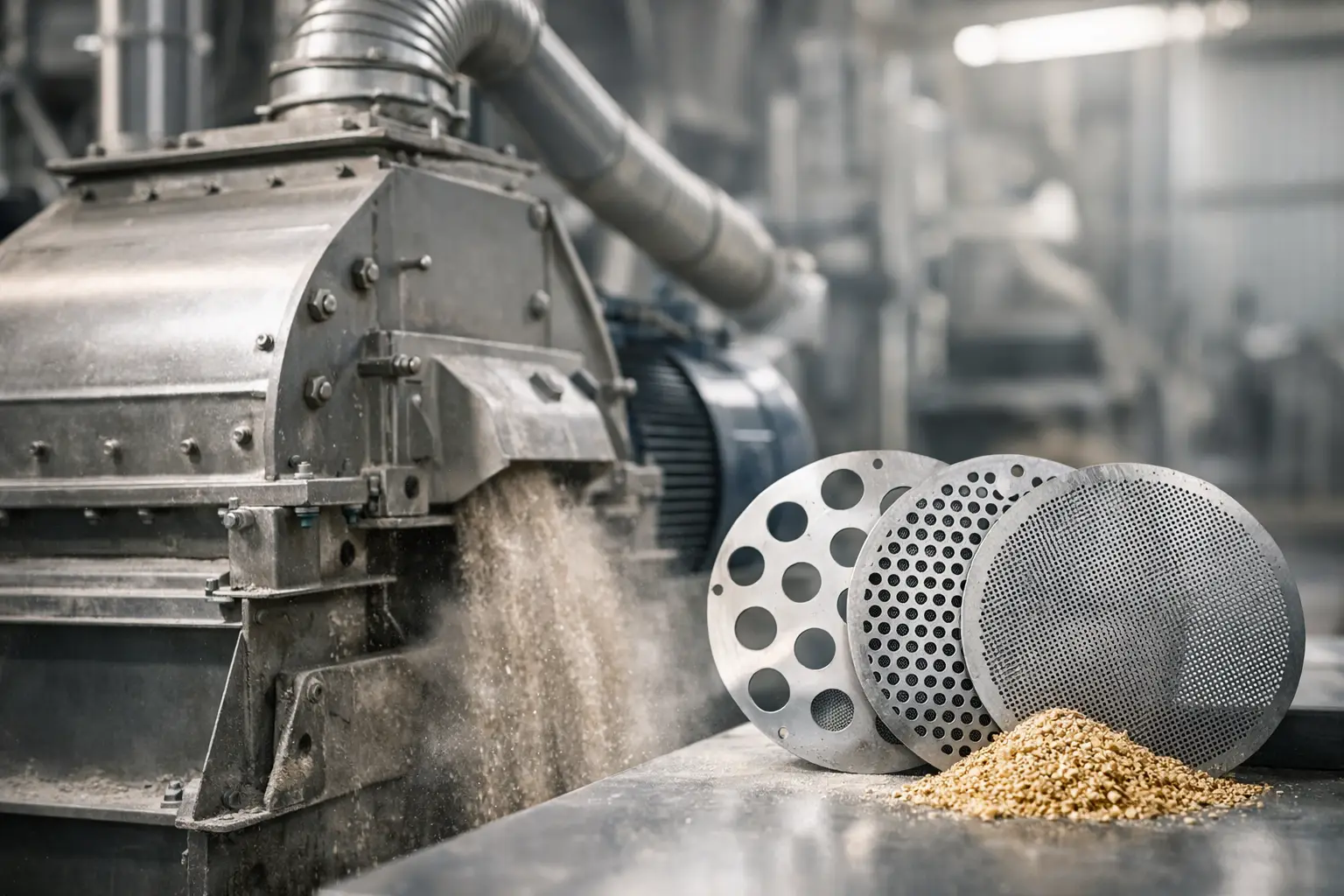
Pin mills, turbo mills, universal mills and air classifier mills use mechanical impact, shear and controlled airflow to reduce particle size. They are widely selected for food ingredients, chemicals, minerals, agricultural products and many other dry powder applications.
A pin mill can provide high-impact grinding for brittle materials, while a turbo mill may be configured to handle more challenging products through rotor and liner selection. An air classifier mill combines size reduction and dynamic classification in one system, offering a practical route to controlled fine powders at industrial throughput. The appropriate design depends on feed size, desired cut point, material hardness and acceptable process temperature.
Cryogenic milling for heat-sensitive or elastic materials
Some materials soften, smear or become difficult to mill at ambient temperature. Polymers, waxes, spices, certain foods and elastomeric products can benefit from cryogenic milling, where liquid nitrogen or another cooling approach lowers the material temperature before and during processing.
Cooling can make an elastic material brittle enough to fracture cleanly and can protect heat-sensitive aromas, flavours or active ingredients. It adds process complexity and operating cost, so it should be justified by product quality, yield or feasibility rather than adopted as a default solution.
The operating conditions that determine performance
Mill type establishes the processing principle, but operating conditions determine whether that principle produces a stable result. Rotor speed, air flow, classifier speed, feed rate and residence time are all interdependent. Increasing one setting can improve fineness while reducing throughput, raising temperature or widening the particle size distribution.
Feed consistency is often underestimated. Variations in moisture, particle size, bulk density or material temperature alter how the powder enters and moves through the mill. A controlled feeding system, such as screw, vibratory or loss-in-weight feeding, helps keep the milling load stable. Upstream screening, deagglomeration or pre-crushing may also be necessary where incoming material is inconsistent.
Temperature requires close attention, particularly in pharmaceutical, food, polymer and speciality chemical applications. Heat can cause melting, degradation, flavour loss, oxidation or changes in crystal form. Process air management, cooling jackets, chilled feed, cryogenic operation or a lower-energy milling route may be required depending on the material.
Designing a complete micronisation line
A production mill should not be assessed in isolation. Reliable micronisation depends on the full material path: feed preparation, controlled dosing, size reduction, classification, collection, containment and transfer to the next process stage.
Poorly designed powder handling can undermine an otherwise capable mill. Long transfer lines, unsuitable bends or inadequate air balancing may cause segregation, build-up and product loss. Collection systems must capture the required fines efficiently while maintaining the airflow conditions needed for milling and classification. Where product recovery, hygiene or high containment is required, filter selection and discharge design become central engineering decisions.
For combustible dusts, the line must be designed around the documented explosion risk assessment. Depending on the material, this may involve earthing and bonding, explosion venting, suppression, isolation, inerting or an appropriately rated process enclosure. Safety cannot be treated as an add-on after equipment selection; it affects the system architecture from the outset.
Scale-up deserves the same discipline. Laboratory trials identify whether a material can reach the target size, but commercial production introduces different heat loads, feeding behaviour, airflow characteristics and residence times. Pilot testing with representative feedstock provides the data needed to establish a credible scale-up route and reduce commissioning risk.
How to evaluate a micronisation system
The most useful evaluation criteria connect directly to production performance. Rather than comparing headline motor power or nominal capacity alone, assess the achievable particle size distribution at the required throughput, energy consumption per kilogram, yield, cleanability, wear rate and maintenance access.
For regulated sectors, material traceability, hygienic construction, validated cleaning arrangements and containment capability may be decisive. For abrasive minerals or ceramics, wear protection and the risk of metallic contamination are likely to take priority. For high-volume commodity processing, uptime, energy efficiency and spares availability can have a greater effect on total cost of ownership than the initial capital figure.
DP Pulveriser UK approaches these requirements as an integrated process challenge, combining milling, classification, mixing and powder handling around the needs of the material and the production environment. That approach is particularly valuable when a project must progress from development work to a full turnkey production line without losing control of product specification.
The most effective micronisation process is the one that consistently makes the powder your downstream operation needs, at the rate, quality and operating cost your plant can sustain. Start with measurable product performance, test representative material and engineer the complete system around those results.