DP Pulveriser UK - Innovating the Future of Size Reduction
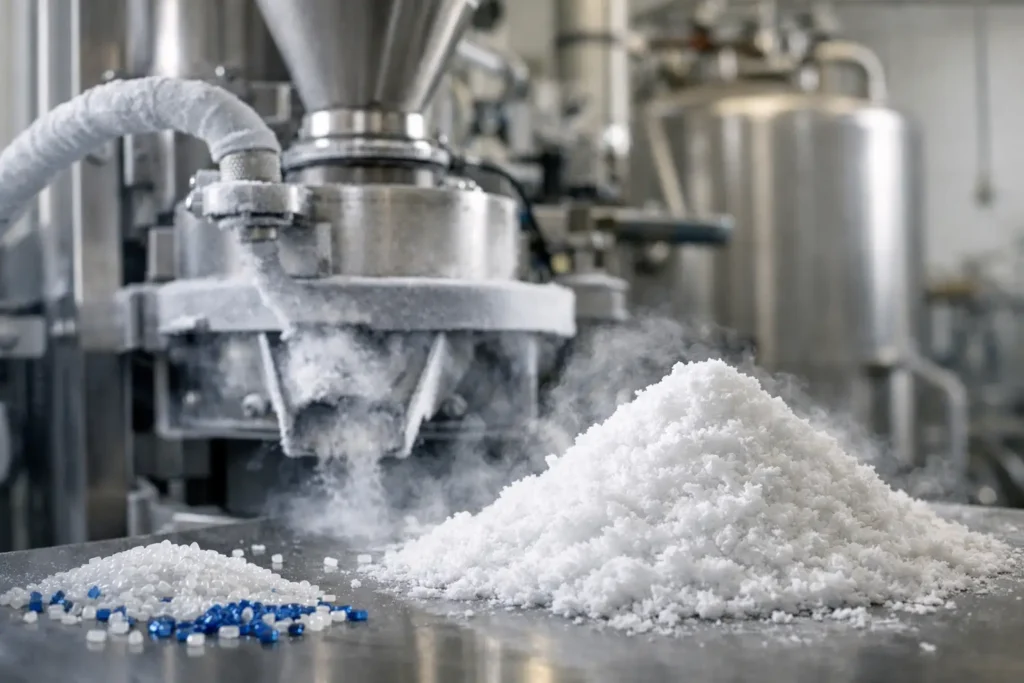
Plastics that soften, smear or agglomerate under ambient grinding require a different process strategy. A cryogenic milling system for plastics uses controlled low temperatures to make difficult polymers brittle before and during size reduction. The result is cleaner fracture, tighter particle size control and a powder that is easier to handle, classify and use in downstream production.
For manufacturers processing thermoplastics, elastomers, films, fibres or recycled polymer streams, the decision is not simply whether to add liquid nitrogen. It is about engineering a complete milling line around the material’s thermal behaviour, target specification and production duty.
Why conventional plastic grinding reaches a limit
Many polymers absorb mechanical energy as heat. In a conventional mill, this can raise the material temperature above its glass transition region or softening point. Instead of fracturing, the feed may become elastic, deform around the grinding elements, coat internal surfaces or fuse into oversize agglomerates.
These effects reduce throughput and create a broad, inconsistent particle size distribution. They can also increase cleaning intervals, screen blockage and unplanned stoppages. For recycled plastics, variable feedstock composition can make these issues more pronounced, particularly where films, flexible compounds or mixed-density fractions are involved.
Cryogenic processing changes the fracture mechanism. Cooling the polymer below its embrittlement temperature reduces elasticity and allows the material to shatter under impact or shear rather than stretch and smear. This supports efficient fine grinding while limiting heat build-up within the mill.
The benefits are most apparent when producing fine powders from materials that are otherwise challenging to mill, including polyethylene, polypropylene, PVC, nylon, EVA, TPU, rubber-modified compounds and many engineering polymers. However, cryogenic milling is not automatically the best answer for every plastic. A rigid, free-flowing polymer with a relatively high softening temperature may be processed effectively at ambient conditions, depending on the required fineness and throughput.
How a cryogenic milling system for plastics works
A properly engineered system cools material in a controlled sequence rather than treating nitrogen as a simple add-on. Feedstock is prepared to a suitable starting size, conveyed through a pre-cooling stage and introduced to the mill at a temperature appropriate to the polymer and the required product specification.
Liquid nitrogen is commonly used because it provides rapid cooling and is inert. It may be injected into a screw feeder, conditioning conveyor, milling chamber or a combination of these points. The objective is to maintain consistent material temperature without excessive nitrogen consumption or localised freezing.
Inside the mill, the embrittled material is reduced by impact, shear or a combination of both. The optimum machine configuration depends on the feed form and target particle size. A pin mill, turbo mill or air classifier mill may be selected where fine powder production and classification control are required. For coarser reduction or tougher feedstocks, a different upstream grinding stage may be appropriate.
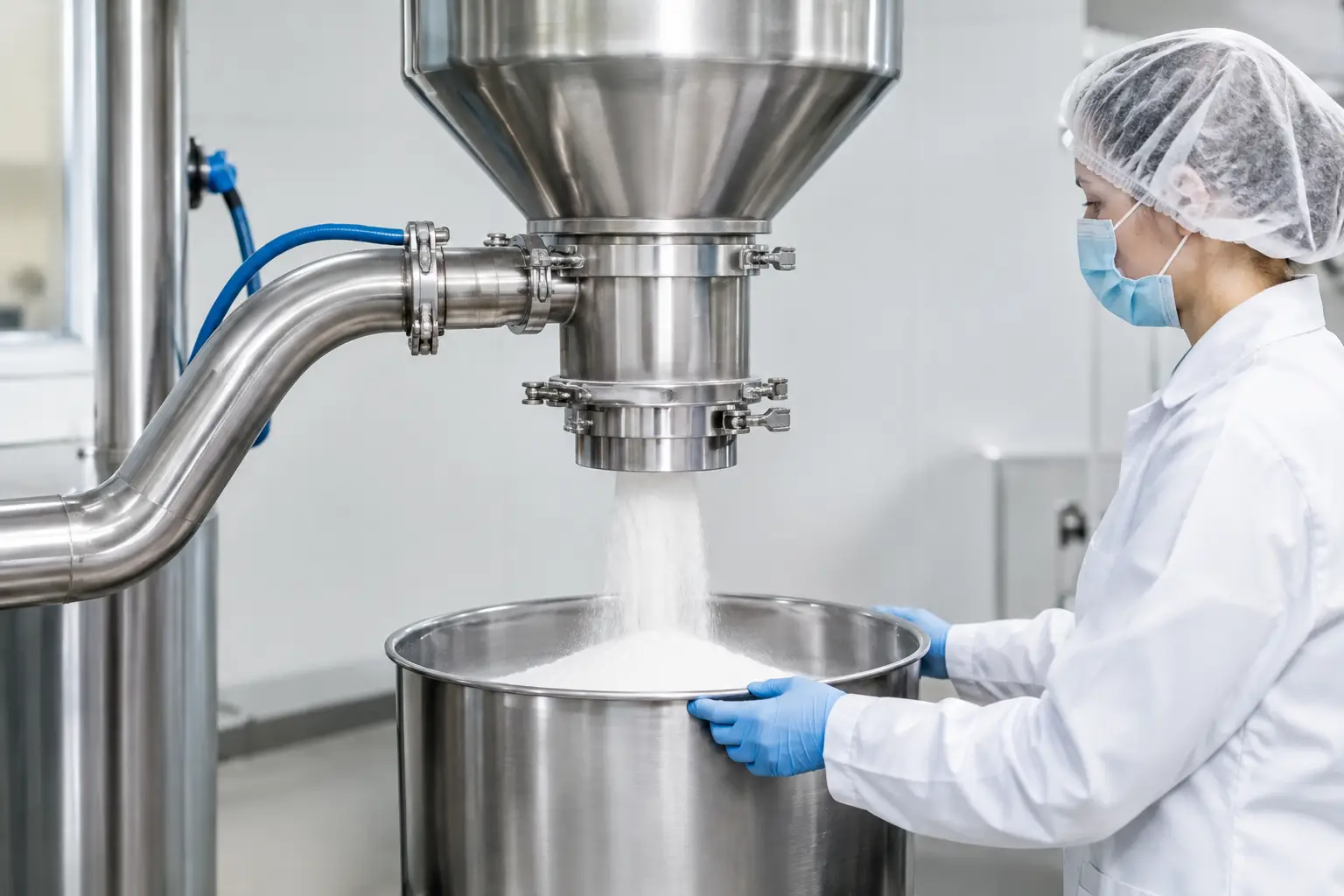
After milling, the powder passes through separation and collection equipment. This can include an air classifier, cyclone, filter receiver and enclosed conveying system. The line should be designed to prevent moisture ingress, manage cold surfaces safely and retain valuable fines rather than losing them to extraction.
Temperature is a process variable, not a fixed setting
There is no universal operating temperature for plastics. The correct temperature depends on polymer chemistry, additives, fillers, moisture content, feed size and the level of mechanical energy introduced by the mill.
Over-cooling can increase nitrogen use without delivering a proportional improvement in milling performance. Under-cooling can leave the material too ductile, resulting in poor fracture and unstable capacity. Testing is therefore valuable when defining the operating window, particularly for filled compounds, recycled feedstocks and proprietary formulations.
A successful system uses temperature monitoring, controllable nitrogen dosing and consistent feed metering to maintain that window. These controls matter as much as the mill itself.
Where cryogenic milling delivers value
Cryogenic size reduction is typically justified where particle quality, process reliability or material recovery outweighs the cost of refrigeration. In plastics processing, this often includes powder for rotational moulding, compounding, masterbatch production, coatings, adhesives, additive manufacturing and specialist recycling applications.
For rotational moulding powders, particle size distribution and particle shape influence flow, packing and mould coverage. Cryogenic milling can produce powders with reduced thermal damage and a controlled fine fraction, helping manufacturers achieve more consistent moulding performance.
In polymer recycling, low-temperature milling can support the conversion of clean production scrap or selected post-industrial materials into reusable powder. It is particularly relevant for flexible materials that are difficult to granulate finely at ambient temperature. The process does not compensate for poor feedstock segregation, however. Contamination, mixed polymers and residual metal must be addressed before milling if a reliable powder specification is required.
For filled polymers, cryogenic milling may limit heat-related degradation while helping to preserve the properties of additives. Yet highly abrasive mineral-filled compounds still require consideration of wear protection, mill internals and maintenance access. Cold milling improves fracture behaviour; it does not remove the mechanical wear associated with abrasive feedstocks.
Specifying the system beyond the mill
A cryogenic line performs only as well as its interfaces. Procurement decisions should consider the whole process from incoming feed to packed powder, rather than comparing mill motor power or headline capacity alone.
Key engineering requirements usually include:
- feed preparation that delivers a consistent chip, granule or flake size;
- gravimetric or controlled volumetric feeding to stabilise milling load;
- nitrogen storage, supply pressure and dosing controls matched to production demand;
- effective classification and collection for the specified particle size distribution;
- enclosed powder handling designed around dust control, product containment and cleanability; and
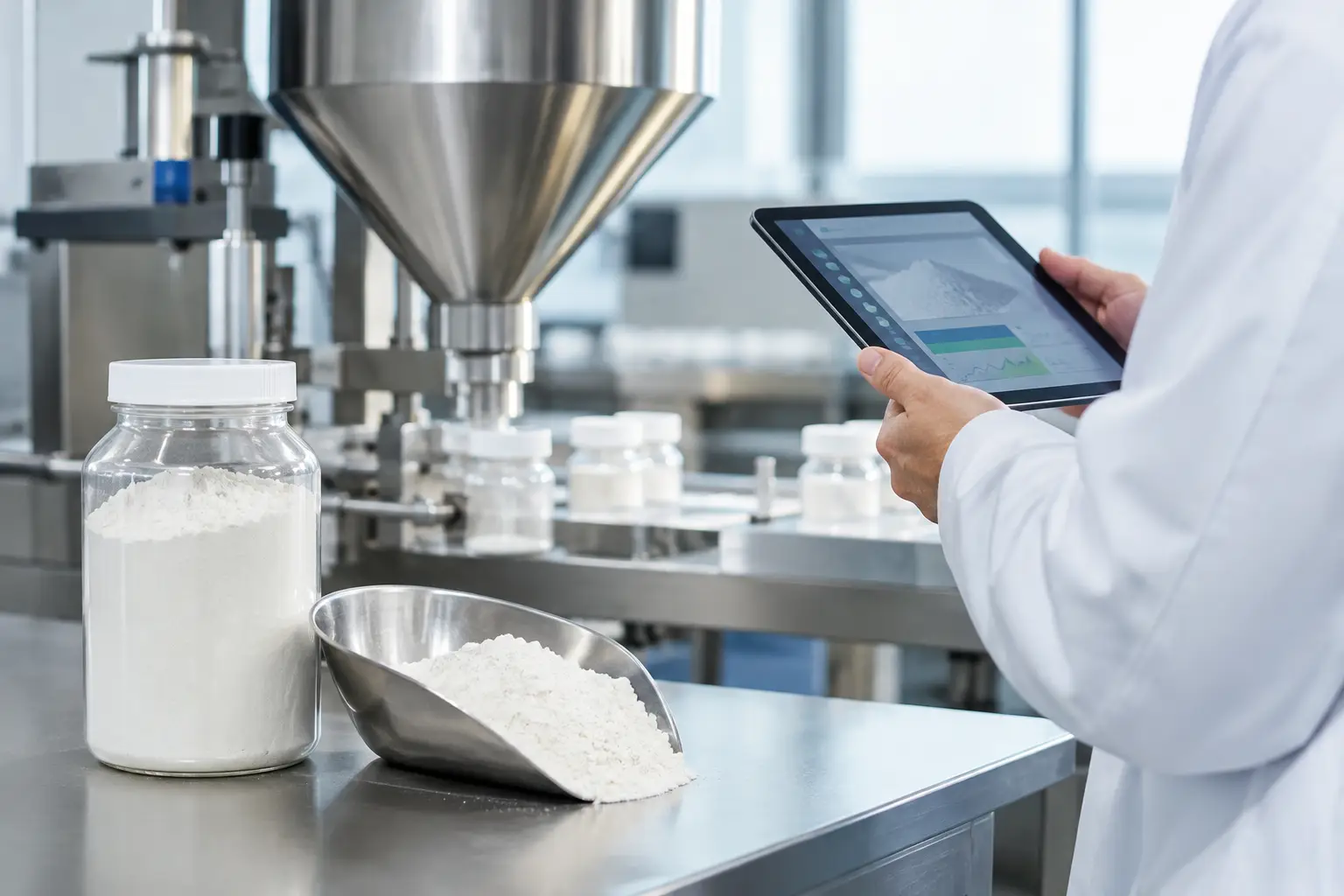
- instrumentation for temperature, pressure, airflow and throughput monitoring.
Capacity must be assessed against the actual material and specification. A system producing a coarse powder may deliver substantially more kilograms per hour than the same equipment producing a narrow fine cut. Similarly, output can change with feed temperature, bulk density, polymer grade and moisture level.
The target particle size should be defined using measurable criteria such as a sieve distribution, laser diffraction range or maximum oversize limit. A requirement such as “fine powder” is not enough for equipment selection. The tighter the distribution, the greater the likely need for classification, recirculation or multiple processing stages.
Safety and plant integration
Liquid nitrogen introduces specific safety requirements. Nitrogen is non-flammable, but it can displace oxygen in enclosed areas. System design must account for ventilation, oxygen monitoring, pressure relief, insulated pipework and safe operating procedures.
Cold surfaces also need to be identified and protected where personnel access is possible. Condensation can become a quality and housekeeping issue if humid air enters poorly insulated sections of the line. In applications where powder quality is sensitive to moisture, sealed transfer and correctly designed collection equipment are essential.
For operations handling combustible polymer dust, the wider dust hazard assessment remains relevant. Cryogenic temperatures do not eliminate the need to evaluate dust containment, explosion protection, earthing and extraction design in accordance with the material risk assessment and site requirements.
Evaluating operating cost realistically
Liquid nitrogen consumption is the most visible cost in cryogenic milling, but it should not be evaluated in isolation. The relevant measure is total cost per kilogram of in-specification powder.
An ambient process may appear less expensive until losses from poor yield, repeated passes, screen replacement, cleaning downtime and off-spec material are included. Conversely, a cryogenic system with poor temperature control can consume unnecessary nitrogen and undermine the expected return. The best economic case is built from trials using representative feedstock and a defined product specification.
Energy efficiency also depends on system balance. Correctly sized fans, efficient classification, insulated cooling sections and stable feeding can all reduce avoidable consumption. Where production is expected to scale, designing for future capacity can be more economical than retrofitting cooling, collection and conveying equipment later.
From trials to a production-ready line
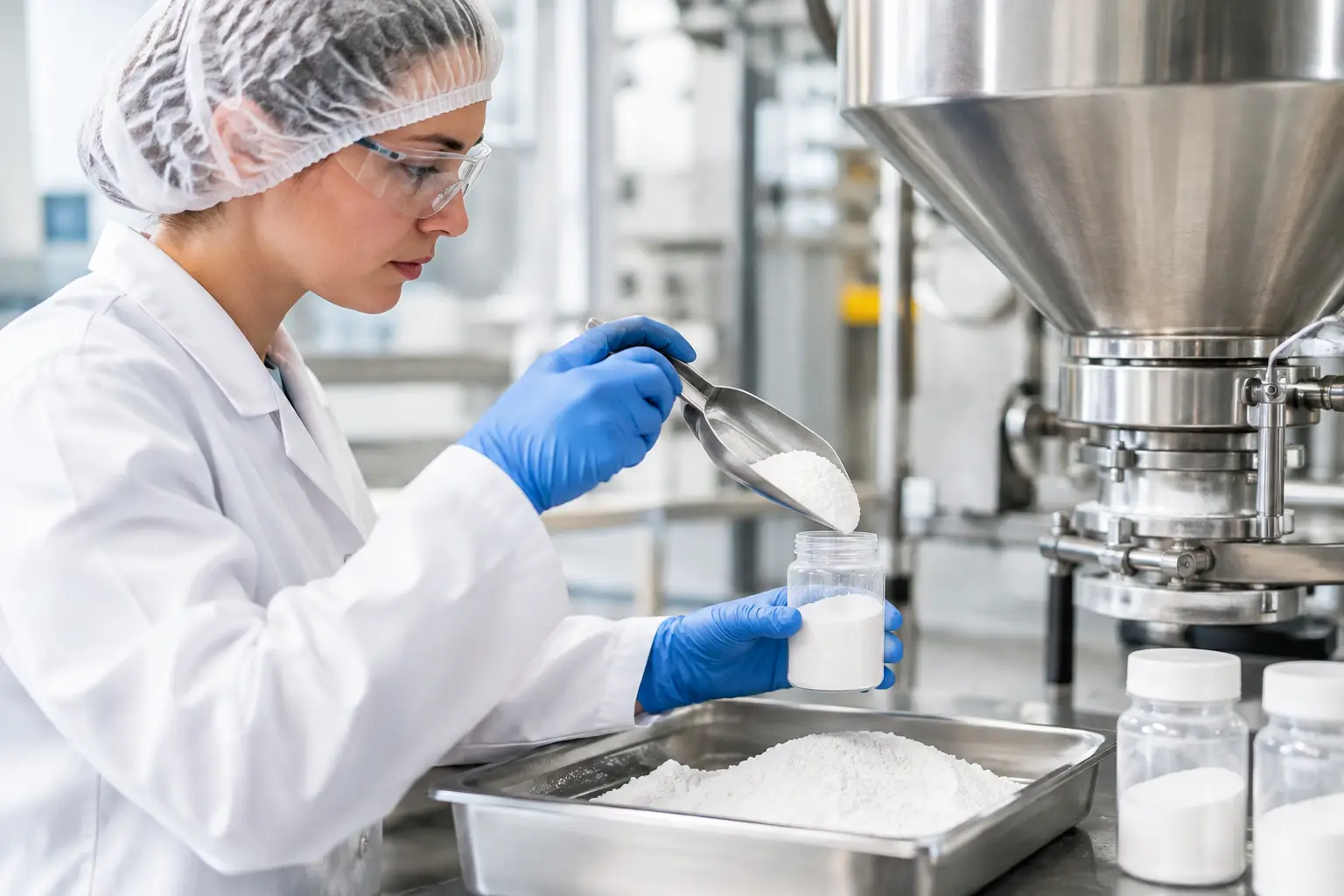
Laboratory and pilot trials should establish more than achievable fineness. They should confirm powder flow, bulk density, yield, temperature profile, nitrogen use, wear behaviour and the consistency of the final particle size distribution. For recycled materials, trials should include realistic feedstock variation rather than only the best available sample.
The scale-up process should then translate those results into a complete production design, including feed preparation, milling, classification, powder collection and controls. This is where an application-specific partner adds value: not by supplying a standard machine in isolation, but by engineering the line around the actual production target.
DP Pulveriser UK supports this approach with milling, classification and powder handling capability that can be developed from trial-scale work through to integrated industrial systems. For plastics processors, the practical objective is straightforward: produce the required powder consistently, at the required rate, without allowing heat, handling losses or unstable feed conditions to dictate the result.
Before committing to equipment, define the polymer grade, incoming form, target particle size, permitted oversize, throughput requirement and downstream use. Those details turn cryogenic milling from a promising concept into a controlled, commercially reliable process.