DP Pulveriser UK - Innovating the Future of Size Reduction
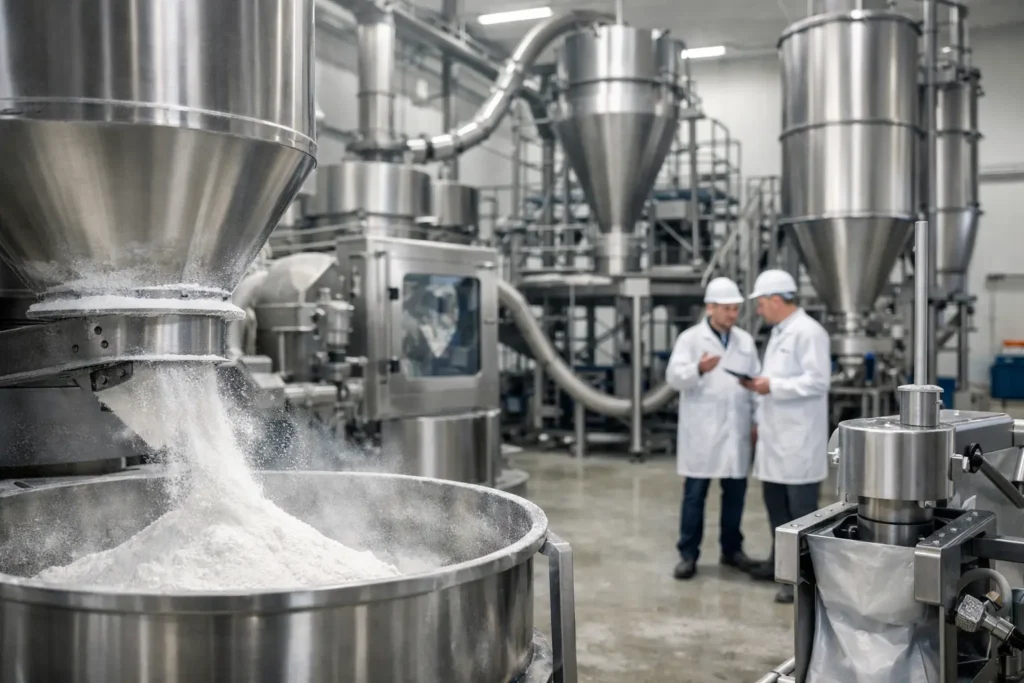
When a production line misses its particle size target, the problem is rarely confined to one machine. Feed variability, poor transfer design, classifier mismatch, dust control issues, batching errors and inconsistent discharge behaviour can all affect the final result. That is why turnkey powder processing systems are increasingly specified by manufacturers that need repeatable performance, not just nominal equipment capacity.
For sectors such as pharmaceuticals, food ingredients, chemicals, battery materials and advanced minerals, the commercial risk of an underperforming process line is significant. Product quality drifts. Yield falls. Cleaning takes longer than expected. Operators spend too much time compensating for design shortcomings. A properly engineered turnkey system addresses the full process, from material intake to finished powder handling, with each stage selected to work as part of one controlled production environment.
What turnkey powder processing systems actually include
A turnkey system is more than a mill delivered with pipework and a control panel. In practice, it is a complete engineered solution designed around the material, throughput requirement, target particle size distribution, plant layout, utility availability and operating standard of the site.
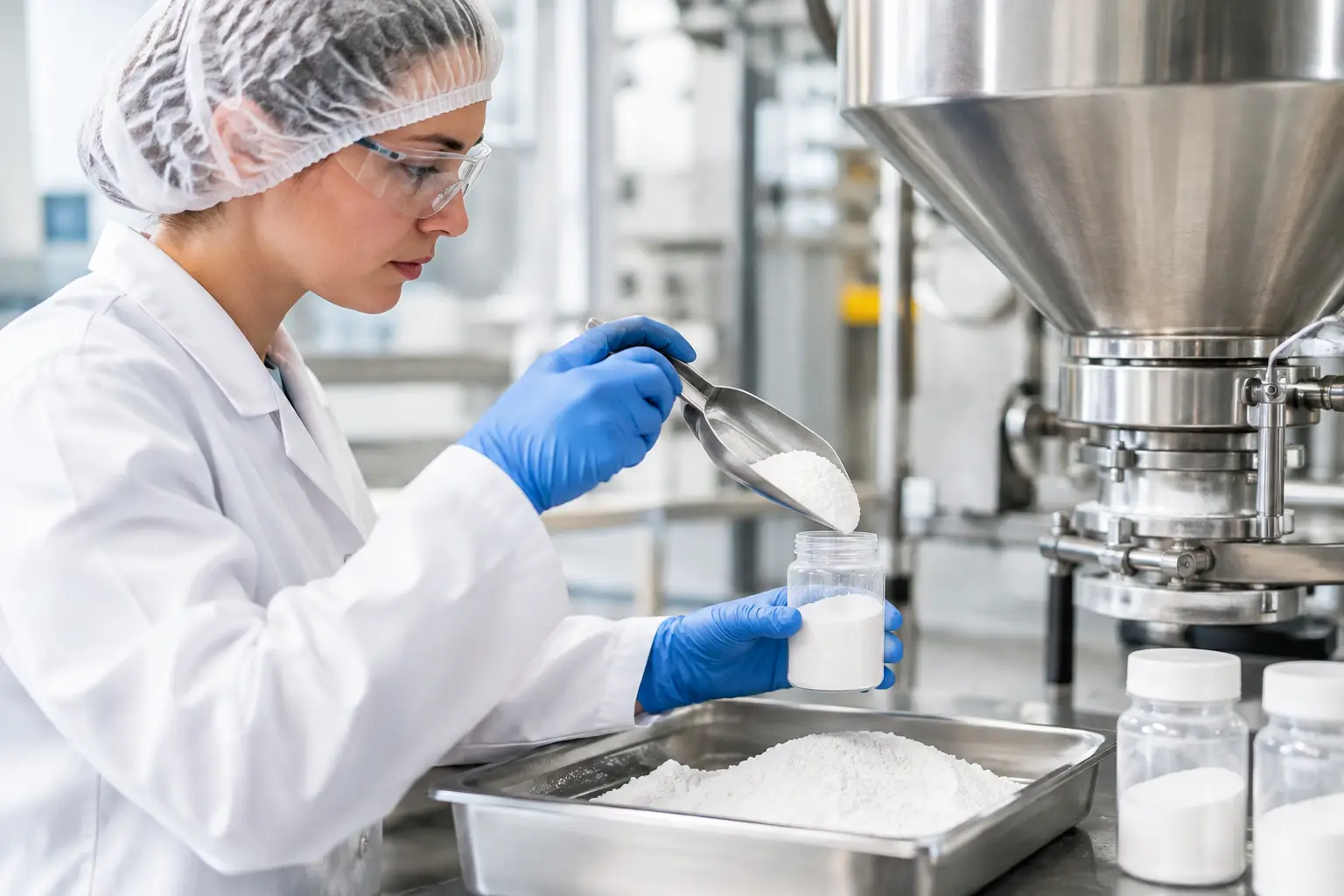
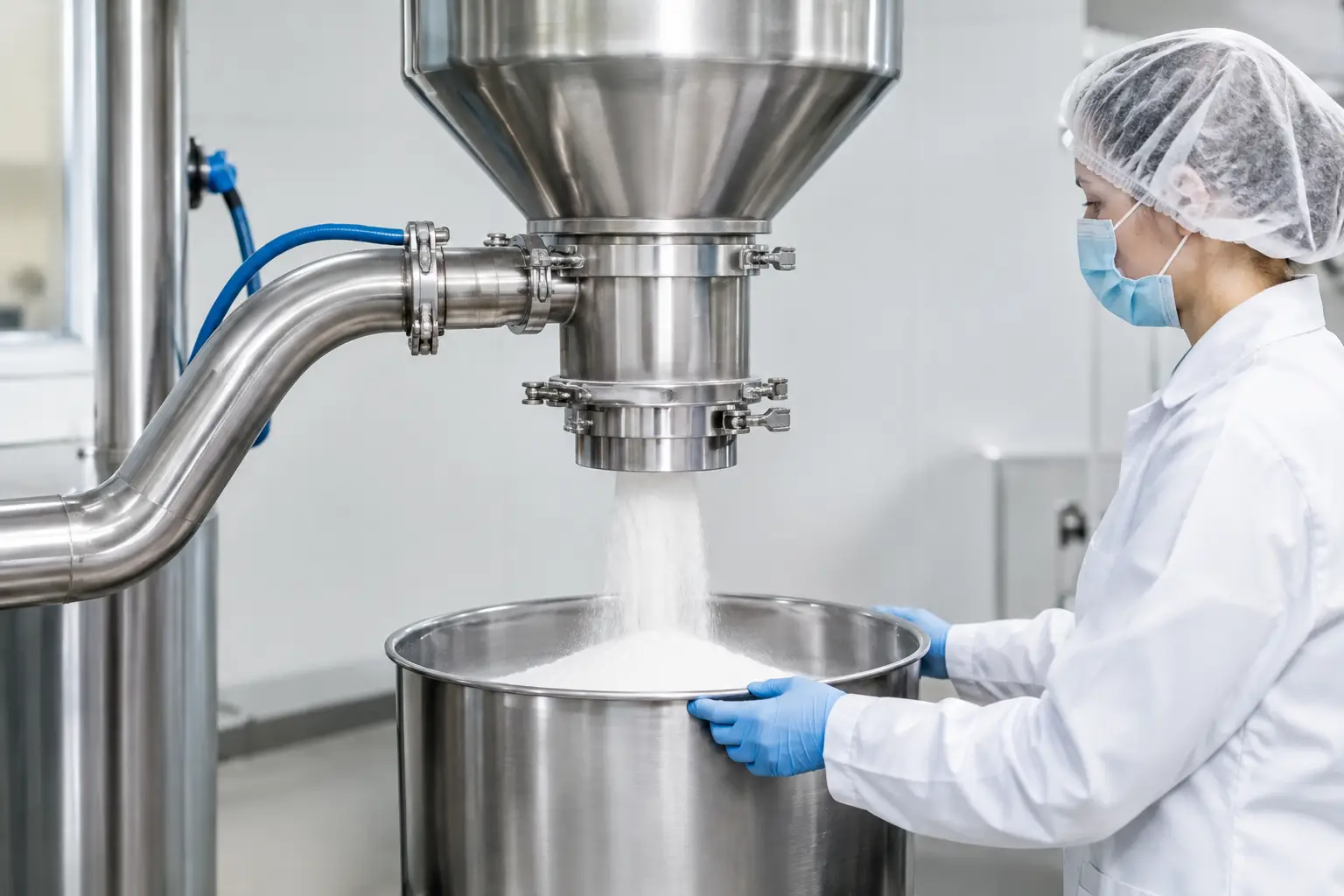
Depending on the application, the system may include feeding and dosing equipment, size reduction technology, classification, mixing, conveying, dust extraction, storage, containment features and automation. It can also include support for trials, scale-up, installation and commissioning. The objective is straightforward – to deliver a line that achieves the required process outcome under real production conditions.
That distinction matters. A standalone machine may perform well in isolation yet still create upstream or downstream bottlenecks once installed. A hammer mill with high capacity, for example, may be the wrong choice if the process also demands narrow particle size distribution, low heat build-up or minimal fines generation. Equally, an efficient mill can be compromised by inconsistent feeding, poor air handling or incorrectly specified conveying velocities.
Why manufacturers move from single machines to integrated lines
Most plants do not begin with a full line strategy. They often expand in stages, adding mills, mixers or conveyors as output grows or product ranges change. Over time, this can leave operations with a patchwork process in which individual assets are serviceable but the line as a whole is inefficient.
This is usually where turnkey powder processing systems start to make commercial sense. Integration improves control. Material transfer points are reduced or better managed. Automation can coordinate feed rates, rotor speeds, classifier settings and discharge behaviour. Cleaning and maintenance access can be built into the system from the outset rather than treated as an afterthought.
There is also a procurement benefit. Instead of managing multiple equipment vendors, interface risks and installation assumptions, the buyer works with one engineering partner responsible for process compatibility and system performance. That does not remove every commissioning variable, because material behaviour always needs validating at scale, but it substantially reduces avoidable uncertainty.
Engineering decisions that determine system performance
The strongest turnkey projects are driven by application data, not catalogue preference. Powder processing is highly material dependent. Friable products, heat-sensitive compounds, abrasive minerals, hygroscopic powders and cohesive blends all respond differently to size reduction and handling.
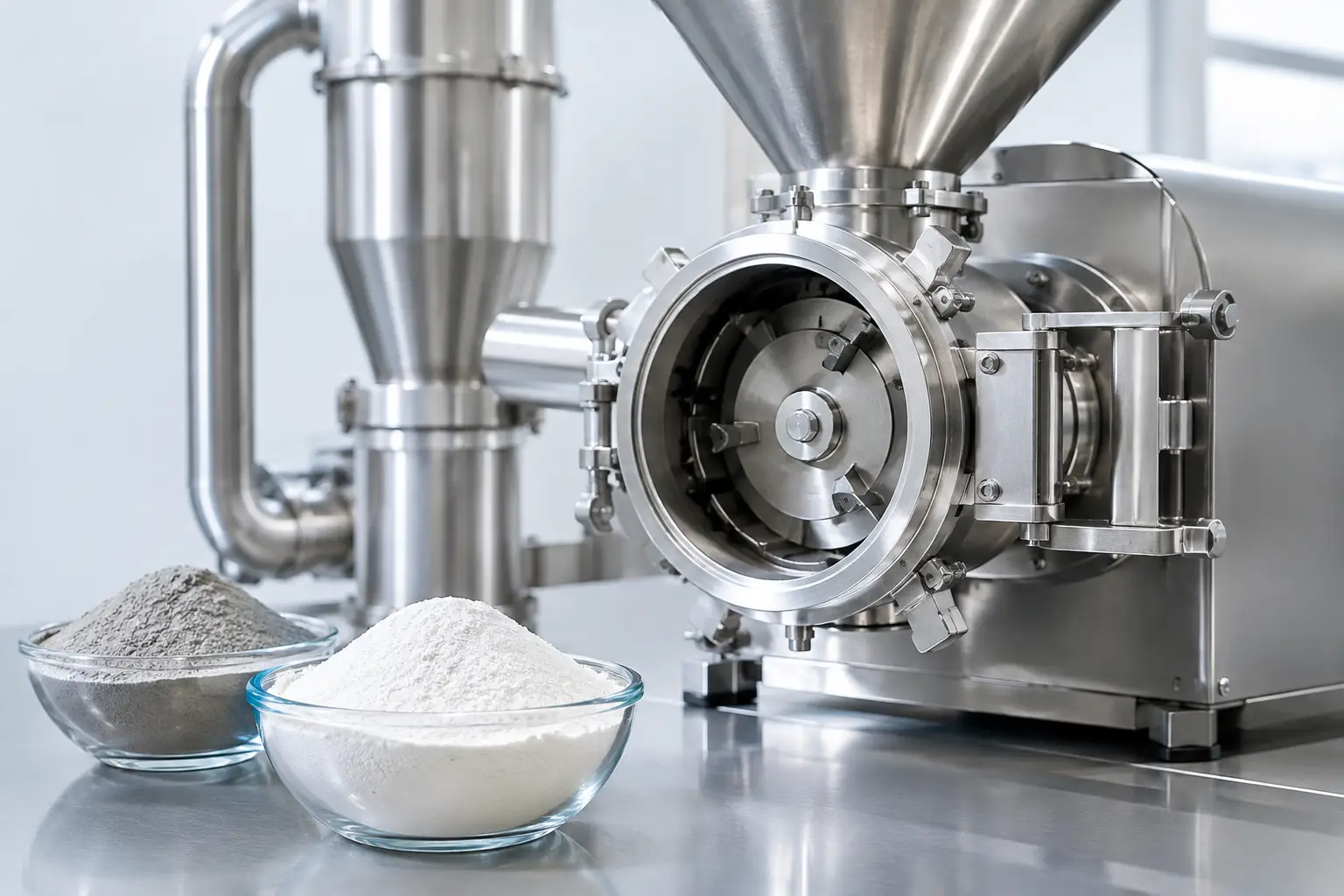
Mill selection sits at the centre of the design. Jet mills are often chosen for ultra-fine applications and where contamination control is critical. Pin mills suit many impact-based grinding duties and can offer effective control for certain food, chemical and pharmaceutical materials. Cone mills are commonly preferred where gentle deagglomeration and controlled sizing are more important than aggressive reduction. Hammer mills remain practical for many bulk duties, while air classifier mills combine grinding and classification in one system where tighter top size control is required.
The correct answer depends on the brief. Throughput, target D50, top cut, moisture, bulk density, temperature sensitivity and explosion risk all shape the decision. In some cases, cryogenic milling is the right route for materials that soften, smear or degrade under ambient grinding conditions. In others, a simpler ambient system with disciplined feed conditioning and classification will deliver better total cost of ownership.
Turnkey powder processing systems and process control
Control strategy is where integrated systems often outperform piecemeal installations. In powder processing, stable performance depends on maintaining consistency across several variables at once. Feed rate, product temperature, air volume, classifier speed, pressure differential and residence time must work together.
A turnkey approach allows those controls to be designed as one operating philosophy. The result is typically better repeatability, faster recipe changeover and less operator intervention. For regulated sectors, that can also support documentation, traceability and validation requirements.
It is worth being realistic here. Automation is not a substitute for sound mechanical design. If a product bridges in the hopper or segregates in transfer, software will not solve the root cause. Good systems pair sensible control architecture with properly engineered material flow, hygienic access where needed, and equipment geometry suited to the powder being processed.
The trade-offs buyers should assess early
Not every integrated line should be engineered for maximum sophistication. There is always a balance between capital cost, flexibility, throughput and complexity. A highly automated line with advanced containment and multiple product pathways may be justified in pharmaceutical or specialty chemical production. It may be excessive for a simpler mineral or agricultural application where ruggedness and throughput are the main priorities.
The same principle applies to over-specification. Buyers sometimes focus on peak throughput without giving equal weight to turndown, cleanability or future product changes. A system that runs one product exceptionally well but performs poorly across the wider manufacturing plan can become restrictive very quickly.
Layout constraints also matter more than many projects allow for. Existing buildings, access routes, ceiling heights, service locations and maintenance clearances can all affect what is realistically achievable. The most reliable supplier input usually comes from early engagement with actual site conditions rather than generic line diagrams.
Scale-up from test work to production
One of the main reasons industrial buyers favour an engineering-led supplier is scale-up confidence. Lab or pilot results are useful, but they only become commercially meaningful when the process can be translated into full production without losing control over particle size, throughput or product integrity.
That scale-up step is where many projects succeed or fail. Material that behaves predictably in a trial unit may respond differently under continuous production loads, especially where heat generation, recirculation rates or feeding consistency change. A capable system supplier will account for those variables when defining equipment size, classifier performance, ancillary components and operating window.
For manufacturers planning growth, the right turnkey line should also support staged expansion. It may be sensible to design around current throughput with provision for future capacity, additional product streams or enhanced automation. That approach often avoids expensive rework later and supports better long-term asset utilisation.
Where total cost of ownership is won or lost
Capital price is only one part of the financial picture. In powder processing, ongoing costs are strongly influenced by energy demand, wear rates, downtime, product loss, filter performance, cleaning time and labour input. A cheaper machine package can become the more expensive option if it creates frequent stoppages or inconsistent output.
Integrated design can reduce those penalties. Correctly matched components improve system efficiency and reduce unnecessary recirculation or handling. Better containment reduces housekeeping burden. Sensible access design shortens maintenance routines. Automation can improve consistency and reduce off-spec production.
This is particularly relevant in high-specification environments where rejected batches, contamination risk or excessive process variation carry a far higher cost than the equipment itself. For those operations, engineering quality is not a premium feature. It is a practical control on operational risk.
DP Pulveriser UK works in exactly this part of the market, where mills, classifiers, mixers and full processing lines must be engineered around measurable production outcomes rather than generic machine ratings.
Choosing the right turnkey partner
The strongest supplier is not necessarily the one with the longest machine list. It is the one that can relate equipment selection to your material, your duty and your plant constraints. That means asking detailed questions about PSD targets, feed form, temperature sensitivity, abrasiveness, bulk density, throughput profile, cleaning requirements and downstream packaging or storage.
It also means being clear about where uncertainty remains. Some materials require trials. Some processes need staged validation. Some layouts force compromises. A credible engineering partner will explain those points directly and design around them where possible.
For technical buyers, that level of engagement is usually the clearest sign that a turnkey proposal is grounded in process reality rather than sales ambition.
The value of turnkey powder processing systems is not that everything arrives from one source. It is that the entire line is engineered to deliver the result the plant actually needs, day after day, batch after batch. When particle size, uniformity and throughput are commercially critical, that difference shows up very quickly on the production floor.