DP Pulveriser UK - Innovating the Future of Size Reduction
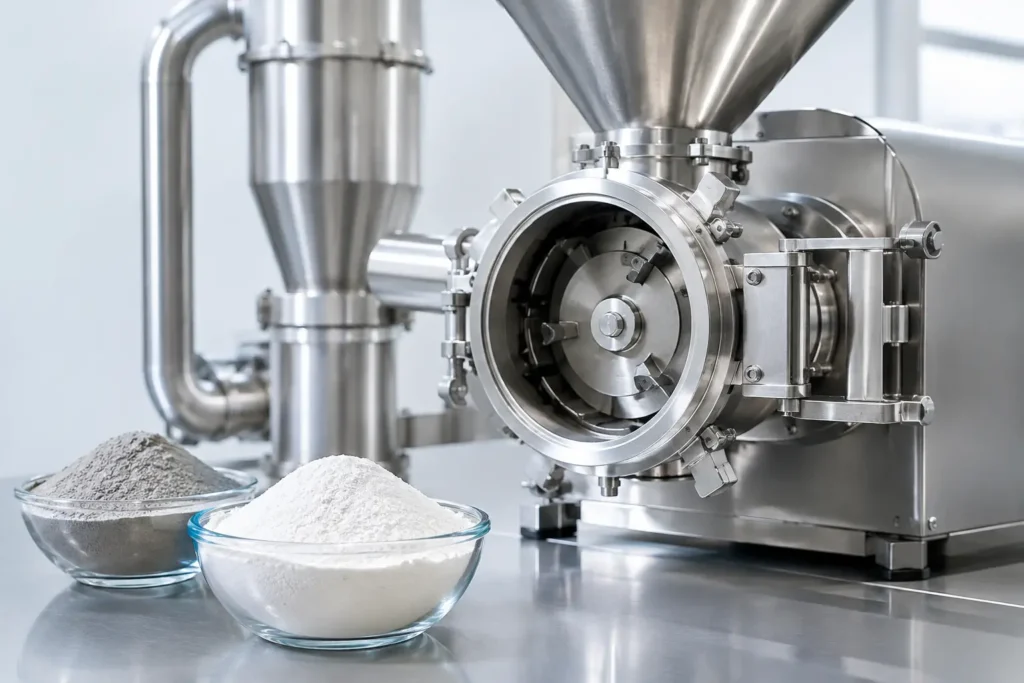
A specification calling for a D90 below 20 microns can turn an apparently straightforward milling project into a process-engineering decision. The best micronisation equipment is not simply the machine capable of producing the finest powder. It is the system that delivers the required particle size distribution, throughput, product condition and cleanability consistently under production conditions.
For pharmaceutical actives, pigments, battery materials, mineral powders and high-value food ingredients, a few microns of variation can affect dissolution, colour strength, flowability, reactivity or final-product performance. Equipment selection must therefore begin with the material and the process target, not with a preferred mill type.
What defines the best micronisation equipment?
Micronisation is generally used to reduce particles into the low-micron range, often below 100 microns and, in many applications, below 20 microns. The target is rarely an average particle size alone. Production teams need control of the full particle size distribution, including D10, D50 and D90 values, alongside limits on oversized particles and fines.
The right system must also manage the factors that change once a material enters the mill: heat generation, moisture uptake, agglomeration, wear, contamination risk and poor flow. A powder that performs well during a short laboratory trial may behave very differently during an eight-hour manufacturing run.
For this reason, the best choice is application-specific. A jet mill may be the correct solution for a heat-sensitive, high-purity pharmaceutical powder, while an air classifier mill may provide better energy efficiency and higher throughput for a mineral or chemical application. A pin mill can be highly effective for friable materials that do not require ultra-fine sizing. There is no universal micronisation machine.
Main equipment options for micronisation
Jet mills for ultra-fine, low-contamination processing
Jet mills use compressed gas to accelerate particles into high-velocity collisions. With no conventional mechanical grinding media in the milling chamber, they are well suited to applications where contamination control and fine particle size are critical. Spiral jet mills and fluidised bed opposed jet mills can achieve very fine results, particularly when paired with integrated classification.
Their main advantages are precise fine grinding, low material contact with moving grinding components and controlled temperature conditions created by gas expansion. This makes them valuable for heat-sensitive products, high-value active ingredients, pigments and specialist chemicals.
The trade-off is operating cost. Compressed air or inert gas demand can be substantial, so jet milling should be assessed against required capacity, air supply, energy consumption and product value. For hazardous or oxidation-sensitive materials, nitrogen operation may be necessary, adding further requirements for containment and gas recovery.
Air classifier mills for controlled fine powders
An air classifier mill combines mechanical impact milling with dynamic air classification. Material that has reached the required size passes through the classifier, while oversized particles are returned to the grinding zone. This closed-loop action provides tighter control than a conventional impact mill operating without classification.
These systems are often selected where manufacturers need fine, consistent powder at meaningful production rates. They are effective across chemicals, coatings, minerals, agricultural products and selected food applications, subject to hygienic design requirements.
Classifier speed, airflow, rotor configuration and feed rate all influence the final distribution. This adjustability is valuable, but it also means that process settings must be established carefully. The equipment should offer repeatable control, accessible wear parts and instrumentation that supports reliable operation shift after shift.
Pin mills and turbo mills for versatile size reduction
Pin mills use rows of rotating and stationary pins to create impact and shearing forces. They provide efficient size reduction for dry, brittle and crystalline materials, with a compact footprint and a wide operating range. For products requiring a moderate-to-fine powder rather than sub-10-micron output, a pin mill can represent a practical and cost-effective option.
Turbo mills apply high-speed impact and airflow to process a broad range of materials. Their suitability depends on hardness, feed size, moisture content and the required particle size distribution. In the right duty, they offer high throughput and straightforward integration with upstream feeding and downstream collection equipment.
Neither technology is automatically suitable for sticky, fibrous or heat-sensitive materials. If the feed softens under impact, builds up on internal surfaces or contains excessive moisture, output can become unstable. Pre-conditioning, drying, cooling or an alternative milling principle may be required.
Cryogenic milling for heat-sensitive materials
Cryogenic milling uses liquid nitrogen or another cooling approach to lower product temperature before and during grinding. It is particularly useful for elastic, waxy, fatty, resinous or thermally sensitive materials that would otherwise soften, smear or degrade in a conventional mill.
Typical applications include polymers, spices, botanicals, rubber, speciality chemicals and certain pharmaceutical or nutraceutical products. Lower temperatures can improve brittleness and reduce volatile loss, helping manufacturers achieve a cleaner cut and a more stable powder.
Cryogenic operation introduces additional engineering considerations, including insulated conveying, nitrogen control, oxygen monitoring, safe venting and running costs. It should be specified where cold grinding solves a defined product problem, rather than treated as a default route to finer powder.
Selecting micronisation equipment by process requirement
Particle size target is the starting point, but it should never be the only criterion. A complete specification considers feedstock properties, capacity, containment, product recovery and the required operating environment.
Material characterisation should establish hardness, brittleness, abrasion, moisture, bulk density, oil or fat content, melting point and tendency to agglomerate. It should also identify whether the material is abrasive, combustible, toxic or sensitive to metal contact. These characteristics influence mill selection, internal metallurgy, wear-liner design, dust collection and safety systems.
Throughput must be assessed at the required fineness, not at an optimistic maximum capacity. Every milling technology experiences a capacity-fineness relationship. Pushing for a smaller top size can reduce output, increase energy demand and create additional fines. For many products, a narrowly controlled distribution at a sustainable rate is more valuable than the smallest possible D50.
The following requirements should be considered together when evaluating a system:
- required D10, D50, D90 and maximum particle-size limits;
- production rate at the final specified particle size;
- allowable product temperature and moisture level;
- containment, explosion protection and occupational exposure requirements;
- cleanability, material traceability and validation needs;
- wear rate, spare parts strategy and planned maintenance access.
A supplier should be able to translate these requirements into a complete process design rather than quote a mill in isolation.
Why classification and collection matter
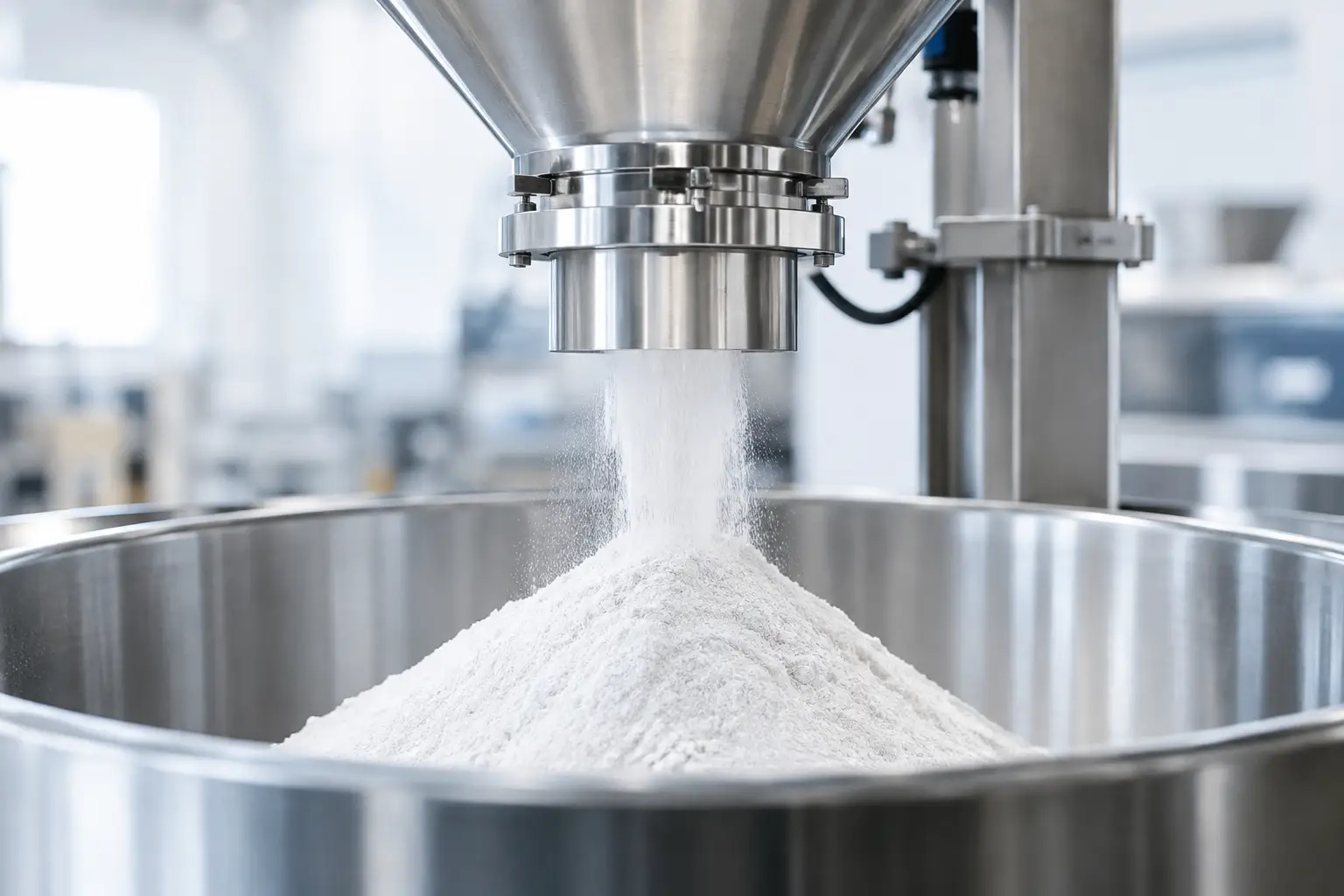
Fine milling performance is heavily dependent on what happens after particles leave the grinding zone. Poorly matched classification can allow oversized material into the finished product or remove useful yield as fines. Inadequate collection can cause pressure instability, product losses and inconsistent process results.
Dynamic classifiers provide active control over cut point and can be integrated with mills to maintain a defined particle size distribution. Cyclones, bag filters and cartridge filters must then be selected for the powder’s particle characteristics, air volume and recovery target. Highly cohesive powders may also need specialised discharge arrangements to prevent bridging and accumulation.
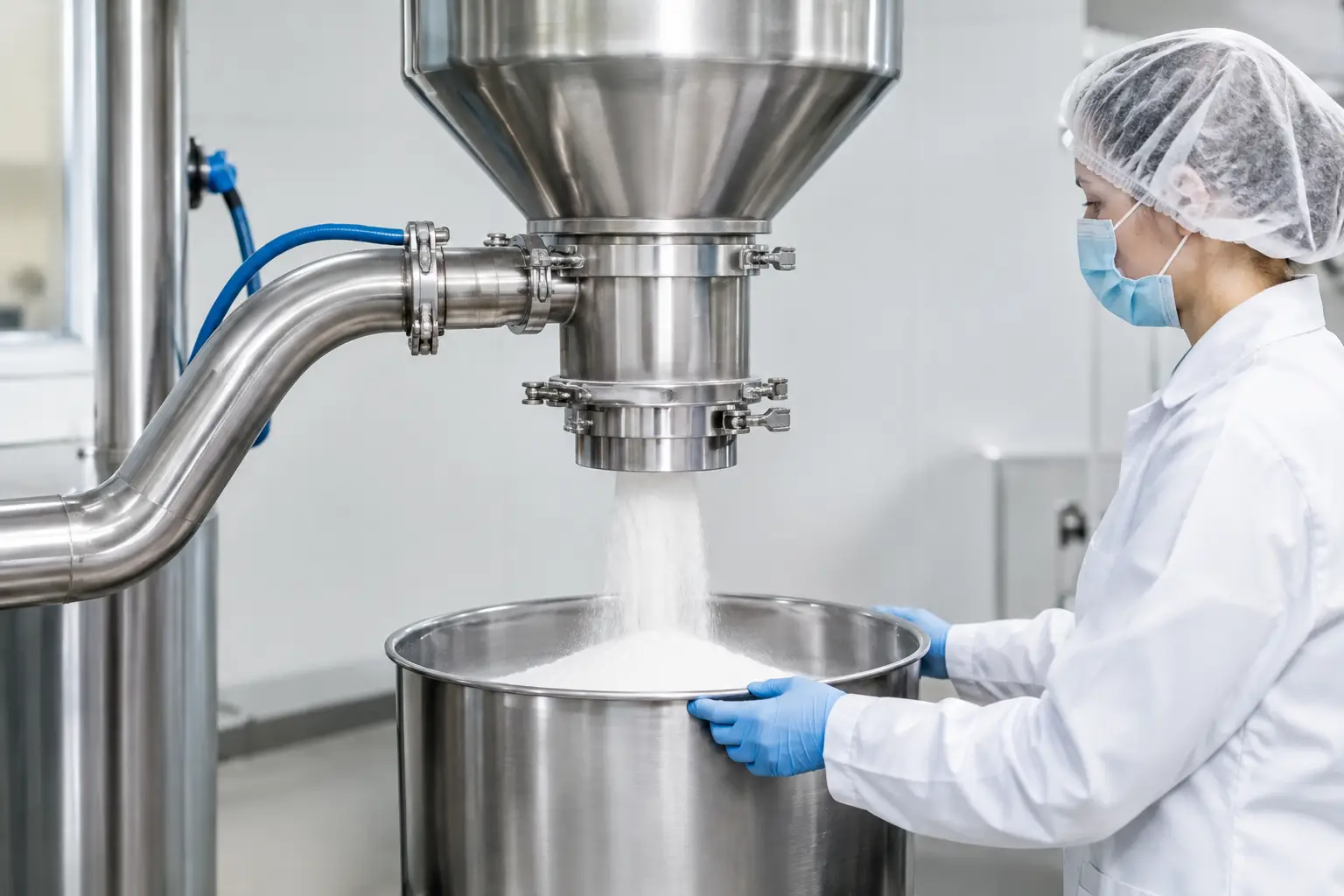
For enclosed production environments, the system should include correctly designed feeding, conveying, dust extraction and discharge. Vacuum transfer, screw feeders, rotary valves and loss-in-weight feeders all have a role, but each must be matched to powder flow properties. Material handling is frequently where a promising micronisation process loses capacity or consistency.
Safety, compliance and cleanability
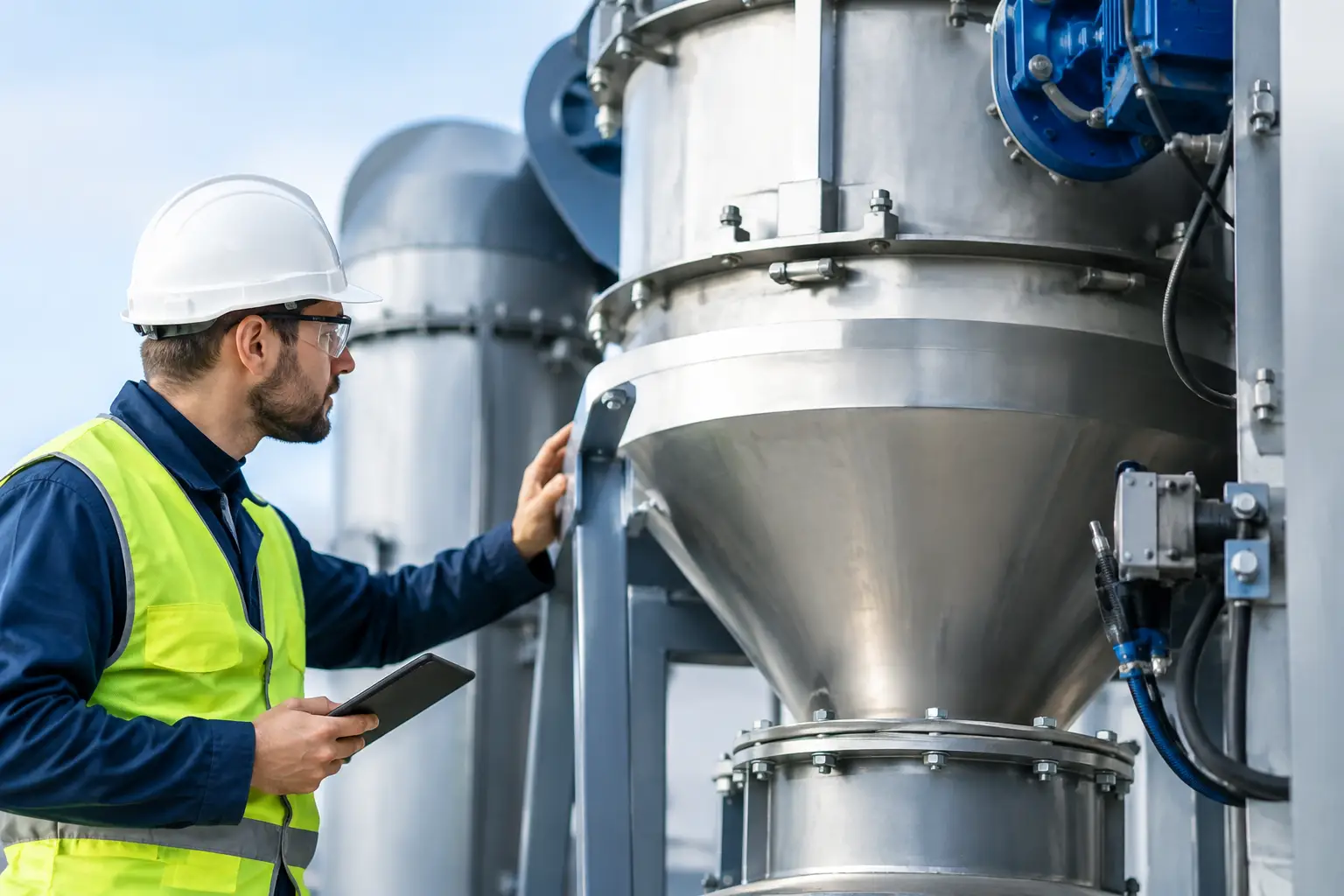
Fine powders create a high surface area, which can increase dust explosion risk and operator exposure. Where applicable, the system design must address dust hazard analysis, containment, earthing, pressure relief, explosion isolation and suitable electrical classification. These requirements should be addressed at project definition stage, not added after commissioning.
Industries with strict hygiene or regulatory requirements also need the appropriate construction standard. Pharmaceutical and food systems may require polished contact surfaces, sanitary connections, clean-in-place provisions, documented material certificates and designs that minimise product retention. Chemical and battery-material processes may prioritise containment, corrosion resistance or non-metallic contact surfaces instead.
The specification should state not only what the mill must produce, but also how it must be cleaned, inspected and maintained. Faster access to screens, classifiers and wear components reduces downtime, while a well-designed system limits the risk of cross-contamination between campaigns.
Scale-up should be proven, not assumed
Laboratory trials are essential, but small-scale results do not always transfer directly to production. Feed behaviour, air balance, residence time and heat load change as capacities increase. The most reliable route is a structured development programme that moves from material assessment to pilot trials and then to full-scale process design.
Representative samples should be tested against agreed quality criteria, including particle size distribution, temperature, yield and physical powder behaviour. Where downstream performance matters, the assessment should also consider dissolution, blending, compaction, dispersion or other end-use properties. This prevents a project being approved on particle size alone when the powder does not perform correctly in the next process stage.
DP Pulverizer UK approaches micronisation as part of an integrated powder-processing line, combining milling, classification, feeding, collection and conveying around the requirements of the material. That engineering perspective is particularly valuable where a system must scale from development to continuous production without compromising quality.
The strongest equipment decision is one based on verified product data, realistic throughput expectations and a complete view of the line. Specify the powder performance first, then select the technology and supporting process equipment capable of delivering it reliably.