DP Pulveriser UK - Innovating the Future of Size Reduction
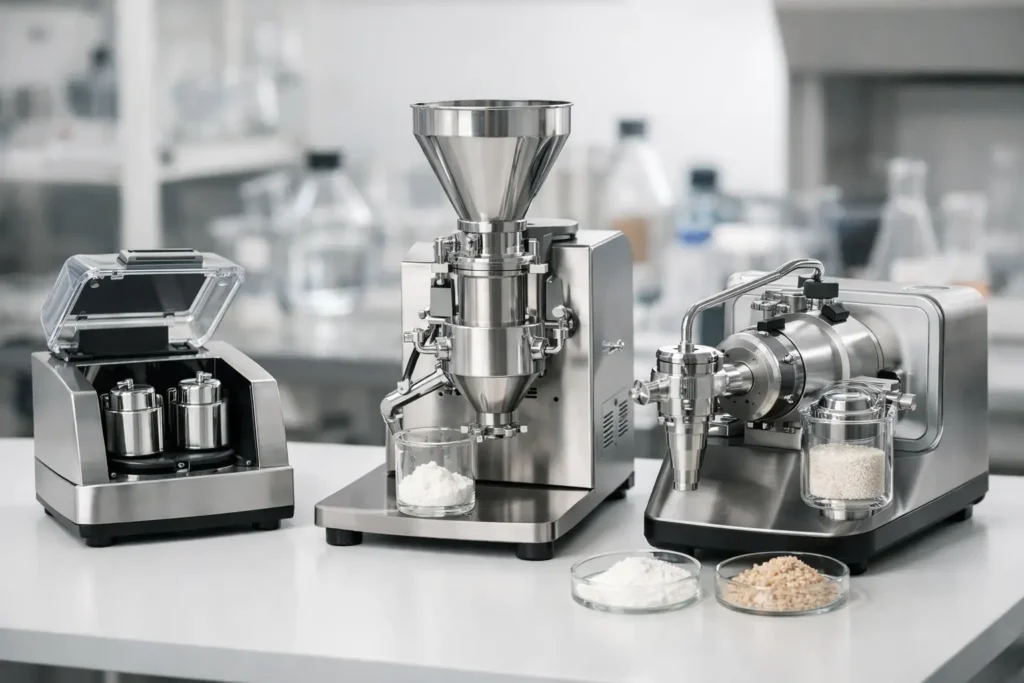
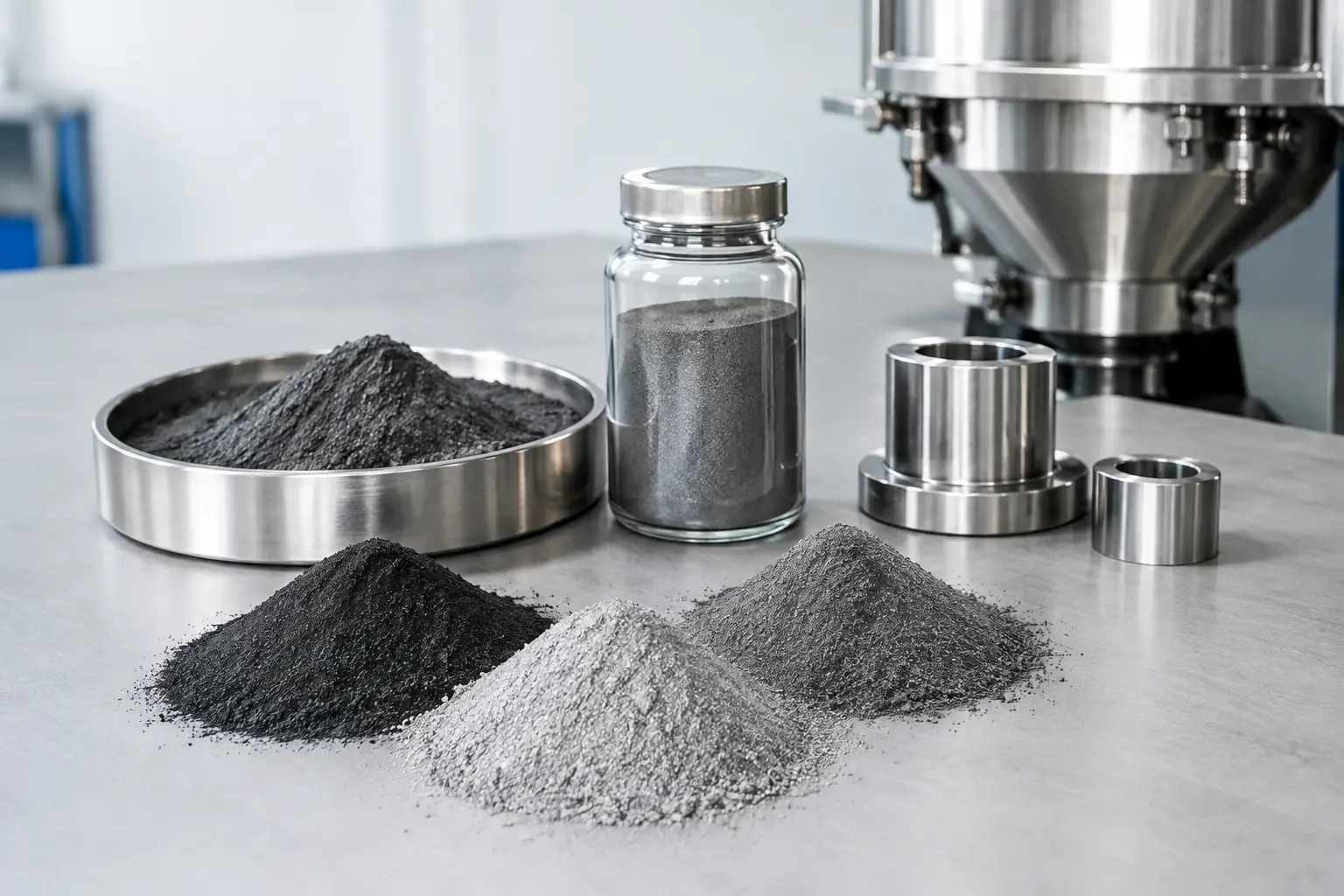
A milling trial that produces a promising particle size distribution but cannot be repeated at pilot or production scale is not a successful trial. This laboratory milling equipment guide is designed for process teams that need laboratory results to inform reliable equipment selection, formulation decisions and commercial scale-up.
Laboratory mills are not simply smaller production machines. They are development tools for understanding how a material responds to impact, shear, compression, attrition and air classification. The right system produces meaningful data on particle size, heat generation, yield, energy use and product behaviour. The wrong system can lead teams towards a specification that looks acceptable in the laboratory but fails on throughput, temperature control or cleanability in production.
What laboratory milling equipment must prove
The primary purpose of laboratory milling is to establish a controllable process window. That means identifying the combination of feed rate, rotor speed, screen or classifier setting, airflow and product temperature that consistently delivers the required particle size distribution.
Mean particle size alone is rarely sufficient. A powder with the same d50 value can behave very differently if it contains excessive fines, oversize particles or irregularly shaped fragments. For pharmaceuticals, nutraceuticals and food ingredients, this can affect blend uniformity, dissolution, taste, dusting and downstream tabletting or encapsulation. In coatings, pigments, minerals and battery materials, it can affect dispersion, surface area, packing density and final product performance.
A well-planned laboratory programme should therefore establish more than a single target size. It should assess:
- Particle size distribution, including d10, d50 and d90 values
- Product temperature and sensitivity to thermal degradation
- Throughput at stable operating conditions
- Yield, retention, dust losses and cleaning requirements
- Material flow characteristics before and after milling
These results give engineering teams the evidence needed to specify a production system with confidence rather than selecting equipment solely by nominal capacity.
Selecting the right laboratory mill
The material and the required finished powder determine the appropriate milling principle. No single mill is the correct answer for every application. The most suitable choice depends on hardness, friability, moisture content, heat sensitivity, feed particle size, contamination risk and the required particle size distribution.
Pin mills for controlled impact milling
A pin mill uses opposing rows of pins to create high-impact size reduction. It is widely used for brittle, crystalline and dry materials where a fine, consistent powder is required without the very high energy input associated with jet milling.
Laboratory pin mills can be particularly useful for sugars, spices, minerals, resins, chemicals and certain food ingredients. Performance depends on peripheral speed, feed control and the material’s tendency to soften or agglomerate. Materials with high fat content or low softening temperatures may require cooling or a different milling principle.
Hammer mills for versatile size reduction
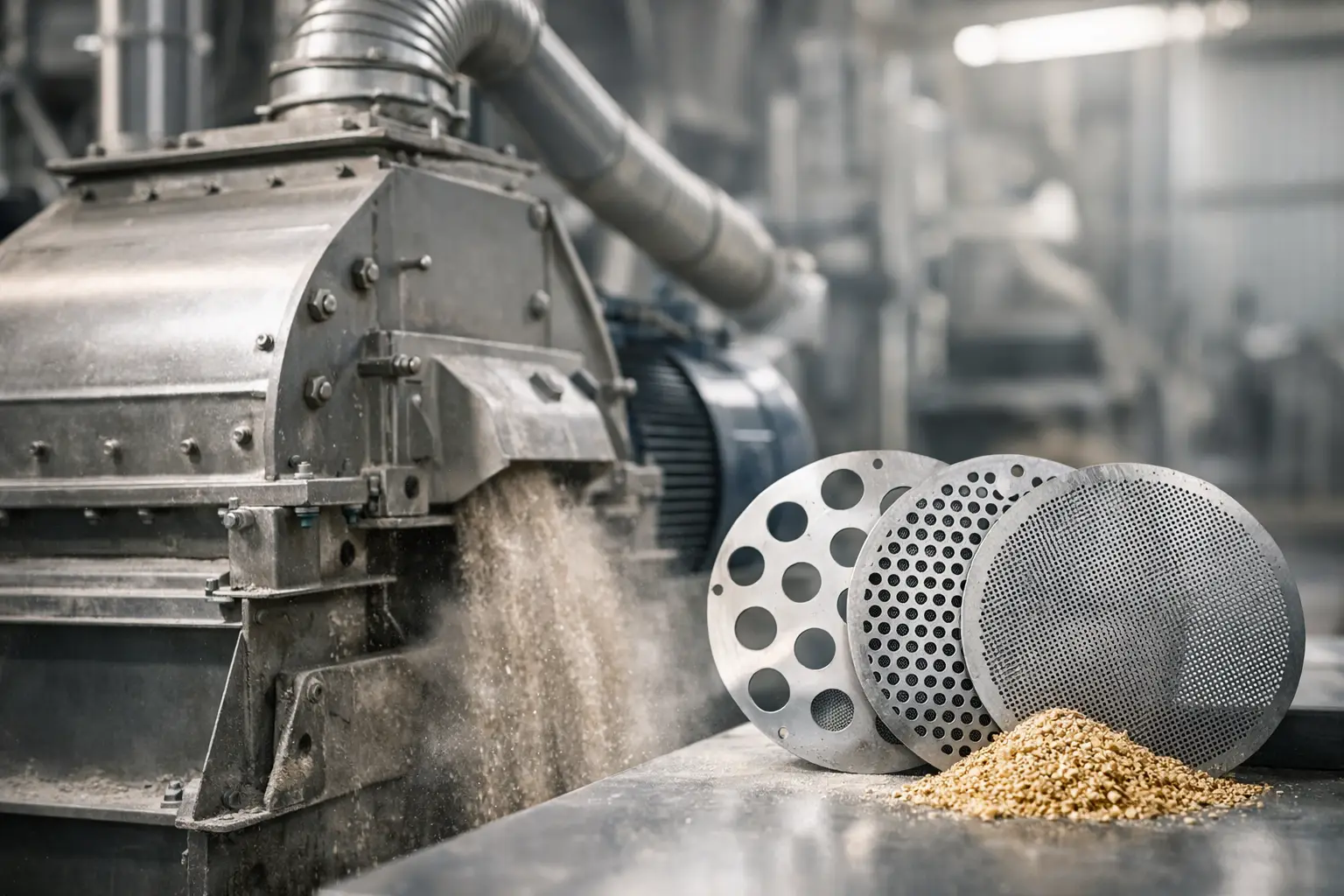
Hammer mills reduce material through repeated impact from rapidly rotating hammers. They are a practical option for coarse-to-medium grinding, deagglomeration and pre-milling, particularly where the feed is variable in size or form.
Screen selection is central to performance. A smaller screen may reduce top size, but it can also increase residence time, heat generation and the risk of blockage with fibrous, sticky or moisture-sensitive products. For this reason, a hammer mill is often evaluated as part of a staged process rather than as the final milling solution.
Cone mills for gentle sizing and calibration
Cone mills, also known as conical mills, are commonly selected where controlled sizing is required with relatively low heat generation and minimal particle damage. They are frequently used in pharmaceutical and food processing for delumping, reclaim processing and granule calibration.
Their strength lies in producing a controlled, repeatable result while preserving product characteristics. They are less suited to applications requiring ultra-fine powders or major particle size reduction from hard feed materials. In a laboratory setting, they are valuable for determining whether a product needs true grinding or simply controlled deagglomeration.
Jet mills for fine and ultra-fine powders
Jet milling uses high-velocity compressed gas to accelerate particles into collisions with one another. With no internal mechanical grinding components in the milling chamber, jet mills are highly effective for fine and ultra-fine particle size reduction, especially for abrasive materials or applications where contamination must be minimised.
The trade-off is operating cost. Compressed air or inert gas consumption can be significant, and feed preparation remains critical. Jet milling is often justified when the product specification demands narrow distributions, very fine particle sizes or low contamination, such as in advanced chemicals, pharmaceuticals, pigments and battery materials.
Air classifier mills for tighter particle control
An air classifier mill combines impact milling with internal air classification. Fine particles are carried through the classifier while oversize material remains in the grinding zone for further reduction. This enables closer control of the final particle size distribution than a conventional screen mill can typically achieve.
For products where excessive fines are as problematic as oversize, the ability to adjust classifier speed and airflow can be decisive. Air classifier mills are suited to many chemical, mineral, food and performance-material applications, but the laboratory trial must reflect the intended production airflow and dust collection arrangement.
Cryogenic milling for heat-sensitive materials
Some products cannot tolerate conventional milling temperatures. Elastomers, waxes, polymers, high-fat food ingredients and certain active materials may soften, smear or lose functional properties as heat rises. Cryogenic milling introduces liquid nitrogen or another cooling method to embrittle the feed and stabilise the process.
A cryogenic trial should evaluate more than particle size. It must quantify coolant consumption, condensation control, safe venting and the practical implications for production-scale handling. The finest result is not necessarily the best process if it requires disproportionate cryogen use or creates avoidable complexity.
Build the trial around the production question
The value of a laboratory trial depends on how accurately it represents the future process. Testing a clean, hand-fed sample at a very low rate may demonstrate material grindability, but it does not establish production capability. Feed consistency, rate control, conveying method and collection efficiency all influence milling performance.
Start with a clear product specification. Define the acceptable particle size range, maximum temperature, permitted moisture change, contamination limits and required output. Then examine the incoming feed: its top size, bulk density, moisture level, flowability and batch-to-batch variation. A mill that performs well with a dry, free-flowing sample may behave differently with material received after storage or transport.
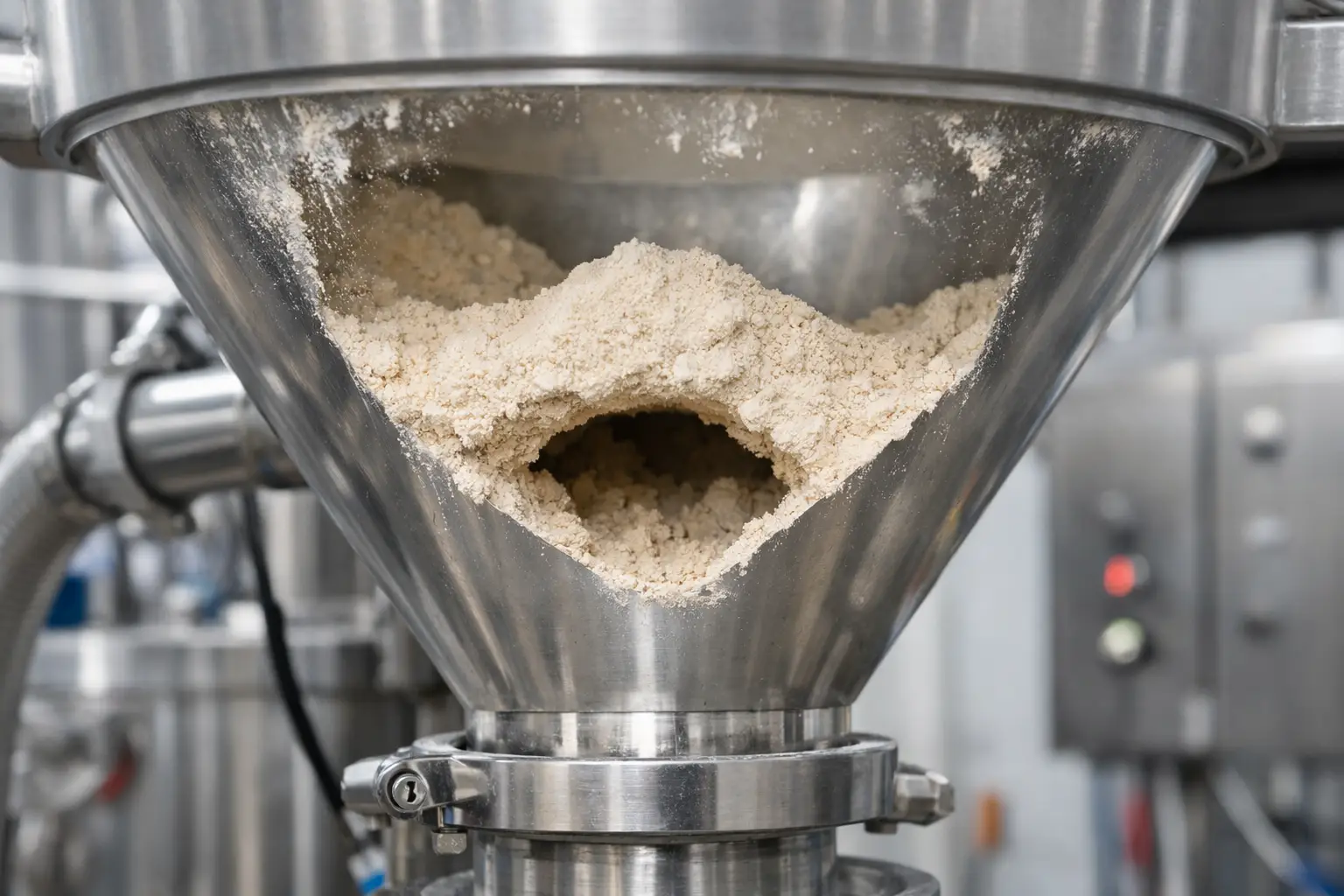
The test should also include realistic downstream conditions. Fine powders can be difficult to collect, prone to electrostatic charge or susceptible to segregation in a hopper. If the production line will incorporate vacuum conveying, screening, magnetic separation, blending or packing, those interfaces should be considered during equipment selection rather than after the mill has been specified.
Use scale-up data carefully
Scale-up is not achieved by multiplying laboratory throughput by the ratio of motor sizes. Larger mills have different airflow patterns, residence times, tip speeds, heat transfer characteristics and feed arrangements. The relationship between speed, energy and particle size is material-specific.
The most reliable route is to develop a process map at laboratory scale, then verify it through pilot trials where appropriate. Record the settings that produce acceptable product, but also record the conditions that cause unwanted fines, temperature rise, poor yield or unstable operation. Those boundaries are often more useful to a production engineer than the single best trial point.
For demanding projects, particle size analysis should be paired with practical observations. Is the powder free-flowing? Does it compact during collection? Does the mill require frequent cleaning? Does the product absorb moisture after milling? These details affect the total cost of ownership as much as headline throughput.
Engineering factors beyond the mill chamber
A milling system performs only as well as its supporting equipment. Accurate feeders maintain a consistent product load. Correctly sized filters and cyclones protect yield and airflow. Efficient conveying prevents material segregation and reduces manual handling. For combustible dusts, the equipment arrangement must also support an appropriate dust hazard assessment and the required explosion protection measures.
Material contact construction is equally important. Stainless steel grades, surface finish, seals, wear liners and access arrangements should match the product and cleaning regime. For regulated production, teams may need traceable materials, documented cleaning procedures and designs that minimise product retention.
DP Pulverizer UK approaches laboratory development as part of an end-to-end powder processing strategy. The objective is not merely to identify a mill, but to define a stable, scalable system that supports product quality, efficient operation and future capacity requirements.
The best laboratory result is the one that gives your team a clear route to production: a proven milling principle, measurable operating limits and a system design that will continue to perform when the sample becomes a shift’s output.