DP Pulveriser UK - Innovating the Future of Size Reduction
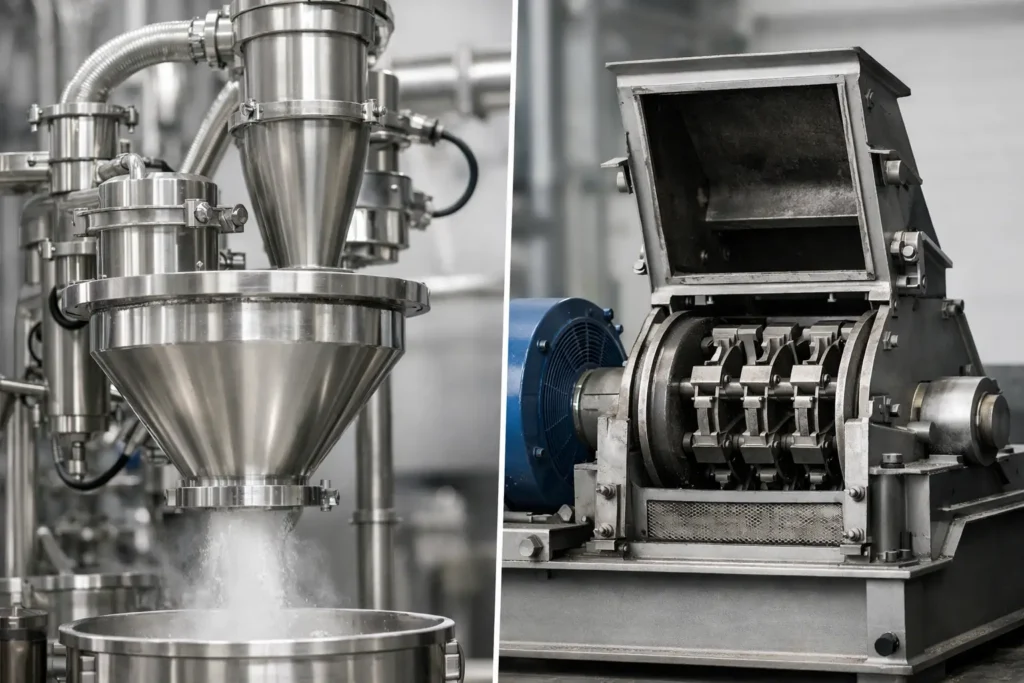
A jet mill vs hammer mill decision is rarely settled by target particle size alone. The wrong choice can create excessive heat, broad particle size distribution, unnecessary wear, or a production bottleneck that becomes apparent only at full-scale throughput. The right mill must suit the material’s fracture behaviour, moisture level, contamination limits and downstream process requirements.
For industrial manufacturers, the practical question is not which technology is better in general. It is which technology produces the required powder specification reliably, safely and at an acceptable total operating cost.
How Each Milling Principle Works
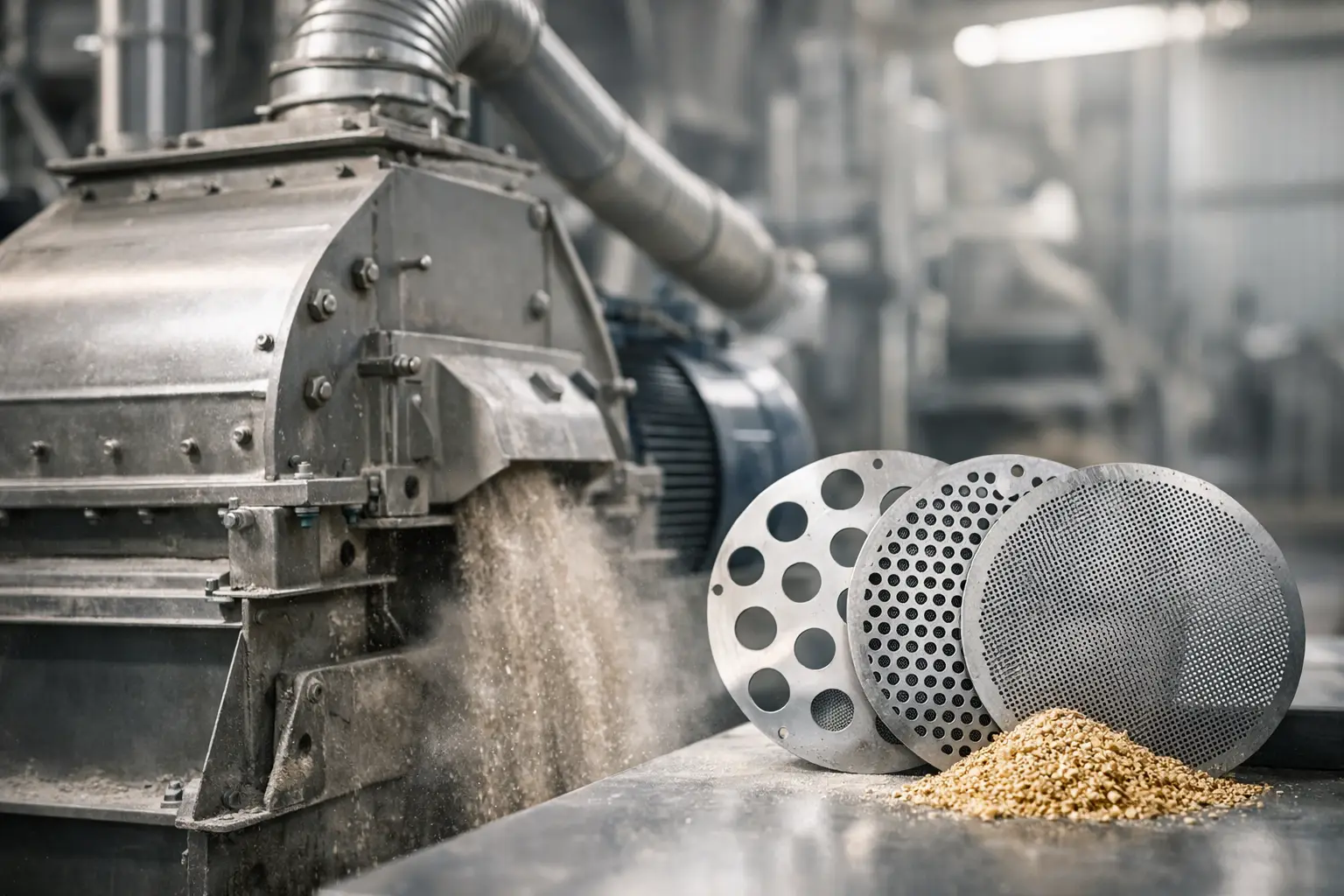
A hammer mill reduces material through high-speed impact. Feed enters the milling chamber and is struck by swinging or fixed hammers before being forced through a perforated screen or grate. Material remains in the chamber until particles are sufficiently small to pass through the selected screen aperture.
This is a mechanically direct process. Rotor speed, hammer design, screen configuration, airflow and feed rate all influence the final particle size distribution. Hammer mills are widely specified for coarse to medium-fine grinding, pre-processing and size reduction of friable materials.
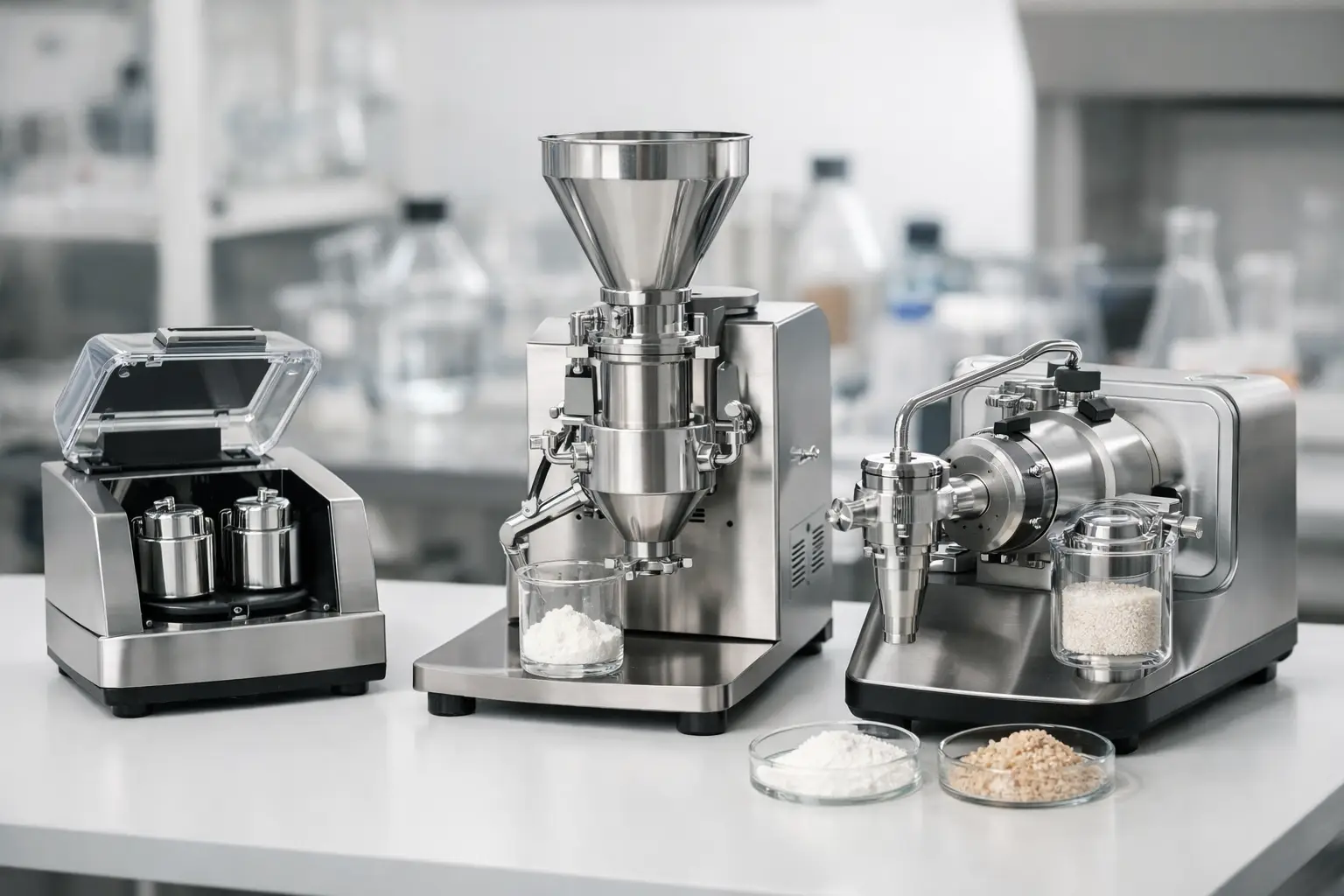
A jet mill uses high-velocity compressed gas, commonly air, nitrogen or steam depending on the application, to accelerate particles within a grinding chamber. Particle-to-particle collision produces size reduction, rather than contact between the product and conventional mechanical grinding elements. An integrated classifier often controls the top cut, returning oversize material to the grinding zone while allowing in-specification fines to leave the system.
The absence of a conventional milling rotor makes jet milling particularly relevant where very fine powders, narrow particle size distribution, low contamination and controlled product temperature are central to the process.
Jet Mill vs Hammer Mill: Particle Size Capability
The most visible difference is fineness. A hammer mill can produce a broad range of particle sizes, from relatively coarse granules down to fine powders. In many applications, it is an efficient choice where the target is in the tens or hundreds of microns, or where a wider distribution is acceptable. Screen selection provides a practical and repeatable means of controlling the upper particle size.
However, a screen is not a precision classifier. Fine particles can leave with coarser particles once they pass the aperture, so hammer milling generally produces a broader distribution than a classified jet mill. Where a tight top size, narrow span or micron-scale product is required, further classification may be needed.
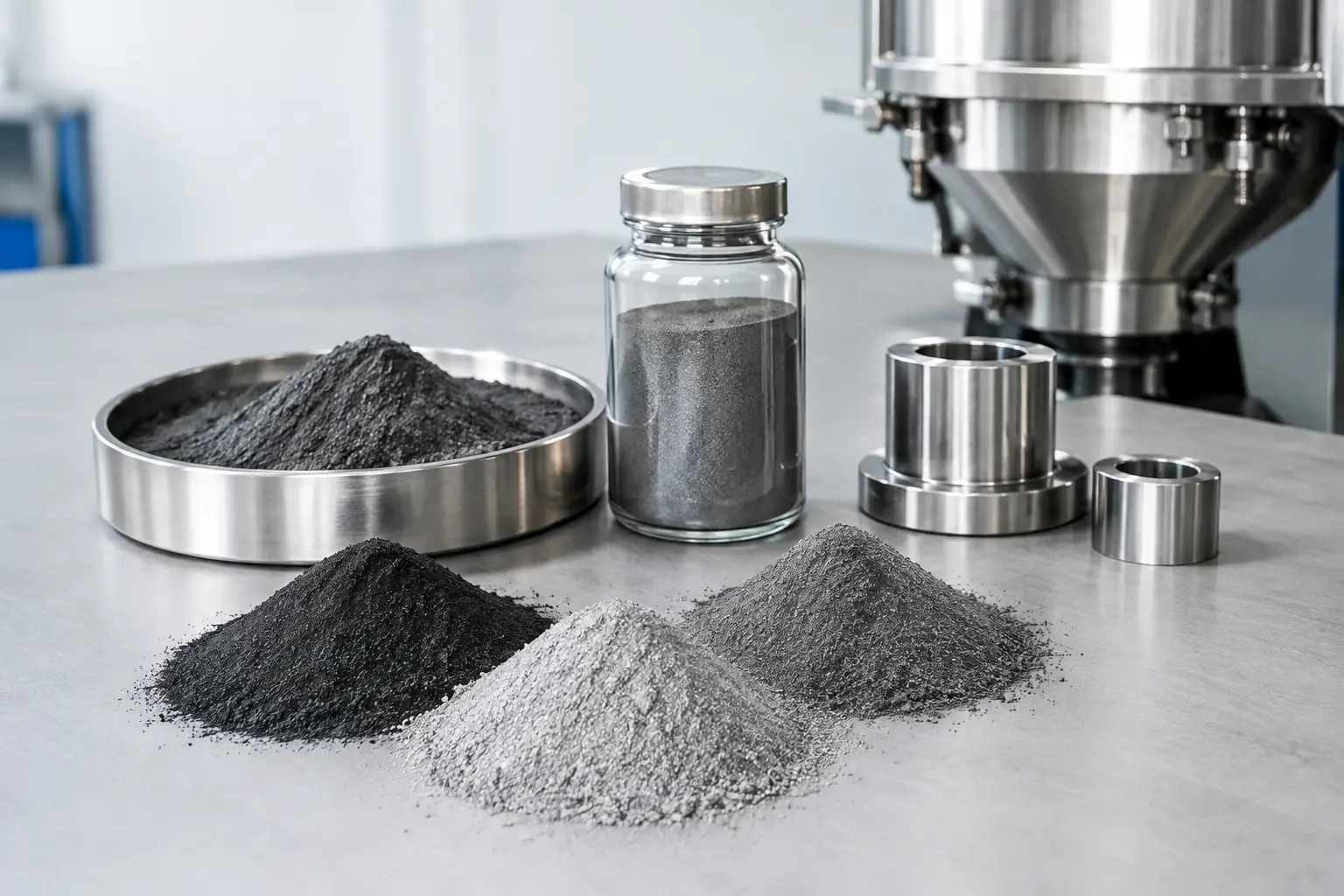
Jet mills are designed for fine and ultra-fine size reduction. Depending on material properties and system configuration, they can produce powders in the low-micron range with accurate control of oversize particles. This capability is valuable for active pharmaceutical ingredients, pigments, speciality chemicals, battery materials and performance coatings, where particle size directly affects dissolution, colour strength, dispersion, reactivity or surface finish.
Finer is not automatically better. If the application only requires a controlled coarse powder, specifying a jet mill can add avoidable capital and compressed-gas costs. Conversely, attempting to achieve a tightly controlled fine specification with a hammer mill may lead to repeated passes, yield losses and inconsistent product quality.
Heat, Moisture and Product Integrity
Heat generation is a major selection factor for heat-sensitive materials. Hammer mills transfer energy through mechanical impact and friction. At high rotor speeds or extended residence times, this can raise product temperature. For heat-sensitive food ingredients, nutraceuticals, polymers and certain pharmaceutical formulations, excess temperature may affect flavour, aroma, potency, flowability or physical structure.
A jet mill can offer a cooler grinding environment because gas expansion provides a cooling effect. It is often selected for thermally sensitive products or materials that soften during mechanical milling. That advantage still requires proper engineering. Compressed air quality, inlet gas temperature, feed condition and system heat balance must all be assessed, especially where moisture pick-up or oxidation is a concern.
Neither machine resolves a difficult feed condition by itself. Sticky, high-moisture or highly elastic materials may smear, agglomerate or block screens in a hammer mill. The same material may not fluidise or collide efficiently in a jet mill. Drying, conditioning, cryogenic processing or an alternative mill type may be the more effective route.
Throughput and Energy Demand
Hammer mills are often favoured where high throughput and straightforward operation are the priority. Their mechanical design supports continuous processing and can be highly productive for grains, minerals, agricultural products, feed ingredients and many dry chemical products. They are also commonly used upstream of finer milling stages to reduce feed size efficiently.
Jet mills usually operate at lower throughputs than hammer mills of a comparable physical footprint, particularly when producing very fine particles. Capacity depends heavily on the material’s grindability, required final size, gas pressure, classifier settings and feed consistency. A system must be sized around verified production data, not a nominal capacity figure alone.
Compressed gas is the principal operating cost consideration for jet milling. Producing and treating compressed air requires significant energy, while nitrogen systems introduce supply, recovery or recirculation considerations. The higher energy demand can be justified where a jet mill removes the need for multiple mechanical passes, improves product performance or prevents the losses associated with off-specification powder.
A hammer mill normally has lower energy demand for coarser reductions and fewer supporting utilities. Its operating economics can deteriorate when an application calls for increasingly fine product, because higher speed, tighter screens and recirculation can reduce capacity and raise wear.
Contamination, Wear and Cleanability
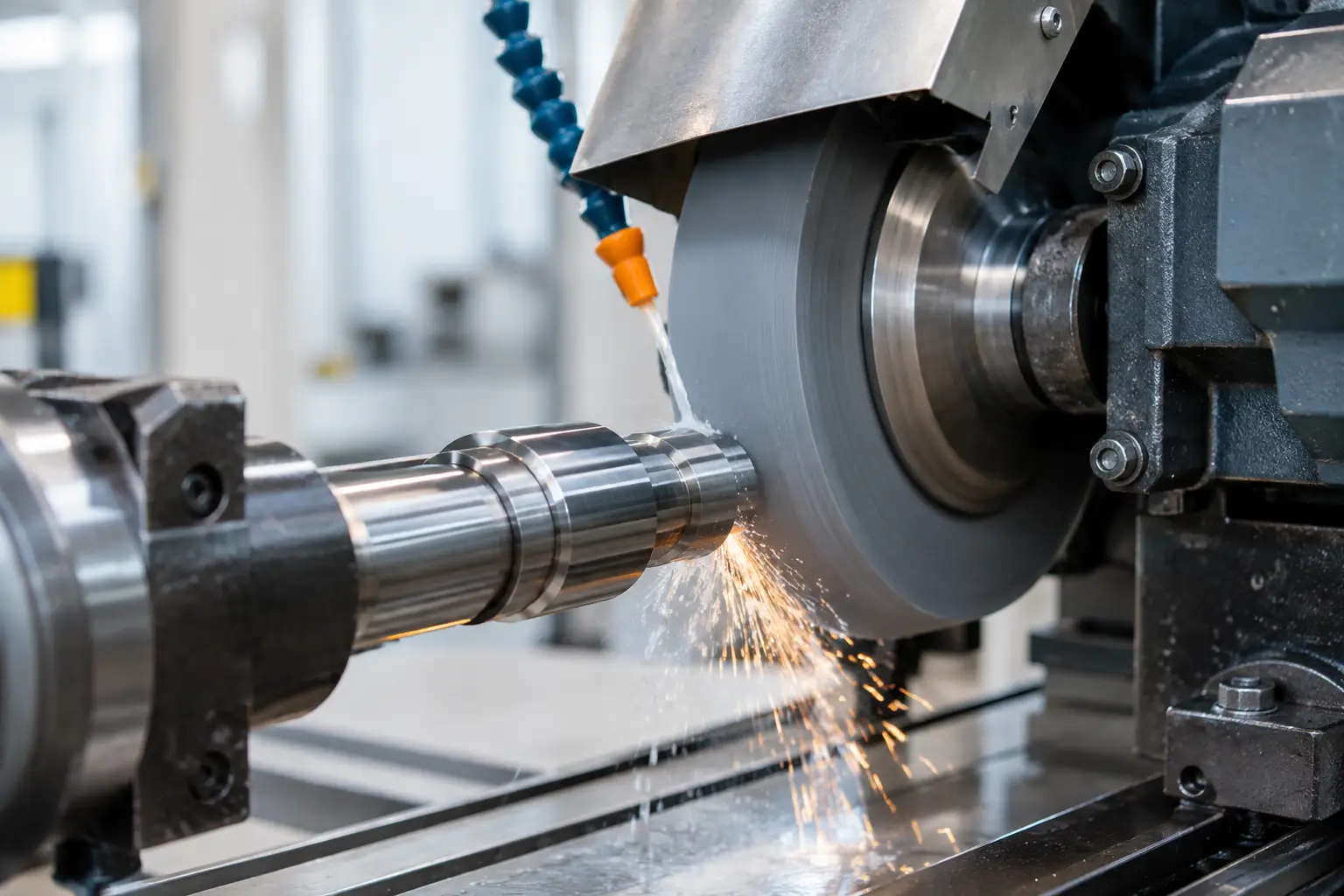
In a hammer mill, hammers, liners and screens are wear components. Abrasive feedstocks can progressively alter the grinding profile and introduce wear-metal contamination if construction materials are not selected correctly. Wear-resistant linings and suitable metallurgy can extend service life, but they should be specified against the actual feed material rather than added as an afterthought.
Jet mills minimise product contact with moving mechanical components in the grinding zone. That can reduce contamination risk and make them appropriate for high-purity applications. The product still contacts the chamber, nozzles, classifier and downstream collection equipment, so material of construction remains important. Ceramic-lined or specialist alloy contact surfaces may be required for abrasive, high-value or metal-sensitive powders.
Cleaning requirements also influence the choice. Hammer mills can provide good access for inspection, screen changes and routine maintenance. Jet milling systems require attention to chamber geometry, classifier assembly, filters and conveying lines, particularly where batch segregation or stringent hygiene controls apply. The complete process boundary matters more than the mill body alone.
Where Each Mill Typically Fits
Hammer mills are a strong fit for applications requiring dependable, economical reduction from larger feed particles to a controlled coarse or medium-fine powder. They are frequently used for agricultural materials, food ingredients, minerals, biomass, resins and chemical intermediates. Their flexibility is particularly useful when product specifications change between campaigns and screen changes can accommodate the variation.
Jet mills are typically specified when powder performance depends on ultra-fine size reduction and close classification. Pharmaceutical micronisation, high-value pigments, advanced ceramics, battery active materials and speciality chemical powders are established examples. They are also valuable when mechanical heat or grinding-media contamination would compromise the product.
There is an important middle ground. Some processes benefit from staged reduction: a hammer mill performs the initial coarse grind, then a jet mill or air classifier mill produces the final fine fraction. This arrangement can reduce gas consumption, protect fine-milling equipment from oversized feed and improve overall line stability.
Engineering Factors That Decide the Result
A successful specification starts with material testing. Bulk density, hardness, friability, moisture, particle morphology, abrasiveness and required particle size distribution should be measured or confirmed through representative trials. A laboratory result is useful, but scale-up must account for feed delivery, gas supply, collection efficiency and residence time at production rate.
The mill should also be evaluated as part of an integrated system. Feeding equipment must deliver a stable, controlled mass flow. Air or gas handling must maintain the correct pressure and volume. Cyclones, filters and classifiers must recover product efficiently without creating excessive fines losses. For combustible powders, dust control, containment and explosion protection must be designed for the full process rather than treated as accessories.
DP Pulveriser UK engineers milling and classification systems around these process interactions, from laboratory development through to production-scale equipment and full turnkey lines. That approach is especially valuable where a target particle size must be maintained across changing raw-material lots and extended production campaigns.
Specify Against the Product Requirement
The most reliable route is to define the outcome before selecting the machine: target distribution, allowable temperature rise, contamination limit, hourly output, cleaning regime and utility availability. Then test the actual material under conditions that represent the intended production line.
A hammer mill may deliver the most efficient answer for a durable, high-volume coarse grind. A jet mill may be the decisive technology when ultra-fine, tightly classified and thermally protected powder determines product value. The best investment is the mill that makes the required specification routine, not merely possible.