DP Pulveriser UK - Innovating the Future of Size Reduction
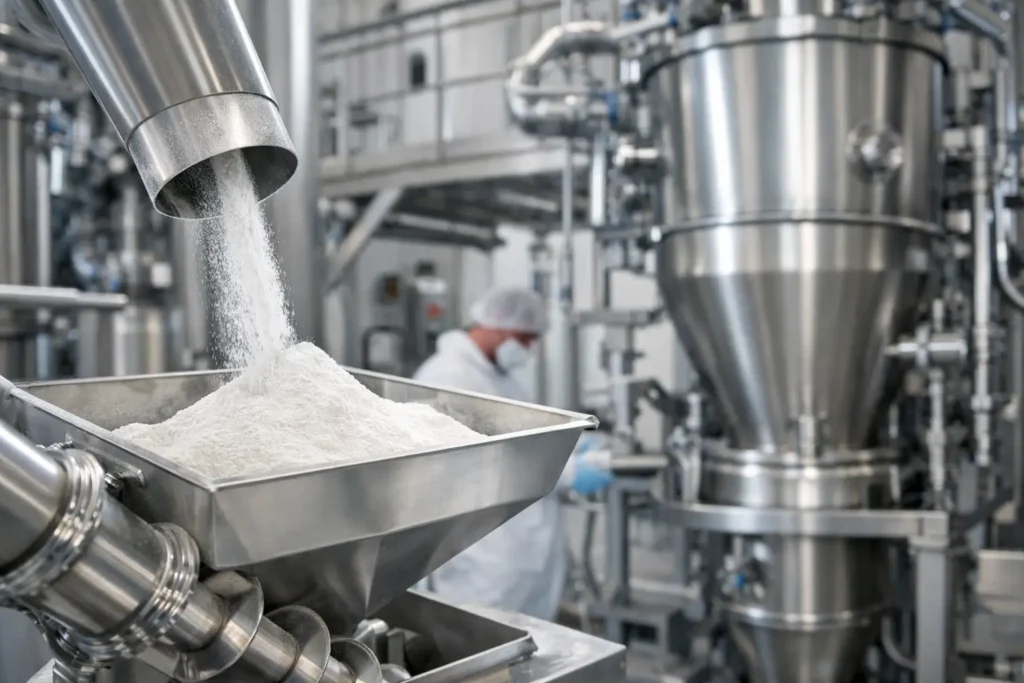
When a product fails specification, the root cause is often upstream in the powder line. A narrow target particle size distribution, consistent bulk density, controlled flow behaviour and reliable blending do not happen by accident. They come from powder processing solutions engineered around the material, the duty and the production environment.
For manufacturers working in pharmaceuticals, food ingredients, chemicals, battery materials or performance minerals, the challenge is rarely just size reduction. It is achieving repeatable output at the right throughput, with the right cleanliness standard, under the right thermal and safety conditions. That is why equipment selection must start with process requirements rather than machine preference.
What effective powder processing solutions need to deliver
At plant level, powder processing performance is measured by more than microns. A system must support product quality, uptime, yield and operating cost at the same time. In some applications, the priority is ultra-fine grinding with minimal heat generation. In others, it is deagglomeration, controlled top cut, high-capacity milling or gentle handling of friable materials.
The most effective powder processing solutions are therefore built around application-specific engineering. That includes the relationship between feed characteristics, milling principle, classifier performance, conveying method, mixing behaviour and discharge design. If one stage is poorly matched, the whole line can suffer from recirculation issues, excess fines, poor flow, segregation or avoidable energy use.
This is also where standard off-the-shelf thinking starts to fall short. A powder line that performs well on a free-flowing mineral may be entirely unsuitable for a heat-sensitive nutraceutical or an explosive organic chemical. Material behaviour matters. So do hygiene requirements, containment, cleanability and the need to scale from laboratory or pilot development into full production.
Matching the process to the material
Powder processing is a materials problem first and an equipment problem second. Hardness, abrasiveness, moisture content, fat content, fibrous structure, stickiness and temperature sensitivity all influence how a product should be handled. The right process route depends on these variables.
For fine and ultra-fine applications, jet milling offers excellent control where contamination and heat must be minimised. It is often the correct choice for high-value products that demand tight particle size control, although compressed gas requirements can affect operating cost. Pin mills and turbo mills can be highly effective for a broad range of friable materials where impact-driven reduction is suitable and throughput matters. Hammer mills remain a practical option for many general-purpose duties, especially where simplicity and ruggedness are priorities.
Cone mills are commonly selected where uniform granule sizing, gentle size reduction and low dust generation are important. Universal mills provide flexibility across varied duties, which can be useful in multiproduct environments. Air classifier mills combine milling and classification in a single system, giving tighter control over final particle size distribution and reducing the burden on downstream separation.
There is no universal best machine. There is only the best fit for the application. That distinction matters because the wrong technology can increase energy consumption, shorten wear life and create consistency problems that no amount of downstream adjustment will fully correct.
Why classification is as important as milling
A powder line should not be judged solely by how small it can grind. Over-grinding can be just as damaging as under-processing, particularly in sectors where dissolution rate, reactivity, packing density or surface area affect end performance. Classification is what turns size reduction from a rough mechanical action into a controlled process.
By separating in-specification particles from oversize material, classification improves product uniformity and allows tighter control of the final cut point. In many applications, this has direct commercial value. Better particle size distribution can improve tablet consistency, suspension stability, coating performance, pigment development or electrochemical behaviour in advanced materials.
Integrated milling and classification can also support better throughput stability. Instead of forcing the mill to do all the work in one pass, the process can be tuned so that acceptable material exits efficiently while coarse fractions are managed appropriately. The result is often better yield with less wasted energy.
Powder handling can make or break the line
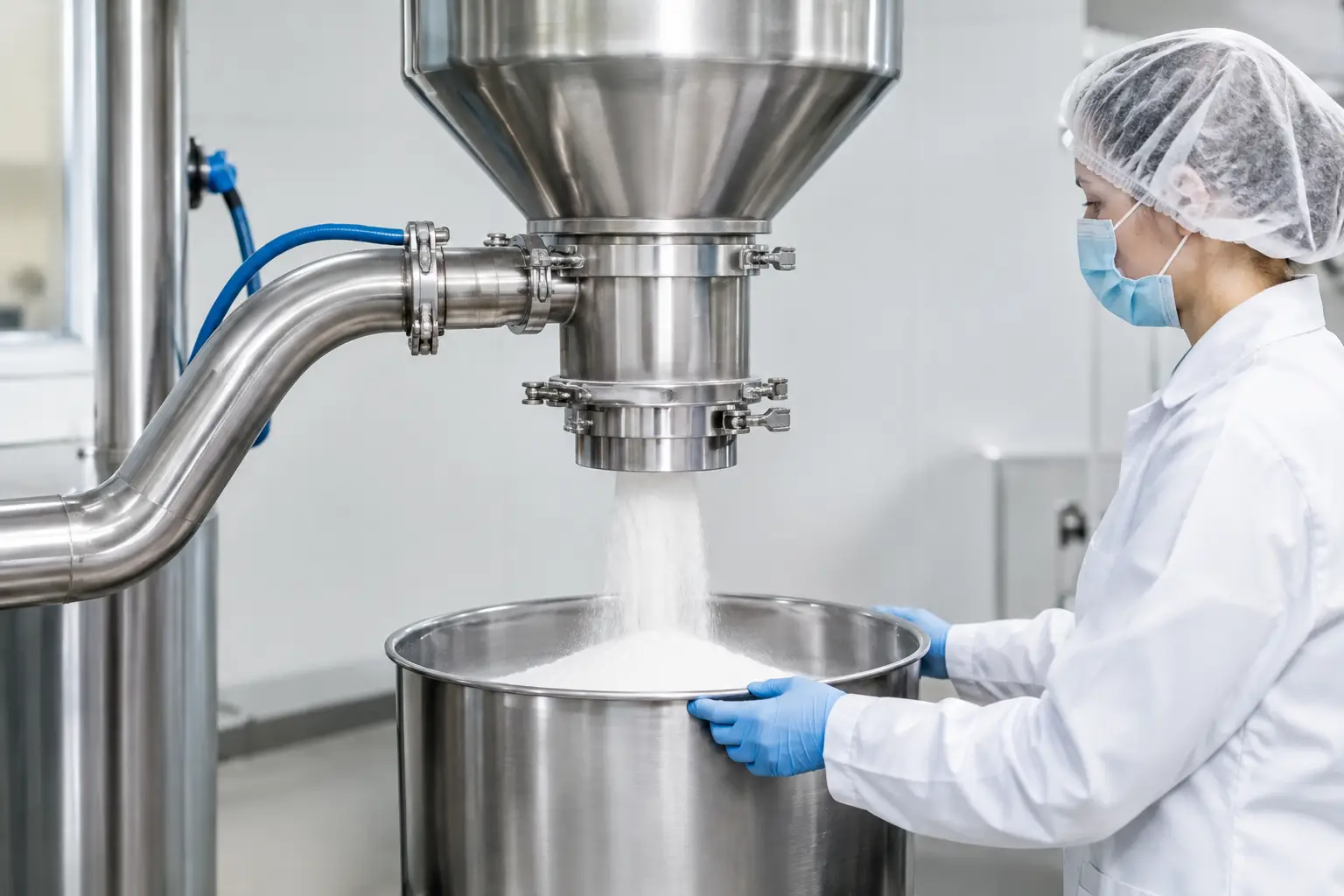
Many processing issues blamed on the mill actually begin in feeding, transfer or discharge. Inconsistent feed presentation changes mill loading and affects particle size stability. Poor conveying design can damage fragile powders or generate unnecessary attrition. Dust control failures create housekeeping problems, operator exposure risk and loss of valuable product.
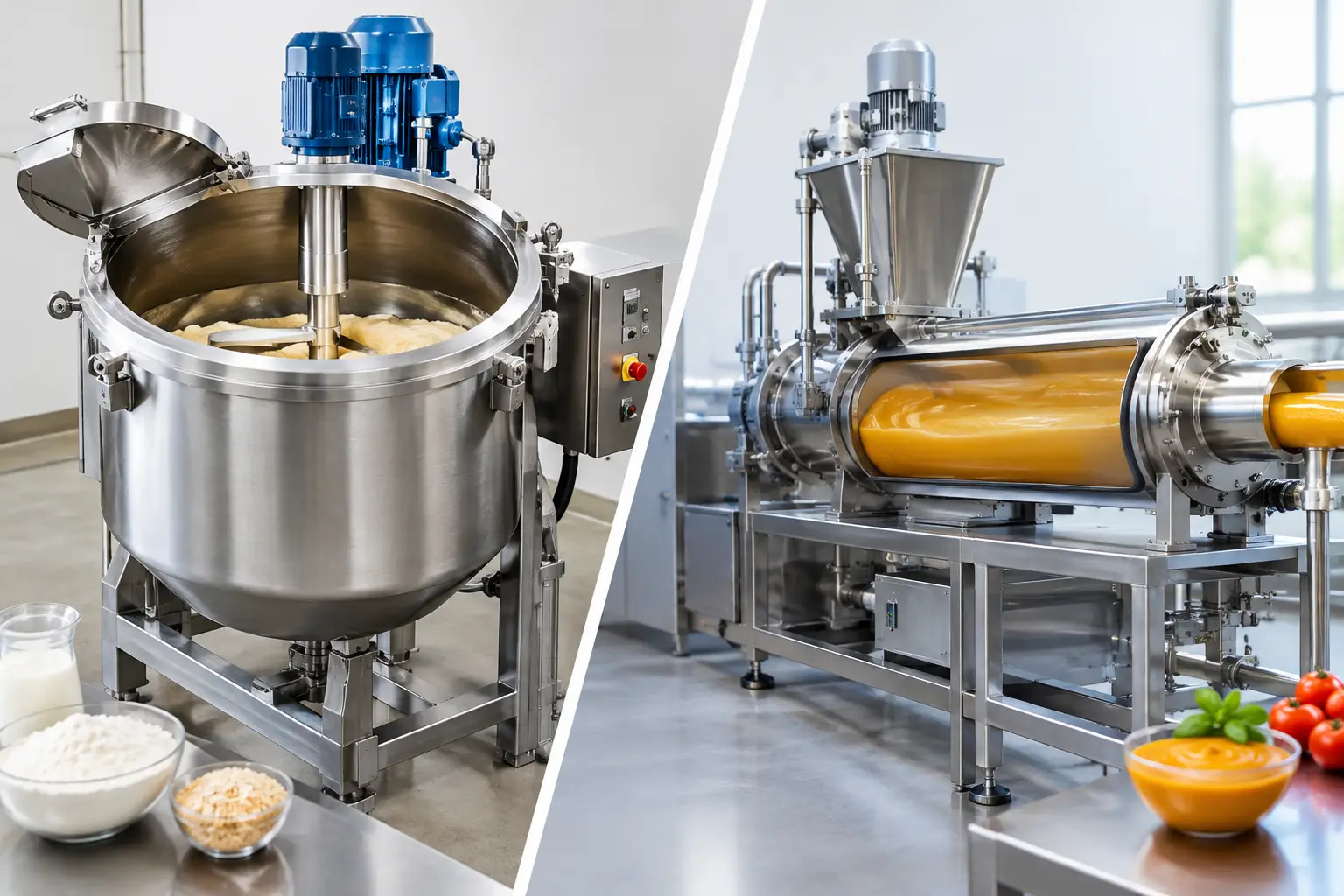
This is why complete powder processing solutions need to consider the whole material path. Feed hoppers, dosing systems, pneumatic or mechanical conveying, intermediate storage, containment measures and discharge arrangements all need to work as one system. Even mixer selection should reflect what happens before and after the blending stage.
For regulated sectors, the design considerations become more demanding. Clean-in-place requirements, validation, traceability, access for inspection and cross-contamination control all influence equipment layout and specification. In high-value manufacturing, reliability is not just about preventing stoppages. It is about protecting every batch.
Scaling from test work to production
One of the most expensive mistakes in powder processing is assuming a successful small-scale trial will automatically translate to full-scale output. Scale changes residence time, feed consistency, airflow patterns, heat load and classifier behaviour. A process that appears stable in development can behave very differently in production.
That is why scale-up needs to be engineered rather than estimated. Laboratory and pilot testing should be used to understand particle size targets, throughput windows, wear rates and product sensitivity before final equipment is specified. The goal is not just to prove that the material can be processed. It is to define how it should be processed at commercial scale with repeatable results.
For manufacturers planning expansion, this matters just as much as initial installation. A line may need to support future capacity increases, product changes or tighter specifications over time. Systems built with that in mind tend to deliver lower total cost of ownership because they reduce the need for disruptive retrofits later.
Energy, wear and total cost of ownership
Industrial buyers rightly look beyond capital cost. The cheapest machine at purchase can become the most expensive asset in operation if it consumes excess energy, requires frequent wear part replacement or creates persistent quality losses.
Energy performance depends on machine type, duty point and process design. A mill operating outside its efficient range will waste power and often produce inferior output. Wear rates are equally application-dependent. Abrasive products can rapidly degrade internals unless the correct materials of construction and protective features are selected. Maintenance access also matters. Downtime for routine servicing has a direct effect on plant productivity.
Well-engineered powder processing solutions reduce cost through balance. They match installed power to actual process demand, minimise recirculation, support predictable maintenance intervals and improve first-pass quality. In practical terms, that means lower scrap, steadier output and fewer interruptions to production planning.
Where turnkey integration adds value
Standalone machines have their place, but many manufacturing environments benefit more from an integrated approach. When milling, classifying, mixing and conveying are designed together, control philosophy, footprint, utilities and material flow can be aligned from the outset.
That usually leads to fewer commissioning issues and a line that is easier to operate consistently. It can also simplify procurement and project management, particularly where multiple process stages must meet strict performance criteria. For companies moving from development into industrial production, an integrated partner can reduce the risk that critical interfaces are missed between suppliers.
This is where an engineering-led manufacturer adds real value. The strongest projects are not built around catalogue selection alone. They are built around the processing objective, supported by testing, customisation and practical understanding of how powders behave in production. DP Pulveriser UK operates in exactly that space, providing equipment and full system capability for high-specification manufacturing environments.
Choosing the right route forward
If your operation is facing inconsistent particle size, poor flow, heat damage, excessive dust or limited throughput, the answer is unlikely to be a larger mill dropped into the same process. More often, the real requirement is a better-matched system – one that considers milling principle, classification strategy, feeding accuracy, powder handling and future scale.
The right powder processing solutions create measurable gains: tighter product consistency, improved efficiency, safer handling and a more predictable route from trial work to production. For technical teams under pressure to improve performance without increasing complexity, that is not a marginal benefit. It is the difference between a process that copes and one that is built to deliver.