DP Pulveriser UK - Innovating the Future of Size Reduction
A classifier can appear to be operating normally while quietly reducing product value. A small drift in cut point, an unstable feed rate or excess air leakage can widen the particle size distribution, lower yield and create avoidable downstream problems. Air classifier performance is therefore not measured by separation alone. It is measured by whether the system repeatedly delivers the specified fine fraction, at the required throughput, with controlled energy use and minimal product loss.
For manufacturers processing pharmaceuticals, food ingredients, pigments, minerals, battery materials or speciality chemicals, that distinction is commercially significant. Particle size affects dissolution, colour strength, flowability, packing density, reactivity and finished-product consistency. The classifier must be treated as a controlled process stage, not simply an item of ancillary equipment.
What good air classifier performance looks like
The primary purpose of an air classifier is to divide a feed material into fine and coarse fractions using aerodynamic forces. In a dynamic classifier, material enters an air stream and passes towards a rotating classifying wheel. Fine particles are carried through with the air, while particles with sufficient mass and momentum are rejected and returned or discharged as coarse material.
A strong result is not always the finest possible cut. It is the required cut point achieved consistently, with an acceptable separation sharpness and a viable production rate. Running a classifier at very high wheel speed may produce a finer product, but it can also reduce throughput, increase power consumption and raise wear rates. Equally, maximising feed rate can overload the classification zone and allow oversized particles to report to the fines.
Performance should therefore be assessed against the production specification. Useful operating measures include the target top size, the d50 cut point, the proportion of misplaced coarse particles in the fines, fines yield, throughput, specific energy consumption and variation between batches. The priority assigned to each measure depends on the application. A pigment producer may place particular value on narrow distribution and colour development, while a mineral processor may focus on high tonnage and controlled top size.
The variables that determine classifier efficiency
Rotor speed and cut point control
Classifying wheel speed is one of the most direct controls over separation. Increasing speed raises the centrifugal force acting on particles in the classification zone. This makes it more difficult for larger particles to enter the fine stream, moving the cut point towards a finer size. Reducing speed generally permits a coarser product.
The relationship is material-dependent rather than fixed. Particle density, shape, surface condition and moisture all affect aerodynamic behaviour. A setting that achieves the specified cut for a dense mineral may be unsuitable for a low-density food powder. For this reason, wheel speed should be established through application trials and then managed within a defined operating window, rather than selected from a generic table.
Airflow, pressure and air quality
Airflow provides the transport force that carries fines through the system, but more air is not automatically better. Insufficient airflow can reduce fine-particle recovery and encourage material build-up. Excess airflow may disturb the classification zone, increase pressure losses and carry particles that should have been rejected into the fine product.
The complete air circuit matters. Fan duty, duct diameter, bends, filter condition, cyclone efficiency and system leakage all influence the real airflow seen by the classifier. A partially blinded filter, for example, changes pressure conditions across the plant and can alter separation without any change to the classifier setpoint.
Air temperature and humidity also deserve attention where powders are hygroscopic, temperature-sensitive or prone to agglomeration. Warm, dry air may improve dispersion for some materials, while other products require conditioned air or closed-loop inert gas operation to protect quality and manage safety requirements.
Feed rate and feed presentation
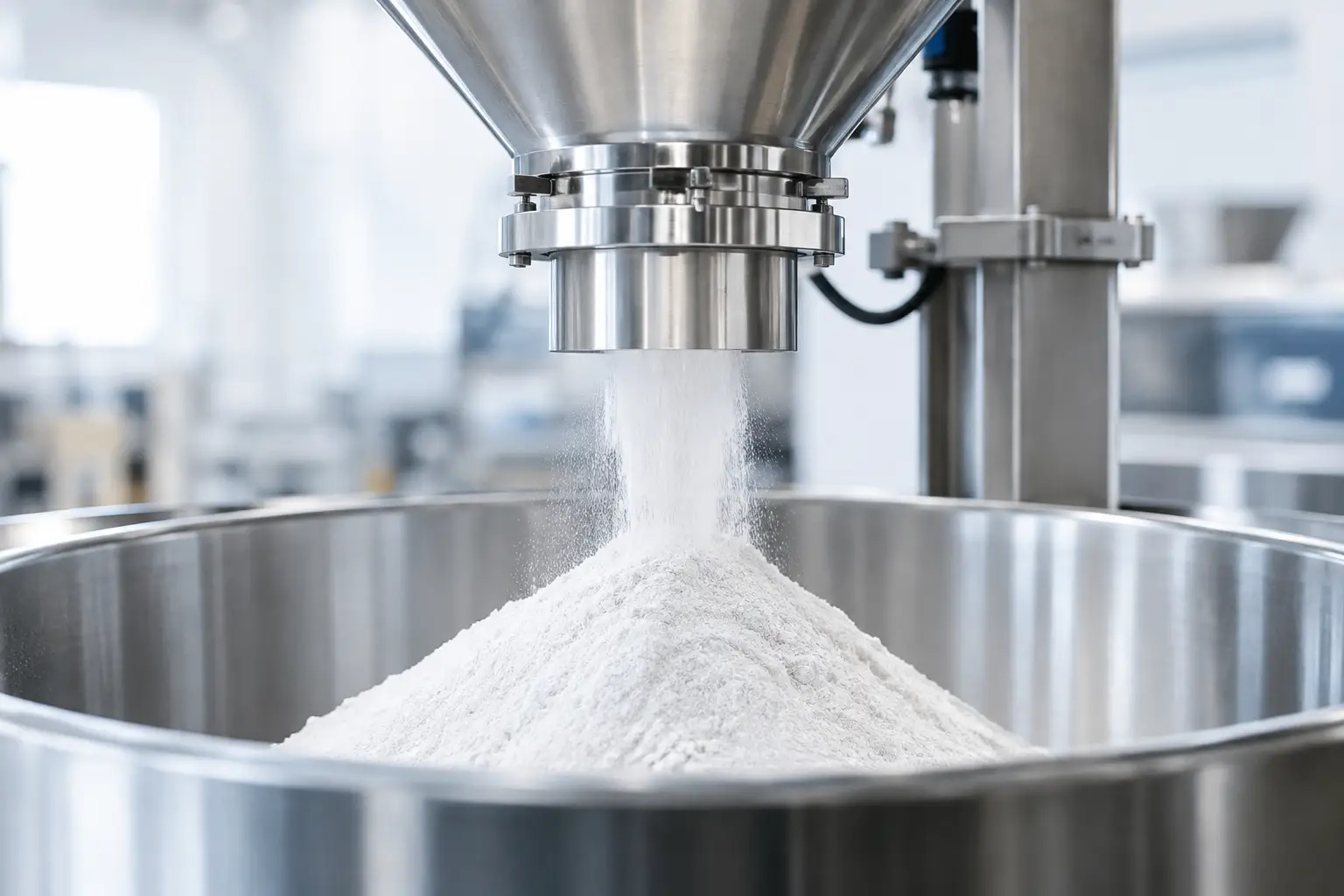
A classifier separates individual particles most effectively when the feed is dispersed consistently. Surges in feed rate overload the classifying zone and reduce the time available for separation. The result is commonly a broader distribution, greater coarse carry-over and unstable product quality.
A controlled metering device is essential, but the condition of material entering the classifier is equally important. Lumps, poorly deagglomerated feed, wide upstream size variation and inconsistent bulk density can all compromise results. If a classifier is repeatedly being asked to correct an unsuitable milling or feeding stage, adjustments to wheel speed alone will not resolve the issue.
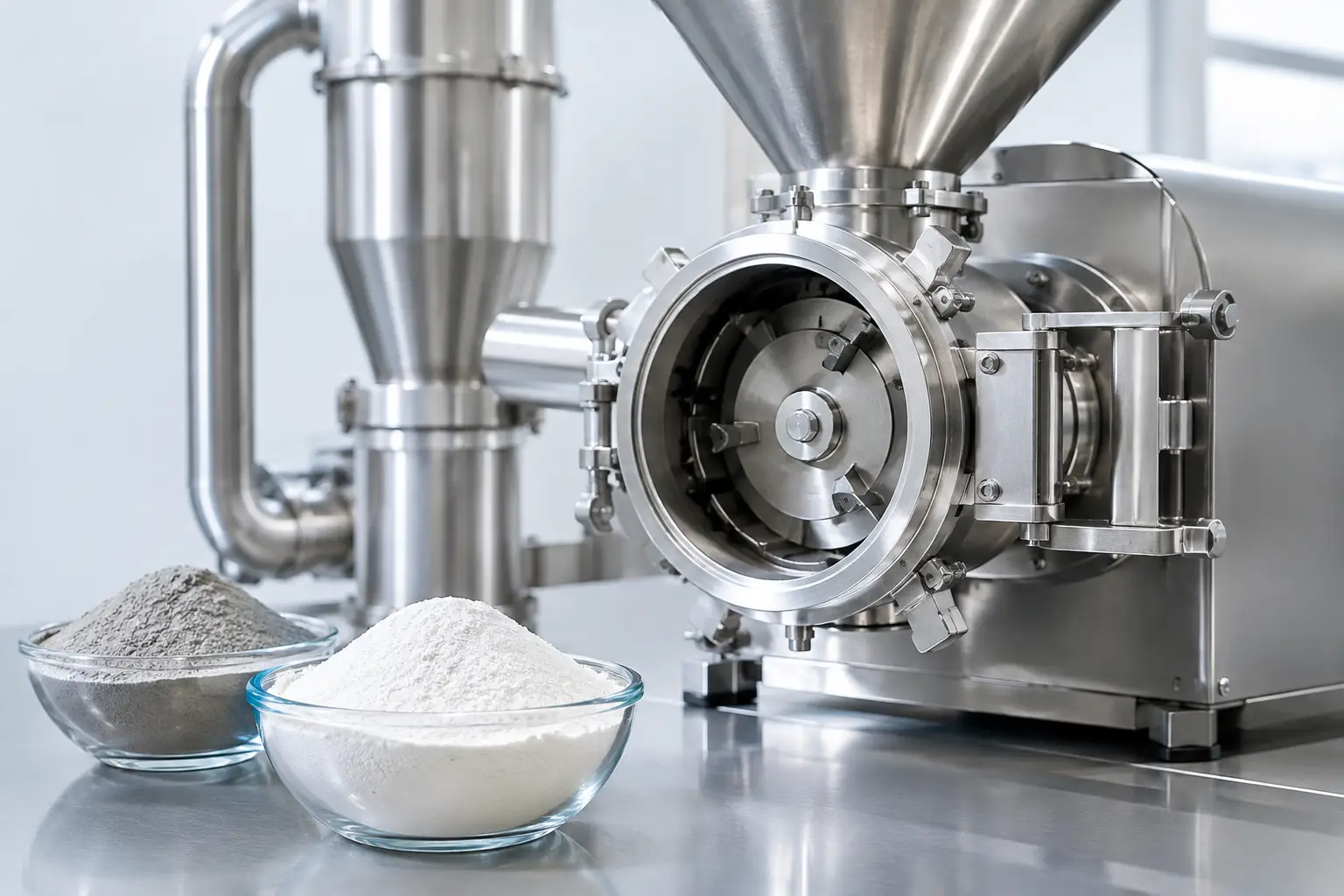
For demanding applications, the milling and classification stages should be engineered as one process. Air classifier mills are particularly effective where size reduction and dynamic classification must work together in a compact system. Separate mills and classifiers can offer greater flexibility in certain high-throughput or multi-product installations, but they require disciplined control of material transfer and air balance.
Material characteristics
No two powders classify in exactly the same way. Density has a clear effect, but it is only one part of the picture. Plate-like particles, fibres and irregular fragments experience different drag forces from spherical particles of equivalent size. Sticky materials can coat the wheel, housing or ducts. Electrostatic charge may cause fine particles to adhere to surfaces or form agglomerates that behave as larger particles.
Moisture is a common source of variation. Even a modest increase can change flow properties, promote adhesion and reduce dispersion. Materials that are soft, heat-sensitive or waxy may also require lower-energy milling, cooled process air or cryogenic milling before classification can be controlled effectively.
Where performance is commonly lost
When product fineness shifts, operators often begin by changing rotor speed. That is a sensible check, but it should not be the only one. A systematic investigation usually identifies the issue elsewhere in the process.
Air leakage is a frequent cause. Leaks at rotary valves, inspection doors, duct connections or poorly sealed collection equipment disrupt the pressure profile and reduce repeatability. Wear is another concern, particularly with abrasive minerals, ceramics and metal powders. Worn wheel components can change the effective geometry of the classification zone and gradually reduce cut accuracy.
Build-up inside the classifier can have a similar effect. Deposits narrow flow paths, alter air velocities and eventually create an unstable operating condition. The cause may be moisture, inadequate cleaning, unsuitable surface finishes or an air temperature that is too low for the product. Corrective action should address the mechanism of build-up, not only remove the deposit.
Instrumentation also requires scrutiny. Pressure readings, fan speed, wheel speed, feeder output and air volume measurements form the basis of process control. If any of these signals are inaccurate or not trended, the plant team may be responding to an apparent classifier issue without visibility of the real cause.
Improving air classifier performance in production
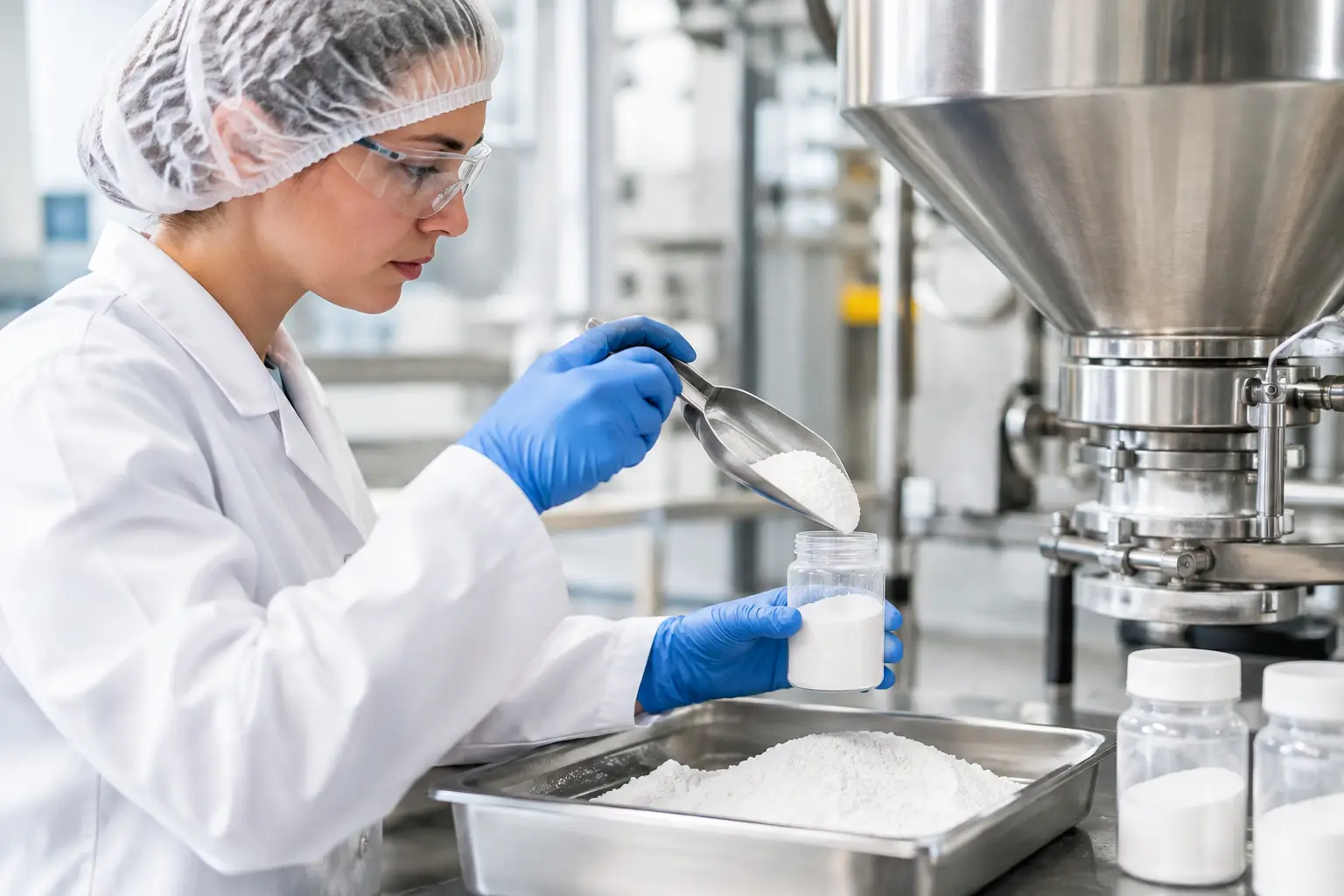
The most effective improvements begin with a defined product specification and a representative material assessment. Laboratory and pilot trials establish how the material responds to wheel speed, airflow and feed rate, while also revealing potential issues with heat, agglomeration, wear or dust handling. This work reduces risk when moving to production scale.
At plant level, establish a baseline using measured particle size data rather than visual judgement alone. Record the product distribution alongside feeder rate, classifier speed, fan duty, differential pressure, temperatures and collection performance. Trends are often more informative than individual readings. A gradual increase in fan load or a slow fall in fines yield can indicate a developing restriction long before the product moves outside specification.
Preventive maintenance should focus on the parts that influence separation directly: the classifier wheel, seals, bearings, rotary valves, filter media and ductwork. For abrasive duties, wear-resistant construction and replaceable components can protect both uptime and long-term cut-point stability. For sanitary or regulated production, cleanability, material traceability and validated cleaning procedures must be part of the system design from the outset.
Automation can improve consistency where multiple variables interact. Variable-speed drives allow repeatable adjustment of wheel and fan speed, while controlled feeding prevents sudden loading changes. In more advanced installations, particle size feedback or validated proxy measurements can support tighter operating control. Automation does not replace process knowledge, but it prevents good operating practice from depending solely on manual intervention.
Engineering the whole system, not just the classifier
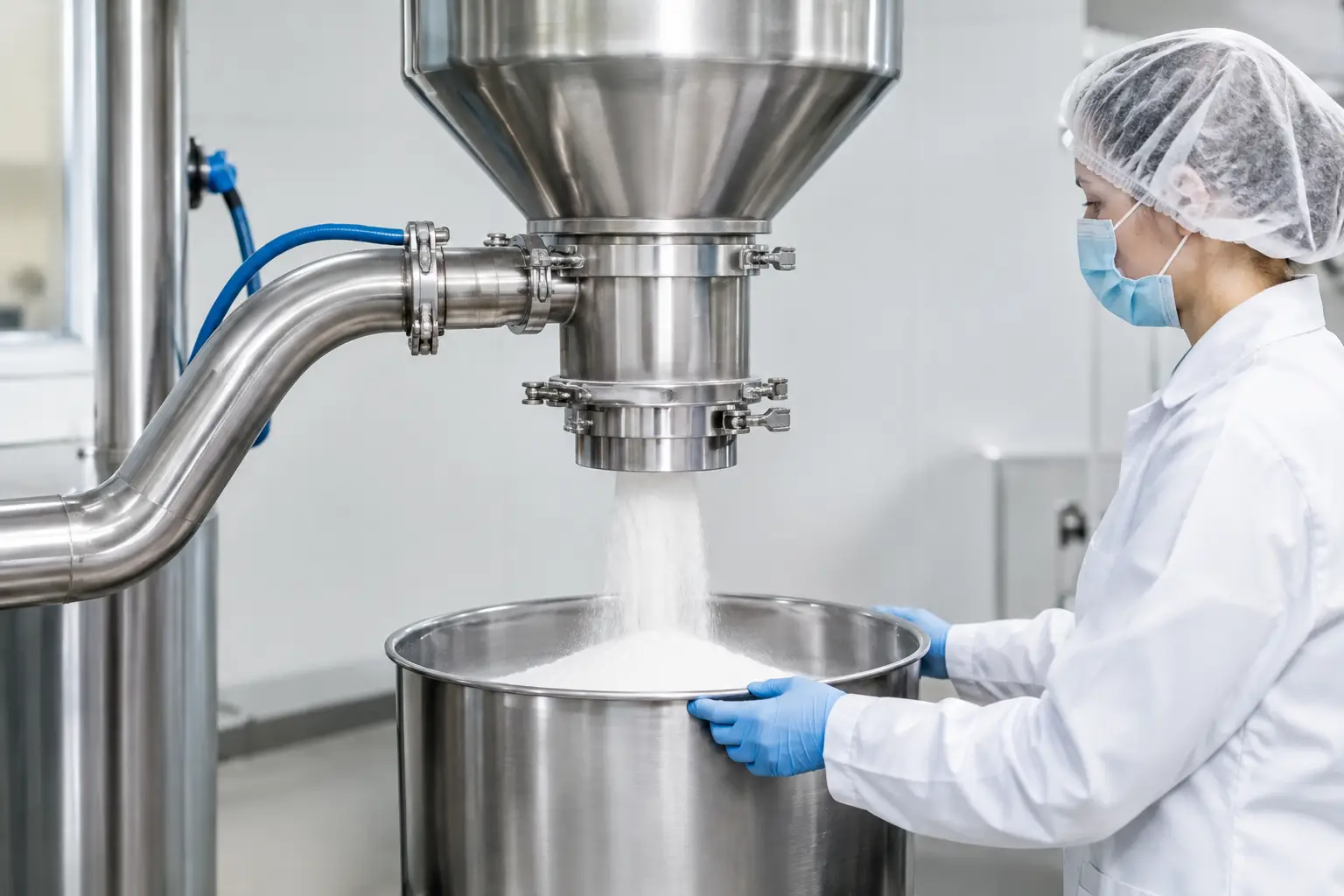
A classifier cannot compensate indefinitely for poor upstream milling, unstable feeding or inadequate product collection. The best results come from an integrated design that considers material entry, dispersion, separation, conveying, dust capture and discharge as one engineered process.
DP Pulverizer UK applies this system-level approach from laboratory development through to full production lines, selecting and configuring equipment around the material, required particle size and practical operating demands. The correct solution may be an air classifier mill, a standalone dynamic classifier or a wider milling and conveying system. It depends on the product specification, production duty, containment requirements and future scale-up plan.
The useful question is not simply whether the classifier can make a fine powder. It is whether the complete process can keep making the same powder, shift after shift, at a cost and capacity that support the operation.