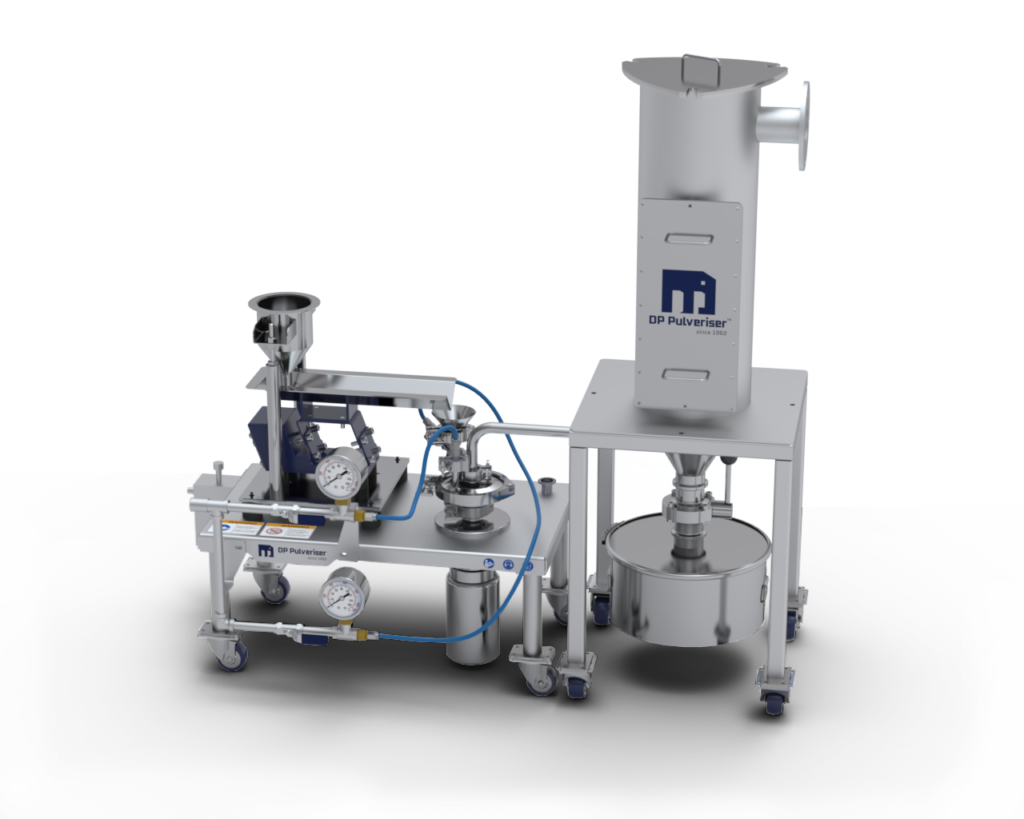
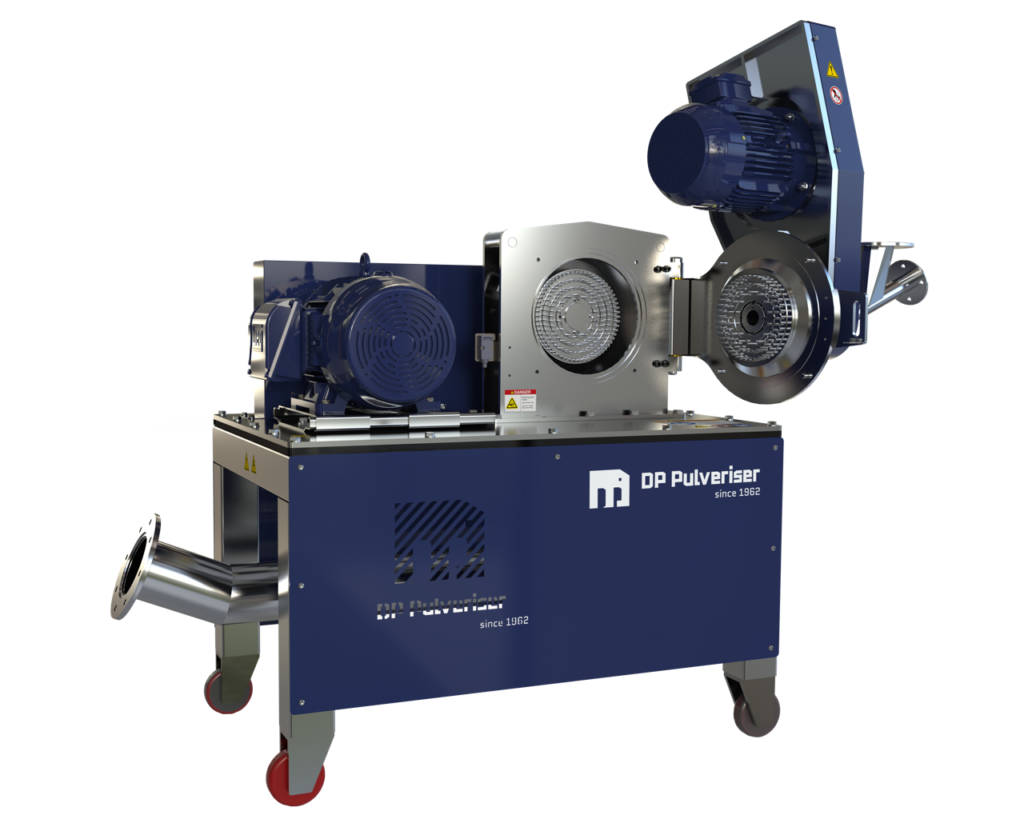
DP Pulveriser UK - Innovating the Future of Size Reduction
DP Pulveriser UK - Innovating the Future of Size Reduction
DP Pulveriser UK - Innovating the Future of Size Reduction
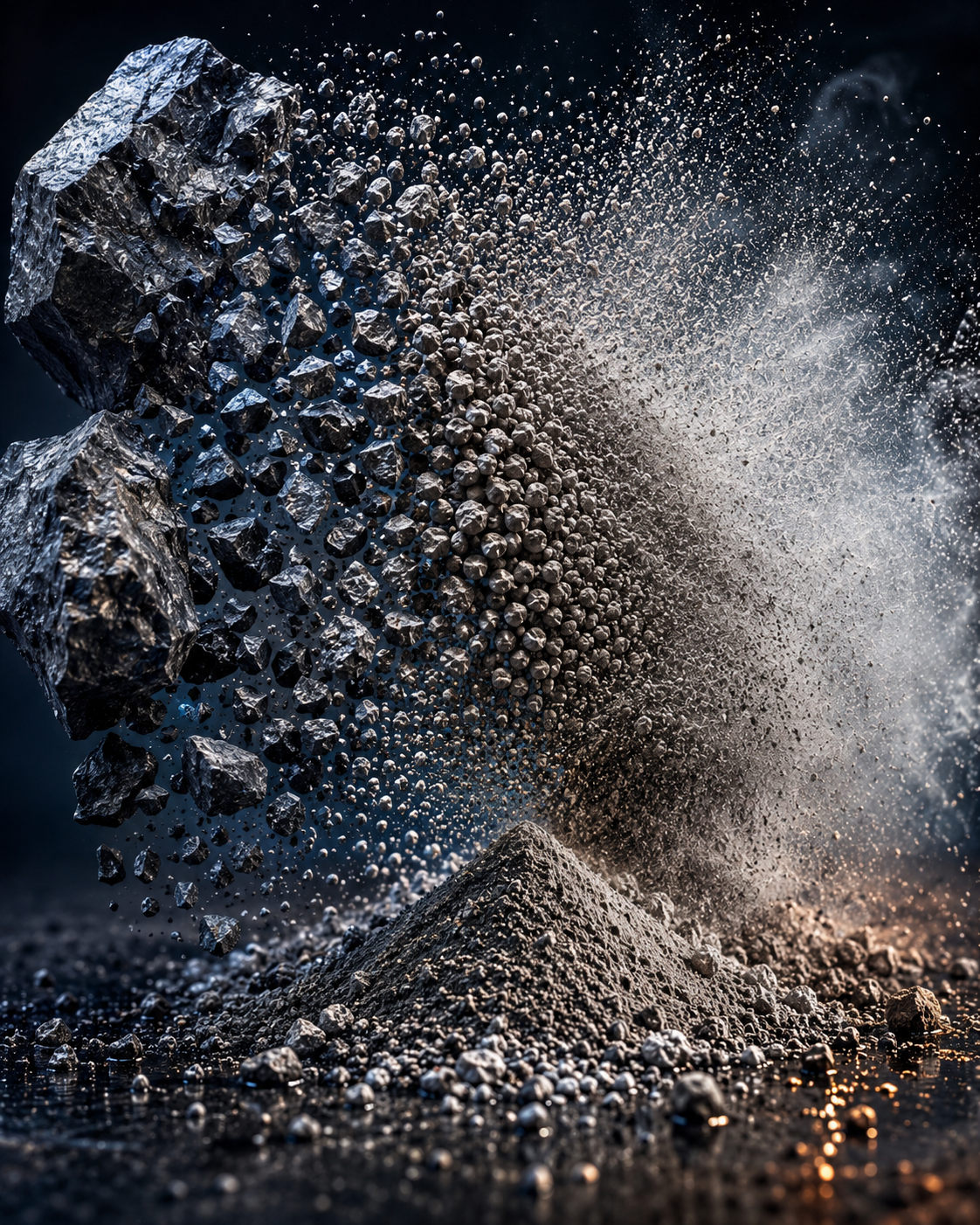
Advanced Particle Size Reduction Technology by DP Pulveriser UK
Particle size reduction is one of the most important processes in modern manufacturing. Whether producing pharmaceutical ingredients, food products, battery materials, chemicals, minerals, nutraceuticals, or advanced materials, the size and distribution of particles directly influence product performance, manufacturing efficiency, and overall product quality.
At DP Pulveriser UK, we specialise in advanced particle size reduction technologies designed to transform raw materials into highly engineered powders with precise particle size distributions.
From coarse grinding and deagglomeration to fine grinding and micronization, our solutions help manufacturers throughout the United Kingdom and Europe optimise product performance, improve process efficiency, and achieve consistent, repeatable results.
Contact our engineering team to discuss your Particle Size Reduction requirements.

Particle size reduction is the process of decreasing the size of solid particles through mechanical, pneumatic, or cryogenic means.
The goal is not simply to make particles smaller. Effective particle size reduction creates powders with specific characteristics that improve manufacturing performance and product quality.
Particle size reduction may be used to:
Virtually every manufacturing sector relies on particle size reduction at some stage of production.
Particle size has a significant impact on how materials behave during manufacturing and how products perform in real-world applications.
As particles become smaller, total surface area increases dramatically.
Increased surface area can improve:
Particle size influences how powders move through:
Consistent particle sizes help improve:
Particle size often affects:
Different industries require different particle size targets.
| Application | Typical Particle Size |
|---|---|
| Food Ingredients | 50–1,000 Microns |
| Protein Powders | 20–300 Microns |
| Nutraceuticals | 10–200 Microns |
| Pharmaceutical Powders | 1–100 Microns |
| Battery Materials | 5–50 Microns |
| Pigments | 1–50 Microns |
| Industrial Minerals | 5–500 Microns |
| Specialty Chemicals | 1–100 Microns |
The correct technology depends upon the material characteristics and desired particle size distribution.
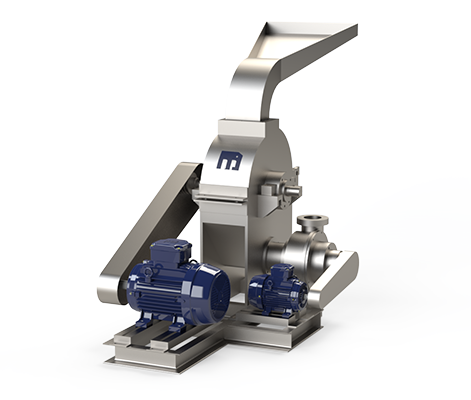
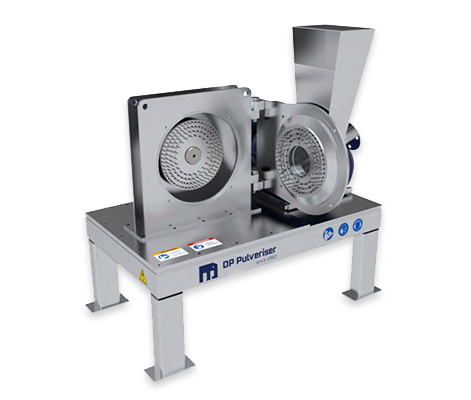
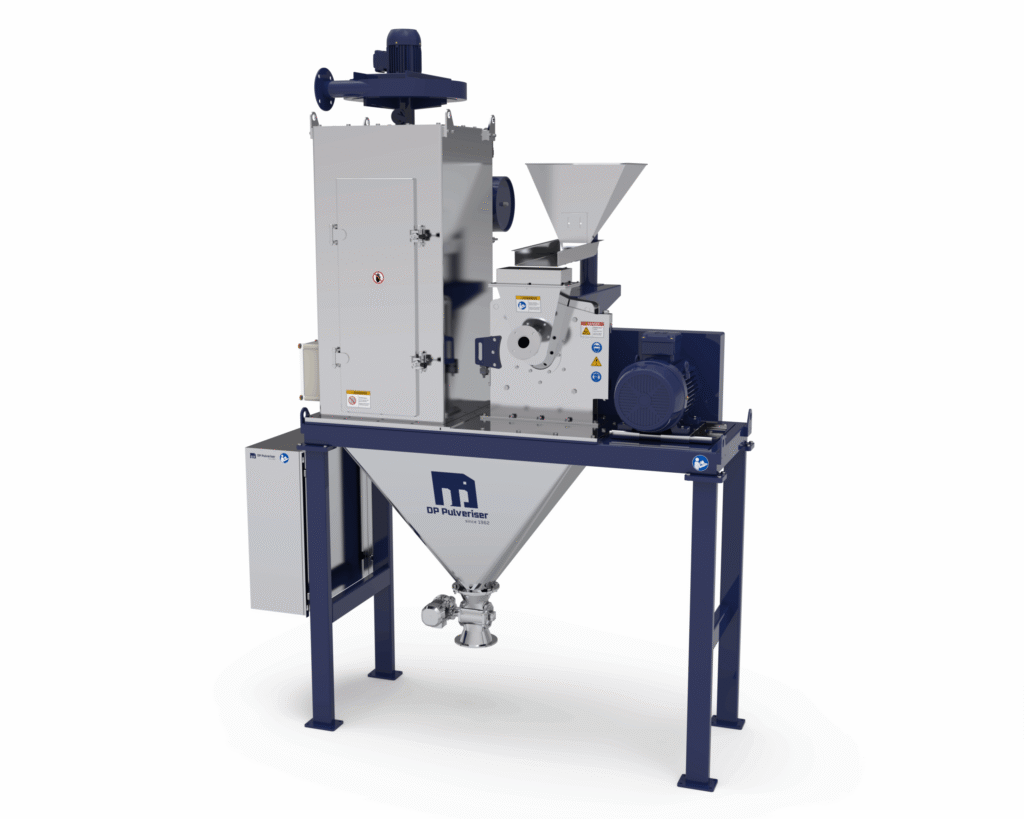
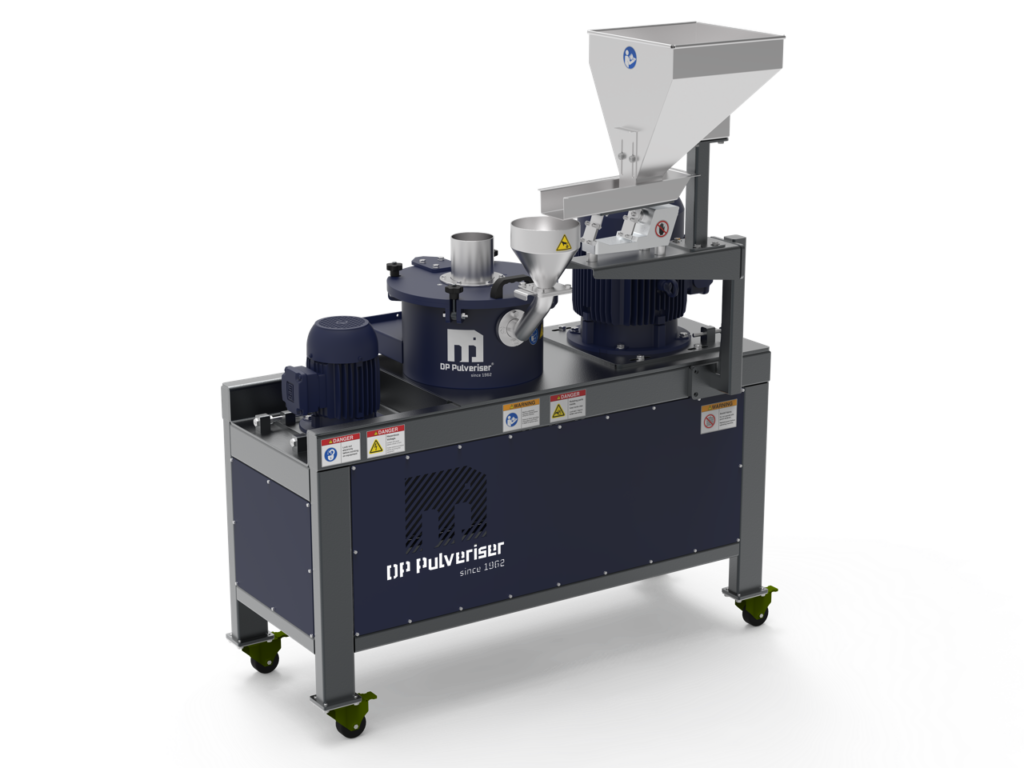
DP Pulveriser offers a comprehensive range of particle size reduction technologies.
Hammer mills provide efficient coarse and intermediate grinding for:
Advantages include:
Universal mills offer exceptional versatility and can process a wide range of materials using interchangeable grinding configurations.
Ideal for:
Pin mills utilise high-speed impact forces to achieve fine particle size reduction.
Applications include:
Advantages include:
Turbo mills combine impact grinding with controlled airflow to achieve efficient fine grinding while minimising product temperature rise.
Ideal for:
Air Classifier Mills combine grinding and classification within a single machine.
Benefits include:
Applications include:
Jet mills use compressed air or inert gases to accelerate particles to extremely high velocities, creating particle-to-particle collisions.
Advantages include:
Applications include:
Cryogenic milling utilises liquid nitrogen to process materials that become difficult to grind at ambient temperatures.
Ideal for:
Particle size reduction is critical for:
Benefits include improved dissolution rates and enhanced bioavailability.
Applications include:
Fine particle control improves texture, solubility, and product consistency.
Particle size reduction supports:
Applications include:
Particle size often influences reaction rates and product performance.
Europe’s rapidly expanding battery sector relies on precise particle engineering for:
Particle size consistency directly impacts battery performance and manufacturing efficiency.
Common materials include:
Particle size reduction helps improve product value and downstream processing efficiency.
Successful particle size reduction depends upon several material characteristics.
Harder materials require greater grinding energy and specialised milling technologies.
Excess moisture may reduce milling efficiency and affect particle size distribution.
Highly abrasive products may require wear-resistant materials of construction.
Certain products require low-temperature or cryogenic processing to prevent degradation.
Many applications require not only a target particle size but also a tightly controlled particle size distribution.
DP Pulveriser supplies systems suitable for food, pharmaceutical, and nutraceutical manufacturing.
Available features include:
These features support compliance with UK and European manufacturing standards.
Many fine powders create combustible dust hazards.
DP Pulveriser can provide:
These features help manufacturers comply with UK and EU safety regulations.
Whether you need to improve product performance, achieve a precise particle size distribution, increase dissolution rates, enhance bioavailability, or optimise manufacturing efficiency, DP Pulveriser UK can provide a particle size reduction solution engineered specifically for your application.
Contact our engineering team today to discuss your material, particle size targets, throughput requirements, and process objectives.
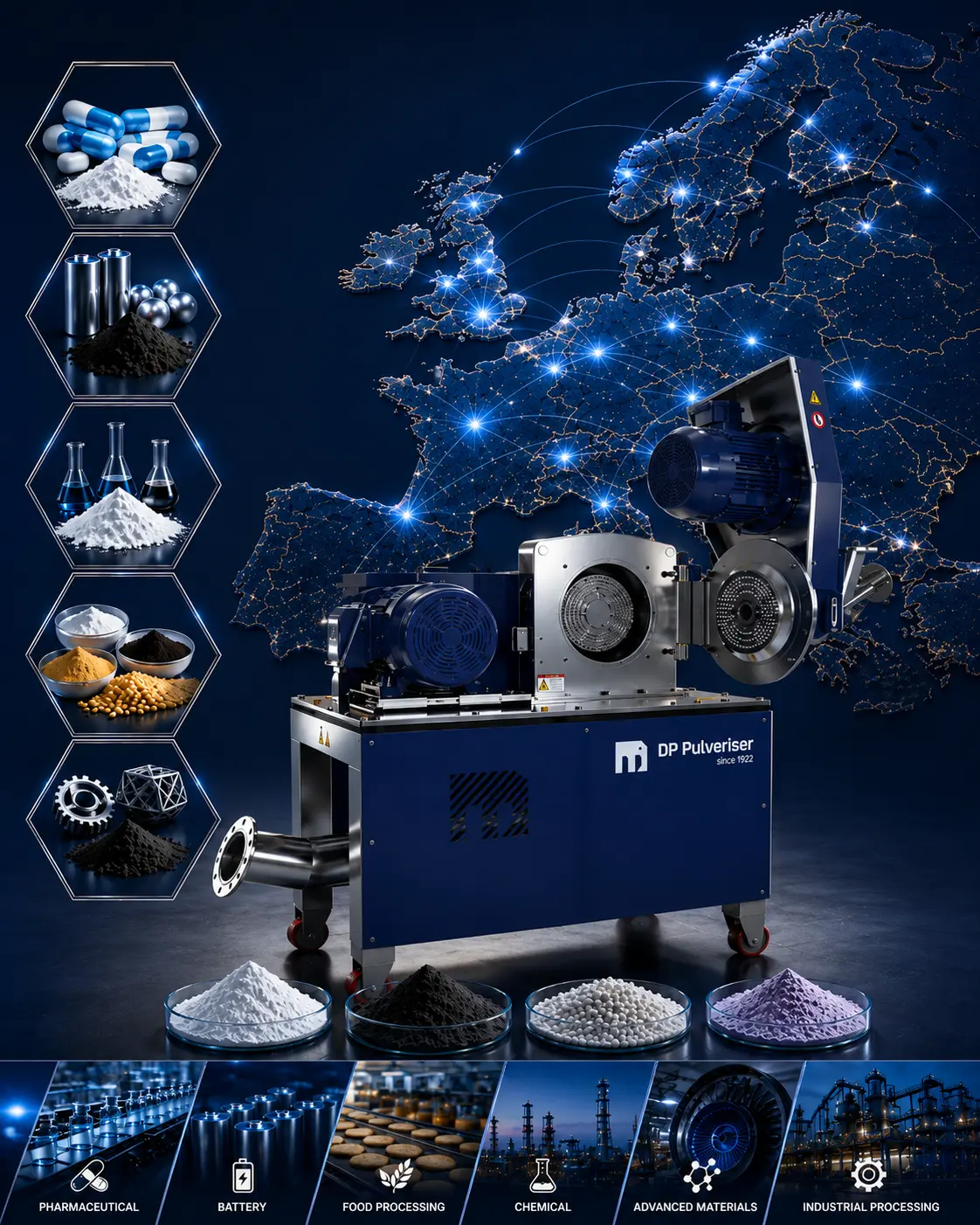
DP Pulveriser supplies particle size reduction equipment throughout:
Our technologies support pharmaceutical manufacturers, food processors, nutraceutical companies, battery material suppliers, chemical manufacturers, advanced material developers, and industrial mineral processors throughout Europe.
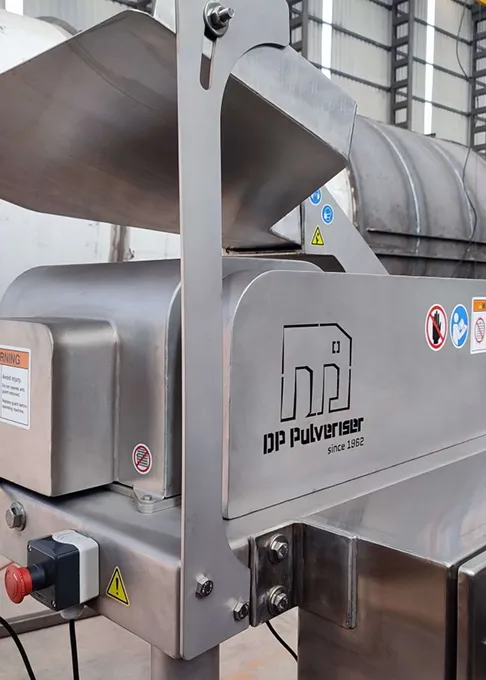
DP Pulveriser combines advanced engineering expertise with decades of particle processing experience to develop customised particle size reduction solutions.
Our capabilities include:
Whether your objective is coarse grinding, fine grinding, micronization, or ultra-fine particle engineering, our team can develop a solution tailored to your specific material and process requirements.
Not Sure Which System You Need? Speak With an Engineer
A practical guide to particle size reduction equipment, covering mill types, material behaviour, ...
What is particle size reduction? Learn how milling changes powder performance, throughput, consis...