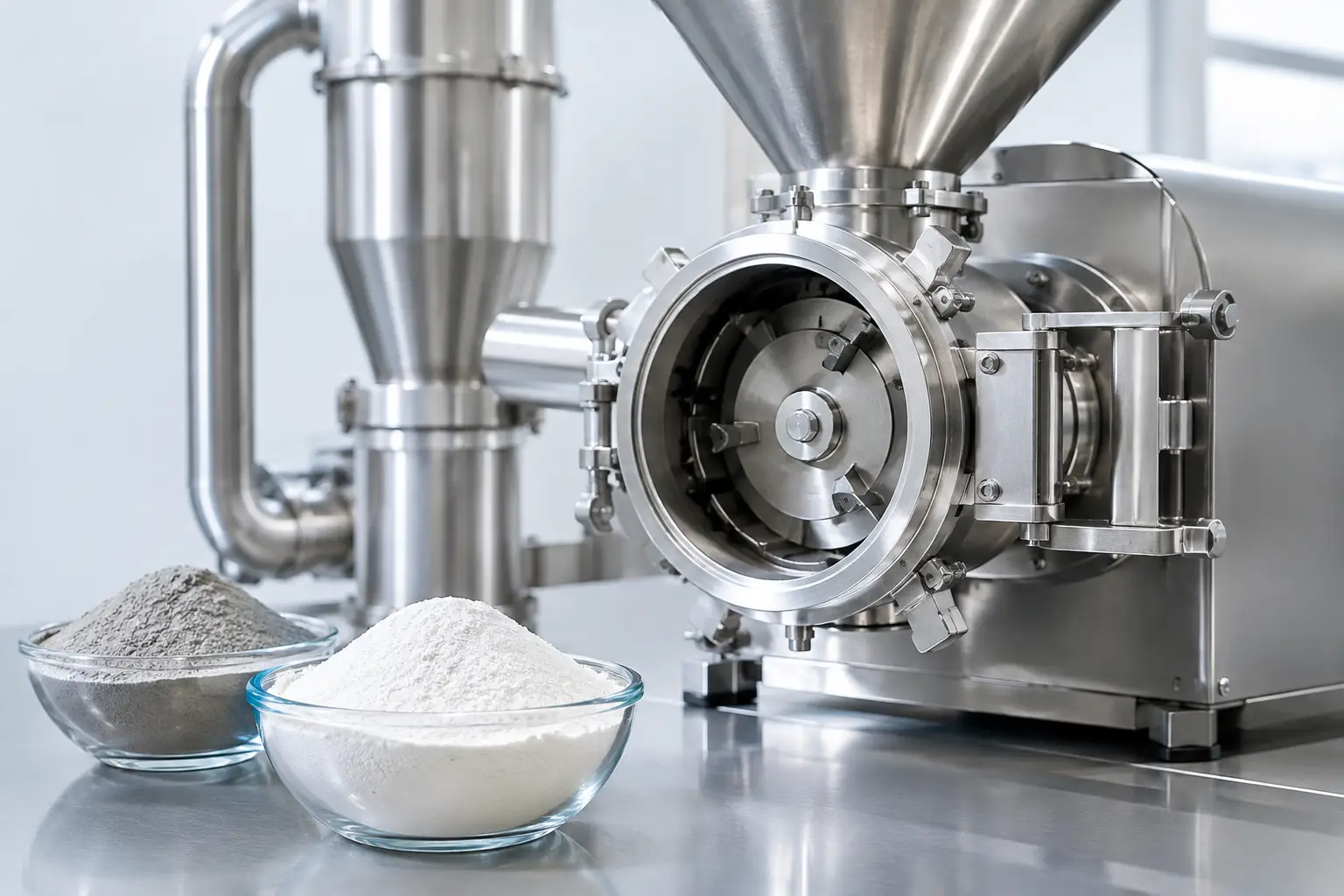
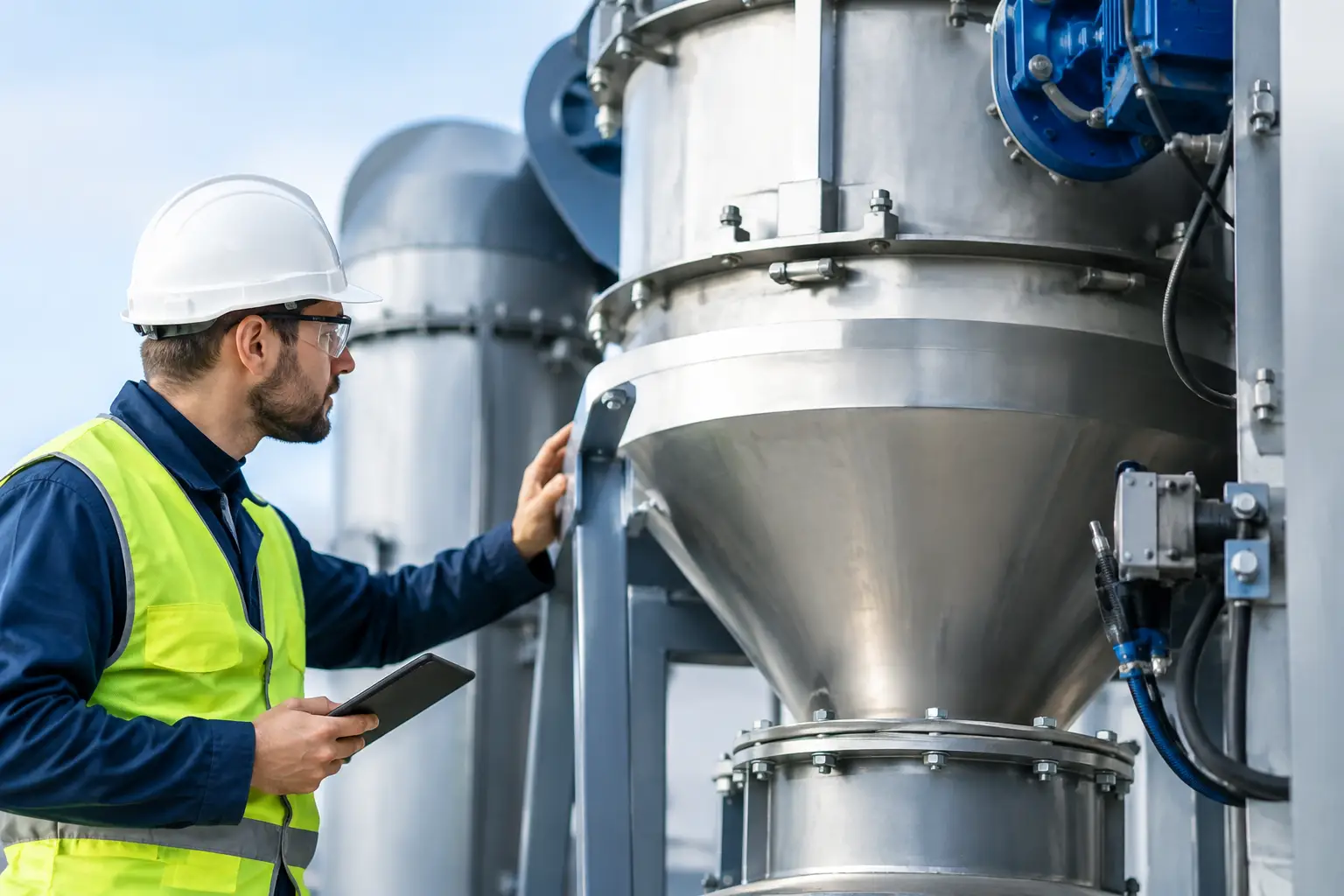
DP Pulveriser UK - Innovating the Future of Size Reduction
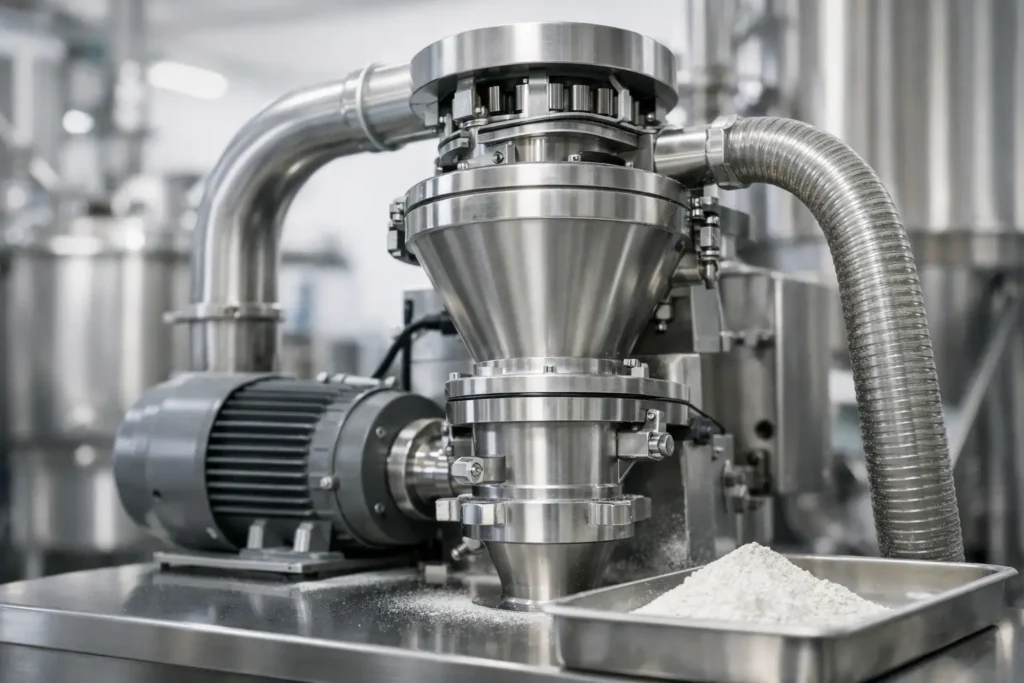
When a powder specification calls for tight top size control, low heat build-up and reliable throughput in the same process step, air classifier mill application becomes a serious engineering decision rather than a simple equipment choice. In many plants, the difference between an acceptable powder and a rejected batch comes down to how consistently the mill can reduce and classify material under real production conditions.
An air classifier mill combines impact milling with integral air classification in one compact system. That matters because size reduction and particle separation are not treated as separate operations that can drift out of balance. The grinding zone generates the required breakage, while the internal classifier continuously rejects oversize particles back into the milling path until they meet the target cut point. For manufacturers working to tight product specifications, that closed internal cycle offers a level of control that conventional mills often struggle to achieve.
Where air classifier mill application makes sense
The most effective air classifier mill application is found where fine to medium-fine powders must be produced with a controlled particle size distribution and minimal oversize. This is common in chemicals, food ingredients, pharmaceuticals, nutraceuticals, pigments, agricultural products and selected mineral applications. Materials that are brittle or friable usually respond particularly well, although behaviour still depends on feed size, hardness, moisture, fat content and required fineness.
In practical terms, this type of mill is often selected when a process needs more precision than a basic hammer mill can offer, but does not require the extreme fineness or energy profile of a jet mill. That middle ground is commercially important. Many manufacturers need dependable particle control at industrial throughput without adding unnecessary complexity to the line.
A plant producing powdered resins, coating additives or speciality chemicals may need a narrow top size to support blending, flow behaviour or downstream reactivity. A food processor may need a fine powder with consistent mouthfeel and controlled heat generation to protect flavour or functionality. A pharmaceutical or nutraceutical producer may need repeatable particle sizing that supports content uniformity, dissolution or blending performance. In each case, the mill is not judged only on whether it can grind. It is judged on whether it can deliver the required product, shift after shift.
How the process supports tighter control
The strength of an air classifier mill lies in the interaction between rotor speed, classifier speed, airflow and feed characteristics. The impact element reduces particle size, while the classifier applies a defined separation threshold. Finer particles are carried forward with the air stream, while coarser material remains in circulation until it is sufficiently reduced.
That arrangement gives process engineers useful control points. By adjusting classifier settings and airflow, the system can be tuned to hit a finer or coarser cut, within the design envelope of the machine and the material. This is one reason why air classifier mills are attractive in production environments that handle multiple grades or need to scale a developed process into continuous manufacture.
The benefit is not only product fineness. Internal classification also improves consistency by reducing broad particle size spread and limiting the discharge of oversized material. In many applications, that reduces the burden on downstream sieving and helps stabilise blending, packing and conveying performance.
Air classifier mill application across industries
Chemicals and speciality materials
Chemical processors often use air classifier mills for powders where particle size directly affects reaction rate, dispersion, bulk density or end-use performance. This includes additives, intermediates, dry blends and speciality compounds. Here, the value of the equipment is its ability to deliver a predictable particle size distribution while handling industrial volumes with a relatively compact footprint.
For some chemical applications, contamination risk and product purity are equally important. Mill construction, wear protection, surface finish and cleanability therefore need to be considered alongside milling performance. Material compatibility cannot be treated as an afterthought.
Food and nutraceutical processing
In food and nutraceutical environments, air classifier mill application is often driven by the need for controlled fineness, clean operation and efficient production. Sugar, spices, cereal derivatives, protein ingredients and plant-based materials can all benefit, provided the product characteristics suit impact milling.
The trade-off is that some heat-sensitive or high-fat materials may become challenging as temperature rises or the product begins to smear. In those cases, the answer may be process modification, chilled air, a different screen and classifier arrangement, or an alternative milling technology altogether. Good engineering starts with material behaviour, not catalogue assumptions.
Pharmaceuticals and high-specification powders
For pharmaceutical and similarly regulated sectors, consistent particle size is tied to product performance and process validation. An air classifier mill can support these requirements where the material and target range are suitable, especially when system design addresses containment, dust control, cleanability and repeatable operating parameters.
This is also where scale-up matters. A result achieved in a laboratory or pilot environment must translate into commercial output without shifting the particle size profile beyond specification. Equipment suppliers with development capability across lab, pilot and production scales bring a clear advantage here because they can reduce uncertainty before full investment is made.
Minerals, pigments and performance fillers
Mineral and pigment processors often need fine powders with controlled top size to support brightness, dispersion, surface finish or reactivity. Air classifier mills can be a strong fit where moderate to fine grinding is required with integrated classification and efficient material handling.
Wear rates, however, can become a major cost factor with abrasive feeds. In these duties, rotor design, wear liners, classifier materials and maintenance access have a direct effect on total cost of ownership. A lower capital price can quickly lose appeal if wear parts are consumed too rapidly or cleaning downtime becomes excessive.
What determines a successful application
The phrase air classifier mill application covers far more than choosing a machine size. Success depends on understanding the feed material, target particle size, moisture level, bulk density, hardness, abrasiveness, required throughput and the sensitivity of the product to heat or contamination.
Feed consistency is one of the biggest variables. If upstream handling delivers wide swings in particle size, moisture or feed rate, the mill will struggle to produce a steady finished product. Likewise, aspiration and dust collection must be properly matched to the process. Air classifier mills rely on controlled airflow, so poor system balance can compromise classification efficiency and final powder quality.
Temperature control can also be decisive. Although these mills can be efficient, impact milling still generates heat. For heat-sensitive materials, the process may need conditioned air, reduced residence time or adjusted tip speeds. If those measures are not enough, another milling method may be the better route.
Equipment selection and process integration
Selecting an air classifier mill should start with product requirements, then move to process integration. Throughput alone is not a sufficient basis for specification. A machine that reaches nameplate capacity but misses the particle size target, consumes too much energy or creates excessive recirculation is not the right solution.
A proper evaluation looks at the whole line: feeding, milling, classification, aspiration, dust control, discharge, conveying and packaging or downstream processing. In many cases, the best outcome comes from a fully engineered system rather than a stand-alone mill. That is particularly true where explosive dust risk, hygiene requirements, containment or recipe changeovers shape plant design.
Testing remains essential. Material trials help establish whether the target fineness is realistic, how the product behaves under impact forces and what settings produce the required distribution. For manufacturers moving from pilot work to production, this evidence reduces scale-up risk and shortens commissioning time.
The commercial case for the right mill
A well-matched air classifier mill improves more than particle size. It can reduce rework, lower oversize rejects, simplify downstream classification and improve line efficiency. It can also support product development by making new grades or tighter specifications commercially achievable.
That said, there is no universal answer. Some materials are better suited to pin milling, hammer milling, jet milling or cryogenic processing. The right decision comes from balancing fineness, throughput, energy use, wear, cleanability and capital cost against the value of the finished product.
For manufacturers assessing their next powder processing investment, the real question is not whether an air classifier mill is a good machine. It is whether the application has been engineered properly from feed to finished product. When that work is done well, the mill becomes a highly effective tool for consistent, scalable and efficient powder production – and that is where long-term process performance starts.